
Digital Transformation in the Healthcare Industry During Covid 19

Digital Transformation in the Healthcare Industry During Covid 19

Digital Transformation in the Healthcare Industry During Covid 19

The world is a technological hub, and we live in a tech bubble. Everything around us has digitalized, and this revolution is the backbone of every industry today. Technology fuels business and organizational ambitions. These ambitions help create a well-knit world that can be reached out at the click of a button. Co-operation and collaborations among industries are the growing trends. Technology provides efficient ways to bridge gaps and create a holistic and sustainable outlook. The necessity for technology and the need for organizations and industries to adapt it has risen now more than ever in the covid pandemic era. In a world where social contact is prohibited, and complete isolation is a survival method, it is almost impossible to imagine communities sailing through if it wasn’t for technology. It is historic how Individuals of the 21st century battled the pandemic and carried on with portable, hand-sized devices in their hands. 

Digital Transformation in the Healthcare Industry During Covid 19

The pandemic also highlighted the need for an efficient healthcare infrastructure that can tackle high demands, as it witnessed apocalyptic times. The surge of patients, demand for doctors, dispersal for treatment, everything saw bumpy roads. In tough times technology resolved a lot of issues. Owing to digitalization in healthcare mechanisms, seeking doctor appointments, query, consultations, etc. have shifted to online platforms, that even includes social media platforms. Technological change in medical services is focused on patient-centered ways to deal with medical care. It will help medical care suppliers smooth out activities, get what the patient requires, construct dedication and trust and offer a superior client experience. A healthcare digital marketing agency helps in amplifying the needs of the healthcare sector and plays a big role in transforming the industry on the whole. 

The advancements of digitalization in healthcare incorporate searching through relevant clinical information sites/blogs, working with clinical help, checking the nature of care, and planning and observing the spread of communicable illnesses, and following supplies of medications and antibodies, vaccines, etc. 

The developing trends prevalent in today’s technological health revolution, especially during and post-covid era, can be explained as: 

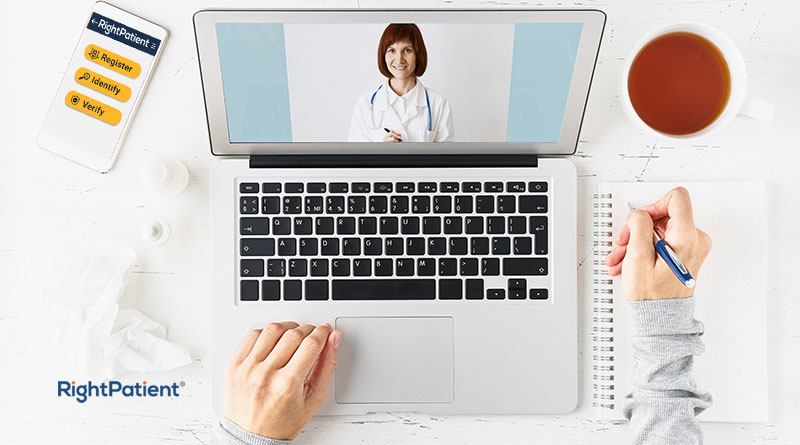
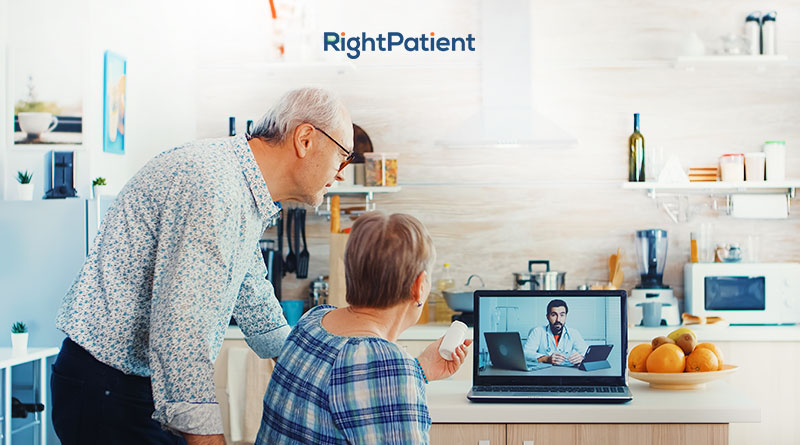
Telemedicine: Many online platforms such as apps and websites provide real-time consultations with the doctor at the comfort of their home with no physical contact. Creative forums are changing the manner in which patients communicate with medical services experts. From looking through a specialist to booking a virtual arrangement and speaking with specialists by video or voice call, telemedicine empowers individuals to access wellbeing experts on request. Booking appointments and conducting payments are hassle-free. Usually, in every telemedicine forum, an extensive profile of the doctor is mentioned, along with a consultation fee. The forums or applications provide absolute transparency in their functioning. 

However, many experts fear that the issues with regular in-patient visits might occur during online consultations as well – especially healthcare fraud. Fortunately, RightPatient prevents medical identity theft cases during telehealth visits and in-person visits as well. The touchless biometric patient identification has a vast amount of experience in preventing fraudsters from assuming patients’ identities, making it ideal for telehealth sessions.

Big Data Usage: Medical care is one of the promising enterprises where big data can work on preventable illnesses, improve personal satisfaction, decrease therapy expenses, and estimate waves pandemics. A massive amount of data is used to plan strategies in extensive healthcare sectors. Big data helps professionals to comprehend trends and make predictions for the betterment of society. Data is also used to interpret patterns that can serve as valuable insights to provide better care to patients, for example, administration, staffing, scheduling appointments in a clinic or any online forum. Clinical Decision Support Software is used with the help of big data to analyze medical data and provide health practitioners with appropriate resources to make informed decisions. Artificial intelligence (AI)-enabled medical device data or wearable device data can easily be tracked by the health care professional, and this assists in real-time alerting. Human errors are also omitted with the use of technology. 

Virtual Reality: Augmented Reality is an innovation that uses digitally produced reproduction of a 3-D picture or climate that permits an individual to hear, see and collaborate by using unique gear, for instance, headsets. The innovation establishes a reenacted environment where clients can communicate and interact. In contrast to customary UIs, VR takes clients inside a virtual encounter rather than just showing a screen. The Healthcare business is embracing augmented reality to convey better consideration to patients. It is used in pain reduction therapies and making physical therapies less stressful and more interactive. Virtual reality can also create stimulation in which doctors, caregivers, or any health care professionals can better understand a patient’s experiences. 

Artificial Intelligence: Artificial intelligence is widely used to implement error-free diagnoses and produce pathological images with utmost clarity. Artificial intelligence is under discussion for being used in drug creation and vaccine generation. Health care clinics can also use AI systems for storing records. From discovering links between hereditary/genetic codes to guiding a medical procedure by robots, studying persistent infections, etc., AI is rethinking and renewing current medical services through machines that can appreciate, foresee, learn and act.

Internet of Things: The Internet of things is a network of physical objects (things) that are embedded with sensors, software, and other technologies to connect and exchange data with other devices and systems over the Internet. A collection of fitness bands, wearable devices, and more, help health care professionals, hospital administration, patients, and customers to develop a well-connected information bubble where patient-centric data is analyzed and used to enhance understanding and deliver first-class care. These devices include hygiene monitoring devices, location of equipment in real-time, updates on vaccination slots, infection vulnerability, specific health condition profile, etc. Even health insurance companies can use the devices to check fraudulent claims and verify reports. 

RightPatient-boosts-the-advantages-of-telemedicine-in-healthcare

To Enjoy Advantages of Telemedicine in Healthcare, Providers Must Protect Patients Online

RightPatient-boosts-the-advantages-of-telemedicine-in-healthcare

Telemedicine, many times used interchangeably with the word telehealth, has grown tremendously during last year because of COVID-19. Whilst it’s been available for a long time (decades, really), its future was uncertain before now. Healthcare experts mainly debated about the possible advantages of telemedicine in healthcare, while patients were wary regarding online doctor appointments.

Still, because of COVID-19, practically everything is different, and desperate times required drastic measures. Rules enveloping virtual visits got relaxed, so, more providers and their patients got exposed to this new phenomenon called telehealth. 

RightPatient-boosts-the-advantages-of-telemedicine-in-healthcare

Online appointments currently have numerous supporters 

The user base for telehealth has soared, with numerous healthcare professionals and their patients supporting it and saying they want it to be a permanent part of healthcare after the emergency is over. It was also extremely helpful and convenient throughout the pandemic. That being said, let’s look closer and examine the advantages of telemedicine in healthcare plus the way providers can safeguard their patients throughout these appointments. 

A few advantages of telemedicine in healthcare

Telemedicine is cost-efficient for all

The universal understanding regarding virtual healthcare is that it is less expensive than in-person visits. Plus, it saves time, no need to travel to use it, etc. Whilst that’s correct, online healthcare is also less expensive for healthcare providers. Think about it – for most online appointments, all the provider requires is an online platform, the proper devices to connect with their patients, plus a steady, secure online connection. These types of appointments get rid of a lot of the costs linked with traditional healthcare – i.e. registration desks, using paper products, fewer staff members required, etc.

The AHA (American Hospital Association) even agrees with the aforementioned – online healthcare saved over 11% of costs for many hospitals. 

Online appointments provide access to many more patients 

Even the toughest critics can’t refute the fact that telehealth offers top-notch care to many more patients than in-person appointments. Consider how it worked before COVID-19 – the majority of patients in rural areas were unable to get to a suitable hospital for several reasons.

RightPatient-protects-patients-during-virtual-visits

An example of one of the top advantages of telemedicine in healthcare is that one can use it from any place – so it’s quite convenient for those who live in rural areas. Whilst a tiny amount of providers offered online appointments prior to the pandemic for rural patients, the pandemic showed how helpful telehealth can be for routine patients too. Online appointments assisted in providing top-notch care to a huge number of patients who had various problems – a lot still use this and the experts want it to become a permanent option for healthcare. 

Telemedicine fits more people’s needs

Preventive medicine, improved quality, superior scheduling experiences – online appointments can meet all those things and even more! 

Numerous experts say because patients are more involved with telehealth appointments than with in-person appointments, the former could encourage more preventive medicine usage. Patients, likewise, feel that they are getting more personalized care with telehealth appointments since they report during in-person appointments that their physicians do not even look at them – only at their computer screens. These cases, along with other factors, might cause a surge of usage that helps to improve healthcare outcomes in the future. 

Online appointments offer a superior quality of care for a lot of patients, particularly rural ones, as described earlier. With online appointments, patients can pick which provider they want, and they can even be miles away and still get one that meets their precise healthcare needs. 

Finally, with online appointments, patients can merely pick the timeframe that works best for them, so, scheduling is easy. Whilst that also can happen with regular in-person appointments, the patient now doesn’t have to wait hours or longer to see their doctor, all they have to do is log in at their appointment time and see their doctor.

Still, whilst telehealth has a huge possibility, it remains pretty new, so several challenges have to be solved – one is protecting patient information online. 

Providers have to safeguard their patients online to enjoy the advantages of telemedicine

Patient records and data are very sensitive information, which is one of the dominant reasons most data breaches occur in the healthcare industry. Hackers can sell a medical record for thousands of dollars on the black market, and the scammers then buy them and use them to get healthcare and the actual patient is charged with the bills. While this normally happens in traditional in-person appointments, a lot of experts believe it can also occur in online appointments, so, the healthcare providers have to safeguard their patients’ information while they are in an online appointment too. 

Luckily, RightPatient comes with lots of great experience in protecting patient data as well as avoiding medical identity theft in real-time.

One of the top touchless patient ID platforms utilized by many healthcare providers, RightPatient detects patients via facial recognition and averts scammers from trying to pass as the real patient during the registration process and beyond.

RightPatient can be used during telehealth appointments – so it is perfect for protecting your patient’s information as well as stopping identity theft during virtual visits. Patients only need to take a picture of themselves and a picture ID like their driver’s license – RightPatient takes it from there. 

Is your facility ready to safeguard your patients’ info and stop medical identity theft in real-time? 

Improving-Patient-Outcomes-with-RightPatient

Improving Patient Outcomes Has to Be the Main Concern since In-Person Visits Are Back

Improving-Patient-Outcomes-with-RightPatient

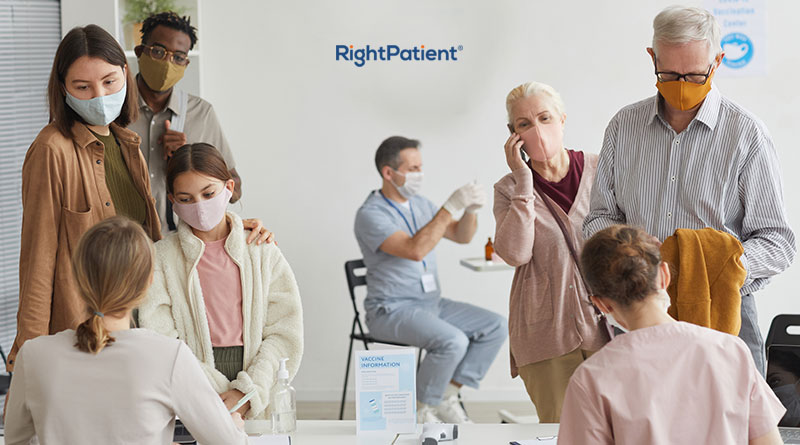
Luckily, it looks like the COVID-19 pandemic may be ending at last. Whilst COVID-19 cases 19 are still occurring, the overall rate has slowed down, thanks to over 326 million Americans getting vaccinated. As restrictions that used to be in place since the beginning of the pandemic start to ease in most states, businesses are gradually opening back up. However, healthcare, which did not close is finally receiving great news – in-person appointments, as well as margins, are going up gradually. Rising patient appointments are not sufficient for caregivers – guaranteeing quality and safety in healthcare facilities is also necessary for improving patient outcomes. 

Improving-Patient-Outcomes-with-RightPatient

Having said that, let’s look closer at the present condition concerning patient volumes as well as margins, some statistics regarding them, and the reason hospitals must find solutions that can assist them in lowering significant costs, eliminating current issues, and surviving this difficult environment. 

Healthcare providers may, at last, be getting a break

After several months of financial losses, along with suffering caused by COVID-19, healthcare providers, finally are opening facilities for in-person visits. Whilst the reaction is sluggish, it is rising steadily regarding patient volumes along with margins, based on research by KaufmanHall – let’s look closer at a few of the stats.

These stats reveal that whilst patient volumes went up, particularly outpatient visits, providers are still ending up with extremely low margins. In May, the median hospital operating margin index was only 2.6 percent, and if you include the federal CARES funding, that was still only 3.5 percent. 

Nevertheless, the operating margin climbed 95.2 percent YTD (year-to-date) when compared to Jan to May 2021, and operating EBITDA (Earnings Before Interest, Taxes, Depreciation, and Amortization) margin improved close to double – 102.4 percent YTD in May, the latter is excluding the CARES aid. 

Conversely, when in comparison to pre-COVID-19 periods (Jan to May 2019), the operating margin was down to 20.5 percent YTD without CARES.

Therefore, what do all these numbers really show regarding healthcare providers? 

Actually, it is very simple – when health systems and hospitals were able to open up, and when the restrictions eased, that led to rises in their margins in comparison to the shutdown timeframes. Though the figures were lower in comparison to the pre-pandemic time due to patient numbers being quite high then, a few cases were nearer to pre-pandemic levels, said that same report.

RightPatient-ensurez-positive-patient-outcomes

Based on these numbers, it is very clear healthcare is improving its numbers, yet hospitals and health systems can’t stop worrying too soon – they must work towards improving patient outcomes.

Providers must deliver their patients a safer atmosphere, carry out telehealth services for people who don’t want to do in-person appointments and decrease issues that may harm patient care. Overall, they must make sure they’re striving to improve healthcare outcomes.

Improving patient outcomes is necessary to mitigate losses

Even while COVID-19 was rampaging, there were a lot of times when it was obvious hospitals needed to work hard towards improving patient outcomes. Incorrect patient information led to repeated lab tests, inappropriate data sharing, sending results to incorrect patients, etc. Regrettably, that is not new, since healthcare providers have always faced these issues, with one of the dominant causes being the wrong identification of patients. 

Misidentifying patients impedes patient outcomes

It is very simple – whenever patients get misidentified, they’re assigned an incorrect EHR, and their treatment process is completely wrong from the start. Patients may get asked to do an unneeded or repetitive lab test, and then will most certainly receive incorrect treatment – all of this gets recorded in an incorrect EHR. This all causes detrimental healthcare outcomes, as well as hospital readmissions, plus in some cases, people even die. 

Healthcare providers were facing litigation costs already as well as loss of income because of such cases. However, the COVID-19 issue, along with these losses, might be sufficient to make them permanently close their doors. They simply can’t afford to make medical mistakes and jeopardize patient safety.

Luckily, they do not have to – RightPatient can help with that. 

RightPatient improves patient outcomes

RightPatient identifies patients correctly from the beginning, and because it is touchless, it offers a hygienic and safe experience for all. Our biometric patient ID platform is used by many reputed healthcare providers like Terrebonne General Medical Center as well as Grady Health, and it protects millions of patients from adverse effects. 

Due to COVID-19, hospitals have to do what they can to lower their losses. RightPatient can do this since it improves healthcare outcomes, as well as averts misidentification problems, and improves the facility’s bottom line.

RightPatient-Identity-Management-in-Healthcare-Facilities

How Identity Management in Healthcare Helps With the Interoperability & Patient Access Rule

RightPatient-Identity-Management-in-Healthcare-Facilities

With COVID-19, telehealth, data breaches, and other challenges, healthcare providers have had their hands full. Because COVID-19 is a national health crisis, CMS pushed back compliance with its Interoperability and Patient Access rule until July 1, 2021, though it’s been effective since the start of 2021. Nevertheless, with mass vaccinations across the country, as well as hospitals slowly opening, CMS (Centers for Medicare and Medicaid Services) will require healthcare providers to comply from July 1. So, let’s examine a few of these requirements, the way it mandates correct information of patients, and the way proper identity management in healthcare facilities can ensure patient data integrity.

RightPatient-Identity-Management-in-Healthcare-Facilities

The reason CMS is gambling hugely on this rule

Like all the rules out there, the CMS Interoperability and Patient Access rule is comprehensive – the majority of it requires healthcare facilities to remove any restrictions which normally prevent patient information exchanges all across the healthcare gamut. 

Under this rule, CMS plans to improve interoperability along with patient access – assisting the providers as well as patients to ensure proper healthcare outcomes.

Concerning interoperability, CMS wants the rule to aid in assisting healthcare providers to share and access patient information securely and effectively. That will assist in improving collaboration and improving healthcare outcomes as it will help make informed decisions more accurately. 

On the other hand, patients, when they’ll get access to their health information, will be more involved with care decisions, increasing patient engagement. 

Improving patient data access across the care continuum has several benefits such as improving healthcare outcomes, cutting costs, reducing redundant lab tests, reducing inefficiencies, and boosting collaboration among the caregivers – improving healthcare results as well. Though, all that will happen only if patient data integrity is rigorously maintained, and this requires immaculate identity management in healthcare facilities.

Healthcare providers must support e-notifications

As a segment of this rule, CMS necessitates healthcare givers (which utilize EHR systems) like critical access, acute care facilities, and psychiatric hospitals must deliver e-notifications to the patient’s other caregivers like primary care doctors, post-acute providers and suppliers, amongst other entities during ADT (admission, discharge, or transfer) events – appropriate for ED as well as inpatient admissions. This data has to consist of the patient’s basic information, the name of the sending organization, and if needed, the diagnosis of the patient.

Boost-CMS-Compliance-with-RightPatient

But how does identity management in healthcare facilities play a part here? 

So, patient identification in the majority of hospitals as well as health systems is yet a substantial dilemma for several causes. The outcomes can be distressing – patient misidentification can lead to making errors with medical records, mixing up patients, medical identity theft, damaging healthcare results, getting readmitted to a hospital or it could end up killing someone!

Think about it. What if an incorrect alert gets delivered to the incorrect caregiver because of a patient identification error – it would end up a disaster for everyone, if unnoticed. Not just would it impede the outcome for the patient, it would additionally compromise CMS compliance – affecting reimbursements, something that is very important for the majority of healthcare suppliers. 

Whilst incorrect patient identification is quite common in the majority of healthcare facilities, reliable caregivers are utilizing RightPatient to guarantee immaculate identity management in healthcare facilities. 

The Way RightPatient guarantees accurate identity management in healthcare facilities

RightPatient is the leading patient ID platform that identifies patients accurately at any touchpoint in the care continuum. By accurately identifying patient records right from registration and beyond, RightPatient prevents false alerts and ensures that the appropriate healthcare organization receives e-notifications. Since RightPatient also ensures patient data integrity by protecting patient information, it also leads to lower readmissions, boosting CMS compliance down the line. RightPatient also enhances patient safety, prevents medical errors, red-flags fraudsters in real-time – improving the bottom line in the process. 

How are YOU planning to ensure CMS compliance at your healthcare facility? 

Digitized Healthcare: The Benefits of Digital Health

The prospect of convenience is not only available to luxury products and more and the ability to buy groceries from the comfort of your home. The digitized age is something that permeates every aspect of society, especially when it comes to healthcare. In a world where convenience is the king, it only makes sense to add proper healthcare to the mix.

That said, some people are still confused regarding how digital healthcare benefits everyone. Such is understandable, as more and more people are adopting a more introverted lifestyle, it’s challenging to tell whether such a move is beneficial to healthcare. Here are just some of the benefits of the shift to digital health.

Getting the medical advice you need as soon as possible

The Internet is full of home remedies for those who are too busy (or too afraid) to get medical attention for a minor condition. There is no end to remedies that may or may not work given the situation. Digital health turns things around by making it that much easier to contact medical professionals and get their advice.

If you’re looking for the best fungal nail infection treatment but are feeling somewhat embarrassed about the condition, there’s no need to worry about going out — even if there’s nothing to be ashamed of. You can get the advice you need for treatment without worry.

A push for prevention rather than reacting to issues

Considering how easy it is to contact medical professionals, thanks to the rise of digital healthcare, more and more people are getting used to the idea of asking about potential issues instead of only heading to the hospital when it’s no longer manageable. There’s no need to run to the local clinic as you can contact your local physician online and get their advice. You no longer have to worry about waiting in line at the clinic and catching someone else’s sickness in the process.

Individuals with an open line of communication with their physicians are more eager to talk about minor issues instead of always waiting for something severe to show up. This opens up the opportunity for a preventative lifestyle.

Ensuring proper healthcare outcomes is a must

However, healthcare providers need to ensure that they are providing accurate treatment to their patients in order to improve patient outcomes – for both in-person visits and virtual ones. Issues such as patient identification errors are far too common and can lead to medical record mix-ups, mistreatments, hospital readmissions, or worse.

Fortunately, a touchless biometric patient identification platform like RightPatient can eliminate these issues, identify patients accurately at any touchpoint, and even prevent medical identity theft in real-time – leading to proper treatments and improved healthcare outcomes. 

Easier on everyone overall

With so many people who need serious medical attention these days, it’s never wrong to leave the hospital rooms open for those who need them. The fewer people there are crowding up a hospital, the better it is for the patients and the doctors, nurses, and other medical staff. It’s something that benefits everyone, and you can breathe a little easier knowing that you’ll get what you need without having to risk going out.

When it comes to the future of digital health, things are undoubtedly looking much brighter. It’s something that will only continue to improve over time, and more breakthroughs in convenience will help make it easier for medical professionals to handle patients. Getting something as crucial as healthcare from the comfort of your home is the goal.

Preventing-Healthcare-Identity-Theft-RightPatient

Curbing Healthcare Identity Theft During Telehealth as it Gains the Biden Administration’s Support

Preventing-Healthcare-Identity-Theft-RightPatient

So, this topic shouldn’t surprise you, but many folks are happy about the announcement. You can’t help but have seen that the use of telehealth soared after the COVID-19 pandemic occurred in the United States along with the easing of any of the surrounding restrictions. Telehealth is here to stay now, but there are concerns regarding healthcare identity theft. Ok, its usage has fallen slightly currently, although there is an ever-expanding amount of healthcare specialists, patients, and providers who wish to institute these virtual visits into a permanent healthcare option. Luckily, that appears to be a good possibility since the Biden administration supports this, so long as it meets precise conditions. Nevertheless, there are additional problems to solve – the most important one is medical identity theft occurring during a session.

Therefore, let’s look closer at the role of telehealth in healthcare, the reason lots of folks now support it, the way the Biden administration supports it, as well as the way RightPatient can avert medical ID theft cases during a remote session. 

RightPatient-prevents-healthcare-ID-theft

Telehealth is getting more popular amongst providers and users 

Telehealth has existed for many years, however, it only revealed its full potential when the COVID-19 pandemic occurred. Since people weren’t able to see their providers in person and many elective procedures got postponed indefinitely, healthcare givers, as well as the government, rushed to provide another method of treating non-critical patients. Telehealth proved to be the answer.

Since another method of treating patients was urgently needed, telehealth got elected, and many of its previous restrictions got lessened. Telehealth got very popular amongst caregivers and patients. A lot of younger patients even decided they prefer telehealth sessions and will use them after the COVID-19 pandemic ends.

Though, a lot are concerned that whenever the pandemic ends, the restrictions on telehealth will return and it will again be hard to use.

The future of Telehealth seems great – Yet there’s a need for the correct framework

Luckily, that is not going to occur, as the Biden administration has said it is going to support expanded telehealth access when the COVID-19 problem ends. Because it assisted in providing virtual care as well as has also ensured patients were safe during this unprecedented timeframe, it has earned a substantial amount of backers who profited from telehealth, so wish to carry it on.

Congress is looking at the present scenario, contemplating which of the regulations on virtual care ought to change whenever the Covid emergency is done. Currently, there are about forty-three bills that have provisions regarding telehealth that have been generated since the start of the pandemic, according to the Alliance for Connected Care.

Preventing-Healthcare-Identity-Theft-RightPatient

Still, HHS Secretary, Mr. Becerra, asserted that everyone must be able to access telehealth, and care quality must be ensured. The Biden administration aims to ensure U.S. citizens get top-notch healthcare through virtual appointments – he said they do not wish folks to get billed for items that do not improve the services. 

Healthcare identity theft can happen during a virtual visit as well

So, whilst telehealth’s future seems bright, a few issues must be ironed out. The healthcare providers additionally have to work to ensure patients get the top care and stay safe from medical identity theft.

One of the concerns some have overlooked regarding telehealth visits is medical identity theft cases that may happen in a session. Exactly like the way healthcare frauds as well as healthcare identity theft occurs in an in-person appointment, experts predict these will happen in virtual visits too. Healthcare suppliers must make sure that is averted – something they can accomplish via better identification of patients during the telehealth visits. Thankfully, RightPatient assists with doing that, and even more! 

RightPatient averts healthcare identity theft in real-time

For years RightPatient has prevented medical ID theft as well as healthcare fraud, thus, safeguarding millions of patient records throughout several top hospitals and many health systems. RightPatient leads the way in touchless biometric patient ID platforms which makes sure patients get identified correctly throughout the care field. Consequently, when a bad actor attempts to pass themselves off as a patient, RightPatient red flags them, avoiding medical identity theft instantly, even during virtual visits. 

RightPatient does not just assist in preventing healthcare identity theft, but it additionally safeguards patient information, ensures patient safety, and decreases litigation costs related to identity theft incidents.

Since the Biden administration backs telehealth, the future of using it looks great. Yet, caregivers must avert problems connecting to virtual appointments, and serious issues such as medical ID theft can be avoided with RightPatient.

What is the way you prevent these cases of identity theft in your medical facility?

Reduce-denied-claim-with-accurate-patient-identification

Claim Denials are Damaging More Than 30 Percent of Hospitals – Are You Stopping Them?

Reduce-denied-claim-with-accurate-patient-identification

Claim denials have always been a problem – it is a fact that they have occurred in all kinds of health issues for many years. Nevertheless, it got pushed to the back of the line due to the COVID-19 as well as problems with IT in the healthcare field, efforts to get people vaccinated, etc.

Sadly, claim denials have gone up – they are happening much more often now. In fact, it’s reported they have gone up 20 percent in the last 5 years! That, along with other gloomy statistics, was announced in a recent study from Harmony Healthcare. With that out of the way, it’s time to look more closely at this situation and how revenue cycle management in healthcare operations can be improved by identifying patients correctly.

Reduce-claim-denials-with-RightPatient

A short update on claim denials

Claim denials, additionally called denied claims, are simply claims normally sent in by a healthcare supplier to the authorized payer, except for particular reasons, they were deemed “unpayable.” That occurs because of issues with coding and billing, mixing up medical records, missing filing deadlines, inadequate medical needs, or additional pertinent explanations.

So, here is what’s going on currently regarding denied claims.

Several disturbing statistics concerning denied claims

The COVID-19 pandemic triggered nearly everything to become worse, including denied claims. In fact, the earlier stated study showed a massive one-third of hospitals stated their denial rates were 10% or over. The study included more than 130 healthcare providers all over the United States and this rate of denial ranged between 6 and 13%. The accepted “danger zone” for denied claims is touted as 10%. 

This study likewise explained why hospital administrators think denied claims happen. Thirty-two percent said it was caused due to coding errors while twenty percent said the reason was front-end concerns. Nonetheless, both these issues may be based on mix-ups with medical records, which comes from patients being misidentified – we will speak more on that topic later. 

Whilst these revealed denied claim frequency, what’re the real issues denied claims cause?

The massive effect of denied claims

Denied claims are exceedingly expensive if faced – and may amount to around $4.9 million for the healthcare supplier. No matter how big or small a provider is, that is a huge portion of cash, and could even cause some hospitals to close.

Reduce-denied-claim-with-accurate-patient-identification

Understand, denied claims are not merely expensive on their own, FTEs or full-time equivalents must do their best to fix any coding errors so the successive claims won’t be refused or refuted. This means the FTEs aren’t doing their normal job, which slows down other work and causes the whole process to be ineffective. Altogether, these facts cause a major blow to the bottom line of these hospitals. 

As earlier stated, numerous denied claims are generated because of issues at the front end as well as coding mistakes, which happen a lot due to misidentifying patients.

The way denied claims and misidentifying patients are linked

This is very easy to figure out – it begins at the registration desk. The incorrect EHR gets noted with the patient, so, incorrect info is placed in the medical record. That may occur because of an error like an overlay or duplicate. If no one discovers the error before the treatment is concluded, the patient’s provider ends up sending the wrong claim info to the authorized payer. 

As the claim is being processed, the authorized payer closely inspects it and sees there are errors, thus the claim gets denied. Misidentifying patients causes coding errors and front-end problems. These issues can be averted if the patient is identified properly. 

RightPatient decreases claim denials, and goes beyond! 

RightPatient helps many healthcare facilities protect millions of their patients’ records. It’s the industry’s top touchless biometric patient identification platform. It works by identifying patients via facial recognition, thus averting overlays, duplicates, and mix-ups with medical records from the beginning. Therefore, this averts the claim from being denied, thus saving hospitals lots of money. It just may be the answer you need to reducing denied claims.

The benefits of RightPatient do not end there. Besides reducing denied claims, RightPatient improves patient safety, enhances healthcare outcomes, and ensures positive patient outcomes. 

Does your healthcare facility prevent denied claims efficiently?

How-to-Protect-Patient-Data-with-RightPatient

How to Protect Patient Data at Your Hospital

How-to-Protect-Patient-Data-with-RightPatient

The U.S. healthcare system has never had a shortage of problems – it has always dealt with several issues simultaneously. The exorbitant prices, the lack of price transparency, medical identity theft cases, lack of patient identification in hospitals, preventable medical errors, and archaic laws are just some issues that plague healthcare. Healthcare data breaches have unfortunately been growing at an exponential rate. With no signs of them stopping anytime soon, it becomes crucial that healthcare providers, professionals, and everyone involved with patient information be vigilant regarding protecting the data. With that out of the way, let’s take a look at how to protect patient data within hospitals and health systems with 5 practices. 

How-to-Protect-Patient-Data-with-RightPatient

Why protecting patient data is becoming so important

Those who are familiar with the U.S. healthcare system know that data breaches are occurring left, right, and center. These data breaches have several grave consequences such as patient information being stolen, being sold in the black market, being used for medical identity theft, patient data integrity failure, litigation costs, loss of goodwill – the list just goes on. And all of this might occur simply because a healthcare staff member opened an external email without being wary of the possible risks. 

As a result, healthcare professionals and facilities need to be on guard at all times against such cyberattacks so that they don’t lead to data breaches, disruption of operations, or the most common endgame – medical identity theft.

With the “why” out of the way, let’s dive into the “how”, to be more precise, how to protect patient data.

How to protect patient data with 5 practices

Work on HIPAA compliance

HIPAA, or the Health Insurance Portability and Accountability Act, mandates that healthcare providers along with anyone else dealing with patient information protect patient information effectively at all times. It provides many rules and regulations that cover a lot of aspects, and if applicable organizations aren’t ensuring compliance, then they’ll be heavily penalized. 

However, working on HIPAA compliance just for the sake of avoiding penalties won’t help. HIPAA provides several guidelines on how to protect patient data at rest and during transmission. If these guidelines are taken as starting points, not only will HIPAA compliance be ensured, but patient data will also be protected – reducing chances of data breaches. There are even solutions such as HIPAA compliance software that can also aid in compliance – helping identify security gaps and reducing the administrative burden in the process.

Protecting-patient-data-RightPatient

Improve user authentication practices

Patient data can be breached from anywhere, and with many healthcare staff working remotely, the risks are just increasing. Putting safeguards in place that enforce limited access to everyone that deals with patient information can slow down breaches. This way, even if the hacker has access to the employee’s account, they will only have restricted access to sensitive information.

Always encrypt sensitive information 

Encrypting sensitive information makes it useless for hackers – it makes the information unreadable by outsiders or unauthorized users. Enforce employees’ use of encryption whenever transmitting sensitive patient information.

Provide training on patient data security whenever required

Too many training sessions on patient information security can be ineffective and counterproductive, and too few can reduce its importance. Instead, find the sweet spot for your organization to provide training sessions regarding patient information security.

For instance, whenever there’s news about another data breach that can provide meaningful information, conducting a training session and disseminating the information to the employees can help – learning from others’ mistakes might just be the thing that will prevent a data breach. Also, regularly provide updates on how to handle external emails and requests – the safest bet is treating each email as a suspicious one.

Implement solutions that protect patient data

Several constraints prohibit healthcare providers from fully being protected against data breaches – cybersecurity budgets and hackers coming up with innovative ways to attack being the most common ones. However, while data breaches might seem inevitable for many, patient data can be protected, but how?

RightPatient is the answer.

It is a touchless biometric patient identification platform that prevents medical identity theft in real-time. By ensuring accurate patient identification, RightPatient successfully red-flags fraudsters during the registration process. This prevents fraudsters from tampering with the EHRs, ensuring patient data integrity, and protecting patient data in the process. 

How are you protecting patient data at your healthcare facility?

RightPatient-helps-improve-patient-outcomes-patient-ID

4 Promising Health IT Practices That Improve Patient Outcomes

RightPatient-helps-improve-patient-outcomes-patient-ID

The pandemic, when it hit the U.S., spurred its healthcare providers to adapt to the rapidly changing landscape it forced on everyone. Hospitals and health systems had to search, come up with, and implement drastically different practices that many experts thought weren’t possible. Just look at telehealth – its future was quite uncertain. However, during the pandemic, both its popularity and usage skyrocketed as hospitals and health systems relied on it to provide care to non-critical patients without risking the latter’s safety. That’s just one example – there are similar promising health IT practices that are trending and set to grow in the future and improve patient outcomes in the process. Let’s take a detailed look at some of the more popular health IT practices that can improve quality and safety in healthcare facilities.

Practices-That-Improve-Patient-Outcomes-RightPatient

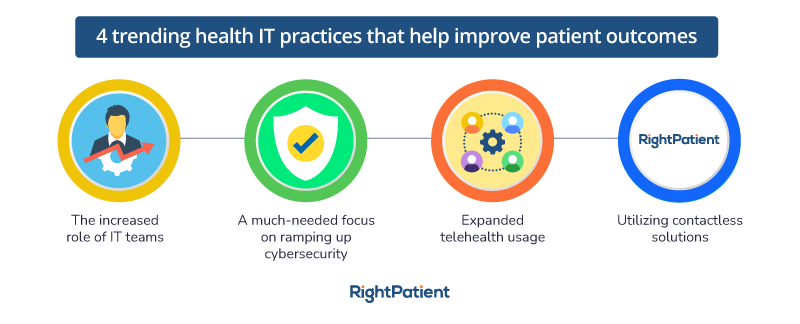
4 trending health IT practices that help improve patient outcomes

The increased role of IT teams

As the pandemic forced healthcare providers to switch from in-person visits to virtual ones, implement practices to aid remote work, and ensure that data management is accurate, it was the IT teams’ responsibility to ensure that everything went smoothly. Moreover, cybersecurity attacks were higher than ever since providers already had their hands full.

CIOs and their IT teams not only had their hands full during the pandemic but they also had added responsibilities and expanded roles to play. As COVID-19 cases are decreasing, healthcare providers are aiming for a different approach to providing better and safer healthcare services to improve patient outcomes in the process. As a result, CIOs and relevant IT personnel are in huge demand.

Talking about cybersecurity, let’s move on to the next point.

A much-needed focus on ramping up cybersecurity

As previously mentioned, hackers had upped their game last year. While many hackers had promised not to attack healthcare due to the unprecedented crisis, not all hackers shared the same sentiments. Unfortunately, many of them did attack while healthcare providers had their hands full with COVID-19 cases. This not only led to them stealing patient information and selling it to fraudsters on the dark web, but many incidents also disrupted healthcare operations. In fact, the IT systems of many hospitals were rendered unresponsive or slow as the information within the systems was locked and not available for use.

So, what did healthcare providers do to mitigate the issues? 

RightPatient-helps-improve-patient-outcomes-patient-ID

Well, many of the hospitals saw what their contemporaries were going through and opted for better cybersecurity practices. While getting a new cybersecurity solution includes several impediments, hospitals opted for simpler solutions. For instance, many had cut off access to external emails whereas others focused on stricter screening of external emails. 

However, while data breaches seem inevitable and as most caregivers cannot upgrade their cybersecurity solutions due to various reasons, they CAN prevent the endgame of most data breaches – medical identity theft. For instance, RightPatient prevents medical identity theft in real-time by identifying fraudsters during the registration process. The patient identification platform can prevent fraudsters from accessing services even if the data is breached, reducing litigation costs. 

With cybersecurity attacks at an all-time high, it looks like healthcare providers are thankfully changing their approach and are working to rectify security gaps by providing better training to employees regarding cybersecurity practices, going for a proactive approach rather than a reactive one, and by hiring competent security professionals – helping enhance patient outcomes in the process. 

Expanded telehealth usage

Is the rapid growth of telehealth even surprising at this point? 

Before the pandemic, telehealth didn’t have a bright future. Apparently, it has been around for a long time, but experts were busy talking about its demerits, patients were wary of it, and there was a lack of consistent interest. As a result, telehealth was collecting dust, figuratively speaking. However, the pandemic changed everything – it showed how useful telehealth was. As regulations were relaxed around telehealth, it helped reach more patients and provide care to the non-critical ones, rapidly expanding its userbase.

Telehealth was one of the most trending health IT topics last year, and it still is reigning, as many actually prefer telehealth over in-person visits now and have said they will continue to use it even after the public health emergency is over.

RightPatient-reduces-patient-mix-ups

Many healthcare providers, as a result, are going for a hybrid approach. They are planning to offer both in-person and virtual care, providing the best of both worlds to their patients. Not only will this help increase patient satisfaction, but it will also speed up processes and keep the patient volume down during in-person visits, something that’s quite necessary as the pandemic is not over yet, helping improve patient outcomes.

Utilizing contactless solutions can improve patient outcomes

There’s always been growing interest in contactless solutions for any given industry, but the pandemic has pushed it to the forefront – virtually everyone knows the risks of physical contact now. Therefore, many are developing contactless solutions for healthcare facilities that can reduce hospital-acquired infections and improve patient safety. However, did you know that such a solution has been in use for several years in many hospitals and health systems?

RightPatient, our touchless biometric patient identification platform, has been serving several healthcare providers for years, and it only requires patients to look at the camera. The platform does the rest and provides the accurate EHR to the registrar – improving patient safety, preventing duplicates and overlays, and reducing medical errors in the process. As previously mentioned, it also helps prevent medical ID theft in real-time by red-flagging fraudsters during the registration process.

That was just an example of how a touchless solution has been transforming patient safety in several ways – there are more solutions on the way that can improve patient outcomes and boost the bottom lines in the process.

Identify-patients-correctly-with-RightPatient

Hospitals that Identify Patients Correctly Enjoy Several Benefits

Identify-patients-correctly-with-RightPatient

We typically talk about grave situations – stories of patient mix-ups, healthcare data breaches, medical identity theft cases, denied claims, and more. However, this time, we will look at the more positive aspects – the additional benefits that healthcare providers who identify patients correctly enjoy. These range from preventing unwanted patient safety incidents within the premises to enhancing patient outcomes.

However, did you know that our touchless biometric patient identification platform can provide far more benefits? More on that later – let’s dive deep into the topmost benefits of ensuring proper patient identification in hospitals.

Identify-patients-correctly-with-RightPatient

Why hospitals must identify patients correctly 

Well, in order to understand that, first, one must understand why patient identification is such a big deal. For starters, patient identification is quite problematic in the U.S. healthcare system for several reasons. Since no effective standardized patient identifier has ever been implemented in the U.S., healthcare providers use different methods, solutions, or strategies to verify their patients, and most of them suffer from patient identification errors and the consequences that follow.

Fortunately, responsible healthcare providers don’t have to suffer from these issues because they have made patient safety their number one priority. These providers are utilizing effective solutions like RightPatient to eliminate errors by helping them identify patients correctly. 

So, what are the benefits of accurately identifying patients? 

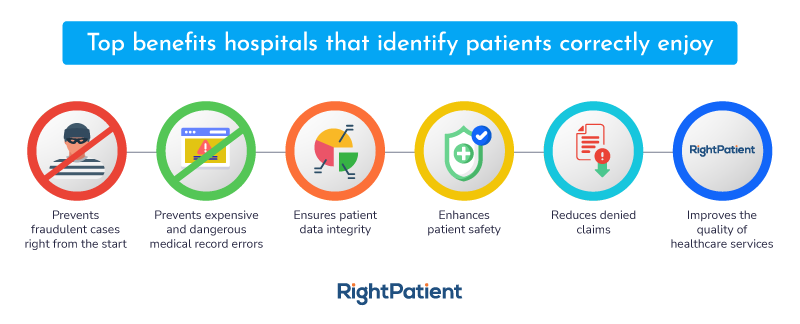
Top benefits enjoyed by hospitals that identify patients correctly

Prevents fraudulent cases right from the start

Although wrong patient identification and medical identity theft are both crucial issues of the U.S. healthcare system, many don’t know that preventing the former can also prevent the latter.

It’s quite simple – since there’s no standardized and rigid way to identify patients accurately in most hospitals, fraudsters aren’t identified right off the bat. In fact, many medical identity theft cases remain undetected until the patient receives a shocking bill or notices anomalies with their EHRs. 

Top-benefits-of-accurate-patient-identification-RightPatient

Hospitals that identify patients correctly can prevent medical identity theft in real-time. When the fraudster comes in, proper patient identification will help officials flag them and catch them red-handed.

This is also applicable even in the case of data breaches. Even if healthcare data is breached, accurate identification will lead to fraudsters being caught in the act, preventing medical identity theft and reducing substantial expenses of rectifying medical record errors and litigation costs down the line.

Prevents expensive and dangerous medical record errors

One of the reasons why patient identification is such a mess has already been mentioned – the lack of an effective patient identifier. However, another reason is the overwhelming medical record errors that already exist in the systems. Duplicate medical records and overlays, namely, have been causing patient mix-ups, leading to the wrong patients getting transplants, incorrect treatments, and more. These duplicate medical record errors typically are created during the registration process, and both their creation and use can be eliminated if patients are identified accurately.

See, if the patient is accurately identified right from the start and the appropriate medical record is used throughout the patient’s medical care history, then duplicates and overlays can be avoided – eliminating the issues caused by them for both caregivers and patients, preserving authentic patient data. This leads to another benefit of proper patient identification.

Ensures patient data integrity

As mentioned, medical record errors, and patient misidentification in general, lead to patient data corruption. Unless patient data integrity is maintained, the information is useless for healthcare providers and quite dangerous for patients. Imagine if a patient has cancer but gets treated for heart disease – it would be catastrophic! 

RightPatient-prevents-patient-mix-ups-during-registration

Patient data integrity failures lead to the wrong treatment plans, detrimental healthcare outcomes, readmissions, and even deaths. However, accurate patient identification ensures that the correct information is being recorded in the appropriate medical records – ensuring patient data integrity.

Enhances patient safety

By now, it should be clear that positive patient identification prevents a plethora of issues such as duplicates, patient data corruption, medical identity theft, among other things. However, identifying patients accurately also leads to better healthcare outcomes and prevents medical errors, improving patient safety in the process.

Medical errors caused by mix-ups are prevented which also reduces readmissions – improving patient outcomes. Accurate information arms healthcare providers with the relevant details about the right patient, helping them make informed decisions, something that’s not possible when patients are wrongly identified. 

Reduces denied claims

Denied claims are a huge burden for any given healthcare provider, however, most of them can be prevented with accurate patient identification. Let’s look at an example of exactly how denied claims and patient misidentification are related. 

Suppose a patient, A, comes in for a checkup and the physician recommends a follow-up, and a small surgical procedure is planned. During the first two visits, A has been identified properly and their medical record includes the proper information. However, prior to the surgery, A is misidentified and the wrong EHR is assigned. Moving forward, everything will be recorded in the wrong EHR.

Now, when it comes to receiving payment for the surgery, the hospital sends a claim to the patient’s insurance provider. However, when the insurance company detects inaccurate coding due to incorrect information, the insurance company “denies” the claim. These billing and coding errors need to be fixed which takes up a considerable amount of resources and time – creating inefficiencies.

Denied claims can cost north of $4 million for the average health system, making it extremely costly for even the largest provider. 

Positive patient identification can prevent most denied claims as they are often caused by medical record mix-ups. Moreover, this also frees up FTEs (full-time equivalents) to do their jobs properly – improving efficiency and eliminating bottlenecks. 

Improves the quality of healthcare services

Patient identification errors have been rampant for almost two decades, leading to data quality issues. As a result, this information cannot be trusted – if the data is inaccurate, then everything moving forward will also be full of issues. 

Proper patient identification ensures that the right patient is connected to their accurate medical record at all times – this itself drastically improves the quality of services they receive. For instance, they won’t get redundant lab tests, incorrect medication, or the wrong treatment plans.

All in all, patient misidentification might seem trivial to many, but if accurate patient identification is ensured, then it brings several benefits for healthcare providers, patients, insurance companies, and everyone else involved.

However, did you know that our patient ID platform, RightPatient, can do even more than everything mentioned above?

RightPatient helps healthcare providers identify patients correctly

RightPatient is the leading biometric patient identification platform that has been helping several healthcare providers protect their patients. However, the factor that sets RightPatient apart from others is that it’s entirely touchless – patients only need to look at the camera during the verification process. The platform matches the saved photo with the live one and provides the accurate EHR once a match is identified.

The fact that RightPatient is contactless is why prominent healthcare providers have chosen it. The platform improves infection control and reduces HAIs (hospital-acquired infections) as there’s no physical contact required, making it ideal in a post-pandemic world.

Caregivers such as Community Medical Centers, Catholic Health Services of Long Island, and the University Health Care System have been using RightPatient and enjoying several benefits such as preventing medical identity theft, reducing duplicates and overlays, protecting patient records, and boosting their bottom lines. Be a responsible healthcare provider now and use RightPatient to see the difference it makes.