
5-Features-of-an-EMS-Computer-Aided-Dispatch-System

5 Features of an Excellent EMS Computer Aided Dispatch System
5-Features-of-an-EMS-Computer-Aided-Dispatch-System

Time is of the essence when your organization is in the business of saving lives. To improve response time and promote clear and concise communication between all parties involved, you need to make use of a customizable yet reliable computer-aided emergency dispatch system to coordinate with the rest of your team members. 

5-Features-of-an-EMS-Computer-Aided-Dispatch-System

If you’re in the market for emergency dispatch software specially designed to meet the needs of your EMS organization and improve the services that you provide your clients, there are a couple of things that you can do to make your selection process much faster and easier. One of these is listing down all the features that you want your ideal solution to have. Exactly what features should a dispatch software include so that it can help your institution provide high-quality service during stressful and critical situations? Here are a few that you should consider:

Mobile-Ready

Almost everyone owns a smartphone these days, and more often than not, your staff members access their daily schedules through their smartphones. When you’re dealing with medical emergencies on a daily basis, it is simply not ideal to rely solely on a computer or website to find out what your next schedule or assignment is. Therefore, it makes sense for your dispatch system to feature a mobile app that your team members can access in a heartbeat. 

Once they have the app installed on their mobile phones, your personnel won’t have to log in using a browser every single time just to see their updated tasks. Also, they can receive real-time notifications for urgent assignments. These features, in turn, will help your organization maximize the use of technology and minimize the time you need to provide your services. 

Visual Dispatching

The act of organizing a dispatch can take up a lot of time. Some systems will require you to manually input the time, location, situation, type of vehicle, personnel, and other details that are needed to carry out a proper response, and this can eat up precious minutes. 

Visual dispatching is a much faster alternative to this dated method. Simply put, visual dispatching allows you to click, drag, and drop a crew member’s details to a schedule grid, and your crew member will know about their current tasks or upcoming schedule changes. This method will make it easier for your dispatchers to manage both scheduled and unscheduled assignments that pass through your system. Also, because you can readily see everyone’s timetable, you’ll have an easy time identifying and filling up available slots. 

Multiple Manager Access

Companies that focus on maintaining public health are often open 24/7. EMS organizations typically have to change the schedule of their personnel every now and then to ensure that there are enough staff members to respond to the needs of their clients. This is true with both the EMS crew members on the ground and the dispatchers who coordinate their efforts. 
Patient-data-accuracy-can-be-ensured-with-RightPatient

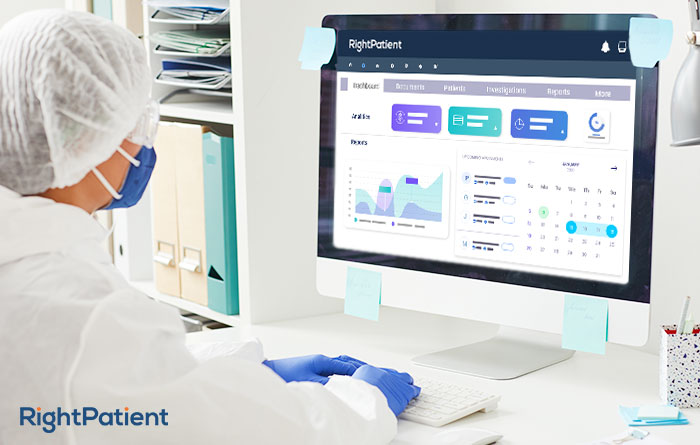
RightPatient enhances patient identification.

Your online scheduling application, then, should allow more than 1 person to work in an administrative capacity. The system should feature multiple levels of access rights to ensure security. While one person can serve as the system’s primary administrator, the others can be given administrative privileges that they can use when the primary manager is out of their workstation. This way, your organization can continue providing its services even if there’s a sudden change in your staffing schedule. 

Active UHU Percentage

Your dispatch system effectively records the time that your team members are on the clock. This puts it in a unique position to report on Unit Hour Utilization (UHU). This key metric is what most EMS organizations monitor frequently when they have profitability in mind.

Using this metric, EMS organizations can track whether their ambulances are being utilized effectively and whether their crew members are being put to work. To maintain or increase profits, some EMS organizations set a minimum UHU goal to achieve. Besides profitability, this metric also helps dispatchers to allocate resources effectively so crew members are not stretched too thin. That way, crew members can provide better quality care and service even during stressful and critical situations.

Integration with Other Modules

Last but not least, your dispatch software should have the ability to easily integrate with other modules. When every module is sitting on an independent island, numerous IT resources and API calls are needed to get all data in one place. Headaches and frustration arise when you get data integration errors.  Your staff will then have to either fix the issues or key in those data, a highly inefficient process.

At the minimum, your computer-aided dispatch should integrate with ePCR and billing. If that’s the case, then you can improve cash flow dramatically because your billers can bill the dispatch as soon as it is finalized. Also, when your dispatch system is integrated with employee scheduling, you can eliminate the mistakes of assigning someone who is on PTO to a dispatch. These are just a few benefits when you use an all-in-one solution for EMS organizations. 

Conclusion

In order to provide people with quick, efficient, and life-saving services, your EMS organization should be supported by a computer-aided dispatch system that’s designed to meet today’s growing demands. To start, sit down with your team members to list down the essential and nice-to-have features as well as functionalities that you want to see in your next dispatch system. Then, use this list as a guide when checking out your options, or use it to formulate questions when you’re shopping for software providers. Doing so allows you to easily narrow down the vendors that offer concrete solutions to the dispatch system issues that you are facing today.
5 Benefits of Technology in the Healthcare Industry

5 Benefits of Technology in the Healthcare Industry

5 Benefits of Technology in the Healthcare Industry

Implementing technology into medical enterprises has enriched the lives of many individuals all across the globe. Ranging from the invention of X-ray machines to advancements in surgical techniques, technology has heightened our life expectancy rates by making us healthier.

5 Benefits of Technology in the Healthcare Industry

Through platforms like Lecturio, information technology is formulated to offer personalized, affordable, and adaptive digital medical pedagogy. This will play a significant role in assisting you in acquainting yourself with how technology has upped healthcare.

How Has Technology Promoted Better Healthcare

There are multiple benefits of technology in the healthcare industry, which brings about a rapid shift in improved healthcare. The following are ways technology impacted healthcare.

Genome Sequencing

Genome sequencing is essentially decoding an individual’s genome. For this reason, it is referred to as the future of health care. Medical specialists’ ability to be equipped enough to sequence the human genome is one of the most tremendous in medical technology. The sequence informs scientists on the type of genetic progression carried by a particular segment of DNA.

The provision of genomic information is beneficial in instantly extracting powerful indications and storing them for future detection. This genetic data is used to find the causes and origins of diseases and how to bring about good health. 

Remote Monitoring Tools

If patients could monitor their health in their own homes, unnecessary doctor visits will be eliminated, and a lot of money will be saved. Tools such as pacemakers for patients who suffer from heart diseases are programmed to send data to health centers. There are also tools customized for patients living with chronic illnesses, and with them, the patients’ health can be monitored from hospitals irrespective of the distance.

Basically, these tools oversee the supervising improvements and breakdowns of patients with preexisting conditions requiring keen and close monitoring, which cuts in half the workload that would have otherwise been involved. Their ability to record this data and billing is an added advantage.

Telemedicine / Telehealth

In remote areas where health care services and hospitals are a bit easy to access, patients can communicate with doctors virtually through their phones and computers. This way, the medical expenses are a lot more substantial.

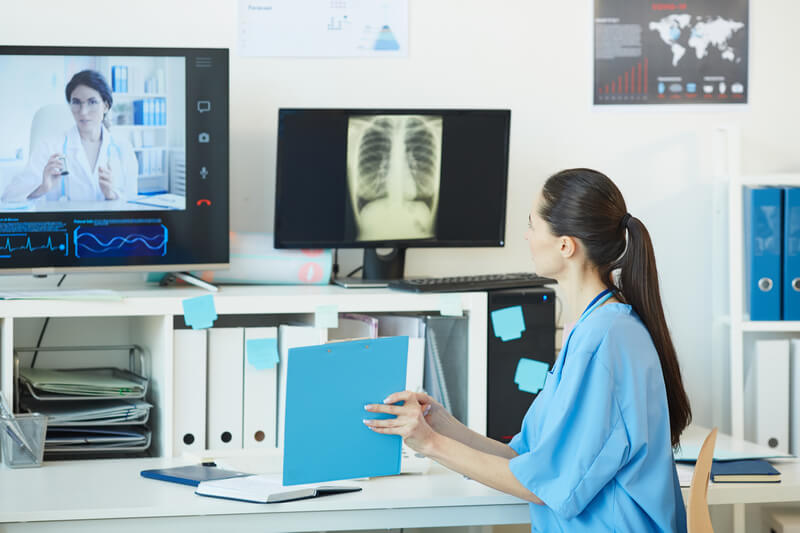
  • Telemedicine: this refers to the utilization of electronic communication and IT to provide medical services for patients situated in remote areas. Remote medical evaluations and diagnoses, virtual consultations, and digital transmission of medical imaging are all illustrations of telemedicine.
  • Telehealth: telehealth technology allows the remote review and diagnosis of patients and the proficiency for distant detection of oscillations in patients’ medical conditions to alter the specific therapy and medications accordingly. Telehealth also facilitates e-prescribe treatments remotely.

Wearable Technology

Technology has introduced wearable medical tools, and they are rapidly taking root in the medical market. These wearables are a category of electrically powered devices that could be implanted in the user’s body, accessories, tattooed on the skin, or embedded in clothing.

They do not require any manual operation and are microprocessor powered and can receive and transmit data through the internet to allow users to monitor their health. Wearable devices are used to gather data that will aid patients, and doctors will need to assess and regulate the wearer’s health. These devices are featured to notify the authorities of acute medical crises.

Electronic Health Records (EHRs)

Any medic will confess that electronic health records are an immensely significant advancement in the healthcare field. It promotes a myriad of upgrades in medical treatment and diagnostics. Unlike in the past, where medical records were clumsily handled, EHRs enable fast information, recording, storage, and transfer of medical files and efficient care integration.

However, many healthcare providers have to use additional solutions in order to use EHRs effectively. Proper patient identification is still a huge issue within the healthcare system due to the lack of an effective patient identifier. As a result, patient mix-ups, duplicate medical records, and patient safety issues are quite common. To prevent all that, responsible caregivers are using innovative solutions like biometric patient identification platforms and RightPatient leads the pack. It is a touchless solution that prevents HAIs (hospital-acquired infections), protects patient data, and enhances patient safety effectively.

To Sum it All Up

Over time, we continue to formulate strategies to promote the quality of our lives and cure ailments. Advancements in the field of medicine through technology have certified numerous life-saving strategies. Imagine being able to have an appointment with your doctor virtually with thousands of miles between you when a few decades ago, it was entirely impossible. Technology is nothing but an asset in the healthcare industry.

RightPatient-prevents-EHR-data-corruption

Senators Focusing on Improved EHR Data Shows the Importance of Patient Identification

RightPatient-prevents-EHR-data-corruption

Unfortunately, even now, many believe that patient misidentification is not a significant issue within the US healthcare system. Even many healthcare providers don’t think of it as a huge problem. They fail to acknowledge that patient misidentification corrupts EHR data significantly, leads to patient record mix-ups, is one of the causes of wrong medical procedures, causes avoidable medical errors, and more.

RightPatient-prevents-EHR-data-corruption

Let’s break down why they are wrong and how patient misidentification is a huge issue by observing what others are doing to solve it and how RightPatient is helping ensure positive patient identification

Patient misidentification is a huge deal – corrupting EHR data is just one of its consequences

A crucial factor that can lead to better patient safety within hospitals, according to the Joint Commission’s National Patient Safety Goals for 2021, is by identifying patients accurately. That’s precisely why it has listed improving patient identification on the top of its list. Each year, the Joint Commission releases goals based on research that they believe will enhance patient safety. Each year, patient identification improvement is always one of the many goals, sometimes even topping the list (just like this year).

There are many healthcare organizations and associations such as AHIMA (The American Health Information Management Association) and CHIME (The College of Healthcare Information Management Executives) that focus on patient misidentification, its consequences (EHR data corruption, patient safety issues, detrimental healthcare outcomes), and the need for accurate patient identification.

Even last year, many organizations came together and formed a coalition called “Patient ID Now” for a national patient identifier. Unfortunately, there is very little progress in that area (as of now), and if the past tells us something, then the UPI (unique patient identifier) is still far from reality. Many organizations, healthcare experts, and officials urge the government to lift the ban on creating a state-funded UPI. Unfortunately, the ban has been in effect for more than two decades due to “privacy concerns”. 

RightPatient-enhances-patient-identification

However, while all of that is occurring, patient misidentification is still thriving and causing issues such as duplicate medical records, corrupting EHR data, hampering patient safety, causing avoidable medical errors, and more. Fortunately, more people are identifying how big of a problem it is. 

Patient misidentification is an issue significant enough to bring senators from different parties together. An effort taken by bipartisan senators is focused on improving patient record matching in hospitals and health systems, something that they believe is crucial for vaccine distribution as well.

Called the “Patient Matching Improvement Act”, it aims to provide vaccination sites, hospitals, and testing labs access to the US Postal Service’s address-formatting tool for improving patient record linkages. They believe that this will help contact tracing efforts and track community spread more accurately.

After the pandemic, it will also help improve EHR data within hospitals and health systems as they believe it will help improve patient identification. But will it be enough on its own, if it ever leaves the Senate health committee? What are responsible caregivers doing now to prevent patient misidentification? 

RightPatient effectively prevents data corruption

While there are several solutions available, the most feasible one, given the pandemic, is RightPatient. It is a touchless biometric patient identification platform that is the choice of responsible healthcare providers. Since it is touchless, it doesn’t create infection control issues for healthcare providers – improving patient safety and ensuring hygiene.

It enhances patient safety, prevents medical identity theft in real-time, ensures that patients are identified at any touchpoint across the care continuum, and is even ideal for telehealth sessions.

However, if the Patient Matching Improvement Act is introduced, RightPatient can augment its effectiveness further, as it is a tried and tested platform used by responsible caregivers – are you one of them?

Tips For Improving Patient Satisfaction In Surgery Centers

Tips For Improving Patient Satisfaction In Surgery Centers

Tips For Improving Patient Satisfaction In Surgery Centers

Are you an administrator looking to expand or improve your hospital’s ambulatory surgical center’s operations? One critical component to every healthcare facility’s success is positive feedback. Use these practical tips to improve your patient’s satisfaction.

Tips For Improving Patient Satisfaction In Surgery Centers

What Is an Ambulatory Surgical Center?

Ambulatory surgery centers (ASCs) were created to administer a variety of low-risk surgeries. Some routine procedures performed at an ASC include:

  • Arthroscopy.
  • Cataract surgery.
  • Cesarean section.
  • Dental restoration.
  • Gastric bypass.

What Are the Benefits of an ASC?

ASCs are becoming an increasingly accessible option for many patients. These centers offer a variety of benefits such as:

  • Same-day discharge.
  • Lower out-of-pocket costs.
  • Higher nurse-to-patient ratios.
  • Lower risk of infection.
  • Improved recovery.

What Is Patient Satisfaction?

Patient satisfaction measures how pleased a person is with their level of care. This accounts for services both inside and outside the surgeon’s office. A patient’s feedback provides administrators with valuable insights into the effectiveness of the medical staff’s care and empathy level. 

How Is It Measured?

Patient surveys are an integral way to measure their overall satisfaction. Whether it’s in person, written, or over the phone, obtaining this information helps healthcare administrations identify gaps and develop quality improvement initiatives. Hospital Consumer Assessment of Healthcare Providers and Systems (HCAHPS) is the industry standard for reporting patient experiences and their perspectives of the care they receive.

Tips for Improving Patient Satisfaction in Your ASC

A patient’s satisfaction level affects many areas of your ASC, such as patient retention, clinical outcomes, and medical malpractice claims. Healthcare executives and physicians can institute a few easy strategies to improve patient experience at ambulatory surgical centers across their system. 

Use Your Patient’s Name

For many patients, their hospital experience is often impersonal. Doctors may forget about one of the most important tools in their arsenal — a friendly hello. More than merely greeting your patients, use their first name.

Ensuring Accurate Patient Identification

One of the biggest pain points faced by any healthcare provider, whether health systems or ASCs, is patient identification errors. In the case of ASCs, these errors lead t mix-ups, wrong surgeries, and worse. Many healthcare providers are preventing these issues with touchless biometric patient identification platforms like RightPatient. By identifying patients accurately at any touchpoint within the care continuum, RightPatient enhances patient safety and personalized the experience – improving patient satisfaction in the process. 

Make Eye Contact

Keeping eye contact with the person you’re talking to shows that you are actively listening to what they have to say. A friendly, sympathetic attitude helps patients feel more at ease. It’s essential for building rapport and is a sign of care and respect. 

Focus on Patient Education

Information is vital to a person’s decision-making process and empowers them to better direct their healthcare. Enlist the help of nurses and other support staff to help educate patients, and remember to use layman’s terms.

Create a Welcoming Environment

Most people think a medical center is a cold and sterile place. Make sure your ASC is tidy, and add some comfortable seating arrangements, soothing artwork, and soft lighting to create an attractive aesthetic.

Upgraded systems

Value stream mapping (VSM) is a business management method physicians can use to analyze and improve patient flow. It gives administrators the tools to identify inefficiencies during any step of a patient’s experience.

Take advantage of these tips to ensure a positive patient experience. Create a welcoming environment for patients and add a personal touch. You’ll soon see your survey results improve.