

RightPatient-ensures-accurate-patient-identification

Accurate Patient Identification Tops 2022’s Patient Safety Goals
RightPatient-ensures-accurate-patient-identification

There is a lot going on in the U.S. healthcare industry right now. While some might argue that the industry has always been a dynamic field, which is true, it’s safe to say that the pandemic has pushed healthcare into overdrive. While healthcare data breaches, increased hospitalizations, vaccine booster shots, and oral pills to tackle COVID-19 dominate the news, the Joint Commission has announced next year’s National Patient Safety Goals applicable beginning January 1, 2022.

RightPatient-ensures-accurate-patient-identification

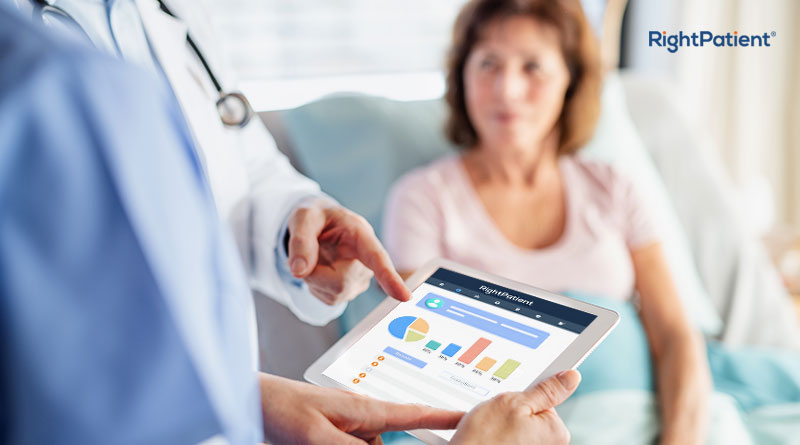
Unsurprisingly, again in 2022, the number one priority for improving patient safety, as per the Joint Commission, is identifying patients accurately. This highlights the importance of positive patient identification, which we’ve been promoting for a long time. That being said, let’s take a look at the top patient safety goals for 2022, why patient identification has been a topmost priority for years, and how RightPatient can effectively help meet those goals.

What are patient safety goals?

Every year, the Joint Commission collects information on patient safety issues that plague hospitals, health systems, and other healthcare facilities. After collecting all the data via credible sources and experts, the Joint Commission releases a list of goals that healthcare facilities need to implement in order to improve patient safety.

As healthcare is quite broad, the Joint Commission has divided it into chapters such as Ambulatory Health Care Chapter, Assisted Living Community Chapter, Behavioral Health Care & Human Services Chapter, Hospital Chapter, Home Care Chapter, etc. However, in all nine chapters, the number one goal is to identify patients correctly (residents in the case of Nursing Care Centers). This shows how imperative proper patient identification is as it’s the top priority in all the chapters.

That being said, let’s look at next year’s goals for the Hospital Chapter, as that’s our primary focus. 

2022’s patient safety goals for hospitals 

Next year, according to the Joint Commission, healthcare providers need to focus on the following goals to improve patient safety at their facilities:

  • Accurate patient identification 
  • Improving staff communication
  • Using medicine safely
  • Using alarms on medical equipment
  • Infection prevention
  • Identifying patient safety risks
  • Preventing errors in surgeries

RightPatient-boosts-patient-safety-goals

Comparing them with the goals for 2021, there hasn’t been any significant change in the goals or their order. But why is patient identification always the topmost goal? 

Accurate patient identification has been a priority for years

Patient misidentification isn’t anything new. Since there was a ban on creating a state-funded patient identifier around two decades ago, patient identification errors have been quite common. To this very day, a standardized and effective patient identifier doesn’t exist. Since misidentification has led to duplicate medical records, overlays, and medical record mix-ups, they have also created medication administration errors, repeated lab tests, patient data integrity failure, delays in care, transplant mix-ups, and even deaths! As a result, patient misidentification quickly became a patient safety concern. 

Every year, healthcare experts come together and demand that the ban against a state-funded patient identifier is lifted. However, to this very day, the ban on the unique patient identifier is in effect.

While different healthcare providers use various methods, solutions, and strategies for accurate patient identification, a touchless biometric patient identification platform like RightPatient is the most ideal and future-proof platform for that. In fact, RightPatient also helps with a few of the other patient safety goals – let’s explore how.

RightPatient helps improve patient safety in several ways

RightPatient is helping several leading healthcare providers enhance patient safety by protecting patient medical records, ensuring accurate patient identification, and reducing infection control issues. It captures patient photos during the registration process and attaches them to EHRs. 

For subsequent visits, returning patients only need to look at the camera for verification. RightPatient compares the live photo with the saved one and provides accurate EHRs, preventing mix-ups, duplicates, and other problems associated with misidentification. 

RightPatient can be used for remote authentication as well – patients need to provide a selfie along with the photo of their driver’s license after scheduling appointments. RightPatient compares the images, and after a successful match, provides the patients with biometric credentials – check out the video to learn more about it.

RightPatient helps with several patient safety goals: 

  • It ensures accurate patient identification
  • It prevents errors in surgeries by preventing patient mix-ups
  • It reduces infection control issues (it’s a touchless experience for both patients and caregivers)
  • It improves staff communication as redundant lab tests, mix-ups, and delays are reduced 
  • It reduces medication administration errors

How are you planning to improve patient safety at your healthcare facilities, and does the strategy include a solution that solves several problems simultaneously as RightPatient does?


3-Innovations-That-Can-Improve-Your-Patient-Experience

3 Innovations That Can Improve Your Patient Experience

3-Innovations-That-Can-Improve-Your-Patient-Experience

Being in the healthcare business, it’s a timeless trend to improve your patient experience at all costs. It’s not just about how you interact with them when they’re visiting for an appointment. Instead, the overall patient experience encompasses an array of interconnections that your customers have with the healthcare system as a whole. While it’s good to invest in establishing excellent interpersonal relationships with patients, the health sector should seek more ways and innovations that can make the experience better for patients in every aspect possible. 

3-Innovations-That-Can-Improve-Your-Patient-Experience

If you’re wondering what these innovations are, here’s a list you might find helpful: 

Modern Health Supplements   

Back in the day, the supplements marketplace was pretty simple and with not a lot of options. From delivery forms to specialty ingredients, consumers can make a quick stop at the supplements aisle and settle for what’s available. Today, a plethora of dietary products are manufactured and offered, not to mention more specific and targeted, giving patients more flexibility and preference when deciding which ones would suit their health concerns better. 

Modern health supplements are now available to help contribute to improving patient experience. Consumers can pick based on what particular health aspect they want to focus on – skin, hair, immunity, bones, etc. – then choose from multiple product types, from essential multivitamins to probiotics, energy bars, and herbal drinks. Among the modern health supplements gaining momentum right now are cognitive enhancers which can help improve an individual’s cognitive abilities such as memory, learning, and concentration. The product is also said to improve mental alertness, concentration, and energy levels. 

Examples are natural nootropic products known to help in productivity and motivation. They can give you the boost you need to get things done, specifically when working on critical tasks such as studying or working. Some people use nootropics to boost their social abilities, thereby helping them increase their confidence, especially in public speaking and doing presentations. If you want to learn more about their potential and how such products can help your patient, you can read this great post by WholisticResearch.  

Online Therapies 

Cognitive-behavioral therapy (CBT) is a type of psychotherapy that can effectively treat a variety of psychological conditions such as depression, obsessive-compulsive disorder (OCD), anxiety, and the like. CBT works by regularly targeting negative thoughts and behaviors that can have a detrimental effect on your daily life. It can help you learn how to use your problem-solving skills effectively to cope with different situations, learn how to calm your mind when stressed, and gain a better understanding of your surroundings.  

Now, CBT can be done online through online chats or video calls. The internet can serve as a means of communication between patients and mental health practitioners. Online CBTs can be used as an alternative to face-to-face sessions. It can be done through video conferencing, instant messaging, or online forums like group therapy, thus significantly contributing to improving patient experience even from the comfort of each other’s homes.  

What used to be books, videos, or audio series can now be adapted into websites that publish interactive content. Online-based therapies, as the core concepts of CBT, can be done through text, video, or audio instructions. There are several self-help programs guided by cognitive behavior therapists that can be done online. However, do note that online CBT providers must keep the patient identities confidential and secure, especially when storing and transmitting patients’ information online – a touchless biometric patient identification platform like RightPatient can help with that, as it can be used to remotely authenticate patients as well. 

Telehealth 

Technology continues to transform multiple industries, including healthcare. What used to be impossible back in the day is now readily available for patients to enjoy and take advantage of, such as the innovation of telehealth. Telehealth involves using communication technologies and digital information so both patients and providers can work together in managing health care remotely.   

Devices such as computers and mobile phones are utilized to support and improve patient experience. Take, for example, a patient who has diabetes. They can use their mobile phone to keep track of their food intake and blood sugar levels with the help of a nurse who interacts with them electronically. There’s also an online portal where patients can schedule appointments, access their test results, and request a prescription refill when needed.  

As you can see, telehealth reduces the need for physical contact or consultations. It makes the interaction more technology-based, but without eliminating access to information and specialists that the customers need to learn more about their condition and make progress with their treatment. 

The Bottom Line 

Industry trends come and go, but one thing will always stay the same – keeping customers happy and satisfied never gets old. The same goes for the healthcare industry, where you deal with countless patients every day. No matter what service or treatment they undergo, their overall experience must remain positive. Satisfied consumers equate to higher revenues for the business, but in healthcare, there’s also the priceless fulfillment you get when you contribute to your patients’ well-being.