

The Most Effective Time Punch System for “Just Pay” in Security Guard & Patrol Services: Secure, Mobile AI TimeClock That Syncs Flawlessly with Payroll Systems

Turn Any Tablet
Into an AI Time Clock

 Time Capture
- HR Chatbot
- Self Service
- Time Card & PTO
Learn More
In the security industry, just pay is mission-critical: guards must be compensated precisely for every hour on post, patrol mileage, overtime during emergencies, and special event premiums—without short pays that erode morale or inflated hours that damage profitability and client trust. Legacy sign-in logs, radio check-ins, or generic apps often break down: missed punches at remote sites, no proof of presence, buddy punching in crew environments, delayed payroll uploads, and disputes that lead to labor board complaints or lost contracts.
CloudApper AI TimeClock is the most effective, purpose-built time punch solution for security companies running Payroll Systems. It combines biometric verification, offline capability, and location intelligence to deliver indisputable time records—ensuring fair, transparent pay while streamlining compliance and operations.
Why Security Services Need a Robust Time Punch System for Just Pay
- Post & Patrol Verification → Geofencing + facial recognition confirms the officer is physically at the assigned post, patrol route, or event venue—eliminating false claims and proving presence for client audits.
- Offline & Remote Reliability → Punches function fully offline (critical for rural sites, construction trailers, or low-coverage industrial zones); data auto-syncs securely when connectivity returns—no gaps in records.
- Incident & Activity Logging → Officers can attach quick notes, photos, or incident flags during punches (e.g., “gate secured,” “alarm responded”)—supporting incident reports, billing justification, and liability defense.
- Overtime & Premium Pay Automation → Tracks double-time, holiday rates, and emergency call-outs automatically; accurate totals flow to Payroll Systems for correct, dispute-free compensation.
- Officer Empowerment → Mobile access to view assigned posts, check hours logged, review upcoming shifts, request time off, or see pay details—building confidence and reducing “paycheck questions” to supervisors.
Key Features Tailored for Security Guard & Patrol Teams on Payroll Systems
- Touchless Biometric Face ID → Fast, secure facial recognition (works with masks, hats, or in low light)—ideal for uniformed officers and hygiene-sensitive posts.
- Flexible Punch Methods → Face ID + QR code/NFC for quick scans at guard shacks, vehicle dashboards, or shared agency tablets.
- 24/7 AI Assistant → Instant answers for officers (“What’s my total hours this pay period?” or “Am I cleared for overtime on Saturday?”)—minimizing radio calls or supervisor interruptions during patrols.
- Seamless Payroll & Reporting Sync → Direct integration with Payroll Systems (UKG, Oracle, Workday compatibility)—punches, overtime, notes, and location data upload automatically for fast, audit-ready payroll.
- Budget-Friendly Deployment → Converts standard iPads or rugged Android tablets into intelligent time clocks—at roughly 25% of traditional guard tour hardware costs (saving up to 75% on setup and upkeep)—scalable for growing fleets or seasonal event contracts.
Security firms using comparable AI time systems report significant drops in payroll disputes, faster officer onboarding, stronger client satisfaction (thanks to verifiable post coverage), reduced overtime creep, and improved retention—all centered on delivering just pay that keeps guards motivated and loyal.
For the complete original article on the most effective time punch system for just pay, see the source: The Most Effective Time Punch System for Employees With Just Pay
Secure True “Just Pay” and Operational Excellence for Your Security Team
Provide your guards, patrol officers, and event staff with a reliable, verifiable way to record time that guarantees fair compensation and integrates directly with Payroll Systems.
Ready to eliminate time disputes, strengthen client reporting, and boost officer satisfaction? Discover CloudApper AI TimeClock – the employee timeclock application designed for frontline security teams and contact our experts for a security-industry-specific demo.
Let’s discuss your priorities: post-specific geofencing, incident logging during punches, patrol route verification, or Payroll Systems integration details!

Streamlining Workday Time Tracking for Construction, Field Services & Logistics Teams: Mobile, Offline-Ready AI Integration with CloudApper AI TimeClock

Turn Any Tablet
Into an AI Time Clock
- Time Capture
- HR Chatbot
- Self Service
- Time Card & PTO
Learn More
In construction, field services, and logistics, accurate time tracking directly affects project budgets, billing accuracy, compliance (e.g., prevailing wage, DOT hours-of-service), and labor cost control. Challenges abound: workers punch in at remote sites with poor/no internet, crews move between jobs daily, task/job codes vary per project phase, buddy punching occurs on shared equipment, and manual timesheets delay payroll while risking errors in overtime, per diem, or certified payroll reporting.
CloudApper AI TimeClock delivers a rugged, frontline-focused seamless Workday time clock integration that handles the demands of mobile, outdoor, and distributed teams—ensuring real-time (or near-real-time) data flows into Workday Payroll, Time Tracking, and Absence modules.
Core Challenges Solved for Construction & Logistics
- Offline Punching in Remote Areas → Clock in/out without connectivity (construction sites, rural delivery routes, utility fieldwork); data stores securely on device and auto-syncs to Workday when signal returns—eliminating lost hours or manual catch-up.
- Job/Project & Cost Code Tracking → Employees select or scan specific job codes, phases, cost centers, or tasks during punches—providing granular labor allocation for accurate job costing, billing, and profitability analysis in Workday.
- Location Verification & Fraud Prevention → Geofencing restricts punches to approved job sites, yards, or routes; biometric face recognition stops buddy punching even on shared tablets or in crew environments.
- Compliance & Reporting Automation → Enforces breaks, overtime caps, daily limits, and attestations (e.g., safety or prevailing wage rules); clean, auditable data syncs to Workday for easier certified payroll, DOT logs, and labor law adherence.
See how it works in detail: CloudApper AI TimeClock for Workday
Powerful Features Tailored to Field & Mobile Workforces
- Diverse Punch Methods → Touchless Face ID for quick, hands-free check-ins (ideal with gloves/tools); QR/barcode/NFC for badge scans or vehicle-mounted tablets in trucks/fleets.
- Mobile & Tablet Deployment → Turns any iPad/Android device into a portable time clock—no expensive fixed hardware needed; deploy at job trailers, dispatch offices, or in-cab for drivers.
- Self-Service for Workers → View schedules, request time off, swap shifts, check accruals, or submit notes (e.g., equipment downtime) directly—reducing foreman/HR interruptions on busy sites.
- 24/7 AI Assistant → Answers queries instantly (“Am I eligible for per diem today?” or “What’s my overtime status?”), automates routine tasks, and supports workers in the field without phone calls.
- High ROI & Low Cost → Affordable tablet-based solution at roughly 25% of traditional rugged clock costs (saving up to 75%)—scales easily for growing crews or multiple project sites.
Similar integrations have helped field-heavy teams reduce payroll discrepancies, improve job costing accuracy, and cut administrative time—directly translating to better margins on bids and projects.
For the core explanation of Workday time clock integration benefits, see the original source: Time Clock Integration Between Workday Time Tracking & Payroll Systems
Elevate Your Field Operations with Better Time Data
Equip your crews, drivers, and technicians with reliable, secure time capture that integrates flawlessly with Workday—driving accurate payroll, precise project tracking, and stronger compliance while minimizing downtime.
Ready to tackle remote-site challenges? Explore CloudApper AI TimeClock for Workday today and connect with our team for a demo customized to construction sites, logistics fleets, or field service workflows.
Let’s talk about your specific needs—multi-site geofencing, job code automation, or fleet integration!

Boost Recruitment Efficiency: AI-Enhanced Candidate Sourcing Directly in Workday ATS

Reduce Time-to-Hire
with Conversational AI
- Text-to-Apply For Open Jobs

- AI Powered Candidate Screening

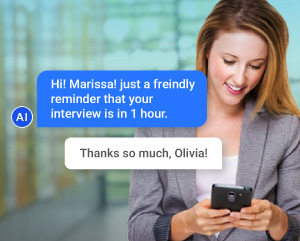
- Automate Interview Scheduling

- Integrate With ATS & HR Systems

Learn More
In a talent landscape where speed, quality, and fairness matter more than ever, recruiters need every advantage. Workday Talent Acquisition and Recruiting Software delivers a strong foundation for applicant tracking, compliance, and workflow management. Pairing it with artificial intelligence elevates sourcing from a manual, time-consuming task into an intelligent, automated process that consistently delivers stronger shortlists and better hires.
Why Traditional Sourcing in Workday Falls Short—and AI Closes the Gap
Even with Workday’s advanced search and reporting features, sourcing often involves:
- Endless scrolling through resumes that only partially match requirements
- Missing qualified candidates due to rigid keyword limitations
- Spending excessive time on initial outreach and follow-ups
- Risk of unconscious bias influencing early decisions
AI-powered tools solve these issues without forcing teams to abandon their familiar Workday environment.
Core Advantages of AI-Powered Sourcing in Workday
- Deeper, More Accurate Candidate Matching AI interprets job descriptions and resumes with contextual understanding—recognizing that “cloud infrastructure engineer with AWS expertise” aligns closely with a “DevOps specialist – cloud platforms” role, even without identical phrasing.
- Instant Prioritization & Intelligent Ranking Profiles are automatically scored and sorted by relevance, potential longevity, skill depth, and other organization-specific factors. Recruiters start each day reviewing the most promising candidates first.
- Proactive, Personalized Candidate Outreach Conversational AI engages applicants in real time—answering questions, sharing next steps, scheduling interviews, and sending tailored messages. This keeps candidates warm and responsive, improving pipeline velocity.
- Built-in Bias Reduction Objective evaluation criteria and optional anonymization features help remove irrelevant personal details from initial reviews, supporting equitable hiring practices and diverse talent pipelines.
- Continuous Improvement Through Analytics Track which AI prompts, sourcing channels, or criteria yield the highest-quality hires. Use these insights to fine-tune processes and maximize return on recruitment effort.
Everything remains inside Workday: candidate records update automatically, recruiter notes stay in sync, and full audit trails support compliance requirements.
Measurable Outcomes Teams Experience
- Significant reduction in time spent screening unqualified applicants
- Faster progression from application to interview for top candidates
- Improved response rates thanks to timely, relevant communication
- Noticeable gains in diversity and inclusion metrics
- Higher confidence in final hires due to data-backed shortlisting
Straightforward Implementation Steps
- Select an AI recruiting solution with native Workday integration and enterprise security standards.
- Establish secure API connectivity to enable real-time data exchange.
- Customize screening logic, outreach templates, and automation rules to reflect your hiring philosophy.
- Launch a focused pilot on a handful of roles to gather quick wins and feedback.
- Expand adoption with recruiter enablement sessions and performance tracking.
Leading providers include comprehensive onboarding support—configuration help, training resources, and dedicated success teams—so rollout is smooth and value appears rapidly.
The Strategic Edge
AI transforms Workday Talent Acquisition from a passive repository into an active sourcing powerhouse. Recruiters reclaim hours for high-value activities like candidate relationship building, stakeholder alignment, and closing offers. The outcome is a recruitment function that moves faster, hires smarter, and builds stronger teams.
Learn the full mechanics and see practical examples in the detailed guide on sourcing candidates from Workday using AI.
Experience conversational AI sourcing that works natively in your Workday environment—explore the CloudApper AI Recruiter conversational chatbot today.

The Connection Between Well-Prepared Clinicians and Better Patient Outcomes

Nurses, doctors, advanced practitioners all go through extensive education and training requirements. And yet, no matter how much they prepare, they’re never fully immersed in the pressures and stresses of a true clinical situation. As a student, you just can’t fully replicate the realities of patient care. There’s always those guardrails in place—a teacher, a fully licensed doctor or nurse monitoring the work, maybe even removal from direct consequences.
Simulated environments over true real-world stress. While these academic conditions are a necessary part of the process, it’s important also to prioritize whenever possible situations that expose students to the realities of clinical experience. In this article, we take a look at how thorough preparation can prepare future healthcare workers for the realities of the job.
Overview: Why Preparation Helps Students Get Ready
We touched on it in the introduction. School settings simply cannot organically cover every aspect of healthcare work. A student can be really good at the pen-and-paper element of school, but until they’ve been exposed to the stresses and pressures of healthcare work, they don’t know how they’ll respond when a patient flatlines or when there are 10 things happening at once and they don’t know where to direct their attention.
The good news, of course, is that colleges all over the country already understand the need for clinical experience. Rotations are a constant element of nursing programs everywhere. Even online nursing programs require in-person clinical rotations to help the students prepare for any possible professional situation.
Not only do these rotations give students a taste of what practicing real medicine is like, but they also may help weed out bad-fit candidates. A person might like the idea of nursing but be turned off by its often grisly reality. The best place for that to happen? Certainly not on their first day of working as an RN. That’s a learning experience best had in a controlled environment. Clinical rotations provide that opportunity.
Exposure to Opportunity
Clinical rotations may also expose nursing students to more and better opportunities. While many people think about emergency rooms or hospital floors when they imagine a nurse, there are actually many more potential applications that you may only become exposed to by working in a hospital setting.
There are nursing educators. There are many different kinds of specialists focused on managing very particular conditions or diseases. There are nurses who work with patients suffering from psychiatric symptoms. There are nurses who help deliver babies. There are also nurse practitioners. Nurse practitioners can function in much the same way as a general practitioner. In many states, they write prescriptions, create treatment plans, and see patients without oversight.
Clinical rotations allow students to glimpse these worlds and find out what opportunities might most appeal to them in the long term.
Preparation Can Be Flexible
It’s worth pointing out that though nursing education and preparation should be extensive, that’s not to say that it can’t also be flexible. Many nursing programs now take place in controlled online environments. The digital landscape makes it possible to take classes over a timeframe that makes the most sense for you. For example, if you wanted to take classes at night after your kids have gone to bed, you can do that through many of the more flexible learning opportunities available online.
Clinical requirements are still an important element of these programs. They still take place in person. But more options make the profession open to more people. Inclusivity does not have to come at the cost of preparation.
Is the Standard Clinical Format Enough?
Is the standard clinical formula enough? As mentioned earlier, every nursing preparation program in the country is very literally required to include clinical rotations as part of the preparatory work. That’s a good thing, but it doesn’t necessarily mean that the system is perfect. For some students, more opportunities are better.
If you are a nursing student who wants as much exposure as is possible to clinical healthcare work, ask your college what other opportunities they have available. Most probably, they will have something. Maybe there are volunteer opportunities within the community, or maybe they have mentorship programs, career shadowing systems, and other chances to meet and work with established healthcare providers. The more exposure you have, the better prepared you’ll be for a career in healthcare.
Conclusion
Healthcare careers have a very high turnover rate, thanks in large part to the fact that many nursing students enter the workforce without fully understanding the stresses and pressures of the job. How could they? They’ve never done it before.
None of what we said to this point is to imply that clinical rotations or other professional development opportunities fully replicate the realities of working as a nurse or a doctor. It’s different when all of the responsibility is on your shoulders. Still, you can get a good idea of what it’s like by working alongside people who do it every day. You’ll discover your likes and dislikes, build some professional resiliency, and hopefully enter your profession feeling more prepared, confident, and ready to meet the challenges ahead.

Why Healthcare Providers Are Turning to AI Chatbots: Boosting Patient Satisfaction, Cutting No-Shows, and Streamlining Care Delivery
Have you ever wondered why more healthcare organizations are integrating AI chatbots to transform patient interactions, leading to higher satisfaction scores, fewer missed appointments, and smoother daily operations?
In today’s healthcare environment, where patients expect quick, convenient access to information and services, AI-powered chatbots are stepping in as reliable digital assistants. They handle a wide range of routine tasks around the clock—scheduling appointments, sending personalized reminders, answering insurance and billing questions, guiding symptom inquiries, and facilitating registration—without the need for staff intervention. This constant availability eliminates frustrating wait times on phone lines or delayed email responses, allowing patients to get the support they need exactly when they need it.
One of the most tangible impacts is on patient satisfaction. Studies and real-world implementations show that chatbots deliver instant, empathetic responses that make patients feel heard and valued. For example, engagement rates often exceed 90% among enrolled users, with some systems achieving care plan adherence as high as 97%. Patients report greater comfort discussing sensitive topics privately with AI, reduced cognitive load (especially among older adults), and overall improved experiences through personalized, multilingual support. These factors contribute to stronger trust, better retention, and higher likelihood of patients recommending the provider to others.
A key driver of satisfaction is the reduction in no-shows. Automated, timely reminders via chatbots significantly decrease missed appointments—often by 20-25% or more in optimized setups. By confirming bookings, rescheduling easily, and providing contextual nudges (like prep instructions or transportation tips), chatbots help patients stay committed to their care plans. This not only boosts clinic efficiency and revenue but also ensures better health outcomes through consistent follow-up and adherence.
Beyond patient-facing perks, chatbots alleviate administrative pressures on healthcare teams. They automate high-volume inquiries, freeing nurses, physicians, and front-desk staff from repetitive calls and data entry. This shift allows providers to dedicate more time to complex cases, meaningful consultations, and preventive care—ultimately supporting higher-quality service delivery and operational cost savings.
The healthcare chatbots market underscores this momentum, with the global size estimated in recent reports from around USD 300-1,200 million (varying by source and scope) and projected strong growth at CAGRs typically in the 20-24% range over the coming years, fueled by advancements in natural language processing, rising demand for digital health tools, and the push for accessible, efficient care.
Adopting an AI chatbot is straightforward with modern no-code platforms. The typical process involves:
- Identifying priorities — Focus on high-volume areas like appointment management, patient intake, or inquiry handling.
- Customizing securely — Tune the AI for accuracy and embed HIPAA-compliant privacy features.
- Loading knowledge — Train with your organization’s specific policies, FAQs, and guidelines.
- Crafting conversations — Design intuitive, empathetic flows for web, app, SMS, and other channels.
- Deploying seamlessly — Integrate with existing systems like EHR or ERP for smooth operations.
CloudApper Conversational AI Chatbot delivers specialized agents that work together for comprehensive support:
- Patient Registration Agent — Simplifies onboarding through natural dialogue.
- Appointment Management Agent — Enables effortless 24/7 booking, changes, and reminders.
- Billing Agent — Offers clear explanations of charges.
- Insurance Verification Agent — Provides quick coverage checks.
- Patient Service Feedback Agent — Captures insights to refine services.
- Compliance Agent — Maintains adherence to key regulations.
With features like multi-channel access, high reliability, and tailored personalization, CloudApper helps elevate satisfaction, minimize no-shows, reduce staff workload, and enhance overall care efficiency.
Ready to see how AI chatbots can drive better patient experiences and operational wins for your practice?
Check the detailed guide: How to Build an AI Chatbot for Healthcare Patient Engagement
Explore CloudApper Conversational AI Chatbot for direct improvements in patient satisfaction and reduced burnout: Improve Patient Experience & Reduce Health Worker Burnout with Conversational AI
AI-Powered Compliance That Actually Boosts Engagement: The Unexpected HR Training Win
AI in Training and Development in HR is delivering one of its most surprising and practical victories: transforming mandatory compliance training from a universally dreaded checkbox exercise into an efficient, low-friction process that quietly increases overall employee satisfaction with learning by 40%.
Rather than treating compliance as a separate, burdensome obligation, intelligent AI platforms now weave it seamlessly into personalized development journeys. The system automatically detects when refreshers or new regulations are due based on role, location, tenure, and real-time changes—then delivers them in bite-sized, contextually relevant formats at the perfect moment. No more mass email blasts, endless tracking spreadsheets, or frustrated follow-ups.
A mid-sized IT company experienced this shift firsthand after implementing CloudApper hrGPT. The platform handled compliance assignments proactively and unobtrusively while continuing to recommend tailored skill-building content for each individual. Employees no longer felt bombarded by irrelevant training; instead, they received timely, useful modules that aligned with both regulatory needs and personal growth. The combined effect was powerful: satisfaction with the entire training experience rose 40%, and HR’s administrative burden for managing training logistics fell by 60%—freeing the team to invest in higher-value talent initiatives.
This approach proves that AI doesn’t just make training smarter; it makes mandatory requirements feel supportive rather than punitive, creating a rare win-win for compliance, engagement, and operational efficiency.
For the full picture of how AI is reshaping training—including this compliance angle, personalization tactics, skill-gap strategies, and more—read the comprehensive guide: How Is AI Used in Training and Development in HR.
Ready to make compliance effortless and turn training into a genuine employee benefit? Discover how CloudApper hrGPT achieves these outcomes—download the brochure here and see the platform that’s quietly changing the game for HR teams worldwide.

Tablet-Based Time Clocks: A Simple Upgrade for Healthcare Workforce Management & Patient Safety

Turn Any Tablet
Into an AI Time Clock
- Time Capture
- HR Chatbot
- Self Service
- Time Card & PTO
Learn More
In healthcare, accurate time tracking isn’t just about payroll — it directly supports patient safety, staffing compliance, shift coverage, and regulatory reporting. Yet many hospitals and clinics still rely on outdated wall-mounted time clocks: expensive proprietary kiosks that are slow, shared (raising infection concerns), difficult to maintain, and disconnected from modern workforce needs.
A better, more hygienic, and cost-effective alternative is emerging: tablet-based time clock systems.
Using standard iPads or Android tablets, these solutions let staff clock in/out quickly and securely — with no shared surfaces, no long queues, and no need for costly hardware replacements every few years.
Why tablet time clocks are gaining traction in healthcare:
- Lower total cost — Tablets cost 70–80% less than traditional terminals (and you can often repurpose existing devices) — freeing budget for patient care priorities.
- Hygienic & touchless — Face ID or fingerprint options eliminate shared buttons/keypads — critical for infection control (see our related post on healthcare workforce challenges).
- Flexible placement — Deploy tablets at nurse stations, break rooms, entrances, or even in mobile carts — no fixed location required.
- Employee self-service — Staff can clock in/out, view schedules, request time off, swap shifts, check accruals, and access pay info — all from one device, reducing HR support calls.
- Offline support — Punches are recorded locally and auto-synced when connectivity returns — essential for areas with spotty Wi-Fi or during emergencies.
- Fraud prevention — Biometric verification (Face ID >99.5% accurate) stops buddy punching and time theft — protecting payroll accuracy and staffing budgets.
- Seamless integration — Real-time sync with major HR/payroll systems (Workday, UKG Ready/Dimensions, Ceridian, etc.) — ensuring accurate labor levels, shift differentials, and compliance reporting.
CloudApper AI TimeClock leads this shift by turning any compatible tablet into a full-featured, touchless time clock and self-service hub — without proprietary hardware or complex IT deployments.
For healthcare leaders focused on both workforce efficiency and patient safety, tablet-based time clocks are no longer a “nice-to-have” — they’re becoming a strategic necessity.
Ready to replace outdated kiosks with a hygienic, flexible, tablet-powered time tracking solution that supports better staffing and patient care?
Discover CloudApper AI TimeClock — the modern tablet clock-in system for secure, touchless time tracking and workforce management: CloudApper AI TimeClock – Employee Timeclock Application
Want the full feature list, cost comparison, integration options, and why tablet-based systems are transforming healthcare workforce management? Read the original CloudApper article: Tablet-Based Time Clock Systems for Employees: Streamlining Workforce Management

How Biometric Time Clock Integration with Workday Cuts Hardware Costs by 70%+ and Pays for Itself in Months

Turn Any Tablet
Into an AI Time Clock
- Time Capture
- HR Chatbot
- Self Service
- Time Card & PTO
Learn More
Traditional Workday time clock deployments often follow the same expensive pattern: proprietary wall-mounted kiosks costing $1,000–$3,000 each, professional installation, ongoing maintenance contracts, and limited flexibility for relocation or scaling. For organizations with hundreds or thousands of employees, these costs quickly reach six figures — before even factoring in downtime, repairs, or hygiene upgrades.
There’s a far more cost-effective path: Workday biometric time clock integration using standard tablets or iPads.
CloudApper AI TimeClock turns affordable, off-the-shelf devices (often already in your environment) into secure, touchless biometric time clocks that integrate natively with Workday Time Tracking — delivering enterprise-grade functionality at a fraction of the price.
Real Cost Comparison
- Traditional Workday kiosks: $1,500–$3,000 per unit + installation ($500–$1,000 per site) + annual maintenance (~15–20% of hardware cost) → total first-year cost per location often $2,000–$5,000+
- CloudApper AI TimeClock approach: Standard tablet ($200–$500) or reuse existing devices + no-code setup (hours, not weeks) + no maintenance contracts → total first-year cost per location typically $300–$800
Savings Breakdown
- Hardware: 70–80% lower upfront cost
- Installation: No specialized technicians required — mount a tablet in minutes
- Maintenance: No proprietary parts or vendor lock-in — replace a tablet for under $500 if needed
- Scalability: Add new locations instantly without re-procurement cycles
- Hygiene upgrades: Touchless Face ID eliminates shared surfaces — no extra sanitization hardware
- Payroll accuracy: Biometric verification (>99.5% accurate Face ID) stops buddy punching → recovers 2–5% of payroll lost to time theft (often $10K–$100K+ annually for mid-sized teams)
Core Integration & Features That Deliver ROI
- Real-time sync via certified Workday APIs — punches, job transfers, labor levels, shift differentials, and accruals flow bidirectionally
- Offline resilience — data captured locally, auto-syncs when connected
- Touchless Face ID — works with masks, glasses, PPE, varying lighting
- Employee self-service — view schedules, request PTO, check accruals right at the device
- Security & compliance — encrypted flows, no stored biometric images, SOC 2/GDPR/CCPA/HIPAA-ready
Many organizations see payback in 3–9 months through hardware savings alone — before even counting reduced payroll leakage, fewer HR support tickets, and improved employee satisfaction.
If your current Workday time clock deployment is tied to costly proprietary hardware, you’re likely overpaying every year.
Ready to modernize with a biometric solution that integrates seamlessly with Workday and pays for itself quickly?
Explore CloudApper AI TimeClock for Workday — affordable, touchless biometric integration that’s secure, scalable, and built for real-world teams: CloudApper AI TimeClock for Workday
Want the full cost comparison, integration architecture, security specs, and proof of how it eliminates buddy punching while slashing hardware expenses? Read the original CloudApper article: Integrating Biometric Time Clocks with Workday

Best Affordable Touchless Biometric Time Clock for Workday: Setup Guide & Cost-Saving Alternative

Turn Any Tablet
Into an AI Time Clock
- Time Capture
- HR Chatbot
- Self Service
- Time Card & PTO
Learn More
Searching for the best Workday time clock alternative? Traditional hardware terminals are costly, outdated, and vulnerable to buddy punching—especially with rising demands for hygiene, accuracy, and compliance in time tracking and payroll.
Enter CloudApper AI TimeClock, the leading touchless biometric time clock for Workday that turns any affordable iOS or Android tablet into a secure, AI-powered punch station. No expensive proprietary hardware required—just fast facial recognition, geofencing for location verification, offline support, and seamless native integration with Workday Time Tracking & Payroll.
Why it’s topping lists as a top Workday time tracking solution alternative:
- Touchless facial recognition — Secure, contactless clock-ins/outs eliminate fraud and support post-pandemic hygiene standards
- Up to 75% cost savings — Ditch pricey Workday-approved terminals; repurpose existing devices for massive ROI
- Advanced features — Job coding, break tracking, self-service PTO requests, schedules, accruals, and AI anomaly detection for error-free payroll
- Flexible deployment — Works online/offline, scales for distributed teams in manufacturing, healthcare, retail, hospitality, and more
- Easy Workday integration — Real-time sync, audit-ready data, and quick setup without heavy IT involvement
Businesses are prioritizing affordable, scalable time clock solutions that boost productivity while cutting labor costs and compliance risks. CloudApper delivers exactly that—often faster and simpler than legacy options.
Ready to see how to configure your own dedicated Workday clock-in and clock-out terminal using this modern AI solution?
Read the full step-by-step setup guide for Workday-integrated AI time clock →
Upgrade your Workday time tracking today with a touchless, biometric powerhouse that’s built for real-world efficiency and savings.

How Self-Service Shift Management in Workday Can Cut Scheduling Costs and Chaos by 50%+

Employee Self-Service Kiosk
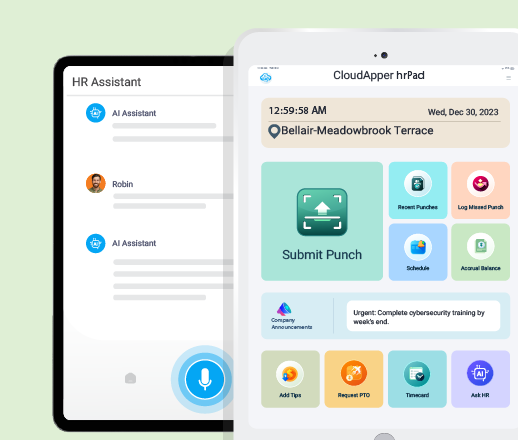
Works on any device with
This article is inspired by CloudApper’s original guide on modernizing shift workflows in Workday. For the complete feature set, integration walkthrough, and real-world examples, read the full post here: Workday Time Clock for Shift Management: Allow Employees to Bid & Swap Shifts
Shift scheduling remains one of the biggest hidden time-sinks in HR and operations teams — especially in industries with variable demand, high turnover, and 24/7 coverage needs. Coordinators spend hours (sometimes days) every week reviewing requests, filling open slots, resolving conflicts, and updating Workday calendars manually.
The hidden costs are significant:
- Overtime spikes from last-minute coverage gaps
- Burnout among schedulers juggling spreadsheets, emails, and phone calls
- Employee frustration when preferred shifts or swaps are denied without clear reasoning
- Compliance risks when union rules, seniority, or labor laws aren’t consistently applied
- Higher turnover when staff feel they have no control over their schedules
The solution isn’t hiring more coordinators — it’s giving employees self-service control within Workday itself.
Modern Workday shift management tools let frontline workers handle the scheduling process directly:
- Shift bidding — view open shifts and submit bids based on availability, seniority, or preference
- Shift swap — propose direct trades with qualified colleagues; the system checks conflicts and notifies managers for quick approval
- Job bidding — bid on preferred roles, departments, or tasks when openings appear
- Vacation bidding — compete fairly for desired vacation slots during peak periods or annual cycles, with automated rule enforcement
- Mobile clock-in/out — secure, touchless punching (Face ID, PIN, QR, NFC) from any device, with GPS verification and offline support
- Real-time visibility — employees and managers see updated schedules, coverage status, and accruals instantly
By moving these tasks to employees, organizations typically see:
- 50–70% reduction in scheduling admin time
- Fewer unfilled shifts and emergency overtime costs
- Improved compliance through automated enforcement of seniority, qualifications, and union rules
- Higher employee satisfaction and retention (flexibility ranks among top retention drivers)
- Full audit trails — every bid, swap, and approval is logged in Workday for reporting and audits
CloudApper AI TimeClock extends Workday Time Tracking with exactly these capabilities — no proprietary hardware needed. Employees use affordable tablets or their own phones, while data syncs natively and securely to Workday via certified APIs.
For a closer look at CloudApper’s touchless biometric features and AI-assisted tools built specifically for Workday, visit: CloudApper AI TimeClock for Workday
The result? A leaner, more agile scheduling process that reduces costs, minimizes errors, improves coverage, and turns employees into active partners in workforce planning — all without disrupting your existing Workday investment.
If your current Workday shift management still depends heavily on manual coordination, the inefficiency is likely costing more than you think.
Ready to shift the workload from coordinators to employees and see real efficiency gains?
Explore the original CloudApper article for in-depth details on how Workday shift management becomes employee-driven with shift bidding, shift swap, job bidding, vacation bidding, and mobile time tracking: Workday Time Clock for Shift Management: Allow Employees to Bid & Swap Shifts
RightPatient Blog
 How to Add AI to UKG, Workday, or SAP SuccessFactors Without Disrupting Your HR OperationsMay 23, 2026 - 11:51 am
 Why Multi-Location Retail Operations on Workday Can’t Afford a Dumb Time ClockMay 22, 2026 - 12:12 pm
 Workday Time Tracking for Home Health Agencies: The Geofencing Gap That Creates Compliance RiskMay 21, 2026 - 11:40 am
 Your Time Clock Is the First Thing New Hires Learn About How You Run HRMay 18, 2026 - 9:15 am