RightPatient-ensures-patient-data-integrity-even-during-telehealth-visits

Telehealth Is Here to Stay – Ensure Patient Data Integrity While Using It
RightPatient-ensures-patient-data-integrity-even-during-telehealth-visits

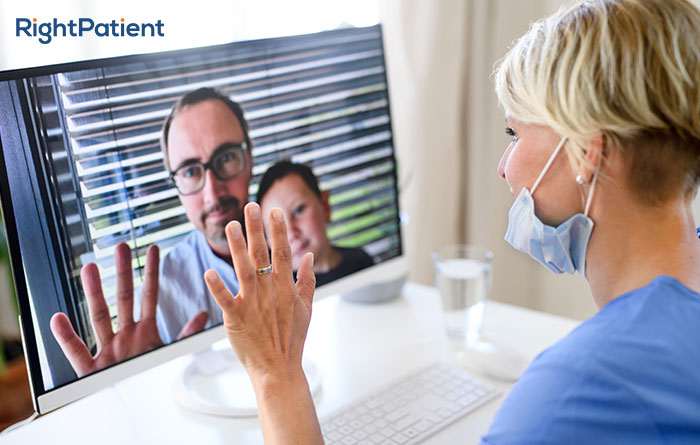
To put it bluntly, the coronavirus pandemic has been catastrophic for the entire world. The U.S. has been leading with the highest number of cases – 6,550,637 at this point. However, there has been a silver lining in the whole coronavirus pandemic – telehealth. Not only did it experience a meteoric rise in the U.S., but it also helped to flatten the curve – patients don’t have any risk of contracting the virus when they use telehealth. While the increased usage of telehealth demonstrates that it’s here to stay for the foreseeable future, healthcare providers must ensure that they are protecting patient data integrity during these visits. Let’s see how accurate patient identification can help.

RightPatient-ensures-patient-data-integrity-even-during-telehealth-visits

Telehealth’s rise

Telehealth isn’t anything new – it’s been in the healthcare space for quite some time now. Sadly, people were busy debating its pros and cons for years. However, 2020 will be remembered as the year of telehealth – its potential was showcased during the pandemic.

People praised its elimination of the physical barriers required for healthcare – people would be able to consult with their caregivers without having to worry about the novel coronavirus – a stable internet connection and a communication device are all they need. It enabled healthcare services to be continued at a time when social distancing was required – creating a win-win situation for all. Laws were relaxed regarding telehealth while providers and officials urged patients to use telehealth instead of coming for hospital visits. Quite naturally, the usage increased exponentially. Let’s take a look at an example – MUSC Health and its experience with telehealth. 

They used “virtual urgent care technology” – something that was initially created to provide patients with a way to be observed for non-critical cases, and converted that to screen potential COVID-19 patients. Moreover, they had the capabilities and resources to dramatically adapt tools to better fight the pandemic. They also enabled remote patient monitoring and a telesitter program as part of their approach, and they believe that telehealth is here to stay. Overall, healthcare providers in the past few months have observed that telehealth can be used to provide patient care while mitigating the risk of contracting COVID-19. 

Some stats regarding telehealth usage

The current stats are in line with the providers’ experiences with telehealth. McKinsey & Company stated that in 2019, a meager 11% of the U.S. patients were using telehealth. As of April 2020, 46% of the patients are using telehealth. Even healthcare providers witnessed around 50-175 times more patients using telehealth visits compared to the pre-pandemic period. However, one has to consider the risks associated with it just like with inpatient visits, for instance, patient data integrity, patient identification, and medical identity theft. 
RightPatient-ensures-proper-patient-identification-during-telehealth

Patient data integrity must be ensured

It’s quite natural that some of the issues plaguing conventional healthcare might be seen during telehealth visits as well. One of the biggest challenges is preventing medical identity theft. 

Healthcare data breaches have been occurring more than ever, where most of the stolen patient data is sold off to fraudsters. They then assume the identities of the victims and use their healthcare services. This leads not only to billing the victims for services they never used but also corrupts the patient data – because the fraudsters’ data is saved in the victims’ medical records. Thus, patient data integrity is compromised in the process.

Experts believe that the pandemic will lead to increased numbers of medical identity theft cases. This is because patient data is not adequately protected by the majority of caregivers due to budgetary issues. Moreover, with the pandemic causing arguably the worst financial crisis healthcare has ever faced, providers need to consider every option in order to survive.

RightPatient ensures patient data integrity – even during telehealth visits

While healthcare data breaches are inevitable, medical identity theft can be prevented. One of the reasons why medical identity theft has become a major threat is because there is no proper patient identity verification system in place to prevent these crimes. Most of the patient identification systems use credentials – something that can be stolen or transferred. 

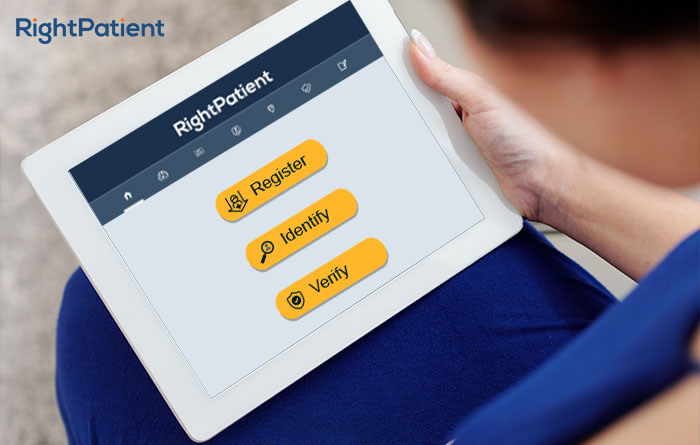
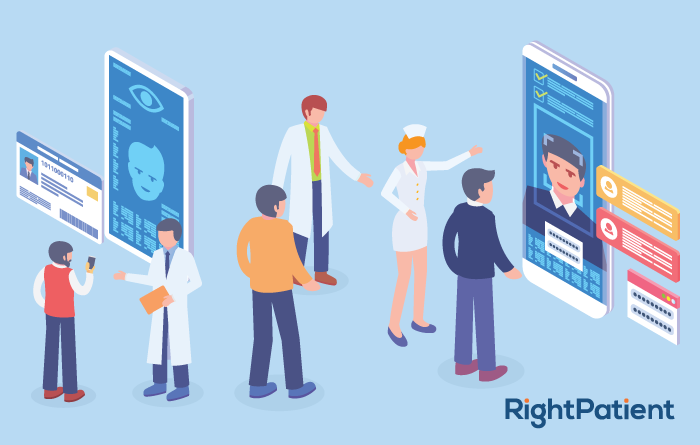
Fortunately, RightPatient can help prevent medical identity theft. It uses the thing that fraudsters or hackers cannot steal – patients’ visual likeness. Using a photo-based search engine, RightPatient matches the photos of the selfie provided during appointment scheduling with the patient’s driver’s license. Fraudsters are red-flagged immediately, preventing medical identity theft in real-time.

During inpatient visits, all the patients need to do is look at the camera – the platform matches the photo it takes with the one it saved during registration. This creates a safe, hygienic, and touchless environment for everyone involved – something which became more crucial than ever due to the pandemic.

RightPatient helps maintain patient data integrity by ensuring that the accurate medical record is associated with the correct patient every time, preventing medical identity theft, and avoiding duplicate medical records. Try RightPatient now to see how it can help you enhance patient safety during these trying times.
Top-Reasons-for-Using-a-Robust-Patient-Identification-Platform-like-RightPatient

Top Reasons for Using a Robust Patient Identification Platform

Top-Reasons-for-Using-a-Robust-Patient-Identification-Platform-like-RightPatient

Even though the novel coronavirus and its effects are dominating headlines (as well as our social lives and safety), patient identification issues have not been far behind. Those who are up to date with the U.S. healthcare system know that the UPI (unique patient identifier) has been trending once again – healthcare leaders across the states are urging lawmakers to lift the ban this year as well. While the future is uncertain due to COVID-19, even if the ban is lifted and the UPI created, providers would need to couple it with a robust patient identification platform such as RightPatient. Let’s take a look at why such a platform would be perfect for patient identification, with or without the UPI.

Top-Reasons-for-Using-a-Robust-Patient-Identification-Platform-like-RightPatient

It eliminates risks associated with contact-based patient identification platforms

There are many patient identification platforms available – we’ve talked about them several times. However, the responsible healthcare providers always choose touchless platforms as they don’t have the problems associated with touch-based patient identification systems – let’s take a precise look at what those are.

Patients have to touch the devices while using most patient identification systems. Naturally, this would entail concerns regarding infection control – these are used within the premises of healthcare providers who serve the sick, after all. Thus, there’s quite a high chance that one patient can unwittingly infect others when they verify their identity using such systems.

One unfeasible remedy to avoid infection control issues would be to clean the devices after every verification – imagine the administrative nightmare! Thus, even if these systems are accurate (fingerprint scanning, for instance), they are not at all suitable for such environments housing cases that may potentially lead to infection control issues.

Secondly, since these are contact-based, many, if not all the patients, would be reluctant to touch these devices. In the post-pandemic world, almost everyone is well-informed about how dangerous contact-based solutions can be. Thus, the COVID-19 crisis has rendered even accurate touch-based solutions ineffective as patient acceptance rates would be significantly lower now. 

Thankfully, touchless patient identification eliminates all these issues – more on that later.

A robust patient identification platform helps avoid duplicate records and overlays

Since we’ve already established that touchless patient identification is the only feasible choice in a post-COVID-19 world, let’s look at the other proven benefits of such a system, starting with duplicate medical records.

Benefits-of-using-RightPatient

Whenever a healthcare provider uses an obsolete patient identification platform (the most common one being asking patients questions), they’re bound to get confused when seeing the multiple medical records assigned to the single patient. They have to dig through them to find the accurate and most up to date one each time the patient arrives. In some cases, they might even create a new record just to avoid the hectic procedure – adding another duplicate record into the mix. These lead to delayed patient care, compromised patient safety, and impact healthcare outcomes. 

Overlays are even more dangerous – these are the merging of medical records of the same or different patients. Imagine being treated with someone else’s medical history – the treatment will be botched right from the start.

A robust patient identification system, however, can avoid such issues. By ensuring that the correct medical record is identified every time across the care continuum, duplicate records and overlays are avoided as well as the issues associated with them.

It prevents medical identity theft

One of the bigger healthcare concerns is data breaches that ultimately lead to medical identity theft. After buying the stolen patient information from hackers, the fraudsters use that to bypass obsolete patient identification systems and gain unauthorized access to medicine, treatment, and expensive medical devices. However, robust patient identification systems like RightPatient can prevent medical identity theft in real-time. When the fraudster has to verify their identity, the identification platform red flags them upon detecting that the fraudster’s photo and the photo in the medical record saved by RightPatient don’t match. Thus, patients and providers are protected from the consequences of medical identity theft, even if the data is breached, thanks to positive patient identification.

It ensures that you send out proper e-notifications

Healthcare providers will require software that supports e-notifications to patients’ other caregivers beginning May 1st, 2021, as per the CMS. This system is designed to promote interoperability and ensure proper care coordination.

However, to send out e-notifications to the appropriate caregivers, the hospital needs to ensure that they are identifying the proper patient first. Otherwise, the hospital might end up sending alerts to the wrong caregiver or information about the wrong patient. This can easily be avoided if a proper patient identity verification system is in place. 

RightPatient does all of the above – and more

RightPatient is the leading patient identification solution used by forward-thinking caregivers. Healthcare providers who are currently using RightPatient don’t need to think about infection control issues now – they thought about it before COVID-19. It uses photos of patients to identify their records. Patients take a selfie and a photo of their driver’s license after appointment scheduling. RightPatient checks the selfie and the driver’s license to ensure a proper match. During hospital visits, patients enrolled under RightPatient only need to look at the camera – the platform finds the appropriate record within seconds. If fraudsters try to assume a user’s identity, it red flags them, preventing medical identity theft in the process.

Contact us now to see how we are helping leading providers like TGMC, CHSLI, and Grady Health.

RightPatient-ensures-patient-safety-and-quality-healthcare

Patient Safety and Quality Healthcare Require Patient Identification During the Pandemic

RightPatient-ensures-patient-safety-and-quality-healthcare

Another day, another new initiative by healthcare leaders regarding patient identification. One might wonder that given the pandemic and its ongoing effects on healthcare, why is that a top priority right now? Well, that’s what the healthcare experts have been demanding as inaccurate patient data negatively impacts patient outcomes during this crisis. The U.S. healthcare system has been suffering due to the absence of a patient identifier for decades now – the ban is still in effect on a UPI. Let’s look at what industry experts are saying and how positive patient identification can ensure patient safety and quality healthcare.

RightPatient-ensures-patient-safety-and-quality-healthcare

The importance of patient identification according to experts

This isn’t the first time leaders have talked about the need for accurate patient identification and it won’t be the last time. Healthcare providers have been struggling with patient identification for decades now, leading to compromised patient safety, inaccurate patient data, and unwanted healthcare outcomes. Add the pandemic to the equation, and identifying patients accurately becomes more important than ever as accurate data sharing is a topmost priority.

Recently, a session organized by the ONC (Office of the National Coordinator) for Health IT brought up the topic. According to Tom Leary, HIMSS VP of Government Relations, incorrect patient data leads to adverse impacts on public health response initiatives. He further elaborated on that – patient identification errors during the ongoing crisis led to several issues like improper data sharing, delays in sharing test results, and inaccuracies within longitudinal patient records. According to Mr. Leary, some nurses even tried to Google patients to identify them and contact them regarding their test results!

Preparing for COVID-19 vaccines, whenever they’re created, will require accurate patient identification during large-scale immunizations to identify the infected ones, the ones who got the shots, and to identify the outcomes of the cases, stated Mr. Leary. Not having any proper patient identity verification system in place is just worsening the health outcomes and adding fuel to the ongoing fires during the pandemic. Thus, to ensure patient safety and quality healthcare, proper patient identification is an absolute must.

Patient safety and quality healthcare depend on identifying patients

As previously mentioned, many might think that with the pandemic still impacting healthcare significantly, patient misidentification is the last thing we need to worry about. However, Mr. Leary, as well as other healthcare industry experts, thinks otherwise. During the ONC session, they have already demonstrated how patient misidentification is affecting healthcare outcomes. But even before the pandemic, patient identification errors were notorious for adversely impacting patient safety and quality healthcare.

RightPatient-accurately-identifies-patients-across-the-care-continuum

Let’s go back to the time before the pandemic struck the U.S. Even then, the healthcare system had a plethora of issues, one of which was duplicate medical records and overlays. Imagine – a patient came to the hospital and they were assigned a duplicate record, based on which the whole treatment will be provided – so many things could go wrong!

An incomplete or inaccurate EHR leads to repeated lab tests, improper treatment, and even deaths due to a single misidentification. As a result, patient safety is severely impacted as well as healthcare outcomes. Patient misidentification cases are associated with unwanted incidents that can haunt caregivers – loss of goodwill and litigation costs are just some of the consequences.

Even before the pandemic, patient misidentification was a significant issue within the healthcare system. However, the COVID-19 crisis demonstrates how patient identification errors impact patient outcomes during a time when accurate patient information is of the essence. 

Experts are urging for the UPI once again

It’s been around two decades since the ban was imposed on a state-funded UPI (unique patient identifier), but industry experts are once again rallying to remove the ban this year. Even if the UPI is finally mandated, responsible healthcare providers will combine it with an effective patient identifier. Such a patient identification policy will encompass several benefits such as enhanced interoperability, reliable patient matching, and improved healthcare outcomes. So, out of all the different patient identification solutions out there, which one is the best match?

Patient safety and quality healthcare require RightPatient

RightPatient has been ensuring accurate patient identification for years now, but why is it the best solution? Well, it can be seamlessly integrated with EHRs to become part of the workflow, making it perfect to be used alongside the UPI, should the latter get approval. Moreover, RightPatient eliminates the biggest headache of providers currently – infection control issues, as it is a touchless solution. With its photo-based search engine for identifying patients during appointment scheduling and beyond, RightPatient is the most feasible choice for positive patient identification post-COVID-19.

Preventing-healthcare-identity-theft-is-possible-with-RightPatient

Data Breaches are Occurring During the Pandemic – Prevent Healthcare Identity Theft Now

Preventing-healthcare-identity-theft-is-possible-with-RightPatient

Despite the relaxed rules and the U.S. slowly opening up, the COVID-19 crisis is still going strong. With no treatment found (as of yet), everyone is still feeling the effects of the coronavirus. However, there’s no doubt that the U.S. healthcare system has been affected more significantly than systems in other countries. For starters, the number of patients is overwhelming, the financial strain is unprecedented, not to mention the existing issues such as data breaches. When faced with so many impediments from all sides, how can providers prevent healthcare identity theft? Let’s explore some of the recent data breaches, how they lead to medical identity theft, and how a solution like RightPatient can protect patients and providers.

Preventing-healthcare-identity-theft-is-possible-with-RightPatient

Some recent cases

It’s not only healthcare providers – all types of healthcare organizations are being targeted by hackers.  Let’s review the healthcare organizations who became recent victims of data breaches.

Dynasplint Systems suffered a data breach that might have resulted in stolen health information. After an investigation, they identified that names, addresses, social security numbers, and other information might have been accessed or stolen. Over 102,800 people were affected.

Another healthcare organization, Pinnacle Clinical Research specializing in clinical trials, suffered a phishing attack. The breach consisted of clinical trial participants’ information. 

Mental Health Partners suffered a phishing attack as well – names, DOBs, social security numbers, among other information was potentially stolen.

How data breaches lead to healthcare identity theft

There are many other recent cases like the ones above. However, they have one thing in common – the hackers were after patient information. Any healthcare organization is a potential target for hackers. But why do hackers target them, especially for their patient information?

RightPatient-prevents-medical-ID-theft-even-if-data-is-breached

After stealing the patient information, the data is sold on the black market for high prices. Since healthcare in the U.S. is quite expensive, the demand is high for the stolen information – those why buy the data believe that it’s worth buying, as opposed to getting healthcare coverage for themselves. When these fraudsters use the victims’ information, they get access to healthcare services, expensive medical devices, and treatments, whereas the victims get fraudulently charged with the costs.

That’s not all – patient safety is jeopardized as well. When the fraudsters use the victims’ medical information, the patient data gets corrupted as the fraudsters’ information and preferences are recorded in the victims’ medical records. Unless such healthcare identity theft cases are rectified, the patient will be receiving improper treatment based on a medical record consisting of corrupted patient data. These cases lead to repeated lab tests, delays in treatment, as well as negative patient outcomes. Healthcare providers also face litigation costs due to medical identity theft cases. 

With the pandemic still raging across the world, one would think that medical identity theft would be the last thing caregivers are worried about. While data breaches are quite inevitable, steps can be taken by healthcare providers to ensure patient safety.

How to prevent healthcare identity theft cases

Ensure HIPAA compliance and safeguard PHI

One way of protecting patient information is by getting back to the source – data breaches. Anyone familiar with healthcare in the U.S. has heard of HIPAA. The law basically sets the groundwork for protecting patient information known as PHI (protected health information). However, it’s quite a comprehensive and multilayered law – even the biggest healthcare providers have a hard time ensuring compliance as the rules and regulations change frequently. 

Even during the start of the pandemic, some rules were relaxed to ensure faster healthcare delivery. The bottom line is that if providers ensure HIPAA compliance, put enough safeguards in place, detect security vulnerabilities using internal audits, and are well versed about data breaches, they can protect themselves better against cybersecurity attacks. That’s what HIPAA Ready does – it is a simple but powerful HIPAA compliance software that keeps all the HIPAA related information centralized, helps you conduct internal audits to detect vulnerabilities, and helps you set up HIPAA training sessions to keep your employees up to date on the latest changes.

Ensure patient identification

Responsible healthcare providers can go the extra mile and add an extra security measure that no fraudster can pass through – even in the cases of data breaches. That’s where RightPatient comes in.

It is a touchless patient identification platform that uses a photo-based search engine to ensure that the patients are who they say they are and not some fraudster. During hospital visits, the platform takes a photo of a patient during enrollment and locks the medical record with it. If a fraudster attempts to commit healthcare identity theft, the platform will red flag the individual, preventing medical identity theft in real-time.

RightPatient has been helping leading healthcare providers for years now, and with its touchless platform, it is the only sensible option in a post-COVID-19 world.

Try RightPatient now and be a responsible healthcare provider.

Solve-patient-ID-issues-and-prevent-professional-patients-with-RightPatient

Lack of Proper Patient ID Leads to “Professional Patients”

Solve-patient-ID-issues-and-prevent-professional-patients-with-RightPatient

Patient ID issues have always been prevalent in the U.S. healthcare system – we help solve these issues for healthcare providers. Today, however, we won’t talk about patient identification issues that exist in hospitals and healthcare systems – we will focus on the fact that the problem extends beyond the average provider. Unfortunately, many patients take advantage of the lack of a proper patient identity verification system and go repeatedly to their providers’ facilities and take advantage of healthcare services. Did you know that this happens within clinical trials as well? Let’s learn more.

Solve-patient-ID-issues-and-prevent-professional-patients-with-RightPatient

The importance of clinical trials

Clinical trials have a significant impact on conventional healthcare. They lead to breakthroughs that boost healthcare outcomes, reduce recovery times, and can even provide medicine to treat complex and previously untreatable diseases. When considering this topic, COVID-19 would likely pop up in most people’s minds. That’s what the whole world is fighting against currently, and the proposed vaccines developed by leading professionals are going through several clinical trials to determine the effectiveness of the vaccines and whether they have any undesirable side effects.

Thus, the importance of clinical trials is paramount for everyone involved. Likewise, the individuals who volunteer, known as clinical research patients, are essential as well. Let’s see what their motivations are to participate in these activities and what factors are at play that might put the entire trial at risk.

The lack of patient ID systems hurts clinical trials

Patients who participate in clinical trials are well compensated for volunteering. Many do it for altruistic reasons, and while compensation is based on the risks involved, the research is also vetted by an institutional review board. This is done to determine whether anybody enlisted solely for monetary benefits – many patients even enlist in multiple trials or sites. But why do they do so? How do they affect the integrity of the trials? How can an effective patient ID platform prevent this issue?

RightPatient-prevents-fraudulent-participation-from-professional-patients

Professional patients

There are some types of clinical trials where the financial benefits are quite lucrative for individuals who join more than one trial or participate at multiple sites simultaneously. Naturally, many do join these trials and expose themselves to either multiple doses of the same drug or single doses of multiple drugs undergoing testing. These types of patients cannot afford the money to pay for healthcare and thus sign up for multiple trials – they participate to gain access to both the treatment and the compensation. This is just one type of “professional patient” – let’s look at others.

The other type of professional patients falsify information regarding their medical condition – they don’t have the required condition but want to be a part of the trial. They can falsify information regarding the results and effects of the trial to show that they are participating – only to receive the compensation. As you can imagine, their participation in clinical trials may be extremely dangerous.

Another type of professional patient is individuals who actually have the required medical condition but they fake the results – they don’t want to be treated for the condition. These are quite common in trials involving research into treatment for addiction.

The consequences of professional patients

Getting exposed to multiple drugs that are still undergoing testing can lead to adverse effects for the patients. Other than patient safety, the reliability of the trials will be reduced due to integrity failure. Overall, the trials will experience significant losses due to the actions of a few. 

COVID-19 has already claimed over 965,000 lives while experts around the world are racing against time to come up with a cure so that we can finally go back to leading normal lives. If these professional patients participate in the clinical trials for a COVID-19 vaccine, the affected trials will be rendered useless due to the unreliable data these patients will provide. Even when a vaccine is developed it will lose credibility due to professional patients, delaying the most significant breakthrough we need. Is there any way to stop these harmful practices and ensure data integrity of clinical trials?

An accurate patient ID platform is the key

Professional patients are getting smarter about how to enter clinical trials now that information is available on social media. However, if there was an effective patient identification platform in place, it would be enough to prevent professional patients’ participation right from the start. That’s where we can help.

RightPatient is the leading touchless patient identification platform used by healthcare providers. They are using it to protect millions of patient records and prevent duplicates in their EHR systems by ensuring that patients are identified correctly across the care continuum.  

Since RightPatient has both the experience and expertise, it can easily prevent professional patients in clinical trials from fraudulent participation. This leads not only to enhanced safety of the participants within the trials but also makes the data immaculate and reliable – speeding up the trials and reducing losses along the way.

How-Many-Patient-Identifiers-Should-be-Used-RightPatient

How Many Patient Identifiers Should be Used to Ensure Patient Safety?

How-Many-Patient-Identifiers-Should-be-Used-RightPatient

The US healthcare system has always been plagued by a number of issues. One very common but often overlooked issue is that of patient identification errors. Misidentification cases continue to be quite prevalent while there continues to be a ban on the creation of a state-funded Universal Patient Identifier (UPI). While debate continues around the risks and rewards involved with a UPI, one should also be asking about its efficacy. How many patient identifiers should be used to prevent patient safety issues? Will a UPI be enough to solve this colossal challenge?

How-Many-Patient-Identifiers-Should-be-Used-RightPatient

UPI’s history in a nutshell

Since the idea for a unique patient identifier was formed, it’s seen constant criticism and opposition, resulting in a ban that’s lasted for around two decades. Last year, healthcare organizations came pretty close to finally having the ban removed when the US House of Representatives voted to repeal the ban. However, the ban is still in effect with the legislation failing to gain approval in the Senate.

As for the future of the UPI, let’s look at its past. It has not been funded for around two decades due to issues like privacy concerns and growing data breach incidents that could seriously jeopardize patient safety and privacy. Thus, chances are high that the future may not be kind to the creation of a state-funded UPI.

Lack of effective patient identification is felt throughout healthcare

The absence of reliable patient identification is widely felt throughout hospitals and health systems. Patient safety issues and patient data integrity failures are just some of the many issues associated with patient misidentification. However, a crisis like the COVID-19 pandemic clearly highlighted the importance of proper patient identification, impeding the ability of caregivers to provide healthcare services quickly and effectively without access to holistic patient information. Since the pandemic started, healthcare staff on the frontlines have been learning that the hard way.

Many experts are even thinking that this might be the time the UPI will finally be realized. But will it be enough? How many patient identifiers should be used to make sure it’s safe for patients and effective for providers? Fortunately, our Co-Founder, Michael Trader, has a comprehensive answer.

RightPatient-can-ensure-accurate-patient-identification

How many patient identifiers should be used?

Mr. Trader has stated that it’s crucial to find balance regarding a UPI and it’s equally important to establish an infrastructure that can house the UPI securely – only identifying patients accurately is not enough. Furthermore, the creation of duplicate medical records and overlays need to be prevented – they are some of the many issues that significantly hinder patient matching.

Mr. Trader adds that while the UPI will have benefits such as better interoperability as providers can share patient data more reliably, it will not mitigate issues such as duplicates, overlays, and medical identity theft. How many patient identifiers should be used, then?

Mr. Trader stated that instead of relying solely on the UPI, responsible providers will pair it with another identification system, and preferably one that is tried and tested. Linking the UPI to a photo-based biometric patient identification platform comes to mind. This touchless solution can be scaled across all encounter touch points, even enabling patients to utilize their own smartphones, making it the ideal solution in our post-pandemic world. With such a combination, patient misidentifications can be eliminated.

For years, patient misidentification has been a persistent problem for patients and caregivers alike. Providers need to eliminate misidentification as soon as possible, with or without the UPI. After all, it’s a single mistake that can cause severe consequences for both providers and patients. Fortunately, RightPatient can help providers avoid such unwanted cases. 

With its photo-based patient identification platform, RightPatient has been identifying patients accurately for years. Leading and responsible providers have chosen RightPatient instead of waiting for the UPI – they know the effects of patient identification errors better than anyone else. Thus, if the UPI is created, responsible leaders will be coupling it with the leading patient identification platform, ensuring interoperability, accurate patient identification, and reliable patient data exchanges.

Prevent-dirty-patient-data-with-RightPatient

Dirty Patient Data Can Have Severe Consequences for Healthcare Providers

Prevent-dirty-patient-data-with-RightPatient

The US healthcare system has always been facing problems that stopped it from realizing its full potential. These issues are longstanding barriers to providing immaculate healthcare services to patients, and thus affect healthcare outcomes for all involved. One of these issues has been the “dirty” patient data accumulating within EHR systems over the years. With the COVID-19 pandemic causing even more issues like the unprecedented financial strain, layoffs, restructuring and so on, providers need to ensure that the patient information within their facilities is accurate, consistent and relevant. Let’s look at what unclean patient data is, how it affects patients and providers and how RightPatient can ensure the cleanest patient data with accurate patient identification.

Prevent-dirty-patient-data-with-RightPatient

Patient data

A brief definition

In the simplest terms, patient data refers to a single patient’s medical information – medications, medical history, vitals, illnesses and so on. Such data is critical in making informed decisions regarding the patient in question. What should be the current or future course of action and how to best handle the needs of the patient are some common examples.

From the explanation, it is clear why clean patient data is important for both caregivers and their recipients. Let’s look at the other side of the coin: dirty data.

“Dirty” patient information

By now, it should be quite clear what dirty data means. Whenever the data is inaccurate, incomplete, inconsistent, obsolete or corrupt, it is considered “dirty”. Unclean patient data can lead to a lot of problems for any given healthcare provider. It impacts everyday operations, makes effective data sharing difficult and impacts healthcare outcomes, among other issues. Let’s have a more detailed look at the common ones.

Effects of unclean patient data

Inaccuracy and inefficient operations

Imagine if a patient goes to their healthcare provider for a checkup. The registrar types in the patient’s name: several medical records pop up on the screen, all pertaining to the same patient. Understandably, this can confuse the registrar. They are faced with a difficult choice: either go through all the patient records and find out the accurate one or create a new one entirely. The former case will take up a lot of time, while the latter will just create another duplicate medical record within the system. Both of these are consequences of having unclean data within the system.

RightPatient-eliminates-any-chances-of-patient-data-corruption

Huge losses

According to Gartner, unclean data can cost an organization anywhere from $9.7 to $14.2 million. For US healthcare providers, however, it’s an entirely different figure. AHIMA stated that duplicate medical records can cost up to $40 million for any given provider, while a health system having several facilities can house up to 20% duplicate records.

Imagine if a patient is treated with another patient’s medical information. When the record holder gets the bill for services they did not use, they’ll simply contact their insurance provider regarding the matter. This will lead to a denied claim. Thus, inaccurate data can lead to denied claims as well – costing around $4.9 million on average for the average health system.

Patient safety is compromised

One of the biggest issues of unclean data is that it impacts patient safety. One patient will receive inaccurate and even dangerous treatment because they are being treated based on an entirely different patient’s medical record. Even if it is the same patient, if there are multiple records under their name, each record will have inconsistent and incomplete information about the patient, leading to improper care, medications and procedures. All in all, healthcare outcomes will not be as expected as patient safety and quality of care is jeopardized severely. This can affect a provider’s ratings as well. Patients will not be happy if they are not receiving unreliable healthcare services. Thus, clean data is critical to improving quality and safety in healthcare.

Non-compliance issues

This one is quite new. However, most healthcare providers know this and are working on it: e-notifications support.

The CMS rule mandates that all caregivers having EHR systems must ensure they support e-notifications by May 1st, 2021. During any ADT event, the provider needs to send e-notifications to the patient’s caregivers, whether they be established primary care practitioners, post-acute providers & suppliers or any other entity primarily responsible for the patient’s care. This is done to boost positive healthcare outcomes and improve care coordination. If the data is unclean, providers will end up sending false alerts either to the wrong provider or the wrong patient.

In any case, unclean data will cause non-compliance issues, penalties and might even jeopardize CMS provider agreements.

Lower ROI

Health systems and hospitals have been investing significantly in population health management, big data, analytics and similar projects they find promising. The efficacy of these systems depends on high-quality data being fed into them. When data is corrupted due to duplicate and overlay records, those investments are diluted, leading to lower ROI. 

Keep patient data clean with RightPatient

One of the best ways to ensure that patient data integrity is maintained is by identifying the accurate patient record from the get-go. That’s where we can help.

RightPatient is the leading patient identification platform that ensures data integrity is maintained within EHRs. It is a touchless, photo-based platform used by leading healthcare providers. 

By making sure that you identify your patients accurately every time, you can avoid duplicate medical records, prevent medical identity theft, eliminate financial issues related to dirty data, improve patient safety and quality of care. Also, you can send out proper e-notifications to the accurate caregivers, eliminating any non-compliance penalties.

By ensuring accurate and consistent data that can be used by the aforementioned investments (population health management, big data, analytics, etc.), RightPatient improves ROI for healthcare providers, creating a win-win scenario for everyone.

Contact us now to know how RightPatient works and how we can help you ensure the cleanest data via positive patient identification.