
Process Improvement Methodologies are used for Patient Experience Improvement

Healthcare organizations are continually pursuing ways to improve their processes to enhance the patient experience they provide. However, the biggest problem is that they need to measure patient experience improvement, and there is no specific way to do so. The challenge is to gain access to timely and relevant data. Nevertheless, in spite of this roadblock, they have found another way to measure their success.

CircleCare-can-enhance-patient-experience-and-engagement

According to a survey, the participating healthcare systems have stated that the Hospital Consumer Assessment of Healthcare Providers and Systems (HCAHPS) or similar CMS surveys are their most preferred tools to track the patient experience provided. These are followed by phone calls made before a patient’s discharge and assistance from third-parties, or non-CMS surveys.

These healthcare providers have also increased their use of social media monitoring because of their needs for accurate and timely patient experience data, which is why using these methodologies do not seem that surprising. The number of healthcare systems utilizing process improvement methodologies is higher than the ones who do not use it, and the former ones stated that HCAHPS or CMS surveys are their preferred way of both tracking and measuring their organization’s success or failure regarding the patient experience they provide.

Moreover, the number of respondents who said they use tracking and are using it for process improvement methodologies is higher compared to those respondents who do not, with in-house surveys being an exception. This shows the amount of emphasis placed on performance measurement by process improvement, which no doubt the respondents believe leads to patient experience improvement.

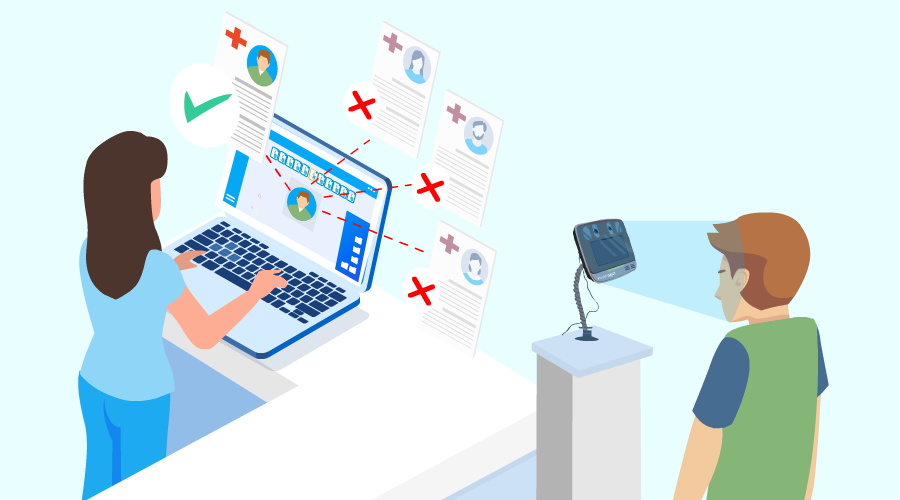
They may have used several process improvements, like enhancing the patient identification system, since patient identification is a recurring problem in most healthcare systems, as 8% of the medical records are duplicates on average. Some hospitals are utilizing biometric patient identification like RightPatient, which does enhance the whole process, as physicians can focus on more critical tasks rather than take time identifying the patients. All of this ultimately leads to the healthcare systems providing a personalized patient experience.

These healthcare systems are correct in placing their trust in process improvement methodologies, and the report reflects that. It is favorable for patients and healthcare providers alike, as 87% of the respondents stated that their organizations had experienced significant improvements in the HCAHPS scores or similar measurements, which is a clear indicator of the efforts they have made to enhance the patient experience in response to their previous scores.

The report’s breakdown is as follows: 13% of respondents have observed significant improvements, 44% have noticed moderate gains, and 30% have experienced minor improvements, while 5% saw no increase.

However, the results reveal another aspect – there is a positive correlation between patient experience improvement and the use of such process improvement methodologies. A large number of respondents (16%) have stated that they experienced significantly improved HCAHPS scores after using the methods compared to those who did not use them (6%). Likewise, moderate improvements were noticed by a large number of respondents (47%) who used the process improvement methodologies compared to those who did not (36%). Accordingly, the respondents who did not use such methods are far higher in number (10%) than those who used it (3%) and reported that they did not see any improvements.

How are the healthcare systems improving their patient experience significantly? Other than process improvements, they can also utilize technology to enhance the patient experience further. They can use apps like CircleCare. It is a patient retention app used by hospitals for active patient engagement. Once a hospital subscribes, they can instruct the patient to use it for various purposes like communication with the hospital, keeping track of their steps, recording their glucose levels, scheduling their medicine, and receiving valuable health tips within the app. All these activities not only help to improve patient engagement but also cause patient experience improvement, resulting in an increase in patient retention rates due to better patient outcomes.


RightPatient-enhances-the-patient-experience

Patient Engagement and Patient Experience help reducing hospital readmissions

RightPatient-enhances-the-patient-experience

Patient engagement refers to the concept of the patient’s behavior where he/she proactively participates with the healthcare provider, whereas patient experience is a concept which encompasses the range of interactions that patients have with the different tiers of the healthcare system such as interactions with doctors, nurses, and staff in hospitals, or basically the whole healthcare system. Some people use it interchangeably because both are linked together and are used towards achieving a common goal – reducing hospital readmissions.

RightPatient-enhances-the-patient-experience

Patient Engagement

Patient engagement is a concept which deals with patient activation, which is mostly empowering the patient so that the patient feels like they can take an informed decision about their healthcare to improve treatment outcome, lower costs, and also help provide more efficient patient care. This also rests in the hands of the healthcare system, as they are the ones who encourage patient engagement in the first place. There is also a framework for patient engagement, which is as follows:

  1. Shared Decision-Making Stage: In this stage, the patient is informed about his/her condition, and the patient participates in the decision-making process along with the healthcare provider. This approach is used mostly for patients whose situation is more preference sensitive.
  2. Patient Activation: In this stage, the patients are more aware and understand their situation as they know their condition. Research among 30,000 patients at Fairview health services in Minnesota suggests that patients with a lower level of understanding about their condition incurred 8% – 21% more costs in healthcare. Thus, this step of active involvement of the patient to treat their situation is the stage called patient activation. However, it does require the assistance of the healthcare systems, as they have accurate information regarding the patients.
  3. Broader Patient Engagement: This step is more about mass awareness creation and social interpretations of patient engagement. The concerned parties are to influence patient participation in such a way that it helps the masses; they try to educate the masses about their conditions so that they can make informed consensual decisions about their healthcare with respect to their healthcare providers.

Patient Experience

Patient experience refers to the number of interactions patients have with the healthcare system. It includes their care from health plans, and doctors, nurses, and staff in hospitals, physician practices, and other healthcare facilities. It is a core aspect of healthcare quality and is used to help measure a healthcare system’s ranking – the better the patient experience, the better the healthcare system, and vice versa. It also consists of components which patients value highly, like appointments, the hospital itself, the care they receive – basically everything associated with the healthcare provider. This is the basic concept of the patient experience. Healthcare providers use a combination of tools to enhance the patient experience. For example, to have an edge over other healthcare systems, many uses biometric patient identification like RightPatient, which matches the patient with their EHRs using iris scanning.

The link between Patient Engagement and Patient Experience

There are several factors which can interlink patient engagement and patient experience amongst them. A few are mentioned below:

  • Better patient engagement and experience lead to better patient satisfaction.
  • Better patient engagement and experience offer better value for patients’ money.
  • Better patient engagement leads directly to better patient experience.
  • Better follow up results in positive patient experience.
  • Patient engagement makes having a better patient experience more comfortable for the patient.
  • The liability of informed consent is divided between the patient and the caregiver, which affects the patient experience positively.
  • Better patient experience and better engagement go hand in hand in the financial aspects of the healthcare system as they help reducing hospital readmissions.
  • Effects on the hospital readmission rate

    • Better engagement and experience relate to better reputation buildup of the hospital, which affects readmission rates by reducing hospital readmissions.
    • Better engagement leads to more effective treatment, which reduces risk-standardized readmissions.
    • Better overall patient experience will result in the patient choosing the hospital over other hospitals in case of another condition of him/her or a family member.
    • Better engagement and experience lead to patient satisfaction, which results in a reduction of risk-based readmissions and increases reputation-based readmissions.
    • With better patient engagement, patients are acquainted with the treatment plans and procedures correctly, which results in lowering risk-based readmission as well.
    • Involvement of the hospital staff leads to better mental satisfaction in the patient as well, which results in better word of mouth reputation, and also leads to more effective treatment, which helps in reducing hospital readmissions.

    Many healthcare providers are very successfully providing both positive patient experience and increased patient engagement. For enhanced patient experience, RightPatient is the choice of many for biometric patient identification, which speeds up the overall process, helping the hospital staff to save significant time identifying the incoming patients so that they can put resources to better use in critical tasks. Patient engagement has a lot of tools, as well. However, the recent trend is to use apps like CircleCare, a patient retention app with a lot of benefits for both the patients as well as the healthcare systems. It can track steps, provide reminders regarding medicine, record glucose levels, blood pressure, as well as help the patients communicate with their healthcare providers. After the hospital subscribes to the app, the patient only needs to download it and use it, not only to communicate with their physicians but also for better health, which will help with patient engagement as well as provide better patient outcomes by reducing hospital readmissions, creating a win-win situation for all.

Ensure-accurate-patient-identification-with-RightPatient

Hospitals are Prioritizing Patient Matching Accuracy

Ensure-accurate-patient-identification-with-RightPatient

Patient identification has been haunting the healthcare industry since its inception. Using the existing practices in the industry, accuracy rates are significantly low and cannot be used to exchange health data effectively, as reported by officials from different healthcare systems such as hospitals and physicians. The industry is in dire need of patient matching improvement. 

Ensure-patient-matching-improvement-with-RightPatient

However, the above report is not the only one – other statements point towards the same conclusion of requiring patient matching improvement, as per the research brief from Pew Charitable Trusts. A study was conducted by Pew researchers along with Massachusetts eHealth Collaborative (MAeHC) that sought to identify the current situation of patient identification in the healthcare industry. They did so by collecting information from different healthcare executives with the use of interviews. Another aspect of the study was to identify how to achieve patient matching improvement. The sample of this study was healthcare experts and influential figures from various practices and sizes who served numerous patients in diverse regions all over the country.

A vast majority of the sample expressed the same view – patient identification and matching were quite inaccurate and desperately needs an overhaul, thanks to the increasing demand for interoperability.

Healthcare providers are now motivated to exchange more health data due to the recent CMS Promoting Interoperability program. That’s not all! CMS is also going to be granting incentives to accountable care organizations (ACOs) who will show savings through activities which support care coordination.

According to the Pew researchers, healthcare systems like hospitals and clinicians eligible for these programs need to exchange information with others so that all of the parties have the latest patient data from other various institutions.

The hospital officials stated that it is quite challenging to measure the match rates, resulting in their efforts being ineffective to examine and improve the patient identification rates. They also had difficulty providing a number when asked for the identification rates within their organizations. This was because many hospitals only keep a record of the duplicates identified through EHRs, whereas others do not know which files are relevant and which are unlinked.  Thus, without knowing the actual number of correct matches, these healthcare systems cannot determine their match rates. Therefore, only the amount of misidentifications was provided by them, thus summarizing the research.

It was also identified that healthcare systems could easily match patient identities when asked by organizations they are in constant contact with. Both automated and manual processes are utilized to link records to the correct individual.

However, whenever it is an organization with whom the healthcare system is not in contact with regularly, match rates are inclined to be lower. This is because these unsolicited requests introduce more blockades because the healthcare system may not have a record of that individual, and the healthcare system uses automated processes for such applications. On top of that, the research also showed that urban areas require better identification rates compared to rural areas as not much-sharing activities take place in the latter.

Some healthcare executives also think that improved patient identification matching requires significant costs. However, many believe that biometric patient identification is the solution to improve matching rates and is worth the cost. Some hospitals are even utilizing iris scanning solutions like RightPatient to identify all their patients and pull their relevant data from their EHRs and show a significant change. They report that it is fast, accurate and improves the overall patient experience as well as speeding up the whole process and saving valuable time of the physicians so that they can concentrate on more critical tasks such as the patients themselves.