
Tips for Maintaining Patient Health and Well-Being with Tech

Tips for Maintaining Patient Health and Well-Being with Tech

Tips for Maintaining Patient Health and Well-Being with Tech

Technological advances are creating seismic changes in virtually every industry, and healthcare is no exception. Providing effective patient care can present a number of significant challenges that have historically plagued the healthcare system at large.

These issues have incurred severe costs over time in the form of wasted resources, care failures, and even lives in many cases.

Tips for Maintaining Patient Health and Well-Being with Tech

Applying technology to solving these problems can fundamentally change the quality and effectiveness of the healthcare system. One area of healthcare that is experiencing particular innovation is that of patient health and well-being. Thanks to technological trends and advances over the past five years, our capabilities in this area have skyrocketed.

In this article, we’ll explore the top areas where tech is revolutionizing patient care.

Why Maintaining Patient Health and Well-Being is Vital

It could be argued that maintaining patient health and well-being is the single fundamental purpose of the healthcare system at large. However, there are several practical and operational ways of understanding this concept that help distinguish patient health and well-being from other systems within healthcare. Maintaining effective protocols for ensuring patient health and well-being is important in a few ways.

Patient health and well-being directly contribute not only to patient outcomes (e.g. the ultimate effectiveness of the treatment or care they receive) but to the patient’s experience and perception of the care they receive. Ultimately, not only the individual patients but healthcare providers, friends and family, and other stakeholders all benefit from favorable patient experiences.

Mitigating lawsuits, decreasing workplace stress for medical professionals, and increasing long-term engagement with healthcare are just some of the advantages the healthcare system can experience when it prioritizes patient health and well-being during the care process.

Top Technological Solutions Raising the Bar for Patient Health and Well-Being

Technology can be used to increase the average level of patient health and well-being in several ways. Here are a few of the top strategies for approaching this goal (though this is not an exhaustive list):

Leveraging the Power of Electronic Health Records (EHRs) and Patient Identification Tools

Having systems in place to better maintain and access patient records while providing care can create a number of benefits for both patients and medical professionals. Having a patient’s health history and profile information immediately available while providing care can help medical personnel avoid making costly mistakes or misdiagnoses.

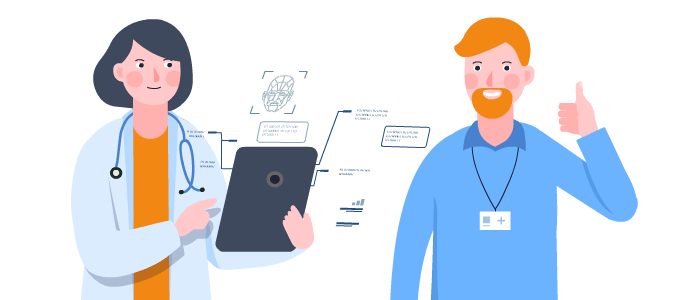
A touchless patient identification platform like RightPatient helps prevent patient safety issues, misdiagnoses, and duplicate medical records. RightPatient utilizes biometrics to identify patient records accurately each time patients come in for visits (both physical and telehealth), preventing mix-ups, duplicate EHRs, and more.

It can also save time by mitigating redundant tests or procedures. This can improve patient outcomes and can also improve their experiences while receiving care.

Implementing Biotech Tools for Better Monitoring and Data Capture

The prevalence, quality, and availability of consumer-accessible biotech and medical monitoring tools have reached unprecedented levels. This makes self-monitoring and new approaches to instituting care possible that utilize more sustained, accurate, or multifaceted data.

Tools for tracking blood pressure, heart rate, stress levels, sleep quality, blood samples, and more can be used by patients at home and in their daily lives. The resulting insights can much improve diagnosis as well as the treatment plan development process.

Utilizing Highly Viable Telehealth Options

Telehealth capabilities have also experienced rapid improvements and scaling over the past 3-5 years. This was partly propelled by necessity during the COVID-19 pandemic. The quality of telehealth services has made telehealth care an accessible, understandable, and preferred option for many patients across the country.

While telehealth won’t completely replace in-person healthcare provision (at least for the foreseeable future), it provides a helpful option for many patients and healthcare entities that can make certain types of healthcare provision much more efficient and convenient for both patients and care professionals.

Telehealth will likely be implemented in increasing measures, both to complement and replace certain types of in-person care, as the healthcare system continues to evolve.

Increasing Medical Professionals’ Access to Databases and Resources

The internet and its organization of information into accessible, centralized places have changed the way medical professionals can access medical knowledge. This can change the process of healthcare provision as well as increase its quality.

Doctors can use a medical prescription database on their phones to check instantly for drug incompatibilities or allergy dangers when writing prescriptions. Nurses can pull up the latest research from a medical database to answer a patient’s questions on the spot. Medical journals can be instantly cross-referenced to provide helpful insights when diagnosing a difficult case.

The wealth and accessibility of medical information and data have fundamentally changed the game for the healthcare process.

Integrating Artificial Intelligence (AI) and Robotics into Surgeries and Diagnoses

Emergent technologies are increasingly making a place for themselves in healthcare provision. Already, AI-capable software is being used to analyze large amounts of data for trends and insights. It can also be used to detect subtle nuances in test results and scans that are indiscernible to the human eye to help diagnose health conditions.

Robotic technology is being utilized in surgeries that require more precision or smaller movements than a human surgeon can perform. These technologies are rapidly expanding and iterating. Though many are still in the early stages of development and adoption, their use will continue to increase because of the clear benefits they present.

Tech Trends Continue for Patient Health and Well-Being

These technological trends and more will continue to develop and will be increasingly implemented to improve patient health and well-being in the coming years. Other technologies that are currently in embryonic or experimental stages will continue to emerge as well that will continue to shift the way tech is applied to healthcare.

It’s important to stay on top of technological solutions that are available now, as well as keep an eye on the technological horizons for significant developments that are sure to come.
6 Key Advantages Of Custom Software For Health Facilities

6 Key Advantages Of Custom Software For Health Facilities

6 Key Advantages Of Custom Software For Health Facilities

Health facilities are looking for ways to optimize their operations and improve patient care as the healthcare industry becomes increasingly complex. If you’re one of these facilities, you might need to use cutting-edge technology to your advantage—and customized software is one way to do that.

6 Key Advantages Of Custom Software For Health Facilities

Custom software is designed to meet the specific needs of a healthcare facility rather than being a one-size-fits-all solution. So how does this innovative technology help healthcare facilities? Let’s take a look at some key advantages:

Improve Patient Data Management

It’s no secret that patient data management is critical in healthcare. From patient records and medical history to billing information, you’ll need to keep track of a lot of data. Custom software can help you manage this data more effectively, so you can spend less time sifting through paperwork and more time providing quality patient care.

You can find healthcare software development services that can create a system tailored to your needs. Whether you need an electronic medical records system or a patient portal, these tech professionals can develop a solution to make it easier for you to store, access, and update patient data. As a result, you’ll be able to deliver excellent patient satisfaction without worrying about losing important details.

Automate Admin Tasks

Managing a healthcare facility is no easy feat. Many administrative tasks must be taken care of, such as scheduling appointments, handling insurance information, and billing patients. These tasks can be tedious and time-consuming, but they’re necessary to keep the facility running smoothly.

Custom software can automate some of these admin tasks. For example, you can utilize an appointment scheduling system to automatically schedule appointments and send reminders to patients. A billing feature can help streamline the invoicing and payment process. This approach can free up your staff’s time to focus on more important tasks, such as providing quality patient care.

Enhance Communication and Collaboration

In a healthcare setting, effective communication is key. It’s an industry where time is of the essence, and every second counts. That’s why it’s crucial to have a system that allows you to quickly and conveniently communicate with your team.

Custom software can help you enhance communication and collaboration within your facility. For instance, you can use a secure messaging system to share sensitive patient information without risking any data breaches. You might also want to utilize a video conferencing system to hold virtual meetings with your team. Whatever your needs, there’s a custom communication solution provider that can help you interact with your team efficiently.

Better Inventory Management

Healthcare facilities must deal with many inventories, from medical supplies to medications. It can be challenging to keep track of everything, even more so when you’re running low on supplies.

Custom software can be your best solution for inventory management. You can integrate a barcoding system to scan and track items as they come in and out of your facility in real-time. And since it’s customized, you can also include features specific to your needs, such as setting up low-stock alerts. It allows you to monitor what you have in stock at all times to avoid any disruptions in your facility’s operations. And more importantly, this system can manage your inventory more accurately, so you don’t have to worry about human error.

Increased Security

Security is always a top concern in the healthcare industry. With all the sensitive patient data floating around, it’s critical to have a robust security system in place to protect against potential threats.

Custom software can help you increase security within your facility. For example, you can set up access control features that restrict certain facility areas to authorized personnel only. You can also utilize data encryption to protect patient information from being hacked. This will give you peace of mind knowing that your facility has the latest security features to keep all the data safe and secure.

Scalable And Flexible

Healthcare facilities are constantly growing and evolving. As your facility grows, so does the need for new features and functionality. In other words, you’ll need a software solution that can grow with you and meet your unique preferences.

Custom software is highly scalable and flexible, which can easily accommodate your expanding needs. You can add or remove software features and functionalities without requiring a major overhaul. And since it’s tailor-made for your healthcare facility, you won’t have to worry about compatibility issues as everything will be designed to work together seamlessly.

Conclusion

No doubt, custom software can be a game-changer for healthcare facilities. By utilizing the right solution, you can improve the overall operations while providing better patient care. And with all the benefits that custom software has to offer, it might be time to evaluate whether this technology is the right fit for your healthcare facility. If it is, make sure to work with a reputable software development company that understands your specific needs.

How Mobile Health Tech Fuels Data-Driven Health Companies

How Mobile Health Tech Fuels Data-Driven Health Companies

How Mobile Health Tech Fuels Data-Driven Health Companies

Mobile healthcare technology provides enormous quantities of data. This information is being used all across the country to not only improve patient outcomes at the individual level but also to identify and interpret trends that are taking place at the societal level. 

It’s more than just a trend. It’s a new way of providing patient care. 

How Mobile Health Tech Fuels Data-Driven Health Companies

In this article, we take a look at how mobile health tech fuels data-driven health companies, and improves the outcomes for the communities that they serve. 

What is Mobile Health Tech?

Mobile health tech includes data-taking technologies like cell phones and wearable health devices. These items range from the very common (like Fitbits and other step trackers) to the more specialized.

For example, modern pacemakers fall into the category of IoT-driven wearable health technology because they allow patients and their physicians to monitor the wearer’s heartbeat and get up to the second updates on their status. 

Other wearables include glucose monitors or devices that check blood pressure. These devices have proliferated over the last decade thanks both to the increased demand for the technology—IoT-powered devices grow by the billions each year—and their relative accessibility. 

The devices are affordable, particularly when insurance companies help, and they can serve as a high-quality supplement for preventative care. 

Naturally, they are also great for taking data. 

Identifying Trends

The study of data is really nothing more than the recognition and analysis of patterns. No matter the field, data technicians are always trying to find repetitions and interpret what they mean. In healthcare this is particularly important, allowing physicians the opportunity to better understand the needs of the community that they are serving. 

For example, data is what allowed scientists to quickly understand that Covid-19 posed a most significant threat to older people or those with preexisting conditions. 

In the case of wearable health technology, it can detect patterns of heart disease or other issues that often occur in large numbers across a community. 

This allows physicians to identify factors that might be causing the large occurrences of disease, and help control them.

For health companies, this may mean bringing a new product to market or tweaking the features of an existing product to serve its user’s needs better. 

For the individuals within the community, it may alert them to problems they didn’t even know existed. 

More Personalized Care

Without personalized data, the healthcare system relies primarily on generalities. For example, when a 28-year-old white male weighing 150 lbs walks into a doctor’s office, he may be informed that he is in good health and that he should keep up with his healthy diet and exercise. 

If that same person has been using wearable health technology, however, the recommendations could change. The doctor could notice that the patient has heart palpitations, or that they, in fact, don’t exercise very much. 

Not only can this help catch problems early, but it also empowers doctors to provide significantly more impactful preventative care. 

Sharing Information

Data-driven healthcare environments also make it much easier to share information between doctors and even hospitals. Whereas once hard copies had to be passed from location to location, data can be shared through a link, giving whoever needs it a detailed report in seconds rather than hours or days. 

Not only does this help the entire healthcare system move more fluidly but it also improves patient outcomes by helping people get the care they need quickly. 

Maintaining a Data-Driven Culture

Just because the technology is available does not necessarily mean that every healthcare system in the country is using it to its full effect. Data integration, like any technological adoption, requires a lot of hard work, often from people who are already working hard enough as it is. 

For data integration to happen in the healthcare system it needs to start from the top down. This means that hospital administrators and higher-ups need to prioritize it for themselves, and for the doctors and nurses that use the technology regularly. 

It’s worth noting that periods of technological adjustment often lead to high rates of turnover. Employees feel frustrated that they are being given additional responsibilities without additional compensation, and they look for employment elsewhere. 

High turnover rates can be avoided by:

  • Give your staff ample time. Technological adaptions can take months to begin to work. Be patient, and provide your staff with as much time as they need to understand their new responsibilities.
  • Provide them with the resources they need. This could include specialized training or even updates to your tech stack that accommodate the feedback you are receiving from your staff. It can expensive to accommodate employee requests but it is usually cheaper than turnover. 
  • Be receptive to feedback. The “my way or the highway” routine is a lonely route to take. Listen to what your employees are saying and try your best to respond to their feedback.