
EHRs-need-accurate-patient-data-RightPatient

The Importance of EHRs Shows Why Medical Record Errors Must be Prevented

EHRs-need-accurate-patient-data-RightPatient

When caregivers are asked about the most important tool they have at their disposal to treat their patients, what answers are expected? Some would say their healthcare team, the cutting edge technology/procedures they have access to, the different solutions they have that improve healthcare outcomes, and so on. However, the most underrated and crucial tool is definitely the electronic health records or EHRs. Think of it – where would healthcare be without EHRs? EHRs ensure that the right information regarding the right patient is provided to the right medical team. However, this is applicable only as long as certain issues are prevented, especially medical record errors.
Medical-record-errors-are-preventable-with-RightPatient

That being said, let’s take a deeper dive into how EHRs are the most important tool for healthcare providers and why ensuring patient data integrity is a must. 

Healthcare is evolving but the starting point remains the same

Let’s go back to a time before the deadly pandemic. If someone went to a healthcare provider and told them that telehealth would become mainstream in the future, the provider would most likely say that they’re crazy! Look at the reality now – telehealth is still preferred by many, even while users are decreasing due to hospitals opening up. 

Healthcare has been evolving – rapidly in some areas and steadily in others. One certain thing is that healthcare isn’t limited to the four walls of hospitals and health systems anymore – one of the consequences of the pandemic. However, whether it’s in-person visits or virtual ones (telehealth/telemedicine), the foundation for providing care to patients remains the same – EHRs. 

EHRs are more important than most realize 

Patients, caregivers, and others are quite satisfied with telehealth now.

Patients on the younger side have stated that they would like to continue using telehealth even if the national health emergency is over. That’s probably because it’s more convenient, easier, and safer – all the patients need is an internet connection with a communication device. 

Caregivers have a bit more complex process to go through. 

EHRs-need-accurate-patient-data-RightPatient

Caregivers who are providing telehealth services have to consider a lot of factors – the telehealth platform, the portal, the EHR system, identifying the right patient, rules and regulations, ensuring patient safety online, and more. Also, while providing virtual services to the patients, the physicians need to ensure that the necessary information is being fed to the EHRs of the patients accurately – just as they do during an in-person visit. 

The bottom line is that whether the healthcare provider is seeing the patient within their facility or online, the one thing that basically remains constant is the patient’s EHR. However, issues such as medical record errors can mess EHRs up, derailing healthcare outcomes among other things – let’s see how. 

Why it’s crucial to prevent medical record errors

One of the starting points of providing healthcare is the EHR. When the patient interacts with their healthcare provider, usually to schedule an appointment, one of the first things done by the caregiver is pulling up the patient’s EHR. It basically provides the entire medical history, recent lab test results, and other information required to treat the patient. Moreover, any new information captured by the caregiver will be added to the EHR. EHRs, by providing timely, relevant, comprehensive, and accurate information to the physicians, improve healthcare outcomes, optimize healthcare delivery, boost coordinated care, and reduce adverse events. 

Now, imagine if an inaccurate EHR is selected – the consequences can be devastating! 

Medical record errors such as duplicates and overlays lead to patient mix-ups. Patient A’s treatment will be based on patient B’s medical record, leading to detrimental healthcare outcomes, adverse effects, and worse. Patient data within the EHRs becomes unreliable as it is fragmented, erroneous, and inconsistent. 

However, all of this can be prevented with positive patient identification with RightPatient.

RightPatient prevents medical record errors – and more!

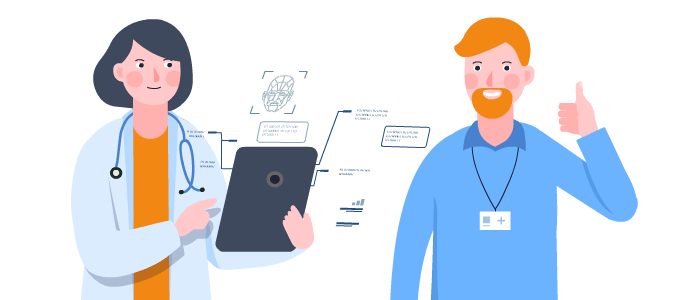
By identifying patients correctly right off the bat, RightPatient ensures that accurate, high-quality data is fed to the EHRs every time the patient checks in for a healthcare visit. Patients only need to look at the camera – the touchless biometric patient identification platform does the rest.

With RightPatient, responsible healthcare providers are not only ensuring patient data integrity, but they are also improving patient outcomes, preventing patient safety incidents, and providing optimal healthcare services to patients.


Another-patient-misidentification-case-RightPatient

Another Patient Misidentification Case Shows Why Hospitals Must Prevent It

Another-patient-misidentification-case-RightPatient

Patient misidentification strikes again. It’s not surprising at this point, as patient misidentification cases have been occurring frequently in hospitals and health systems. There are a plethora of consequences attached to it, which is why patient safety goals quite frequently have “improving patient identification” listed as one of the top goals to address. That being said, let’s take a look at the patient identification error in detail and how these cases are preventable with a robust patient ID solution. 

Another-patient-misidentification-case-RightPatient

A recent occurrence of patient misidentification, but certainly not the last one

Fortunately, the problem was detected before it caused any patient harm. While the patient, Ronnie (pseudonym), was waiting for a virtual visit, she was trying to convince the medical assistant that she didn’t have the rare condition called hereditary nonspherocytic hemolytic anemia. Ronnie doesn’t know how it got added to her EHR, however, that was not her only concern regarding the matter. As she was trying to get this inaccurate information removed, she experienced a lengthy and tedious process. 

The assistant informed Ronnie that only the person who added the condition can remove it – EHRs are quite sensitive documents, and access to modify them is restricted to only a handful of people. However, the assistant provided the name of the doctor, and the surprise here is that Ronnie had never had any physician by that name. 

The assistant was adamant that Ronnie might have had some encounter she forgot about – for instance, it might have occurred in an ER visit. However, Ronnie never went to the ER and got diagnosed with such a rare condition. She backed up her statement by adding that if she actually had hereditary nonspherocytic hemolytic anemia, she would’ve been informed about it. The assistant just reiterated that the physician has added it. Most probably, this occurred because Ronnie’s EHR was mixed up with some other patient and it was a condition that belongs to another “Ronnie” – a classic case of medical record mix-up caused by wrong patient identification

Unfortunately, the tale doesn’t end here – there’s far more to it. 

Ronnie had to go to extreme lengths to address the problem. As the discussion with the medical assistant got her nowhere, the condition was still present in her EHR. When Ronnie explained it to her physician, the latter tried to remove it but couldn’t, and neither could Ronnie’s other physicians. After trying everything, Ronnie submitted a formal request to modify her EHR – something many patients need to do to resolve patient identification errors.

RightPatient-accurately-identifies-patients

We believe that Ronnie’s among the lucky ones – many such cases remain undetected until it’s too late, causing detrimental healthcare outcomes. 

EHRs are beneficial but are bogged down due to patient misidentification

EHRs have a host of benefits and have been helping physicians see everything in one place, improve patient outcomes, and more. However, since EHRs contain sensitive information, editing them to rectify the errors is quite cumbersome – just look at the case above! Moreover, since caregivers have to share with other physicians due to coordinated care, these errors are seen by everyone involved in the patient’s treatment. 

This is just one case, and fortunately, Ronnie was able to identify the issue. As previously mentioned, this might have occurred because of a medical record mix-up – we know, because we’ve heard about numerous cases from hospitals and health systems. Unfortunately, there are thousands of patient identification errors in hospitals that are undetected and cause a plethora of issues – both financial and physical. How do we know so much about patient misidentification? 

Because our touchless biometric patient identification platform, RightPatient, prevents it and helps healthcare providers identify their patients correctly at all times. 

RightPatient ensures accurate patient identification at all touchpoints

RightPatient could have very well prevented the error in this case study – we have prevented such cases in numerous hospitals and have even drastically reduced duplicate record creation. The patients only need to look at the camera – our platform does the rest. During registration, RightPatient takes a photo of the patient and attaches it to the EHR. Whenever the patient comes in, the platform takes another photo and matches it with the saved one – providing an accurate EHR every time. 

RightPatient has been protecting millions of patient records in several hospitals and health systems. It ensures accurate patient identification, prevents medical identity theft in real-time, prevents duplicates and overlays, and more – ensuring positive patient outcomes.

Don’t become a mistaken patient identification story and contact us now to see how we can help you boost your bottom line.

Remote Patient Monitoring - What It Is and How It Can Improve Patient Health

Remote Patient Monitoring: What It Is and How It Can Improve Patient Health?

Remote Patient Monitoring - What It Is and How It Can Improve Patient Health

Over the past year, you’ve probably heard a fair amount about telehealth. Telehealth – the usage of technology to facilitate care when a patient and their doctor are not in the same place at the same time – has surged during the pandemic. It’s helped a lot of people get the care they need while allowing them to practice social distancing and reduce face-to-face contact with others. 

Remote Patient Monitoring - What It Is and How It Can Improve Patient Health

While many experts are worried that some problems faced during regular in-person hospital visits might bleed over to virtual visits, medical identity theft CAN be prevented. RightPatient, for instance, is used to identify patients accurately at hospitals, and can also be used to authenticate patients during appointment scheduling. Fraudsters, thus, are red-flagged when they try to impersonate registered patients, preventing medical identity theft in real-time during both virtual and in-person visits.

Coming back to the topic at hand, one type of telehealth that you may not have heard as much about but that is also rapidly growing in popularity is remote patient monitoring (RPM). Sometimes referred to as “RPM,” This program allows a physician to leverage technology to monitor a patient’s vital health information, such as blood pressure, weight, and heart, from outside the confines of a typical office visit. To accomplish this, patients are provided with a device that tracks health information the doctor needs. Covered by Medicare as well as other insurance plans, RPM is most often used to track the symptoms associated with a number of different chronic health conditions, including, diabetes, chronic obstructive pulmonary disease (COPD), hypertension, and heart failure, just to name a few. In all, the process is typically simple and straightforward and delivers significant benefits.

While the prospect of new technology can be daunting for some, many RPM devices are incredibly easy for patients to use. These devices transmit data to software utilized by the physician and their care team in one of three ways: via cellular data, Bluetooth, or the Internet, such as over Wi-Fi. Devices are typically plug-and-play, meaning there is little setup required on behalf of the patient. Some of the most common types of devices used in RPM include blood pressure monitors, glucose monitors, and weight scales. 

Most devices you will find in an RPM program require active participation from patients, although not a lot of work. A patient will need to step on the scale or properly put the device on their body to capture vitals data. Once the readings are taken by the patient, they are then sent directly to the doctor. This allows the physician and their team to use that information to make assessments about a patient’s immediate health, thus eliminating the need for frequent in-person visits and potentially avoiding exacerbations of a patient’s chronic health condition. 

How does RPM improve patient health?

RPM can help a healthcare team assess and treat concerning symptoms related to a wide variety of acute and chronic health conditions. The biggest benefit is that the data collected is sent in real-time, so the doctor can quickly identify concerning changes in a patient’s vital signs to make time-sensitive adjustments to treatment plans, thus avoiding potential health emergencies or helping a patient get the urgent care they need. 

Aside from reducing health emergencies, five other significant benefits are as follows:

Increased communication between the patient and their doctor

With more frequent communication between office visits, RPM allows a patient and their doctor to function as a team, actively working together towards improving patient health.

Increased personal accountability and awareness

Since RPM captures real-time information, patients are more aware of “triggers” that might exacerbate chronic disease symptoms. Patients also have increased motivation to make healthy lifestyle changes permanent as they witness the impact of those changes with the increased collection of health information.

Reduced need for traveling

Many chronic health conditions require close monitoring and frequent follow-up with a physician. Since RPM can be done from essentially anywhere, it can help significantly cut the number of time-consuming trips needed to a doctor’s office. By reducing the number of trips, also saves the money that would have been associated with those trips (e.g., gas, tolls, taxi, parking, babysitting, pet sitting) and eliminates the need to coordinate traveling for those office visits.

Better access and improved quality of care

Instead of regular trips to see a physician, RPM patients receive wraparound care services and 24-hour a day access to their healthcare team. Since health information is frequently sent directly to their doctor and care team, it’s easier to react quickly when health concerns arise, granting the patient precision-focused quality care.

Patients can take more control of their chronic disease

RPM helps a physician focus on their patient’s specific healthcare needs. This allows a doctor to provide better and more timely feedback, support, and education. Armed with this information, patients can take better control of their health through active adjustments to their lifestyle.

Big-Picture Benefits of Remote Patient Monitoring 

RPM is a great way to help keep patients healthier. It reduces the need for hospitalization, reduces hospital readmissions, can reduce the length of stay if a patient does not need to be admitted to the hospital, reduces healthcare costs, and permits older or disabled individuals to remain in their homes for longer. RPM is truly a win-win-win for patients, doctors, and our healthcare system.

Improve-the-revenue-cycle-management-with-RightPatient

Healthcare Revenue Cycle Management Optimization is Crucial as In-Person Visits Increase

Improve-the-revenue-cycle-management-with-RightPatient

Believe it or not, while COVID-19 was arguably one of the worst problems faced by the U.S. healthcare system, it was just ONE of many. That’s right, there are a plethora of issues that have been hampering healthcare for years, causing patient safety incidents, lost revenue, and more. Unfortunately, these losses went through the roof due to COVID-19 – they were estimated to be around $323 billion in 2020. While the pandemic is slowly waning, things are going in the right direction as providers are opening their doors for in-person visits. To recover from the pandemic’s financial losses, healthcare revenue cycle management optimization must be one of the topmost priorities for health systems – let’s take a closer look at why it’s important and some strategies that can help with revenue cycle optimization.

Improve-the-revenue-cycle-management-with-RightPatient

Revenue cycle management in healthcare facilities

Healthcare revenue cycle management might be quite complex, as it contains many intricate processes, but it is simple enough to understand.

Revenue cycle management, in a nutshell, is used by hospitals and health systems to keep track of the “revenue” they receive by treating patients. It has many steps, but RCM starts from the first interaction with the patient, for instance, appointment scheduling, and continues until caregivers receive the final payment. 

If broken down, revenue cycle of healthcare facilities usually contains 7 components:

  • Preregistration
  • Registration
  • Charge capture
  • Claim submission
  • Remittance processing
  • Insurance followup
  • Patient collections

As this list shows, the revenue cycle starts from the first interaction with the patient and ends with receiving the full amount for providing healthcare services to the patient.

RightPatient-optimizes-healthcare-revenue-cycle-management

While it might seem simple, healthcare revenue cycle management is quite complicated and difficult, especially when it comes to collecting claims from the payers (insurance providers). 

Why optimizing RCM has never been more crucial

While it was always important for healthcare providers to improve RCM within their facilities, doing so now might ensure their survival and get them through this trying time. COVID-19 has drastically affected healthcare providers, and while some received bailouts in billions, others had to close their doors permanently. The rest of them are simply struggling through the financial losses, but as in-person visits are increasing, things look brighter for the caregivers, as long as they are implementing strategies that optimize RCM right from the start. 

That being said, let’s take a look at some of the strategies that can be employed to optimize healthcare revenue cycle management.

Strategies that enhance healthcare revenue cycle management

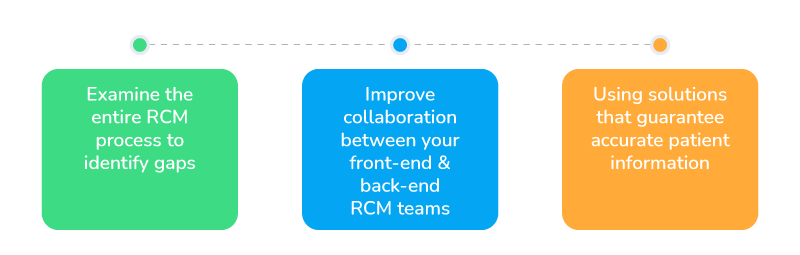
Examine the entire RCM process to identify gaps

While the age-old saying is “If it isn’t broke, don’t fix it”, rapidly evolving environments beg to differ. How do you know that it’s working out fine for you? Unless your denied claims are reduced to virtually zero, there’s always room for improvement. 

Improving-revenue-cycle-management-RightPatient

Analyze the entire RCM process to see if there are addressable gaps that require improvement – even the smallest ones matter. Talk to patients, survey your RCM team, take a look at the current numbers, and determine where you want the numbers to be. If issues are not found, then great – the problem might not lie in RCM, but if issues exist, work on them. RCM is evolving rapidly, and with the changes brought about by COVID-19, introducing technology in almost every aspect of the service to improve efficiency and collaboration has become the new normal. And speaking of collaboration, let’s move to the next point. 

Improve collaboration between your front-end and back-end RCM teams

The traditional practice is that the front-end and back-end teams work towards the same goals, but separately. However, if they work more collaboratively then the entire process will become seamless and it will help optimize RCM as information is never lost or misinterpreted – helping to receive payments much faster and in greater numbers, improving the bottom line. 

Using solutions that guarantee accurate patient information

When it comes to RCM, one of the biggest impediments to its optimization is denied or rejected claims – most of which can be traced back to billing and coding errors. On the front-end, if the patients are misidentified or if inaccurate medical records are used, then there are bound to be inconsistencies that are picked up by the payers. These errors lead not only to billing errors and denied claims, but can also be detrimental to positive patient outcomes – affecting the bottom line and the goodwill towards the hospital. As a result, ensuring patient data integrity and accurate patient identification is a must – both of which can be done with RightPatient.

RightPatient is a tried and tested biometric patient ID platform that safely and accurately identifies patients using their faces. The patient only needs to look at the camera – the platform does the rest, making it an entirely contactless process, something that is crucial in the post-pandemic world.

Not only does RightPatient make identification faster and accurate, but it also ensures that accurate information is fed to the registered patients’ EHRs every time they opt for healthcare visits, reducing billing and coding inconsistencies and denied claims in the process.

Ensuring-healthcare-data-quality-with-RightPatient

Ensuring Healthcare Data Quality Boosts Hospitals’ Digital Transformation Efforts

Ensuring-healthcare-data-quality-with-RightPatient

The U.S. healthcare system has always had a complex relationship with technology, to say the least. While it has always been open to ideas that can transform healthcare, there have been certain impediments. For instance, the concept of a unique patient identifier is around two decades old, but due to many concerns, one doesn’t exist yet. As a result, healthcare providers are either struggling with patient identification errors or are using a robust patient identification platform to resolve the issues. Moreover, new research demonstrates the complex relationship between healthcare and technology – healthcare is lagging behind other industries in terms of digital transformation. Let’s take a closer look at the study, why some are reluctant to pursue digital transformation, and how ensuring healthcare data quality can boost digital transformation, among other things. 

Ensuring-healthcare-data-quality-with-RightPatient

Some stats regarding digital transformation

The study was conducted with over 300 C-level executives, and while it includes a variety of industries, it also compares healthcare with the others, providing a different perspective.

Overall, a whopping 82% of the respondents from all industries stated that data quality is a barrier to data integration. This falls in line with the problems faced in U.S. hospitals and health systems – healthcare data quality can be inconsistent and problematic. 

Healthcare was found to be comparable to financial services and the telecommunications industry in digital transformation – most of the respondents from these organizations stated that they were witnessing success rates of around 60%. While this number might be encouraging to some, healthcare lags behind organizations such as software and tech companies, who naturally are advanced in digital transformation, as well as transportation and logistics firms.

While different industries were surveyed, some commonalities show digital transformation exists as a common problem between them. For instance, around 80% of respondents stated that they found “enriching” existing data quite difficult, impeding the quest to find new insights or meaningful patterns. This is also an issue seen in hospitals and health systems, as ensuring healthcare data quality can be a considerable challenge for many – something which is preventable with proper patient identity management – more on that later. 

Healthcare data quality issues also lead to losing time and resources as data needs to be rectified for usage. The survey also reflected this issue – around 40% of the respondents stated that their data teams have to spend time to clean the data, time which they could’ve spent doing something more productive, as data quality issues should not exist in the first place. 

Healthcare data quality issues have a long history

It’s no secret that patient misidentification is a crucial issue in health systems and hospitals, and it leads to patient data integrity failure. Just imagine that a patient named Sam Jackson comes to the hospital and is assigned the medical record with the name “Sam Jackson”. However, the EHR actually belongs to a different Sam Jackson! The modified EHR will be full of errors and will be unusable and dangerous for both the Sams.

RightPatient-ensures-high-quality-patient-data

Such problems have been going on for a long, long time, leading to patient data quality issues, medication errors, wrong treatments, detrimental healthcare outcomes, readmissions, and more.

High-quality patient data is a must

Hospitals and health systems have been investing considerable money and resources in population health management, big data, analytics, and other projects that can transform healthcare for their patients in a variety of ways. However, the only way these efforts can work is if they have access to patient data that is complete, accurate, timely, and relevant. Unfortunately, when patient data is corrupted because of duplicate and overlay records from identification issues, these investments are diluted and affect ROI, patient safety, and healthcare outcomes.

Digital transformation in healthcare, as a result, requires high-quality patient data, and everything depends on identifying the accurate patient record right from the start – something which RightPatient is built for. 

RightPatient ensures patient data integrity 

RightPatient has been ensuring patient data integrity for several hospitals with its touchless patient identification platform. Registered patients are identified accurately right from the start – all they need to do is look at the camera and the platform provides the right medical record. By ensuring that accurate patient information is fed into EHRs every time, RightPatient ensures that high-quality data is present within the facilities to boost digital transformation efforts and investments – improving patient outcomes and reducing unwanted incidents in the process.

Digital Transformation in the Healthcare Industry During Covid 19

Digital Transformation in the Healthcare Industry During Covid 19

Digital Transformation in the Healthcare Industry During Covid 19

The world is a technological hub, and we live in a tech bubble. Everything around us has digitalized, and this revolution is the backbone of every industry today. Technology fuels business and organizational ambitions. These ambitions help create a well-knit world that can be reached out at the click of a button. Co-operation and collaborations among industries are the growing trends. Technology provides efficient ways to bridge gaps and create a holistic and sustainable outlook. The necessity for technology and the need for organizations and industries to adapt it has risen now more than ever in the covid pandemic era. In a world where social contact is prohibited, and complete isolation is a survival method, it is almost impossible to imagine communities sailing through if it wasn’t for technology. It is historic how Individuals of the 21st century battled the pandemic and carried on with portable, hand-sized devices in their hands. 

Digital Transformation in the Healthcare Industry During Covid 19

The pandemic also highlighted the need for an efficient healthcare infrastructure that can tackle high demands, as it witnessed apocalyptic times. The surge of patients, demand for doctors, dispersal for treatment, everything saw bumpy roads. In tough times technology resolved a lot of issues. Owing to digitalization in healthcare mechanisms, seeking doctor appointments, query, consultations, etc. have shifted to online platforms, that even includes social media platforms. Technological change in medical services is focused on patient-centered ways to deal with medical care. It will help medical care suppliers smooth out activities, get what the patient requires, construct dedication and trust and offer a superior client experience. A healthcare digital marketing agency helps in amplifying the needs of the healthcare sector and plays a big role in transforming the industry on the whole. 

The advancements of digitalization in healthcare incorporate searching through relevant clinical information sites/blogs, working with clinical help, checking the nature of care, and planning and observing the spread of communicable illnesses, and following supplies of medications and antibodies, vaccines, etc. 

The developing trends prevalent in today’s technological health revolution, especially during and post-covid era, can be explained as: 

Telemedicine: Many online platforms such as apps and websites provide real-time consultations with the doctor at the comfort of their home with no physical contact. Creative forums are changing the manner in which patients communicate with medical services experts. From looking through a specialist to booking a virtual arrangement and speaking with specialists by video or voice call, telemedicine empowers individuals to access wellbeing experts on request. Booking appointments and conducting payments are hassle-free. Usually, in every telemedicine forum, an extensive profile of the doctor is mentioned, along with a consultation fee. The forums or applications provide absolute transparency in their functioning. 

However, many experts fear that the issues with regular in-patient visits might occur during online consultations as well – especially healthcare fraud. Fortunately, RightPatient prevents medical identity theft cases during telehealth visits and in-person visits as well. The touchless biometric patient identification has a vast amount of experience in preventing fraudsters from assuming patients’ identities, making it ideal for telehealth sessions.

Big Data Usage: Medical care is one of the promising enterprises where big data can work on preventable illnesses, improve personal satisfaction, decrease therapy expenses, and estimate waves pandemics. A massive amount of data is used to plan strategies in extensive healthcare sectors. Big data helps professionals to comprehend trends and make predictions for the betterment of society. Data is also used to interpret patterns that can serve as valuable insights to provide better care to patients, for example, administration, staffing, scheduling appointments in a clinic or any online forum. Clinical Decision Support Software is used with the help of big data to analyze medical data and provide health practitioners with appropriate resources to make informed decisions. Artificial intelligence (AI)-enabled medical device data or wearable device data can easily be tracked by the health care professional, and this assists in real-time alerting. Human errors are also omitted with the use of technology. 

Virtual Reality: Augmented Reality is an innovation that uses digitally produced reproduction of a 3-D picture or climate that permits an individual to hear, see and collaborate by using unique gear, for instance, headsets. The innovation establishes a reenacted environment where clients can communicate and interact. In contrast to customary UIs, VR takes clients inside a virtual encounter rather than just showing a screen. The Healthcare business is embracing augmented reality to convey better consideration to patients. It is used in pain reduction therapies and making physical therapies less stressful and more interactive. Virtual reality can also create stimulation in which doctors, caregivers, or any health care professionals can better understand a patient’s experiences. 

Artificial Intelligence: Artificial intelligence is widely used to implement error-free diagnoses and produce pathological images with utmost clarity. Artificial intelligence is under discussion for being used in drug creation and vaccine generation. Health care clinics can also use AI systems for storing records. From discovering links between hereditary/genetic codes to guiding a medical procedure by robots, studying persistent infections, etc., AI is rethinking and renewing current medical services through machines that can appreciate, foresee, learn and act.

Internet of Things: The Internet of things is a network of physical objects (things) that are embedded with sensors, software, and other technologies to connect and exchange data with other devices and systems over the Internet. A collection of fitness bands, wearable devices, and more, help health care professionals, hospital administration, patients, and customers to develop a well-connected information bubble where patient-centric data is analyzed and used to enhance understanding and deliver first-class care. These devices include hygiene monitoring devices, location of equipment in real-time, updates on vaccination slots, infection vulnerability, specific health condition profile, etc. Even health insurance companies can use the devices to check fraudulent claims and verify reports. 

RightPatient-boosts-the-advantages-of-telemedicine-in-healthcare

To Enjoy Advantages of Telemedicine in Healthcare, Providers Must Protect Patients Online

RightPatient-boosts-the-advantages-of-telemedicine-in-healthcare

Telemedicine, many times used interchangeably with the word telehealth, has grown tremendously during last year because of COVID-19. Whilst it’s been available for a long time (decades, really), its future was uncertain before now. Healthcare experts mainly debated about the possible advantages of telemedicine in healthcare, while patients were wary regarding online doctor appointments.

Still, because of COVID-19, practically everything is different, and desperate times required drastic measures. Rules enveloping virtual visits got relaxed, so, more providers and their patients got exposed to this new phenomenon called telehealth. 

RightPatient-boosts-the-advantages-of-telemedicine-in-healthcare

Online appointments currently have numerous supporters 

The user base for telehealth has soared, with numerous healthcare professionals and their patients supporting it and saying they want it to be a permanent part of healthcare after the emergency is over. It was also extremely helpful and convenient throughout the pandemic. That being said, let’s look closer and examine the advantages of telemedicine in healthcare plus the way providers can safeguard their patients throughout these appointments. 

A few advantages of telemedicine in healthcare

Telemedicine is cost-efficient for all

The universal understanding regarding virtual healthcare is that it is less expensive than in-person visits. Plus, it saves time, no need to travel to use it, etc. Whilst that’s correct, online healthcare is also less expensive for healthcare providers. Think about it – for most online appointments, all the provider requires is an online platform, the proper devices to connect with their patients, plus a steady, secure online connection. These types of appointments get rid of a lot of the costs linked with traditional healthcare – i.e. registration desks, using paper products, fewer staff members required, etc.

The AHA (American Hospital Association) even agrees with the aforementioned – online healthcare saved over 11% of costs for many hospitals. 

Online appointments provide access to many more patients 

Even the toughest critics can’t refute the fact that telehealth offers top-notch care to many more patients than in-person appointments. Consider how it worked before COVID-19 – the majority of patients in rural areas were unable to get to a suitable hospital for several reasons.

RightPatient-protects-patients-during-virtual-visits

An example of one of the top advantages of telemedicine in healthcare is that one can use it from any place – so it’s quite convenient for those who live in rural areas. Whilst a tiny amount of providers offered online appointments prior to the pandemic for rural patients, the pandemic showed how helpful telehealth can be for routine patients too. Online appointments assisted in providing top-notch care to a huge number of patients who had various problems – a lot still use this and the experts want it to become a permanent option for healthcare. 

Telemedicine fits more people’s needs

Preventive medicine, improved quality, superior scheduling experiences – online appointments can meet all those things and even more! 

Numerous experts say because patients are more involved with telehealth appointments than with in-person appointments, the former could encourage more preventive medicine usage. Patients, likewise, feel that they are getting more personalized care with telehealth appointments since they report during in-person appointments that their physicians do not even look at them – only at their computer screens. These cases, along with other factors, might cause a surge of usage that helps to improve healthcare outcomes in the future. 

Online appointments offer a superior quality of care for a lot of patients, particularly rural ones, as described earlier. With online appointments, patients can pick which provider they want, and they can even be miles away and still get one that meets their precise healthcare needs. 

Finally, with online appointments, patients can merely pick the timeframe that works best for them, so, scheduling is easy. Whilst that also can happen with regular in-person appointments, the patient now doesn’t have to wait hours or longer to see their doctor, all they have to do is log in at their appointment time and see their doctor.

Still, whilst telehealth has a huge possibility, it remains pretty new, so several challenges have to be solved – one is protecting patient information online. 

Providers have to safeguard their patients online to enjoy the advantages of telemedicine

Patient records and data are very sensitive information, which is one of the dominant reasons most data breaches occur in the healthcare industry. Hackers can sell a medical record for thousands of dollars on the black market, and the scammers then buy them and use them to get healthcare and the actual patient is charged with the bills. While this normally happens in traditional in-person appointments, a lot of experts believe it can also occur in online appointments, so, the healthcare providers have to safeguard their patients’ information while they are in an online appointment too. 

Luckily, RightPatient comes with lots of great experience in protecting patient data as well as avoiding medical identity theft in real-time.

One of the top touchless patient ID platforms utilized by many healthcare providers, RightPatient detects patients via facial recognition and averts scammers from trying to pass as the real patient during the registration process and beyond.

RightPatient can be used during telehealth appointments – so it is perfect for protecting your patient’s information as well as stopping identity theft during virtual visits. Patients only need to take a picture of themselves and a picture ID like their driver’s license – RightPatient takes it from there. 

Is your facility ready to safeguard your patients’ info and stop medical identity theft in real-time? 

Improving-Patient-Outcomes-with-RightPatient

Improving Patient Outcomes Has to Be the Main Concern since In-Person Visits Are Back

Improving-Patient-Outcomes-with-RightPatient

Luckily, it looks like the COVID-19 pandemic may be ending at last. Whilst COVID-19 cases 19 are still occurring, the overall rate has slowed down, thanks to over 326 million Americans getting vaccinated. As restrictions that used to be in place since the beginning of the pandemic start to ease in most states, businesses are gradually opening back up. However, healthcare, which did not close is finally receiving great news – in-person appointments, as well as margins, are going up gradually. Rising patient appointments are not sufficient for caregivers – guaranteeing quality and safety in healthcare facilities is also necessary for improving patient outcomes. 

Improving-Patient-Outcomes-with-RightPatient

Having said that, let’s look closer at the present condition concerning patient volumes as well as margins, some statistics regarding them, and the reason hospitals must find solutions that can assist them in lowering significant costs, eliminating current issues, and surviving this difficult environment. 

Healthcare providers may, at last, be getting a break

After several months of financial losses, along with suffering caused by COVID-19, healthcare providers, finally are opening facilities for in-person visits. Whilst the reaction is sluggish, it is rising steadily regarding patient volumes along with margins, based on research by KaufmanHall – let’s look closer at a few of the stats.

These stats reveal that whilst patient volumes went up, particularly outpatient visits, providers are still ending up with extremely low margins. In May, the median hospital operating margin index was only 2.6 percent, and if you include the federal CARES funding, that was still only 3.5 percent. 

Nevertheless, the operating margin climbed 95.2 percent YTD (year-to-date) when compared to Jan to May 2021, and operating EBITDA (Earnings Before Interest, Taxes, Depreciation, and Amortization) margin improved close to double – 102.4 percent YTD in May, the latter is excluding the CARES aid. 

Conversely, when in comparison to pre-COVID-19 periods (Jan to May 2019), the operating margin was down to 20.5 percent YTD without CARES.

Therefore, what do all these numbers really show regarding healthcare providers? 

Actually, it is very simple – when health systems and hospitals were able to open up, and when the restrictions eased, that led to rises in their margins in comparison to the shutdown timeframes. Though the figures were lower in comparison to the pre-pandemic time due to patient numbers being quite high then, a few cases were nearer to pre-pandemic levels, said that same report.

RightPatient-ensurez-positive-patient-outcomes

Based on these numbers, it is very clear healthcare is improving its numbers, yet hospitals and health systems can’t stop worrying too soon – they must work towards improving patient outcomes.

Providers must deliver their patients a safer atmosphere, carry out telehealth services for people who don’t want to do in-person appointments and decrease issues that may harm patient care. Overall, they must make sure they’re striving to improve healthcare outcomes.

Improving patient outcomes is necessary to mitigate losses

Even while COVID-19 was rampaging, there were a lot of times when it was obvious hospitals needed to work hard towards improving patient outcomes. Incorrect patient information led to repeated lab tests, inappropriate data sharing, sending results to incorrect patients, etc. Regrettably, that is not new, since healthcare providers have always faced these issues, with one of the dominant causes being the wrong identification of patients. 

Misidentifying patients impedes patient outcomes

It is very simple – whenever patients get misidentified, they’re assigned an incorrect EHR, and their treatment process is completely wrong from the start. Patients may get asked to do an unneeded or repetitive lab test, and then will most certainly receive incorrect treatment – all of this gets recorded in an incorrect EHR. This all causes detrimental healthcare outcomes, as well as hospital readmissions, plus in some cases, people even die. 

Healthcare providers were facing litigation costs already as well as loss of income because of such cases. However, the COVID-19 issue, along with these losses, might be sufficient to make them permanently close their doors. They simply can’t afford to make medical mistakes and jeopardize patient safety.

Luckily, they do not have to – RightPatient can help with that. 

RightPatient improves patient outcomes

RightPatient identifies patients correctly from the beginning, and because it is touchless, it offers a hygienic and safe experience for all. Our biometric patient ID platform is used by many reputed healthcare providers like Terrebonne General Medical Center as well as Grady Health, and it protects millions of patients from adverse effects. 

Due to COVID-19, hospitals have to do what they can to lower their losses. RightPatient can do this since it improves healthcare outcomes, as well as averts misidentification problems, and improves the facility’s bottom line.

RightPatient-Identity-Management-in-Healthcare-Facilities

How Identity Management in Healthcare Helps With the Interoperability & Patient Access Rule

RightPatient-Identity-Management-in-Healthcare-Facilities

With COVID-19, telehealth, data breaches, and other challenges, healthcare providers have had their hands full. Because COVID-19 is a national health crisis, CMS pushed back compliance with its Interoperability and Patient Access rule until July 1, 2021, though it’s been effective since the start of 2021. Nevertheless, with mass vaccinations across the country, as well as hospitals slowly opening, CMS (Centers for Medicare and Medicaid Services) will require healthcare providers to comply from July 1. So, let’s examine a few of these requirements, the way it mandates correct information of patients, and the way proper identity management in healthcare facilities can ensure patient data integrity.

RightPatient-Identity-Management-in-Healthcare-Facilities

The reason CMS is gambling hugely on this rule

Like all the rules out there, the CMS Interoperability and Patient Access rule is comprehensive – the majority of it requires healthcare facilities to remove any restrictions which normally prevent patient information exchanges all across the healthcare gamut. 

Under this rule, CMS plans to improve interoperability along with patient access – assisting the providers as well as patients to ensure proper healthcare outcomes.

Concerning interoperability, CMS wants the rule to aid in assisting healthcare providers to share and access patient information securely and effectively. That will assist in improving collaboration and improving healthcare outcomes as it will help make informed decisions more accurately. 

On the other hand, patients, when they’ll get access to their health information, will be more involved with care decisions, increasing patient engagement. 

Improving patient data access across the care continuum has several benefits such as improving healthcare outcomes, cutting costs, reducing redundant lab tests, reducing inefficiencies, and boosting collaboration among the caregivers – improving healthcare results as well. Though, all that will happen only if patient data integrity is rigorously maintained, and this requires immaculate identity management in healthcare facilities.

Healthcare providers must support e-notifications

As a segment of this rule, CMS necessitates healthcare givers (which utilize EHR systems) like critical access, acute care facilities, and psychiatric hospitals must deliver e-notifications to the patient’s other caregivers like primary care doctors, post-acute providers and suppliers, amongst other entities during ADT (admission, discharge, or transfer) events – appropriate for ED as well as inpatient admissions. This data has to consist of the patient’s basic information, the name of the sending organization, and if needed, the diagnosis of the patient.

Boost-CMS-Compliance-with-RightPatient

But how does identity management in healthcare facilities play a part here? 

So, patient identification in the majority of hospitals as well as health systems is yet a substantial dilemma for several causes. The outcomes can be distressing – patient misidentification can lead to making errors with medical records, mixing up patients, medical identity theft, damaging healthcare results, getting readmitted to a hospital or it could end up killing someone!

Think about it. What if an incorrect alert gets delivered to the incorrect caregiver because of a patient identification error – it would end up a disaster for everyone, if unnoticed. Not just would it impede the outcome for the patient, it would additionally compromise CMS compliance – affecting reimbursements, something that is very important for the majority of healthcare suppliers. 

Whilst incorrect patient identification is quite common in the majority of healthcare facilities, reliable caregivers are utilizing RightPatient to guarantee immaculate identity management in healthcare facilities. 

The Way RightPatient guarantees accurate identity management in healthcare facilities

RightPatient is the leading patient ID platform that identifies patients accurately at any touchpoint in the care continuum. By accurately identifying patient records right from registration and beyond, RightPatient prevents false alerts and ensures that the appropriate healthcare organization receives e-notifications. Since RightPatient also ensures patient data integrity by protecting patient information, it also leads to lower readmissions, boosting CMS compliance down the line. RightPatient also enhances patient safety, prevents medical errors, red-flags fraudsters in real-time – improving the bottom line in the process. 

How are YOU planning to ensure CMS compliance at your healthcare facility? 

Digitized Healthcare: The Benefits of Digital Health

The prospect of convenience is not only available to luxury products and more and the ability to buy groceries from the comfort of your home. The digitized age is something that permeates every aspect of society, especially when it comes to healthcare. In a world where convenience is the king, it only makes sense to add proper healthcare to the mix.

That said, some people are still confused regarding how digital healthcare benefits everyone. Such is understandable, as more and more people are adopting a more introverted lifestyle, it’s challenging to tell whether such a move is beneficial to healthcare. Here are just some of the benefits of the shift to digital health.

Getting the medical advice you need as soon as possible

The Internet is full of home remedies for those who are too busy (or too afraid) to get medical attention for a minor condition. There is no end to remedies that may or may not work given the situation. Digital health turns things around by making it that much easier to contact medical professionals and get their advice.

If you’re looking for the best fungal nail infection treatment but are feeling somewhat embarrassed about the condition, there’s no need to worry about going out — even if there’s nothing to be ashamed of. You can get the advice you need for treatment without worry.

A push for prevention rather than reacting to issues

Considering how easy it is to contact medical professionals, thanks to the rise of digital healthcare, more and more people are getting used to the idea of asking about potential issues instead of only heading to the hospital when it’s no longer manageable. There’s no need to run to the local clinic as you can contact your local physician online and get their advice. You no longer have to worry about waiting in line at the clinic and catching someone else’s sickness in the process.

Individuals with an open line of communication with their physicians are more eager to talk about minor issues instead of always waiting for something severe to show up. This opens up the opportunity for a preventative lifestyle.

Ensuring proper healthcare outcomes is a must

However, healthcare providers need to ensure that they are providing accurate treatment to their patients in order to improve patient outcomes – for both in-person visits and virtual ones. Issues such as patient identification errors are far too common and can lead to medical record mix-ups, mistreatments, hospital readmissions, or worse.

Fortunately, a touchless biometric patient identification platform like RightPatient can eliminate these issues, identify patients accurately at any touchpoint, and even prevent medical identity theft in real-time – leading to proper treatments and improved healthcare outcomes. 

Easier on everyone overall

With so many people who need serious medical attention these days, it’s never wrong to leave the hospital rooms open for those who need them. The fewer people there are crowding up a hospital, the better it is for the patients and the doctors, nurses, and other medical staff. It’s something that benefits everyone, and you can breathe a little easier knowing that you’ll get what you need without having to risk going out.

When it comes to the future of digital health, things are undoubtedly looking much brighter. It’s something that will only continue to improve over time, and more breakthroughs in convenience will help make it easier for medical professionals to handle patients. Getting something as crucial as healthcare from the comfort of your home is the goal.