
Preventing-Healthcare-Identity-Theft-RightPatient

Curbing Healthcare Identity Theft During Telehealth as it Gains the Biden Administration’s Support

Preventing-Healthcare-Identity-Theft-RightPatient

So, this topic shouldn’t surprise you, but many folks are happy about the announcement. You can’t help but have seen that the use of telehealth soared after the COVID-19 pandemic occurred in the United States along with the easing of any of the surrounding restrictions. Telehealth is here to stay now, but there are concerns regarding healthcare identity theft. Ok, its usage has fallen slightly currently, although there is an ever-expanding amount of healthcare specialists, patients, and providers who wish to institute these virtual visits into a permanent healthcare option. Luckily, that appears to be a good possibility since the Biden administration supports this, so long as it meets precise conditions. Nevertheless, there are additional problems to solve – the most important one is medical identity theft occurring during a session.

Therefore, let’s look closer at the role of telehealth in healthcare, the reason lots of folks now support it, the way the Biden administration supports it, as well as the way RightPatient can avert medical ID theft cases during a remote session. 
RightPatient-prevents-healthcare-ID-theft

Telehealth is getting more popular amongst providers and users 

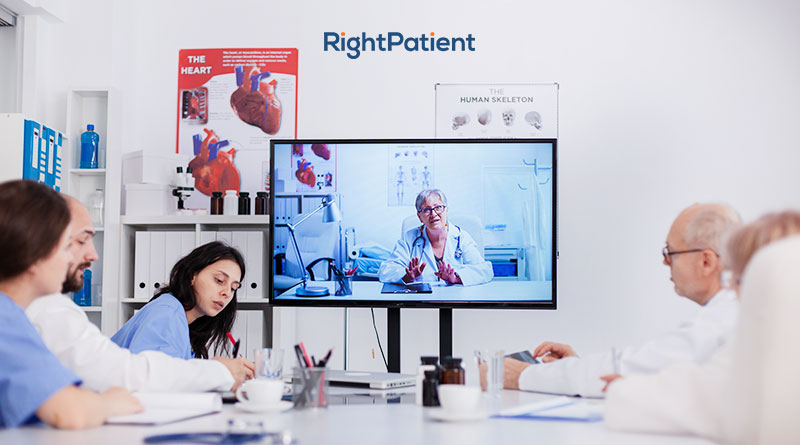
Telehealth has existed for many years, however, it only revealed its full potential when the COVID-19 pandemic occurred. Since people weren’t able to see their providers in person and many elective procedures got postponed indefinitely, healthcare givers, as well as the government, rushed to provide another method of treating non-critical patients. Telehealth proved to be the answer.

Since another method of treating patients was urgently needed, telehealth got elected, and many of its previous restrictions got lessened. Telehealth got very popular amongst caregivers and patients. A lot of younger patients even decided they prefer telehealth sessions and will use them after the COVID-19 pandemic ends.

Though, a lot are concerned that whenever the pandemic ends, the restrictions on telehealth will return and it will again be hard to use.

The future of Telehealth seems great – Yet there’s a need for the correct framework

Luckily, that is not going to occur, as the Biden administration has said it is going to support expanded telehealth access when the COVID-19 problem ends. Because it assisted in providing virtual care as well as has also ensured patients were safe during this unprecedented timeframe, it has earned a substantial amount of backers who profited from telehealth, so wish to carry it on.

Congress is looking at the present scenario, contemplating which of the regulations on virtual care ought to change whenever the Covid emergency is done. Currently, there are about forty-three bills that have provisions regarding telehealth that have been generated since the start of the pandemic, according to the Alliance for Connected Care.

Preventing-Healthcare-Identity-Theft-RightPatient

Still, HHS Secretary, Mr. Becerra, asserted that everyone must be able to access telehealth, and care quality must be ensured. The Biden administration aims to ensure U.S. citizens get top-notch healthcare through virtual appointments – he said they do not wish folks to get billed for items that do not improve the services. 

Healthcare identity theft can happen during a virtual visit as well

So, whilst telehealth’s future seems bright, a few issues must be ironed out. The healthcare providers additionally have to work to ensure patients get the top care and stay safe from medical identity theft.

One of the concerns some have overlooked regarding telehealth visits is medical identity theft cases that may happen in a session. Exactly like the way healthcare frauds as well as healthcare identity theft occurs in an in-person appointment, experts predict these will happen in virtual visits too. Healthcare suppliers must make sure that is averted – something they can accomplish via better identification of patients during the telehealth visits. Thankfully, RightPatient assists with doing that, and even more! 

RightPatient averts healthcare identity theft in real-time

For years RightPatient has prevented medical ID theft as well as healthcare fraud, thus, safeguarding millions of patient records throughout several top hospitals and many health systems. RightPatient leads the way in touchless biometric patient ID platforms which makes sure patients get identified correctly throughout the care field. Consequently, when a bad actor attempts to pass themselves off as a patient, RightPatient red flags them, avoiding medical identity theft instantly, even during virtual visits. 

RightPatient does not just assist in preventing healthcare identity theft, but it additionally safeguards patient information, ensures patient safety, and decreases litigation costs related to identity theft incidents.

Since the Biden administration backs telehealth, the future of using it looks great. Yet, caregivers must avert problems connecting to virtual appointments, and serious issues such as medical ID theft can be avoided with RightPatient.

What is the way you prevent these cases of identity theft in your medical facility?

Reduce-denied-claim-with-accurate-patient-identification

Claim Denials are Damaging More Than 30 Percent of Hospitals – Are You Stopping Them?

Reduce-denied-claim-with-accurate-patient-identification

Claim denials have always been a problem – it is a fact that they have occurred in all kinds of health issues for many years. Nevertheless, it got pushed to the back of the line due to the COVID-19 as well as problems with IT in the healthcare field, efforts to get people vaccinated, etc.

Sadly, claim denials have gone up – they are happening much more often now. In fact, it’s reported they have gone up 20 percent in the last 5 years! That, along with other gloomy statistics, was announced in a recent study from Harmony Healthcare. With that out of the way, it’s time to look more closely at this situation and how revenue cycle management in healthcare operations can be improved by identifying patients correctly.

Reduce-claim-denials-with-RightPatient

A short update on claim denials

Claim denials, additionally called denied claims, are simply claims normally sent in by a healthcare supplier to the authorized payer, except for particular reasons, they were deemed “unpayable.” That occurs because of issues with coding and billing, mixing up medical records, missing filing deadlines, inadequate medical needs, or additional pertinent explanations.

So, here is what’s going on currently regarding denied claims.

Several disturbing statistics concerning denied claims

The COVID-19 pandemic triggered nearly everything to become worse, including denied claims. In fact, the earlier stated study showed a massive one-third of hospitals stated their denial rates were 10% or over. The study included more than 130 healthcare providers all over the United States and this rate of denial ranged between 6 and 13%. The accepted “danger zone” for denied claims is touted as 10%. 

This study likewise explained why hospital administrators think denied claims happen. Thirty-two percent said it was caused due to coding errors while twenty percent said the reason was front-end concerns. Nonetheless, both these issues may be based on mix-ups with medical records, which comes from patients being misidentified – we will speak more on that topic later. 

Whilst these revealed denied claim frequency, what’re the real issues denied claims cause?

The massive effect of denied claims

Denied claims are exceedingly expensive if faced – and may amount to around $4.9 million for the healthcare supplier. No matter how big or small a provider is, that is a huge portion of cash, and could even cause some hospitals to close.

Reduce-denied-claim-with-accurate-patient-identification

Understand, denied claims are not merely expensive on their own, FTEs or full-time equivalents must do their best to fix any coding errors so the successive claims won’t be refused or refuted. This means the FTEs aren’t doing their normal job, which slows down other work and causes the whole process to be ineffective. Altogether, these facts cause a major blow to the bottom line of these hospitals. 

As earlier stated, numerous denied claims are generated because of issues at the front end as well as coding mistakes, which happen a lot due to misidentifying patients.

The way denied claims and misidentifying patients are linked

This is very easy to figure out – it begins at the registration desk. The incorrect EHR gets noted with the patient, so, incorrect info is placed in the medical record. That may occur because of an error like an overlay or duplicate. If no one discovers the error before the treatment is concluded, the patient’s provider ends up sending the wrong claim info to the authorized payer. 

As the claim is being processed, the authorized payer closely inspects it and sees there are errors, thus the claim gets denied. Misidentifying patients causes coding errors and front-end problems. These issues can be averted if the patient is identified properly. 

RightPatient decreases claim denials, and goes beyond! 

RightPatient helps many healthcare facilities protect millions of their patients’ records. It’s the industry’s top touchless biometric patient identification platform. It works by identifying patients via facial recognition, thus averting overlays, duplicates, and mix-ups with medical records from the beginning. Therefore, this averts the claim from being denied, thus saving hospitals lots of money. It just may be the answer you need to reducing denied claims.

The benefits of RightPatient do not end there. Besides reducing denied claims, RightPatient improves patient safety, enhances healthcare outcomes, and ensures positive patient outcomes. 

Does your healthcare facility prevent denied claims efficiently?

How-to-Protect-Patient-Data-with-RightPatient

How to Protect Patient Data at Your Hospital

How-to-Protect-Patient-Data-with-RightPatient

The U.S. healthcare system has never had a shortage of problems – it has always dealt with several issues simultaneously. The exorbitant prices, the lack of price transparency, medical identity theft cases, lack of patient identification in hospitals, preventable medical errors, and archaic laws are just some issues that plague healthcare. Healthcare data breaches have unfortunately been growing at an exponential rate. With no signs of them stopping anytime soon, it becomes crucial that healthcare providers, professionals, and everyone involved with patient information be vigilant regarding protecting the data. With that out of the way, let’s take a look at how to protect patient data within hospitals and health systems with 5 practices. 

How-to-Protect-Patient-Data-with-RightPatient

Why protecting patient data is becoming so important

Those who are familiar with the U.S. healthcare system know that data breaches are occurring left, right, and center. These data breaches have several grave consequences such as patient information being stolen, being sold in the black market, being used for medical identity theft, patient data integrity failure, litigation costs, loss of goodwill – the list just goes on. And all of this might occur simply because a healthcare staff member opened an external email without being wary of the possible risks. 

As a result, healthcare professionals and facilities need to be on guard at all times against such cyberattacks so that they don’t lead to data breaches, disruption of operations, or the most common endgame – medical identity theft.

With the “why” out of the way, let’s dive into the “how”, to be more precise, how to protect patient data.

How to protect patient data with 5 practices

Work on HIPAA compliance

HIPAA, or the Health Insurance Portability and Accountability Act, mandates that healthcare providers along with anyone else dealing with patient information protect patient information effectively at all times. It provides many rules and regulations that cover a lot of aspects, and if applicable organizations aren’t ensuring compliance, then they’ll be heavily penalized. 

However, working on HIPAA compliance just for the sake of avoiding penalties won’t help. HIPAA provides several guidelines on how to protect patient data at rest and during transmission. If these guidelines are taken as starting points, not only will HIPAA compliance be ensured, but patient data will also be protected – reducing chances of data breaches. There are even solutions such as HIPAA compliance software that can also aid in compliance – helping identify security gaps and reducing the administrative burden in the process.

Protecting-patient-data-RightPatient

Improve user authentication practices

Patient data can be breached from anywhere, and with many healthcare staff working remotely, the risks are just increasing. Putting safeguards in place that enforce limited access to everyone that deals with patient information can slow down breaches. This way, even if the hacker has access to the employee’s account, they will only have restricted access to sensitive information.

Always encrypt sensitive information 

Encrypting sensitive information makes it useless for hackers – it makes the information unreadable by outsiders or unauthorized users. Enforce employees’ use of encryption whenever transmitting sensitive patient information.

Provide training on patient data security whenever required

Too many training sessions on patient information security can be ineffective and counterproductive, and too few can reduce its importance. Instead, find the sweet spot for your organization to provide training sessions regarding patient information security.

For instance, whenever there’s news about another data breach that can provide meaningful information, conducting a training session and disseminating the information to the employees can help – learning from others’ mistakes might just be the thing that will prevent a data breach. Also, regularly provide updates on how to handle external emails and requests – the safest bet is treating each email as a suspicious one.

Implement solutions that protect patient data

Several constraints prohibit healthcare providers from fully being protected against data breaches – cybersecurity budgets and hackers coming up with innovative ways to attack being the most common ones. However, while data breaches might seem inevitable for many, patient data can be protected, but how?

RightPatient is the answer.

It is a touchless biometric patient identification platform that prevents medical identity theft in real-time. By ensuring accurate patient identification, RightPatient successfully red-flags fraudsters during the registration process. This prevents fraudsters from tampering with the EHRs, ensuring patient data integrity, and protecting patient data in the process. 

How are you protecting patient data at your healthcare facility?

RightPatient-helps-improve-patient-outcomes-patient-ID

4 Promising Health IT Practices That Improve Patient Outcomes

RightPatient-helps-improve-patient-outcomes-patient-ID

The pandemic, when it hit the U.S., spurred its healthcare providers to adapt to the rapidly changing landscape it forced on everyone. Hospitals and health systems had to search, come up with, and implement drastically different practices that many experts thought weren’t possible. Just look at telehealth – its future was quite uncertain. However, during the pandemic, both its popularity and usage skyrocketed as hospitals and health systems relied on it to provide care to non-critical patients without risking the latter’s safety. That’s just one example – there are similar promising health IT practices that are trending and set to grow in the future and improve patient outcomes in the process. Let’s take a detailed look at some of the more popular health IT practices that can improve quality and safety in healthcare facilities.

Practices-That-Improve-Patient-Outcomes-RightPatient

4 trending health IT practices that help improve patient outcomes

The increased role of IT teams

As the pandemic forced healthcare providers to switch from in-person visits to virtual ones, implement practices to aid remote work, and ensure that data management is accurate, it was the IT teams’ responsibility to ensure that everything went smoothly. Moreover, cybersecurity attacks were higher than ever since providers already had their hands full.

CIOs and their IT teams not only had their hands full during the pandemic but they also had added responsibilities and expanded roles to play. As COVID-19 cases are decreasing, healthcare providers are aiming for a different approach to providing better and safer healthcare services to improve patient outcomes in the process. As a result, CIOs and relevant IT personnel are in huge demand.

Talking about cybersecurity, let’s move on to the next point.

A much-needed focus on ramping up cybersecurity

As previously mentioned, hackers had upped their game last year. While many hackers had promised not to attack healthcare due to the unprecedented crisis, not all hackers shared the same sentiments. Unfortunately, many of them did attack while healthcare providers had their hands full with COVID-19 cases. This not only led to them stealing patient information and selling it to fraudsters on the dark web, but many incidents also disrupted healthcare operations. In fact, the IT systems of many hospitals were rendered unresponsive or slow as the information within the systems was locked and not available for use.

So, what did healthcare providers do to mitigate the issues? 

RightPatient-helps-improve-patient-outcomes-patient-ID

Well, many of the hospitals saw what their contemporaries were going through and opted for better cybersecurity practices. While getting a new cybersecurity solution includes several impediments, hospitals opted for simpler solutions. For instance, many had cut off access to external emails whereas others focused on stricter screening of external emails. 

However, while data breaches seem inevitable and as most caregivers cannot upgrade their cybersecurity solutions due to various reasons, they CAN prevent the endgame of most data breaches – medical identity theft. For instance, RightPatient prevents medical identity theft in real-time by identifying fraudsters during the registration process. The patient identification platform can prevent fraudsters from accessing services even if the data is breached, reducing litigation costs. 

With cybersecurity attacks at an all-time high, it looks like healthcare providers are thankfully changing their approach and are working to rectify security gaps by providing better training to employees regarding cybersecurity practices, going for a proactive approach rather than a reactive one, and by hiring competent security professionals – helping enhance patient outcomes in the process. 

Expanded telehealth usage

Is the rapid growth of telehealth even surprising at this point? 

Before the pandemic, telehealth didn’t have a bright future. Apparently, it has been around for a long time, but experts were busy talking about its demerits, patients were wary of it, and there was a lack of consistent interest. As a result, telehealth was collecting dust, figuratively speaking. However, the pandemic changed everything – it showed how useful telehealth was. As regulations were relaxed around telehealth, it helped reach more patients and provide care to the non-critical ones, rapidly expanding its userbase.

Telehealth was one of the most trending health IT topics last year, and it still is reigning, as many actually prefer telehealth over in-person visits now and have said they will continue to use it even after the public health emergency is over.

RightPatient-reduces-patient-mix-ups

Many healthcare providers, as a result, are going for a hybrid approach. They are planning to offer both in-person and virtual care, providing the best of both worlds to their patients. Not only will this help increase patient satisfaction, but it will also speed up processes and keep the patient volume down during in-person visits, something that’s quite necessary as the pandemic is not over yet, helping improve patient outcomes.

Utilizing contactless solutions can improve patient outcomes

There’s always been growing interest in contactless solutions for any given industry, but the pandemic has pushed it to the forefront – virtually everyone knows the risks of physical contact now. Therefore, many are developing contactless solutions for healthcare facilities that can reduce hospital-acquired infections and improve patient safety. However, did you know that such a solution has been in use for several years in many hospitals and health systems?

RightPatient, our touchless biometric patient identification platform, has been serving several healthcare providers for years, and it only requires patients to look at the camera. The platform does the rest and provides the accurate EHR to the registrar – improving patient safety, preventing duplicates and overlays, and reducing medical errors in the process. As previously mentioned, it also helps prevent medical ID theft in real-time by red-flagging fraudsters during the registration process.

That was just an example of how a touchless solution has been transforming patient safety in several ways – there are more solutions on the way that can improve patient outcomes and boost the bottom lines in the process.