Enhancing-Patient-Safety-through-Technology

Enhancing Patient Safety through Technology
Enhancing-Patient-Safety-through-Technology

Patient safety is always an essential component of high-quality healthcare. In turn, the healthcare industry has always been fast to integrate the latest tech into all their systems – including security.

This point is especially relevant today. While the advancement of technology has never been slow – recent rapid developments in tech like AI, the Internet of Medical Things (IoMT), and cloud computing make it appear this way.

From preventing identity fraud to securing sensitive health data, innovative solutions are revolutionizing the way healthcare providers approach the complex challenges of patient safety.

Let’s look at how technology is enhancing patient safety.

The Challenges of Patient Safety in Healthcare

Patient safety within healthcare settings is fraught with challenges that can have dire consequences if not addressed. Some notable concerns are:

  • Medical identity theft: A growing issue where individuals’ identifying information is used to receive medical services, leading to incorrect entries in medical records, claim denials, and potential harm to patients.
  • Duplicate records: When patients are assigned more than one medical record, it can lead to fragmented care, repeated tests, and missed diagnoses.
  • Data breaches: With healthcare data being highly sensitive, breaches can result in the loss of patient trust and significant legal repercussions.
  • Medication errors: These remain a leading cause of patient harm in healthcare settings, often due to misidentification or incorrect data.
  • Infection control: The spread of infections within hospitals is a persistent safety risk, exacerbated by high patient turnover and complex care procedures. 

This is a formidable list that requires formidable solutions. This is where technology is increasingly stepping in.

How Technology Is Addressing Healthcare Security Challenges

The rapid advancement of technology has changed how we think about healthcare security. Advanced and integrated systems are addressing the above-noted challenges in ways that would have seemed impossible a few short years ago.

Here we look at some of the innovative approaches and technologies that are transforming patient safety:

Integrated Security Systems

Healthcare facilities are increasingly turning to integrated security systems for hospitals to create a safer environment for patients and staff. These sophisticated systems are a blend of innovative technologies that can be tailored to offer comprehensive protection:

  • AI-powered surveillance: Utilizes advanced algorithms to monitor and analyze live video feeds, detecting anomalies and potential threats with greater accuracy.
  • Access control: Advanced access control systems employ biometrics, such as fingerprint or iris recognition, to ensure that only authorized individuals can enter sensitive areas, protecting patients and confidential information.
  • Interoperability: These systems work in tandem with other healthcare technologies, providing a unified view of security operations.

What’s particularly poignant is that the whole system must work together. The integration of security systems is streamlining patient safety to a huge degree.

Real-Time Threat Detection and Management

The ability to detect and manage threats in real-time is crucial for patient safety. Here’s how technology is making this possible:

  • Immediate alerts: Systems now can send instant alerts to the relevant personnel if a security breach or medical anomaly is detected, allowing for swift action.
  • Continuous monitoring: With round-the-clock surveillance, potential risks can be identified and addressed before they escalate into serious incidents.
  • Data-driven decisions: Real-time data analytics aid in making informed decisions, ensuring that patient care is both safe and uninterrupted.

The integration of real-time threat detection systems into healthcare security protocols is a testament to the industry’s dedication to proactive patient safety and care.

Seamless Integration with Existing Infrastructure

Ensuring patient safety, especially with the advent of online doctor services, has always been a delicate balance between maximizing safety and keeping within budgets. By integrating with existing infrastructure, the latest generation of security innovations can satisfy both of these criteria:

  • Compatibility: New security technologies are designed to be compatible with current healthcare systems, ensuring a smooth transition and immediate enhancement of safety measures.
  • Data synchronization: Real-time synchronization of patient data across platforms helps maintain accuracy and accessibility, crucial for emergencies and routine care.
  • Scalability: As healthcare facilities grow, security systems can scale accordingly, ensuring that patient safety remains uncompromised without the need for constant overhauls.

By integrating with existing systems means the latest security technologies can be integrated with little disruption and without too big a dent in healthcare budgets.

Advancements in Patient Identification Technology

The latest advancements in patient identification technology are an essential component for enhancing patient safety and streamlining healthcare operations:

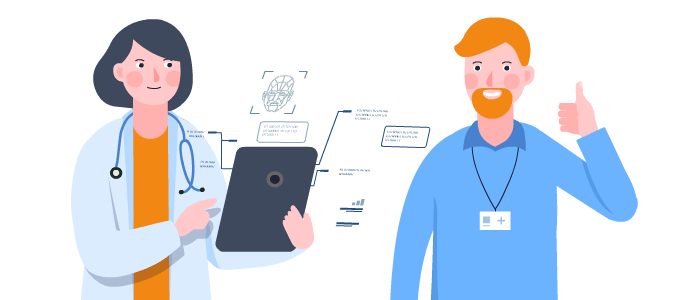
  • Touchless biometric systems: Utilize advanced imaging and contactless patient identification to identify patients quickly and accurately without physical contact, reducing the risk of infection transmission.
  • Smart data integration: These systems can integrate patient data with electronic health records (EHRs), ensuring that the right patient is associated with the right medical information.
  • Enhanced data security: With robust encryption and privacy controls, modern patient identification solutions offer a higher level of data security, protecting against unauthorized access.

Not only are such technologies enhancing patient safety, they also play a massive role in streamlining healthcare delivery.

Sweetening a Bitter Pill: The Role of Technology in Improving Patient Safety

Patient safety has always been a challenge in healthcare, a bitter pill that was necessary to swallow. Technology has advanced to such a level that taking such medicine is no longer such a burden. By utilizing technology to its fullest, healthcare facilities can not only improve patient safety but streamline operations while doing so.

Biometric Data Analytics for Motion Sickness Research

Biometric Data Analytics for Motion Sickness Research

Biometric Data Analytics for Motion Sickness Research

Many people experience motion sickness when they travel through different vehicles. When they read or check their phone in a moving car, there’s a disconnect between their visual information and their body’s reaction to the motions. Some people may also experience motion sickness when undergoing a VR experience.

Nausea is quite common in many patients and treatments are available to ease the symptoms. While some people adapt and grow out of motion sickness, others don’t

Luckily, motion sickness prediction and reduction research is garnering some progress. Biometric data analytics can be a vital tool for motion sickness.

Biometric Data Affected by Motion 

Biometrics have a reputation when it comes to security and authentication. They have proven to be an asset with medication prescription and medical record-keeping. However, the biological data from biometrics can also supplement information on motion and motion sickness.

Heart Rate Variability

Biometric technology like chest sensors can monitor a person’s heart rate in real-time. When undergoing motion sickness, the heart rate tends to increase. Using sensors, motion sickness researchers can deduce the average heart rate of a person and record moments when the heart signals start to change and spike. 

Brain Waves

A person will feel like they are losing their balance when experiencing motion sickness, resulting in headaches or vertigo. Brain wave biometrics through electroencephalography can sense moments when the brain activity starts to shift. This information can pinpoint what motions a person may react to. It can also suggest the severity in which they begin to feel sick.

Electrodermal Activity

Some people get pale or feverish when they ride a vehicle. Others might start to form cold sweats on their skin inadvertently. Biometric wearables can track the electrodermal activity in a person. This insight can detect some of the standard symptoms of motion sickness.

Eye-Tracking Data

There is a correlation between vision problems and motion sickness. Some people undergo motion sickness when they try out virtual reality. These simulations provide a visual experience while the body stays stable, triggering nausea. Tracking a person’s eye movements with biometrics can help expose when they’re entering a state of nausea.

Accelerometer Data

Accelerometer sensors in biometric technology are used in the medical field for blood pressure measurement. It can also help track and estimate the movement and speed of a person. These varying details are affected by motion sickness, making it critical information in research.

Postural Changes

Biometric sensors can recognize and track people’s posture. There is evidence regarding how certain situations involving motion sickness can change one’s postural activity, especially regarding imbalance and discomfort.

Applying Biometric Data Analytics

There is plenty of overlap between biometric data and the symptoms of motion sickness. This technology can provide valuable information to pinpoint when a person is starting to experience nausea. Identifying those moments and recording patterns makes it possible to predict when a person is undergoing motion sickness.

Beyond that, biometrics can also be valuable when reducing motion sickness. There is growing interest in how improving one’s visual and spatial awareness can train the brain to minimize motion sickness. Since the biological data is unique to a person, it’s also possible to personalize a patient’s prevention plan.

Additionally, visuospatial training may be more beneficial than desensitization therapy since researchers can form intervention strategies from a subject’s biometric data. When notified of severe changes in a person’s heart rate and brain activity, they can halt the progression without causing further motion sickness.

Hindrances in Motion Sickness Research

Motion sickness research can utilize biometric data to advance its progress, but there are specific challenges to overcome. For instance, there is existing research on using different kinds of technology like eye trackers and sensors. That said, it is necessary to consider the logistics of using this technology.

Enrolling and monitoring the person can be done easily when not in motion. However, putting them in a moving vehicle will require more consideration. Current data from virtual reality can be helpful, but cybersickness does not encapsulate all the physical conditions a person may experience with real-life motion sickness.

Utilizing biometric data also calls for increased cybersecurity. The technology that holds and records this information turns health care facilities into a prime target for cyberattacks, especially without the proper protection. It is paramount to protect the information of patients with motion sickness research.

Utilize Biometrics in Motion Sickness

Biometric technology is a promising tool when it comes to motion sickness research. Examiners should address a few gaps, but there is no doubt that integrating its use can be helpful in the prediction and prevention of this syndrome.

Forensic-Nurses-What-They-Do-and-How-They-Contribute-to-Public-Well-Being

Forensic Nurses: What They Do and How They Contribute to Public Well-Being

Forensic-Nurses-What-They-Do-and-How-They-Contribute-to-Public-Well-Being

While most of the public is aware of nurses and forensic professionals, far fewer are aware that forensic nurses play a key role in healthcare and the legal system. These professionals provide specialized care to victims of crimes and take a unique approach to healthcare. 

Those interested in both legal processes and the nuances of the healthcare system can bolster their understanding of these topics by gaining more perspective on these crucial professionals. 

Here is a breakdown of what forensic nurses do and how they contribute to public well-being. 

The Forensic Nurse’s Role

Before understanding their impact, it’s important to have a clear understanding of the forensic nurse role itself. 

In essence, these professionals are specialized nurses who take a specific approach to understanding and treating their patients. Forensic processes revolve around deducing insights through the method of scientific observation. This being the case, forensic nurses take a scientific approach to treating their patients. 

Typically, forensic nurses treat victims of physical abuse and sexual assault. Additionally, they may also treat and assess patients such as children or older adults who legal or law enforcement professionals believe may be the victims of abuse. Beyond treating victims of crimes who are alive, forensic nurses sometimes investigate patients who have died under suspicious circumstances in order to glean insights that can be used in the legal system as evidence. 

In addition to helping heal their patients, these nurses are also tasked with collecting evidence that can be utilized in legal processes. In this way, their professional efforts toe the line between taking a medical approach and taking a legal approach. 

How Forensic Nurses Impact Public Well-Being

While forensic nurses have an undeniably large impact on the lives of the specific patients they treat and assess, they also have a significant impact on public health. To understand why, it’s important to understand one of the most critical public health issues being dealt with today. 

Specifically, violence is a huge problem that adversely affects countless individuals each and every day. As a result, engaging in efforts to minimize the amount of violence in the public has a critical impact on public health as a whole. 

Fortunately for the public, forensic nurses consistently engage in a variety of measures that mitigate the amount of violence in society. 

One incredibly important way they do this is by helping to collect evidence that can be used to convict violent criminals. Without being able to prove that these criminals committed acts of violence, they would be free to roam the streets and harm other innocent individuals.

In this way, the work of forensic nurses plays a key role in keeping violent criminals accountable for their actions and making them less likely to commit similar acts. 

Another significant way that forensic nurses bolster public well-being is by advocating for victims of violence and sexual assault and helping them and their loved ones heal. By aiding these victims and bringing more awareness to these crimes, more changes can be made to make the public safer from violence. As such, the work that forensic nurses engage in to advocate for victims of violent crimes helps mitigate its impact on public well-being. 

Beyond putting violent criminals behind bars and advocating for victims, these admirable professionals also help historically marginalized people achieve the justice they deserve. Sadly, people from specific groups and classes have traditionally experienced higher levels of violent crimes.

By helping these individuals receive the care they need and the justice they deserve, forensic nurse specialists help bolster social justice for marginalized people. 

Becoming a Forensic Nurse

Given the amazing ways that forensic nurses help individuals and society as a whole, it comes as no surprise that this role is rising in popularity. However, many aspiring professionals interested in the role are unaware of how to achieve their career goals. 

Fortunately, having a little bit of guidance can make it far easier to pursue one’s goal of becoming a forensic nurse. 

To become a forensic nurse, one will have to go through a number of key steps. However, the path to stepping into this role can look different for each individual. 

For professionals who are already working as registered nurses, obtaining a master’s degree in forensic nursing is a great way to become qualified to work in the field. While some roles will hire nurses without this degree, they often require one to have forensic experience before stepping into a forensic nurse role. 

Other educational options include obtaining a specialized certificate. There are a wide variety of these types of certificates that can be useful for forensic nurses ranging from those that prepare one to collect evidence from dead bodies to those that train one to treat victims of sexual abuse. 

Ultimately, how one becomes a forensic nurse will depend on where one is in their educational and professional career. 

Forensic Nurses Play a Key Role in Mitigating Violence and Bolstering Public Well-Being

Though many people are unaware of the amazing work that they do, forensic nurses have a specialized skillset that allows them to positively impact both the medical and legal fields. From helping put criminals behind bars to raising awareness about violent crimes, these professionals are making the world a safer place in critical ways.

As time goes on and society continues to evolve, many are hopeful that the field of forensic nursing and its impact on the public will continue to grow.