
RightPatient-prevents-misidentification-of-patients

Misidentification of Patients Can Cause Deaths – How Are Hospitals Preventing Them?
RightPatient-prevents-misidentification-of-patients

Unfortunately, misidentification of patients is something that’s still a prominent issue in hospitals and health systems. In fact, just a few weeks ago, there was a patient who received the wrong kidney, which was just one example of the many wrong patient surgery cases. Fortunately, the patient survived but just imagine the implications if the patient didn’t live! Not everyone recovers from patient misidentification mishaps unscratched – some even lose their lives. 

RightPatient-prevents-misidentification-of-patients

Although these cases are occurring more frequently, most healthcare providers are responding reactively rather than being proactive and preventing such cases entirely. That being said, let’s take a look at a couple of other patient mix-up cases and how RightPatient is ensuring identity management in healthcare facilities to avoid such cases.

Misidentification of patients – a few more cases

A patient got the wrong medications

This one is an old story but is worth mentioning since it shows the actual dangers of patient misidentification. A patient, Z, had gone in for cancer treatment and the patient mix-up occurred in a busy registration area, something that is quite typical in hospitals. The EHR user was quite new but followed the facility’s rules – she entered the patient’s name according to the driver’s license. Unfortunately, she clicked on the first EHR that appeared without checking the others or inspecting them to see if this was the patient’s medical record or not. She was oblivious to the fact that there can be other patients with the same exact name – something that is quite a common issue.

The patient was given a wristband with the wrong information. Later down the line, the EHR user asked the patient whether it was accurate or not – the patient responded positively. However, during a testimony down the line, the patient said that he wasn’t wearing any glasses to be able to verify it accurately and was actually depending on the hospital to ensure his safety. 

The patient was later sent to a busy area and the nurse asked whether his name was Z or not and also his birthdate – the most common (but unreliable) patient identifiers used. While the patient agreed, a mistake had already been made – as a result, the patient received chemotherapy for an entirely different patient whose name was also Z but had a different D.O.B.

During the same testimony, it was found out that this all happened because of miscommunication – the room was too loud so that the patient couldn’t hear properly, and he also said that the nurse had an accent that was difficult to understand. The nurse, on the other hand, said that the instructions were written as “day 1, day 8”, and she assumed that the patient came in on the scheduled day. All of these problems could’ve been avoided with positive patient identification using RightPatient – more on that later.
Prevent-wrong-patient-identification-RightPatient

Fortunately, while the patient received the wrong treatment, the side effects were few, although, it was classified as wrong medication administration, something that’s quite common when misidentification of patients occurs.

While patient Z was extremely lucky to have survived, not everyone does – just like the patient in the next case. 

The wrong patient was taken off of life support

This was quite a devastating case – the wrong patient was taken off life support

The patient, Samuel (pseudonym), was apparently admitted to St. Barnabas Hospital and was unconscious. Later down the line, it was detected that due to OD, he was left in a vegetative state and required life support. His sister was contacted, and after a few days, she made the very difficult decision to take her brother off of life support. 

Afterwards, it was identified that it wasn’t actually her brother but a different person entirely! Once again, this is a case of misidentification of patients. When the actual patient was admitted to the ER, the social security card identified him with his actual name (Samuel Richard Jackson). However, the hospital staff chose the medical record of Samuel Jackson, an entirely different patient. While the patient’s fate might have been uncertain, at least the proper family would’ve been notified if the accurate medical record was chosen. 

As can clearly be seen, patient identification errors have severe consequences for everyone involved. The patients receive the wrong medication and treatments, resulting in detrimental healthcare outcomes, hospital readmissions, or even deaths, whereas the healthcare providers face lawsuits, suffer from losses, and lose goodwill. All of this is entirely preventable by ensuring accurate patient identification.

RightPatient eliminates misidentification of patients

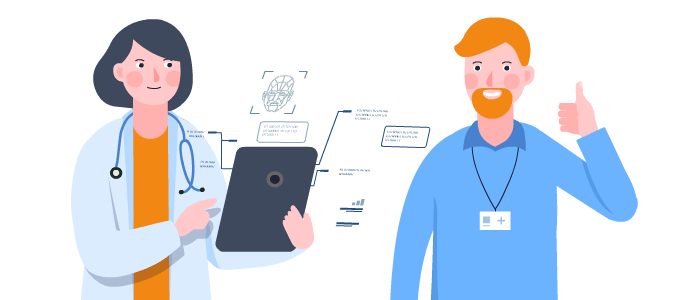
RightPatient has been protecting millions of patients in several healthcare facilities with its touchless biometric patient identification platform. During the registration process, it attaches a photo of the patient to their EHR, “locking” them essentially. Even if a patient with the same name or characteristics comes up, the registered patients’ records will be safe, since their faces don’t match. 

By identifying patients accurately right from appointment scheduling, check-in, and beyond, RightPatient eliminates chances of duplicate medical records, overlays, and patient mix-ups.

How are YOU preventing such mix-ups within your healthcare facility?
New Tech That Will Improve Your Medical Practice

New Tech That Will Improve Your Medical Practice

New Tech That Will Improve Your Medical Practice

By incorporating the new technology in your medical practice, you can deliver better patient care that is timely and cost-efficient. This means that the latest technology can help hospitals meet the growing demand in healthcare and efficiently deliver health services that guarantee good health.

New Tech That Will Improve Your Medical Practice

The following is the new tech that will help improve your medical practice in the best way possible:

Electronic Health Records (EHR)

With Electronic Health Records (EHR), you and the patient will always have permanent access to the patient data regarding some of the important issues like diagnostics, cardiac waveforms, chronic diseases, and important prescriptions either from the past or present.

With this kind of data being available at all times, it boosts your interaction with the patient and guarantees better healthcare delivery.

Also, it’s very important to note that EHR eliminates the need for bulky paperwork whenever you and your patient schedule a checkup. This is because the EHR is available online, which means that only a smartphone will be required to access patient data.

However, to ensure that the correct information is being fed to the appropriate EHRs, many responsible healthcare providers are using RightPatient – a touchless biometric patient identification platform. Not only does it ensure patient data integrity, but it also avoids medical record errors, medication errors, patient safety incidents, and adverse healthcare outcomes. 

Health-tracking apps

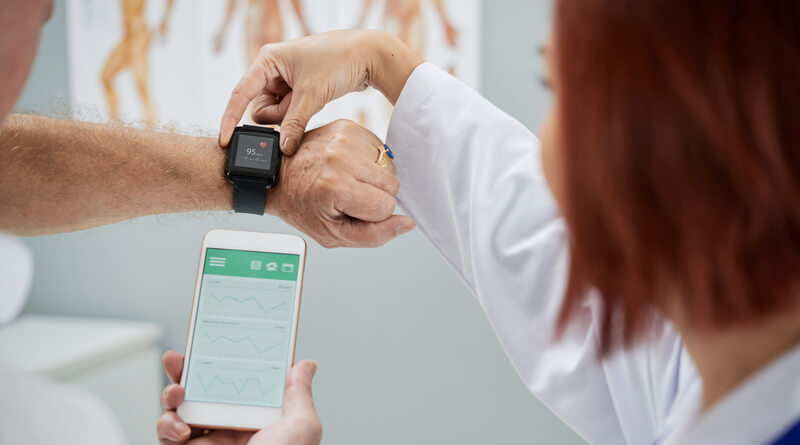
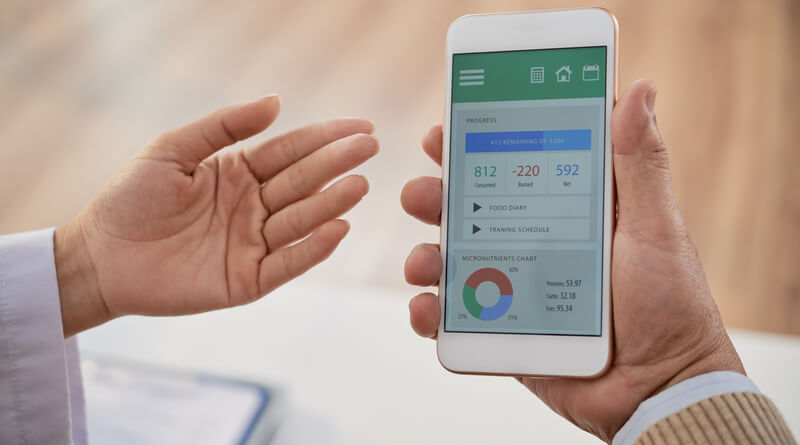
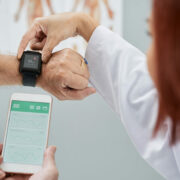
Health-tracking apps have been a game-changer as far as tracking patients’ vitals and health conditions is concerned. Using health-tracking apps, you’re able to track the sleep period, heart rate, blood pressure, and the distance covered by your patient in real-time.

The best thing about these health-tracking apps is that they enable you to view data in a more readable form, save the data, conduct statistical analysis of the data and compare the given results with standard results in the system.

This helps you give your patients the best medical advice that will help them get better in the shortest time possible. You can also use these apps to identify and diagnose any health problems, assess the risks involved with a particular medication, and offer the ideal treatment to your patients.

5G

5G is undoubtedly the fastest network out there, and it can be of great use to your medical practice. This is because 5G will enable better collaboration among healthcare organizations since data transmission will be very fast and reliable.This means that healthcare specialists and experts will be able to review any crucial patient data in real-time and advise on the best treatment method in the shortest time possible.

Also, using 5G, you’ll be in a better position to use the Internet of Things technology where required, which will enable you to deliver the best treatment possible with the aid of AR, mixed reality, and VR.

The best thing about the 5G network is that you can also monitor your patients remotely and give new prescriptions conveniently.

Laser drilling

Laser drilling is a new technology that is being used in hospitals to improve accuracy and precision. In the past, most healthcare organizations have relied on mechanical drilling, which at times might be aggressive and inaccurate, especially when dealing with delicate tissues.

Using laser drilling, you’ll be able to make precise drillings severally without causing any accidents or creating any unwanted holes. This is particularly useful in instances where small diameters are required. Nowadays, there are even more materials used in lasers to improve precision and accuracy.

If you need to guarantee more efficiency for your lasers, you might want to buy beta-barium borate crystals (bbo) crystals. These crystals guarantee wide transparency, a large nonlinear coefficient, a high damage threshold, high optical homogeneity, among many other features.

3D printing

As you might have witnessed it working in other industries, 3D printing helps with prototyping, customization, manufacturing, and research for healthcare facilities. By using 3D printing, surgeons and other health experts can replicate human body parts.

With 3D printing, you can print most human organs that might be required to perform a transplant, such as limbs, ears, tissues, among others. The best thing about 3D printing is that it is cost-effective for everyone. It’s important to note that 3D printing is also applied in orthodontics and dentistry.

Conclusion

Using the above technologies, you’ll provide better medical practice which will guarantee good health for your patients. It’s important that you always stay on the lookout for the best trends in healthcare tech that can help save lives and alleviate pain among your patients.

How Digital Health Has Revolutionized the Healthcare Industry

How Digital Health Has Revolutionized the Healthcare Industry

How Digital Health Has Revolutionized the Healthcare Industry

In today’s world where technology has seeped into every field, how could the healthcare industry be untouched? Digitization of healthcare has taken the entire process by storm as the way the entire process works has absolutely transformed. You do not need to wait in queues to get an appointment or even visit the doctor’s clinic to get a consult. Hospitals also can ensure accurate patient identification – improving patient safety, preventing duplicate medical records, and enhancing healthcare outcomes in the process. Patients can schedule appointments, and more, all through a simple mobile app. In fact, accessing your medical record has never been easier with this technology.

How Digital Health Has Revolutionized the Healthcare Industry

Let us get into more details of how digitization has benefitted the healthcare industry.

1. Convenient Flow of Communication

As the line of communication opens up, more patients will reach out to get healthcare. These channels allow patients to connect with their doctors via the preferred mode of communication, such as email, text, phone, or video calls. The tool is such that it provides notifications, reminders and also streamlines the process of booking an appointment.

2. Prevention Before Treatment

This technology lets patients self-manage their health through regular tracking and monitoring of their symptoms. This helps with the early detection of significant disease progression before the condition can become untreatable. This also makes patients more cautious about their health; hence they are trying to stay healthy by eating a good diet and working out in reputed gyms like Gymnation to keep themselves fit.

3. Update Health Information from Any Location

Digital health systems actually enhance your experience as you do not need to collect your health data from different hospitals. All your medical data is digitally updated wherever you go; hence, it is all available next time your doctor needs to refer to your medical history.

4. Organized Information

The use of files to store medical records has been followed for ages. This way, lots of data gets lost, and it gets tough to organize so much data. Digital platform makes it absolutely easy. The data stored can be processed anytime in seconds without any errors. This method has revolutionized file management systems. This means doctors can quickly refer the patient records to access important information and give better treatment. The admin staff can spend more time on regular tasks rather than handling files.

5. Cloud-Based Systems

So any patient data is not stored in an internal hard disk but on the cloud, which can be globally accessed. The system is secure and not location-dependent. This means updates made in one location will automatically reflect everywhere. The idea of this is to make the tasks really easy for patients that reside around the world.

6. Digital Tools Give Patients Better Experience

Digital technology has pushed the limits further as digital health apps have been introduced that make engaging much easier for patients. This means patients are encouraged to enter data as it is easier; hence, the tool helps to provide a complete health status for the person. 

7. Create Patient Portal

Further, the patient portal is an interface designed to connect patients with providers quickly. There are different types of these portals, and all function more or less the same. Patients can schedule appointments, view the results of their recent tests, and get other health information through these portals. These portals also contain a chat box where the patient can digitally connect to the provider through video conferencing. This is being widely used now due to the pandemic situation. Many people can get treatment easily from their homes using this technology, hence reducing their contact with other people for prevention. 

8. Easier to Share Feedback

The digital healthcare system also makes it so much easier to provide two-way communication. This is the best way for patients to share their experience with the doctors, as it will help people make an informed decision about the doctor and whether they want to visit that doctor or not. 

9. Gateway to Communication

Many digital platforms allow you to find outpatients with similar conditions and give you a chance to connect with them. You can form a community of your own and deal with any illness with the support and encouragement of the group that is going through the same thing.

10. Expanding Healthcare Professionals Reach

Digital platforms aim to reduce the burden on healthcare professionals, as the administrative work is repetitive, which can be reduced using the platform. This actually expands their time to spend more time with the patient instead and gives them better care. This is especially important for patients and clinics located in rural areas where travel is difficult. With technology in their pocket, patients can provide their health information from any location to physicians at any time.

In Conclusion

Today is this era where artificial technology and virtual reality are being introduced in the healthcare sector. Digitization is the first step towards these revolutionary measures. Digital healthcare will ensure quality care with full transparency of all medical records and with a large network of people benefiting across the entire country. This, in turn, will make quality medical services accessible from any part of the world.

7 Benefits of Leasing Medical Equipment

7 Benefits of Leasing Medical Equipment

7 Benefits of Leasing Medical Equipment

As medical technology continues to evolve, the need for health facilities to adapt to changing trends increases. This is because advanced medical equipment facilitates the efficient delivery of services compared to outdated equipment. It also reduces referrals, as medical practitioners can handle most health cases.

7 Benefits of Leasing Medical Equipment

Purchasing medical equipment can be costly for any organization to acquire. Through leasing, medical facilities can acquire up-to-date medical equipment. Here are a few key benefits of leasing medical equipment. 

1. Low initial cost

Normally, leasing doesn’t require a down payment, so all costs are uniform across the leasing period. Purchasing advanced medical equipment such as a PCR system is costly, whereas leasing allows you to pay a low initial cost and pay the remaining balance in installments.

2. The liberty to upgrade

Technology is constantly changing, and a piece of equipment that was considered advanced five years ago may become obsolete in a few years. Leasing gives you the liberty to continue upgrading your equipment alongside these changes. In addition, you may consider upgrading your older equipment, giving you the ability to transform your health facility into a state-of-the-art institution without breaking the bank.

3. It helps save time and money

Even though the initial cost is low, leasing eliminates the burden of additional costs associated with purchasing medical equipment, such as procurement and servicing costs. In addition, upgrading current equipment saves you money that would otherwise be spent buying new tech. In addition, leasing saves you time when it comes to documentation and approval.

4. Quality care for less

A facility equipping itself through leasing provides relatively affordable and quality services to its customers. In addition, the fact that the facility is updated with the latest equipment enables it to attract a wider range of clients, helping to improve its revenue.

5. Flexible terms

Compared to loans, leases offer flexible payment terms and are favorable for people with bad credit scores. Additionally, you may negotiate for low installments that will take you longer to pay if you can’t afford the set amount.

At the end of a leasing period, you are offered three options. You may decide to buy the equipment, return it, or extend the leasing period. The fact that you can upgrade your equipment at any period during the lease term makes leasing a flexible option.

6. Tax benefits

Tax on leasing medical equipment is considered a deductible expense. Medical facilities may deduct lease payments from their income to lower their tax burden, reducing the lease cost.

7. Reduced maintenance and repair costs

Medical equipment maintenance costs can be very high, especially since parts are expensive to replace and technician fees are costly. When you lease equipment, the leasing company manages all the repairs and maintenance, which reduces overall costs and saves you money. 

Endnote

Investing in changing medical technology impacts the healthcare industry. Since it can be financially challenging for an institution to purchase advanced equipment, leasing is a cheaper way to upgrade. You also get flexible terms and you can upgrade your equipment as technology advances, and you don’t have to cater for maintenance and repair costs.

RightPatient-prevents-wrong-patient-surgery-cases

Another One Added to Wrong Patient Surgery Cases – Is Patient Misidentification To Blame?

RightPatient-prevents-wrong-patient-surgery-cases

We’ve been talking about patient misidentification for quite a long time now, and for very good reasons. While many think that patient identification errors in hospitals are not that common or serious, but every now and then, a piece of news comes up that shows just how serious it can be. This time, a patient received a kidney that was actually meant for someone else – can you imagine? Without further ado, let’s dive deep into the unfortunate tale and see how wrong patient surgery cases can be prevented with positive patient identification. 

RightPatient-prevents-wrong-patient-surgery-cases

A classic case of transplant mix-up

This unfortunate case of transplant mix-up is exactly what we warn healthcare professionals against – we’ve seen our fair share of wrong patient surgery cases.

It occurred in University Hospitals (UH) on the 2nd of July, and fortunately, the recipient survived, as the kidney was compatible with the patient. The patient is slowly recovering, according to a spokesperson, and the surgery of the actual patient who was supposed to get the kidney has been delayed. UH also notified UNOS (United Network for organ Sharing) about the transplant mix-up.

Moreover, UH isn’t divulging any more details about the situation as of now – they are analyzing the situation, investigating what caused the issue, and are working so that it never occurs again. However, the employees that were involved with the medical error are on administrative leave until the issue is figured out. 

However, while this might seem quite unusual, wrong patient surgery cases do occur every now and then – something which we can confidently say occurs because of patient mix-ups due to poor patient identification systems. 

Wrong patient surgery cases are uncommon, but not unheard of

Back in 2019, before the pandemic changed everything, wrong patient identification led to another transplant mix-up in Lourdes Hospital Transplant Center (which we’ve covered already). Coincidentally, it also was a case of a kidney transplant.

However, this was a much more transparent case as the patients had a similar name and age – something that we very well know leads to patient mix-ups, among other things. Fortunately, in that case, the patient who got the kidney survived as it was a perfect match. 

RightPatient-prevents-patient-mix-ups

This case was also reported to UNOS and the patient who was supposed to get the kidney had the transplant down the line. 

However, in UH’s case, the patient who’s supposed to get the transplant is still on the waiting list. As already mentioned, UH isn’t releasing any details about the mix-up – but we are too familiar with such cases. 

Wrong patient surgery cases occur due to poor patient identification

In Lourdes Hospital Transplant Center’s case, the patients had common names and were of similar age. This is a classic case of patient identification errors. Patient’s medical records are usually mixed up during registration, and if they have common characteristics, such devastating cases are generated. 

We believe that whatever occurred in UH was due to patient misidentification, or the lack of proper patient identification.

Medical record mix-ups, poor quality patient data, medication administration errors, wrong transplants, detrimental healthcare outcomes, mistreatments, and adverse incidents are just some of the consequences of poor patient identification, and can even claim patients’ lives. The patients involved in the two wrong patient surgery cases above are extremely lucky to be alive – not everyone makes it out alive. 

Such transplant mix-ups or patient mix-ups are deadly, but they ARE preventable – as long as the healthcare provider is ensuring accurate patient identification. We’re so concerned about such cases is because we help responsible hospitals and health systems prevent patient mix-ups with our industry-leading touchless biometric patient identification platform, RightPatient. 

RightPatient prevents patient mix-ups and patient safety incidents

RightPatient prevents patient identification errors right from the start. It takes patients’ photos during registration and locks the medical records with them. Whenever a patient comes up later on, the platform provides the accurate medical record after comparing the saved photo with the live one. This makes sure that patient mix-ups are eliminated, as it uses the one characteristic that cannot be mixed up – patients’ faces. 

RightPatient has a vast amount of experience with ensuring accurate patient identification in several hospitals and health systems, and we’re confident that it could’ve prevented such cases. 

Are you preventing such mix-ups at your healthcare facility effectively?

EHRs-need-accurate-patient-data-RightPatient

The Importance of EHRs Shows Why Medical Record Errors Must be Prevented

EHRs-need-accurate-patient-data-RightPatient

When caregivers are asked about the most important tool they have at their disposal to treat their patients, what answers are expected? Some would say their healthcare team, the cutting edge technology/procedures they have access to, the different solutions they have that improve healthcare outcomes, and so on. However, the most underrated and crucial tool is definitely the electronic health records or EHRs. Think of it – where would healthcare be without EHRs? EHRs ensure that the right information regarding the right patient is provided to the right medical team. However, this is applicable only as long as certain issues are prevented, especially medical record errors.

Medical-record-errors-are-preventable-with-RightPatient

That being said, let’s take a deeper dive into how EHRs are the most important tool for healthcare providers and why ensuring patient data integrity is a must. 

Healthcare is evolving but the starting point remains the same

Let’s go back to a time before the deadly pandemic. If someone went to a healthcare provider and told them that telehealth would become mainstream in the future, the provider would most likely say that they’re crazy! Look at the reality now – telehealth is still preferred by many, even while users are decreasing due to hospitals opening up. 

Healthcare has been evolving – rapidly in some areas and steadily in others. One certain thing is that healthcare isn’t limited to the four walls of hospitals and health systems anymore – one of the consequences of the pandemic. However, whether it’s in-person visits or virtual ones (telehealth/telemedicine), the foundation for providing care to patients remains the same – EHRs. 

EHRs are more important than most realize 

Patients, caregivers, and others are quite satisfied with telehealth now.

Patients on the younger side have stated that they would like to continue using telehealth even if the national health emergency is over. That’s probably because it’s more convenient, easier, and safer – all the patients need is an internet connection with a communication device. 

Caregivers have a bit more complex process to go through. 

EHRs-need-accurate-patient-data-RightPatient

Caregivers who are providing telehealth services have to consider a lot of factors – the telehealth platform, the portal, the EHR system, identifying the right patient, rules and regulations, ensuring patient safety online, and more. Also, while providing virtual services to the patients, the physicians need to ensure that the necessary information is being fed to the EHRs of the patients accurately – just as they do during an in-person visit. 

The bottom line is that whether the healthcare provider is seeing the patient within their facility or online, the one thing that basically remains constant is the patient’s EHR. However, issues such as medical record errors can mess EHRs up, derailing healthcare outcomes among other things – let’s see how. 

Why it’s crucial to prevent medical record errors

One of the starting points of providing healthcare is the EHR. When the patient interacts with their healthcare provider, usually to schedule an appointment, one of the first things done by the caregiver is pulling up the patient’s EHR. It basically provides the entire medical history, recent lab test results, and other information required to treat the patient. Moreover, any new information captured by the caregiver will be added to the EHR. EHRs, by providing timely, relevant, comprehensive, and accurate information to the physicians, improve healthcare outcomes, optimize healthcare delivery, boost coordinated care, and reduce adverse events. 

Now, imagine if an inaccurate EHR is selected – the consequences can be devastating! 

Medical record errors such as duplicates and overlays lead to patient mix-ups. Patient A’s treatment will be based on patient B’s medical record, leading to detrimental healthcare outcomes, adverse effects, and worse. Patient data within the EHRs becomes unreliable as it is fragmented, erroneous, and inconsistent. 

However, all of this can be prevented with positive patient identification with RightPatient.

RightPatient prevents medical record errors – and more!

By identifying patients correctly right off the bat, RightPatient ensures that accurate, high-quality data is fed to the EHRs every time the patient checks in for a healthcare visit. Patients only need to look at the camera – the touchless biometric patient identification platform does the rest.

With RightPatient, responsible healthcare providers are not only ensuring patient data integrity, but they are also improving patient outcomes, preventing patient safety incidents, and providing optimal healthcare services to patients.

Another-patient-misidentification-case-RightPatient

Another Patient Misidentification Case Shows Why Hospitals Must Prevent It

Another-patient-misidentification-case-RightPatient

Patient misidentification strikes again. It’s not surprising at this point, as patient misidentification cases have been occurring frequently in hospitals and health systems. There are a plethora of consequences attached to it, which is why patient safety goals quite frequently have “improving patient identification” listed as one of the top goals to address. That being said, let’s take a look at the patient identification error in detail and how these cases are preventable with a robust patient ID solution. 

Another-patient-misidentification-case-RightPatient

A recent occurrence of patient misidentification, but certainly not the last one

Fortunately, the problem was detected before it caused any patient harm. While the patient, Ronnie (pseudonym), was waiting for a virtual visit, she was trying to convince the medical assistant that she didn’t have the rare condition called hereditary nonspherocytic hemolytic anemia. Ronnie doesn’t know how it got added to her EHR, however, that was not her only concern regarding the matter. As she was trying to get this inaccurate information removed, she experienced a lengthy and tedious process. 

The assistant informed Ronnie that only the person who added the condition can remove it – EHRs are quite sensitive documents, and access to modify them is restricted to only a handful of people. However, the assistant provided the name of the doctor, and the surprise here is that Ronnie had never had any physician by that name. 

The assistant was adamant that Ronnie might have had some encounter she forgot about – for instance, it might have occurred in an ER visit. However, Ronnie never went to the ER and got diagnosed with such a rare condition. She backed up her statement by adding that if she actually had hereditary nonspherocytic hemolytic anemia, she would’ve been informed about it. The assistant just reiterated that the physician has added it. Most probably, this occurred because Ronnie’s EHR was mixed up with some other patient and it was a condition that belongs to another “Ronnie” – a classic case of medical record mix-up caused by wrong patient identification

Unfortunately, the tale doesn’t end here – there’s far more to it. 

Ronnie had to go to extreme lengths to address the problem. As the discussion with the medical assistant got her nowhere, the condition was still present in her EHR. When Ronnie explained it to her physician, the latter tried to remove it but couldn’t, and neither could Ronnie’s other physicians. After trying everything, Ronnie submitted a formal request to modify her EHR – something many patients need to do to resolve patient identification errors.

RightPatient-accurately-identifies-patients

We believe that Ronnie’s among the lucky ones – many such cases remain undetected until it’s too late, causing detrimental healthcare outcomes. 

EHRs are beneficial but are bogged down due to patient misidentification

EHRs have a host of benefits and have been helping physicians see everything in one place, improve patient outcomes, and more. However, since EHRs contain sensitive information, editing them to rectify the errors is quite cumbersome – just look at the case above! Moreover, since caregivers have to share with other physicians due to coordinated care, these errors are seen by everyone involved in the patient’s treatment. 

This is just one case, and fortunately, Ronnie was able to identify the issue. As previously mentioned, this might have occurred because of a medical record mix-up – we know, because we’ve heard about numerous cases from hospitals and health systems. Unfortunately, there are thousands of patient identification errors in hospitals that are undetected and cause a plethora of issues – both financial and physical. How do we know so much about patient misidentification? 

Because our touchless biometric patient identification platform, RightPatient, prevents it and helps healthcare providers identify their patients correctly at all times. 

RightPatient ensures accurate patient identification at all touchpoints

RightPatient could have very well prevented the error in this case study – we have prevented such cases in numerous hospitals and have even drastically reduced duplicate record creation. The patients only need to look at the camera – our platform does the rest. During registration, RightPatient takes a photo of the patient and attaches it to the EHR. Whenever the patient comes in, the platform takes another photo and matches it with the saved one – providing an accurate EHR every time. 

RightPatient has been protecting millions of patient records in several hospitals and health systems. It ensures accurate patient identification, prevents medical identity theft in real-time, prevents duplicates and overlays, and more – ensuring positive patient outcomes.

Don’t become a mistaken patient identification story and contact us now to see how we can help you boost your bottom line.

Remote Patient Monitoring - What It Is and How It Can Improve Patient Health

Remote Patient Monitoring: What It Is and How It Can Improve Patient Health?

Remote Patient Monitoring - What It Is and How It Can Improve Patient Health

Over the past year, you’ve probably heard a fair amount about telehealth. Telehealth – the usage of technology to facilitate care when a patient and their doctor are not in the same place at the same time – has surged during the pandemic. It’s helped a lot of people get the care they need while allowing them to practice social distancing and reduce face-to-face contact with others. 

Remote Patient Monitoring - What It Is and How It Can Improve Patient Health

While many experts are worried that some problems faced during regular in-person hospital visits might bleed over to virtual visits, medical identity theft CAN be prevented. RightPatient, for instance, is used to identify patients accurately at hospitals, and can also be used to authenticate patients during appointment scheduling. Fraudsters, thus, are red-flagged when they try to impersonate registered patients, preventing medical identity theft in real-time during both virtual and in-person visits.

Coming back to the topic at hand, one type of telehealth that you may not have heard as much about but that is also rapidly growing in popularity is remote patient monitoring (RPM). Sometimes referred to as “RPM,” This program allows a physician to leverage technology to monitor a patient’s vital health information, such as blood pressure, weight, and heart, from outside the confines of a typical office visit. To accomplish this, patients are provided with a device that tracks health information the doctor needs. Covered by Medicare as well as other insurance plans, RPM is most often used to track the symptoms associated with a number of different chronic health conditions, including, diabetes, chronic obstructive pulmonary disease (COPD), hypertension, and heart failure, just to name a few. In all, the process is typically simple and straightforward and delivers significant benefits.

While the prospect of new technology can be daunting for some, many RPM devices are incredibly easy for patients to use. These devices transmit data to software utilized by the physician and their care team in one of three ways: via cellular data, Bluetooth, or the Internet, such as over Wi-Fi. Devices are typically plug-and-play, meaning there is little setup required on behalf of the patient. Some of the most common types of devices used in RPM include blood pressure monitors, glucose monitors, and weight scales. 

Most devices you will find in an RPM program require active participation from patients, although not a lot of work. A patient will need to step on the scale or properly put the device on their body to capture vitals data. Once the readings are taken by the patient, they are then sent directly to the doctor. This allows the physician and their team to use that information to make assessments about a patient’s immediate health, thus eliminating the need for frequent in-person visits and potentially avoiding exacerbations of a patient’s chronic health condition. 

How does RPM improve patient health?

RPM can help a healthcare team assess and treat concerning symptoms related to a wide variety of acute and chronic health conditions. The biggest benefit is that the data collected is sent in real-time, so the doctor can quickly identify concerning changes in a patient’s vital signs to make time-sensitive adjustments to treatment plans, thus avoiding potential health emergencies or helping a patient get the urgent care they need. 

Aside from reducing health emergencies, five other significant benefits are as follows:

Increased communication between the patient and their doctor

With more frequent communication between office visits, RPM allows a patient and their doctor to function as a team, actively working together towards improving patient health.

Increased personal accountability and awareness

Since RPM captures real-time information, patients are more aware of “triggers” that might exacerbate chronic disease symptoms. Patients also have increased motivation to make healthy lifestyle changes permanent as they witness the impact of those changes with the increased collection of health information.

Reduced need for traveling

Many chronic health conditions require close monitoring and frequent follow-up with a physician. Since RPM can be done from essentially anywhere, it can help significantly cut the number of time-consuming trips needed to a doctor’s office. By reducing the number of trips, also saves the money that would have been associated with those trips (e.g., gas, tolls, taxi, parking, babysitting, pet sitting) and eliminates the need to coordinate traveling for those office visits.

Better access and improved quality of care

Instead of regular trips to see a physician, RPM patients receive wraparound care services and 24-hour a day access to their healthcare team. Since health information is frequently sent directly to their doctor and care team, it’s easier to react quickly when health concerns arise, granting the patient precision-focused quality care.

Patients can take more control of their chronic disease

RPM helps a physician focus on their patient’s specific healthcare needs. This allows a doctor to provide better and more timely feedback, support, and education. Armed with this information, patients can take better control of their health through active adjustments to their lifestyle.

Big-Picture Benefits of Remote Patient Monitoring 

RPM is a great way to help keep patients healthier. It reduces the need for hospitalization, reduces hospital readmissions, can reduce the length of stay if a patient does not need to be admitted to the hospital, reduces healthcare costs, and permits older or disabled individuals to remain in their homes for longer. RPM is truly a win-win-win for patients, doctors, and our healthcare system.

Improve-the-revenue-cycle-management-with-RightPatient

Healthcare Revenue Cycle Management Optimization is Crucial as In-Person Visits Increase

Improve-the-revenue-cycle-management-with-RightPatient

Believe it or not, while COVID-19 was arguably one of the worst problems faced by the U.S. healthcare system, it was just ONE of many. That’s right, there are a plethora of issues that have been hampering healthcare for years, causing patient safety incidents, lost revenue, and more. Unfortunately, these losses went through the roof due to COVID-19 – they were estimated to be around $323 billion in 2020. While the pandemic is slowly waning, things are going in the right direction as providers are opening their doors for in-person visits. To recover from the pandemic’s financial losses, healthcare revenue cycle management optimization must be one of the topmost priorities for health systems – let’s take a closer look at why it’s important and some strategies that can help with revenue cycle optimization.

Improve-the-revenue-cycle-management-with-RightPatient

Revenue cycle management in healthcare facilities

Healthcare revenue cycle management might be quite complex, as it contains many intricate processes, but it is simple enough to understand.

Revenue cycle management, in a nutshell, is used by hospitals and health systems to keep track of the “revenue” they receive by treating patients. It has many steps, but RCM starts from the first interaction with the patient, for instance, appointment scheduling, and continues until caregivers receive the final payment. 

If broken down, revenue cycle of healthcare facilities usually contains 7 components:

  • Preregistration
  • Registration
  • Charge capture
  • Claim submission
  • Remittance processing
  • Insurance followup
  • Patient collections

As this list shows, the revenue cycle starts from the first interaction with the patient and ends with receiving the full amount for providing healthcare services to the patient.

RightPatient-optimizes-healthcare-revenue-cycle-management

While it might seem simple, healthcare revenue cycle management is quite complicated and difficult, especially when it comes to collecting claims from the payers (insurance providers). 

Why optimizing RCM has never been more crucial

While it was always important for healthcare providers to improve RCM within their facilities, doing so now might ensure their survival and get them through this trying time. COVID-19 has drastically affected healthcare providers, and while some received bailouts in billions, others had to close their doors permanently. The rest of them are simply struggling through the financial losses, but as in-person visits are increasing, things look brighter for the caregivers, as long as they are implementing strategies that optimize RCM right from the start. 

That being said, let’s take a look at some of the strategies that can be employed to optimize healthcare revenue cycle management.

Strategies that enhance healthcare revenue cycle management

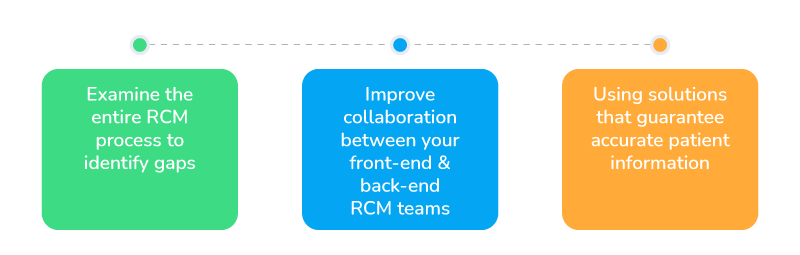
Examine the entire RCM process to identify gaps

While the age-old saying is “If it isn’t broke, don’t fix it”, rapidly evolving environments beg to differ. How do you know that it’s working out fine for you? Unless your denied claims are reduced to virtually zero, there’s always room for improvement. 

Improving-revenue-cycle-management-RightPatient

Analyze the entire RCM process to see if there are addressable gaps that require improvement – even the smallest ones matter. Talk to patients, survey your RCM team, take a look at the current numbers, and determine where you want the numbers to be. If issues are not found, then great – the problem might not lie in RCM, but if issues exist, work on them. RCM is evolving rapidly, and with the changes brought about by COVID-19, introducing technology in almost every aspect of the service to improve efficiency and collaboration has become the new normal. And speaking of collaboration, let’s move to the next point. 

Improve collaboration between your front-end and back-end RCM teams

The traditional practice is that the front-end and back-end teams work towards the same goals, but separately. However, if they work more collaboratively then the entire process will become seamless and it will help optimize RCM as information is never lost or misinterpreted – helping to receive payments much faster and in greater numbers, improving the bottom line. 

Using solutions that guarantee accurate patient information

When it comes to RCM, one of the biggest impediments to its optimization is denied or rejected claims – most of which can be traced back to billing and coding errors. On the front-end, if the patients are misidentified or if inaccurate medical records are used, then there are bound to be inconsistencies that are picked up by the payers. These errors lead not only to billing errors and denied claims, but can also be detrimental to positive patient outcomes – affecting the bottom line and the goodwill towards the hospital. As a result, ensuring patient data integrity and accurate patient identification is a must – both of which can be done with RightPatient.

RightPatient is a tried and tested biometric patient ID platform that safely and accurately identifies patients using their faces. The patient only needs to look at the camera – the platform does the rest, making it an entirely contactless process, something that is crucial in the post-pandemic world.

Not only does RightPatient make identification faster and accurate, but it also ensures that accurate information is fed to the registered patients’ EHRs every time they opt for healthcare visits, reducing billing and coding inconsistencies and denied claims in the process.

Ensuring-healthcare-data-quality-with-RightPatient

Ensuring Healthcare Data Quality Boosts Hospitals’ Digital Transformation Efforts

Ensuring-healthcare-data-quality-with-RightPatient

The U.S. healthcare system has always had a complex relationship with technology, to say the least. While it has always been open to ideas that can transform healthcare, there have been certain impediments. For instance, the concept of a unique patient identifier is around two decades old, but due to many concerns, one doesn’t exist yet. As a result, healthcare providers are either struggling with patient identification errors or are using a robust patient identification platform to resolve the issues. Moreover, new research demonstrates the complex relationship between healthcare and technology – healthcare is lagging behind other industries in terms of digital transformation. Let’s take a closer look at the study, why some are reluctant to pursue digital transformation, and how ensuring healthcare data quality can boost digital transformation, among other things. 

Ensuring-healthcare-data-quality-with-RightPatient

Some stats regarding digital transformation

The study was conducted with over 300 C-level executives, and while it includes a variety of industries, it also compares healthcare with the others, providing a different perspective.

Overall, a whopping 82% of the respondents from all industries stated that data quality is a barrier to data integration. This falls in line with the problems faced in U.S. hospitals and health systems – healthcare data quality can be inconsistent and problematic. 

Healthcare was found to be comparable to financial services and the telecommunications industry in digital transformation – most of the respondents from these organizations stated that they were witnessing success rates of around 60%. While this number might be encouraging to some, healthcare lags behind organizations such as software and tech companies, who naturally are advanced in digital transformation, as well as transportation and logistics firms.

While different industries were surveyed, some commonalities show digital transformation exists as a common problem between them. For instance, around 80% of respondents stated that they found “enriching” existing data quite difficult, impeding the quest to find new insights or meaningful patterns. This is also an issue seen in hospitals and health systems, as ensuring healthcare data quality can be a considerable challenge for many – something which is preventable with proper patient identity management – more on that later. 

Healthcare data quality issues also lead to losing time and resources as data needs to be rectified for usage. The survey also reflected this issue – around 40% of the respondents stated that their data teams have to spend time to clean the data, time which they could’ve spent doing something more productive, as data quality issues should not exist in the first place. 

Healthcare data quality issues have a long history

It’s no secret that patient misidentification is a crucial issue in health systems and hospitals, and it leads to patient data integrity failure. Just imagine that a patient named Sam Jackson comes to the hospital and is assigned the medical record with the name “Sam Jackson”. However, the EHR actually belongs to a different Sam Jackson! The modified EHR will be full of errors and will be unusable and dangerous for both the Sams.

RightPatient-ensures-high-quality-patient-data

Such problems have been going on for a long, long time, leading to patient data quality issues, medication errors, wrong treatments, detrimental healthcare outcomes, readmissions, and more.

High-quality patient data is a must

Hospitals and health systems have been investing considerable money and resources in population health management, big data, analytics, and other projects that can transform healthcare for their patients in a variety of ways. However, the only way these efforts can work is if they have access to patient data that is complete, accurate, timely, and relevant. Unfortunately, when patient data is corrupted because of duplicate and overlay records from identification issues, these investments are diluted and affect ROI, patient safety, and healthcare outcomes.

Digital transformation in healthcare, as a result, requires high-quality patient data, and everything depends on identifying the accurate patient record right from the start – something which RightPatient is built for. 

RightPatient ensures patient data integrity 

RightPatient has been ensuring patient data integrity for several hospitals with its touchless patient identification platform. Registered patients are identified accurately right from the start – all they need to do is look at the camera and the platform provides the right medical record. By ensuring that accurate patient information is fed into EHRs every time, RightPatient ensures that high-quality data is present within the facilities to boost digital transformation efforts and investments – improving patient outcomes and reducing unwanted incidents in the process.