
Why Your Onboarding Still Feels Like 1999 (And Why AI Is About to Make That Embarrassing)

Let’s be brutally honest: If your new-employee welcome still involves printing forms, chasing signatures across departments, generic welcome emails, and “figure it out” handoffs… you’re not just behind the curve—you’re actively sabotaging your talent pipeline.

In 2026, top talent doesn’t tolerate friction. They drop out (up to 92% in drawn-out processes), disengage early, or quietly job-hunt again within months. HR teams burn out on admin drudgery. Managers wait weeks for productive contributors. The cost? Millions in lost productivity, sky-high early churn, and a brand that quietly screams “we’re outdated.”

See how CloudApper AI Recruiter + hrGPT is making outdated processes obsolete: cloudapper.ai/ai-powered-hr-revolutionizing-employee-onboarding

CloudApper is proving there’s a better—and already proven—way.

Their AI Recruiter and hrGPT platform don’t just digitize onboarding; they make it intelligent, human-centered, and ridiculously efficient:

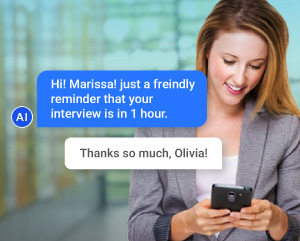
  • Conversational AI that speaks 50+ languages, chats naturally via mobile/SMS/QR/tablet, collects docs by snapping photos, answers questions 24/7, and personalizes every step—from culture intro to role-specific training paths.
  • Bias-reduced, compliant screening and handoffs that flow seamlessly into your HCM (Workday, SAP SuccessFactors, Oracle HCM, UKG, BambooHR, ADP, and more—no data silos, no manual re-entry).
  • Self-service magic for frontline and shift workers: hrGPT tablets let graveyard-shift warehouse teams onboard independently, understanding policies clearly and feeling connected from hour one.
  • Real results already rolling in:
    • 50–70% faster ramp to full productivity
    • 80% reduction in HR administrative burden
    • 20–30% lift in first-year retention
    • Time-to-hire slashed dramatically (one stat: up to 97% faster in optimized flows)

A logistics powerhouse already ditched the chaos: Using hrGPT for round-the-clock frontline hires, they turned confusing overnight onboarding into clear, engaging, self-guided experiences. Retention climbed. Productivity accelerated. Turnover dropped. No extra HR army required.

This isn’t hype—it’s happening in high-volume, high-churn industries right now.

The question isn’t “Will AI transform onboarding?” It’s “Will your organization lead the change… or get left explaining why new hires still feel lost on day one?”

Stop settling for “good enough” onboarding. Give your people (and your bottom line) the upgrade they deserve.

See how CloudApper AI Recruiter + hrGPT is making outdated processes obsolete: cloudapper.ai/ai-powered-hr-revolutionizing-employee-onboarding

Your next cohort of hires is arriving soon. Make sure their first impression isn’t your last chance. ⚡


Instant Weekly Time Clock Calculator – Hours, Breaks & Pay Made Simple

Manual timesheet math is painful: adding daily hours, subtracting lunch breaks, figuring overtime, checking gross/net pay… one tiny mistake and someone’s paycheck is wrong.

👉 Calculate your week now: https://www.cloudapper.ai/ai-time-clock/weekly-time-clock-hours-lunch-break-pay-calculator/

Our free Weekly Time Clock Hours & Lunch Break Pay Calculator fixes that in seconds:

  • Input clock-in/out for each day
  • Choose auto or custom lunch/break deductions
  • Enter hourly rate + overtime rules
  • See instant breakdown:
    • Regular hours
    • Overtime hours
    • Gross pay
    • Lunch deduction impact
    • Estimated net pay

No sign-up, no ads, mobile-friendly — use it on your phone, tablet or desktop.

👉 Calculate your week now: https://www.cloudapper.ai/ai-time-clock/weekly-time-clock-hours-lunch-break-pay-calculator/

Tired of fixing payroll errors or manual adjustments in UKG, Workday or other systems? CloudApper AI TimeClock automates accurate time capture and eliminates most rework.

Ever had a surprise paycheck deduction because of a lunch break error? Tell us in the comments!

Daily Coping Strategies for Managing High-Functioning Anxiety

Let’s talk about a hidden engine. It fuels countless accomplishments. It powers the immaculate to-do list. It delivers perfect work before a deadline. On the outside, everything looks calm and successful. On the inside, a different story unfolds. There’s a constant buzz of worry. A relentless drive to over-prepare. A fear of disappointing anyone. 

This experience has a name. It is often called high-functioning anxiety. It is not a formal diagnosis. It’s a descriptive term. It captures that unique space between achievement and inner turmoil. The good news? You can learn to manage the engine without stalling it. Daily strategies make a profound difference.

Name the Noise in Your Mind

Start with simple recognition. That inner voice needs labeling. Is it the critic? The catastrophizer? The perfectionist? Give it a silly name. Call it The Manager or The Doomsday Scout. This creates mental distance. You are not your anxiety. You are a person experiencing anxious thoughts. 

Acknowledge the feeling without judgment. Say it plainly. Ah, there’s the worry about the presentation. This act of naming steals its vague, overwhelming power. It becomes just another thought. You can observe it. You can then choose to engage with it, or not.

Redefine Your Relationship With Time

Anxiety thrives on a frantic clock. It whispers about future disasters. It scolds you for past mistakes. Your job is to gently return to the present. Practice grounding. Use your five senses. Notice five things you can see. Four things you can touch. Three things you can hear. Two things you can smell. One thing you can taste. 

This is not silly. It is a neurological circuit breaker. It pulls you from the whirlwind of “what if” into the solid reality of “what is.” Try this for sixty seconds. It creates a small, peaceful pocket in your day.

Build Intentional Pauses, Not Escapes

Your brain needs breaks to function well. Forced non-stop productivity backfires. Schedule deliberate pauses. Do not wait until you are exhausted. Block ten minutes between tasks. Use this time for true disconnection. Do not scroll on your phone. Step outside. Breathe deeply. Stretch your body. Look at the sky. 

These are not moments of laziness. They are strategic resets. They lower your body’s stress hormones. They allow your nervous system to downshift. Think of them as essential maintenance for a high-performance machine. That machine is you.

Practice Imperfect Action

Perfectionism is anxiety’s favorite disguise. It paralyzes you with the fear of a mistake. The antidote is “good enough.” Challenge yourself to do things at 80%. Send that email without over-editing it for twenty minutes. Leave one small, non-critical task undone. Share a draft idea before it feels fully polished. 

This feels uncomfortable at first. It is a muscle you must build. Each act of imperfect action proves a powerful point. The world does not end. Your credibility remains intact. You reclaim hours of time once lost to relentless tweaking.

Move Your Body With Kindness

Do not think of exercise as punishment. View it as a pressure release valve. Physical movement metabolizes stress hormones. It signals safety to your brain. Find a method you genuinely enjoy. A brisk walk works wonders. Try dancing in your kitchen. Practice gentle yoga. 

The goal is not a punishing workout. The goal is mindful motion. Pay attention to the feeling of your feet on the ground. Notice your breath and your heartbeat. This shifts your focus from mental chaos to physical sensation. It grounds you firmly in your body.

Curate Your Inputs Carefully

Your environment shapes your inner state. Audit what you consume. Limit endless news cycles. Notice how certain social media accounts make you feel. Do they inspire or incite comparison? 

Set boundaries with people who drain your energy. Create a digital sunset each night. Turn off notifications for blocks of time. Fill the space with better inputs. Listen to a calming podcast. Read fiction. Play music without words. You are the guardian of your own attention. Protect it fiercely. Your mind will feel less cluttered and more calm.

Connect, but Do Not Compare

Isolation magnifies anxiety. Connection dilutes it. Reach out to a safe person. Talk about your feelings. Use honest language. Say: I’m feeling really wound up today. Vulnerability is a strength here. But beware of comparison. Your colleague may seem perfectly calm. You have no idea about their internal world. 

Focus on your own journey. Seek support, not benchmarks. Consider joining a group for professionals. Talking with people who “get it” reduces the shame. It reminds you that you are not alone in this quiet hustle. You are navigating a common human experience with grace and intention.

Celebrate the Quiet Moments

Finally, learn to acknowledge stillness. Your worth is not tied to your productivity. Your value exists outside your accomplishments. At the end of the day, reflect on moments of peace. Maybe you drank your tea without multitasking. Perhaps you watched the sunset. Honor these small victories. They are evidence of your management skills. 

You are not trying to eliminate your driven nature. You are simply building a kinder, more sustainable relationship with it. You are learning to channel the energy without letting it consume you. That is the ultimate sign of high function.

How Nurses Protect Patient Safety Across Decentralized Care Environments

Healthcare is no longer confined to the traditional hospital setting. In fact there are plenty of nursing positions outside of hospital settings. From home health visits to telemedicine, community clinics, urgent care centers, and mobile health units, patients now receive care in a variety of decentralized environments.

While these diverse settings expand access and convenience, they also introduce new complexities in maintaining patient safety. Nurses—often the first point of clinical contact in these environments—play a pivotal role in ensuring that quality and safety standards are upheld, regardless of where care is delivered.

Here are some of the ways in which nurses protect patient safety across decentralized care environments. 

Understanding Decentralized Care

Decentralized care refers to the distribution of healthcare services away from centralized hospitals or large medical facilities, bringing care closer to the patient’s home or community. Examples include:

  • Telehealth consultations
  • Community-based clinics
  • Home health services
  • Urgent care and retail clinics
  • Mobile outreach programs

While decentralization improves accessibility, it can challenge continuity of care, standardization of protocols, and immediate access to specialized resources. Nurses must adapt to these variables and apply their clinical expertise in environments that may lack the infrastructure of a hospital.

Across all care settings, nurses serve as critical safety anchors. Their responsibilities stretch beyond clinical interventions to include patient education, care coordination, early detection of complications, and advocacy. In decentralized care, these roles become even more pronounced because nurses often operate with greater autonomy, sometimes as the sole on-site healthcare professional.

Key Strategies Nurses Use 

1. Vigilant Assessment and Early Intervention

Nurses are trained to detect subtle changes in a patient’s condition. In decentralized settings—where advanced monitoring equipment may be limited—this skill is vital. For example, during a home health visit, a nurse may observe fatigue, shortness of breath, or changes in skin color that indicate early-stage complications. Prompt recognition allows for timely escalation to higher levels of care, preventing deterioration.

In environments where immediate specialist consultation isn’t available, a nurse’s clinical judgment can be the deciding factor between a manageable situation and an emergency.

2. Standardizing Protocols 

Variation in equipment, staffing, and environmental conditions can lead to inconsistent care. Nurses mitigate these risks by applying evidence-based protocols consistently, whether they are in a hospital satellite clinic or a rural patient’s living room.

For instance, infection control practices—such as proper hand hygiene and safe disposal of sharps—remain non-negotiable across all environments. By adhering to standardized safety checks and procedures, nurses create a reliable framework that patients and families can depend on.

3. Accurate Communication and Documentation

Decentralized care often involves multiple providers across different organizations. This can lead to communication gaps that endanger patient safety. Nurses address this by taking meticulous notes, updating electronic health records promptly, and using secure communication channels to relay critical information to the care team. Structured handoff tools help ensure that essential information is not lost during transitions between providers.

4. Patient and Caregiver Education

In decentralized environments, patients and families frequently assume a greater role in daily care. Nurses empower them with the knowledge and skills needed to manage chronic conditions, recognize warning signs, and adhere to treatment plans.

For example, a nurse providing home-based post-operative care might teach a patient how to monitor a surgical wound, recognize infection, and maintain mobility safely. This education not only prevents complications but also builds patient confidence and engagement in their own health.

Challenges and How Nurses Overcome Them

Limited Resources

In decentralized environments, nurses may not have immediate access to laboratory testing, advanced imaging, or rapid-response teams. They adapt by honing triage skills, using point-of-care testing, and establishing clear escalation pathways.

Geographic and Connectivity Barriers

In rural or underserved areas, transportation and internet connectivity can be major obstacles. Nurses often serve as creative problem-solvers—arranging community volunteer transport, coordinating mobile health vans, or using offline-capable health apps.

Role Expansion 

Decentralized care often requires nurses to work at the top of their license, taking on tasks that might typically be distributed among several hospital staff members. This demands continuous professional development and a readiness to adapt to evolving clinical responsibilities.

Nursing in Decentralized Care

As healthcare continues to move toward patient-centered, community-based models, the role of nurses will only grow in importance. Their ability to blend clinical expertise, adaptability, and interpersonal skills makes them uniquely equipped to safeguard patient safety in any environment. Investment in nurse training, mobile health technologies, and interprofessional communication systems will further strengthen their capacity to deliver safe, high-quality care wherever patients are.

Conclusion

Decentralized care environments present both opportunities and challenges for patient safety. Nurses stand at the front line of this evolving landscape, ensuring that safety protocols, patient education, and vigilant monitoring remain uncompromised. Whether in a patient’s living room, a bustling community clinic, or through a video screen, nurses are the constant presence safeguarding health outcomes. 


Intelligent Scheduling in Busy Labs: How Orchestration Makes It Possible

Imagine a busy research lab. Machines hum. Scientists rush. Experiments demand attention. Every day feels like a high-stakes puzzle. Juggling equipment, people, and time becomes a huge challenge. Something always needs fixing. Something else runs late. 

This chaos eats into valuable research hours. It slows down discovery. There must be a better way to manage this complex dance. The answer is not just working harder. It is about working smarter with a clever digital helper.

Beyond the Basic Calendar

Traditional lab calendars are not enough. They show bookings. They do not show context. Scheduling a sensitive spectrometer seems simple. But what about the sample preparation time beforehand? What about the cleaning protocol after? A person might block three hours on a shared device. They may only use it for two. That wasted hour could help another project. 

Manual schedules miss these hidden connections. They create silent gaps and bottlenecks. This is where smart technology changes everything. Cutting-edge lab orchestration software acts like a central nervous system. It sees the entire lab’s rhythm.

The Magic of Linking Tasks

Intelligent scheduling understands dependencies. Think of it as a master recipe. Step B cannot start before Step A finishes. A cell culture needs precise incubation before analysis. A piece of equipment requires calibration after maintenance. Good software knows these rules. It weaves them into the schedule automatically. 

A researcher books a key instrument. The system instantly reserves the preparatory workstations they will need earlier. It blocks the necessary cleanup time after. This linked thinking prevents costly domino-effect delays. It ensures every part of an experiment flows smoothly into the next.

Predicting Problems Before They Happen

A great system does not just react. It looks ahead. It uses historical data to make smart guesses. Maybe the DNA sequencer often needs a service call every eighty runs. The software tracks this. It can prompt preventive maintenance before a critical failure. It learns that certain assays always take longer in the afternoon. It factors that into its time estimates. 

This predictive power turns managers into forecasters. They can see resource conflicts next week. They can solve them today. This stops small issues from becoming major roadblocks.

Giving Time Back to Scientists

The biggest win is focus. Scientists train for years to solve big problems. They should not waste mental energy on administrative puzzles. Constant scheduling conflicts are a distraction. They break deep concentration. Automated orchestration removes that burden. 

A researcher can request a workflow. The system finds the optimal path and time. It sends a clear notification. The scientist then thinks about science, not logistics. This reclaims hours every week. It boosts both morale and productivity. Happy, focused researchers do their best work.

Smarter Use of Every Tool

Labs have major equipment investments. An idle machine is wasted money. Intelligent scheduling maximizes this valuable asset use. It finds every possible slot for operation. It can even suggest off-peak hours for lengthy, non-urgent jobs. 

The software provides clear data on usage patterns. Managers can see which instruments are in high demand. This informs future purchasing decisions. Perhaps the lab needs another centrifuge, not a new shaker. Data-driven insights lead to smarter spending. They ensure the right tools are always available.

Building a Transparent Lab Culture

Clarity reduces friction. A shared, intelligent schedule creates a single source of truth. Everyone sees the same plan. This transparency builds trust among team members. It is clear why a certain instrument is booked. It is obvious when a workstation will be free. 

Disputes over access become rare. Collaboration becomes easier. Teams can align their projects around shared resources efficiently. This open environment fosters better communication. It turns a group of individual researchers into a truly coordinated unit.

The Future of Lab Efficiency

This is just the beginning. Imagine software that connects with freezer sensors. It could schedule defrost cycles during planned downtime. Future systems might sync with inventory databases. They could delay an experiment automatically if a crucial reagent is low. 

The goal is a fully responsive lab environment. Intelligent orchestration is the key to that future. It transforms chaos into a symphony of productivity. It lets brilliant minds focus on what they do best: discovery. The lab of tomorrow is not just stocked with better gear. It is powered by smarter, invisible coordination.