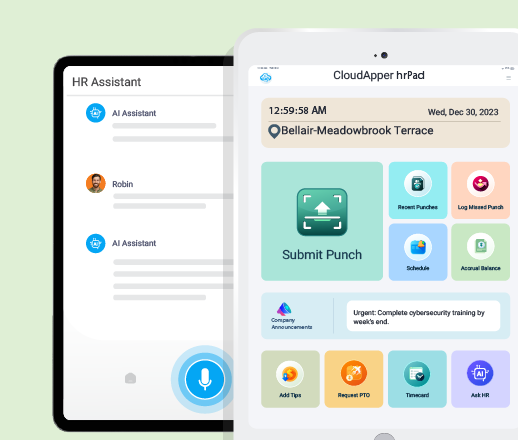
AI-Powered Compliance That Actually Boosts Engagement: The Unexpected HR Training Win

AI in Training and Development in HR is delivering one of its most surprising and practical victories: transforming mandatory compliance training from a universally dreaded checkbox exercise into an efficient, low-friction process that quietly increases overall employee satisfaction with learning by 40%.

Rather than treating compliance as a separate, burdensome obligation, intelligent AI platforms now weave it seamlessly into personalized development journeys. The system automatically detects when refreshers or new regulations are due based on role, location, tenure, and real-time changes—then delivers them in bite-sized, contextually relevant formats at the perfect moment. No more mass email blasts, endless tracking spreadsheets, or frustrated follow-ups.

A mid-sized IT company experienced this shift firsthand after implementing CloudApper hrGPT. The platform handled compliance assignments proactively and unobtrusively while continuing to recommend tailored skill-building content for each individual. Employees no longer felt bombarded by irrelevant training; instead, they received timely, useful modules that aligned with both regulatory needs and personal growth. The combined effect was powerful: satisfaction with the entire training experience rose 40%, and HR’s administrative burden for managing training logistics fell by 60%—freeing the team to invest in higher-value talent initiatives.

This approach proves that AI doesn’t just make training smarter; it makes mandatory requirements feel supportive rather than punitive, creating a rare win-win for compliance, engagement, and operational efficiency.

For the full picture of how AI is reshaping training—including this compliance angle, personalization tactics, skill-gap strategies, and more—read the comprehensive guide: How Is AI Used in Training and Development in HR.

Ready to make compliance effortless and turn training into a genuine employee benefit? Discover how CloudApper hrGPT achieves these outcomes—download the brochure here and see the platform that’s quietly changing the game for HR teams worldwide.

Tablet-Based Time Clocks: A Simple Upgrade for Healthcare Workforce Management & Patient Safety

In healthcare, accurate time tracking isn’t just about payroll — it directly supports patient safety, staffing compliance, shift coverage, and regulatory reporting. Yet many hospitals and clinics still rely on outdated wall-mounted time clocks: expensive proprietary kiosks that are slow, shared (raising infection concerns), difficult to maintain, and disconnected from modern workforce needs.

A better, more hygienic, and cost-effective alternative is emerging: tablet-based time clock systems.

Using standard iPads or Android tablets, these solutions let staff clock in/out quickly and securely — with no shared surfaces, no long queues, and no need for costly hardware replacements every few years.

Why tablet time clocks are gaining traction in healthcare:

  • Lower total cost — Tablets cost 70–80% less than traditional terminals (and you can often repurpose existing devices) — freeing budget for patient care priorities.
  • Hygienic & touchless — Face ID or fingerprint options eliminate shared buttons/keypads — critical for infection control (see our related post on healthcare workforce challenges).
  • Flexible placement — Deploy tablets at nurse stations, break rooms, entrances, or even in mobile carts — no fixed location required.
  • Employee self-service — Staff can clock in/out, view schedules, request time off, swap shifts, check accruals, and access pay info — all from one device, reducing HR support calls.
  • Offline support — Punches are recorded locally and auto-synced when connectivity returns — essential for areas with spotty Wi-Fi or during emergencies.
  • Fraud prevention — Biometric verification (Face ID >99.5% accurate) stops buddy punching and time theft — protecting payroll accuracy and staffing budgets.
  • Seamless integration — Real-time sync with major HR/payroll systems (Workday, UKG Ready/Dimensions, Ceridian, etc.) — ensuring accurate labor levels, shift differentials, and compliance reporting.

CloudApper AI TimeClock leads this shift by turning any compatible tablet into a full-featured, touchless time clock and self-service hub — without proprietary hardware or complex IT deployments.

For healthcare leaders focused on both workforce efficiency and patient safety, tablet-based time clocks are no longer a “nice-to-have” — they’re becoming a strategic necessity.

Ready to replace outdated kiosks with a hygienic, flexible, tablet-powered time tracking solution that supports better staffing and patient care?

Discover CloudApper AI TimeClock — the modern tablet clock-in system for secure, touchless time tracking and workforce management: CloudApper AI TimeClock – Employee Timeclock Application

Want the full feature list, cost comparison, integration options, and why tablet-based systems are transforming healthcare workforce management? Read the original CloudApper article: Tablet-Based Time Clock Systems for Employees: Streamlining Workforce Management

How Biometric Time Clock Integration with Workday Cuts Hardware Costs by 70%+ and Pays for Itself in Months

Traditional Workday time clock deployments often follow the same expensive pattern: proprietary wall-mounted kiosks costing $1,000–$3,000 each, professional installation, ongoing maintenance contracts, and limited flexibility for relocation or scaling. For organizations with hundreds or thousands of employees, these costs quickly reach six figures — before even factoring in downtime, repairs, or hygiene upgrades.

There’s a far more cost-effective path: Workday biometric time clock integration using standard tablets or iPads.

CloudApper AI TimeClock turns affordable, off-the-shelf devices (often already in your environment) into secure, touchless biometric time clocks that integrate natively with Workday Time Tracking — delivering enterprise-grade functionality at a fraction of the price.

Real Cost Comparison

  • Traditional Workday kiosks: $1,500–$3,000 per unit + installation ($500–$1,000 per site) + annual maintenance (~15–20% of hardware cost) → total first-year cost per location often $2,000–$5,000+
  • CloudApper AI TimeClock approach: Standard tablet ($200–$500) or reuse existing devices + no-code setup (hours, not weeks) + no maintenance contracts → total first-year cost per location typically $300–$800

Savings Breakdown

  • Hardware: 70–80% lower upfront cost
  • Installation: No specialized technicians required — mount a tablet in minutes
  • Maintenance: No proprietary parts or vendor lock-in — replace a tablet for under $500 if needed
  • Scalability: Add new locations instantly without re-procurement cycles
  • Hygiene upgrades: Touchless Face ID eliminates shared surfaces — no extra sanitization hardware
  • Payroll accuracy: Biometric verification (>99.5% accurate Face ID) stops buddy punching → recovers 2–5% of payroll lost to time theft (often $10K–$100K+ annually for mid-sized teams)

Core Integration & Features That Deliver ROI

  • Real-time sync via certified Workday APIs — punches, job transfers, labor levels, shift differentials, and accruals flow bidirectionally
  • Offline resilience — data captured locally, auto-syncs when connected
  • Touchless Face ID — works with masks, glasses, PPE, varying lighting
  • Employee self-service — view schedules, request PTO, check accruals right at the device
  • Security & compliance — encrypted flows, no stored biometric images, SOC 2/GDPR/CCPA/HIPAA-ready

Many organizations see payback in 3–9 months through hardware savings alone — before even counting reduced payroll leakage, fewer HR support tickets, and improved employee satisfaction.

If your current Workday time clock deployment is tied to costly proprietary hardware, you’re likely overpaying every year.

Ready to modernize with a biometric solution that integrates seamlessly with Workday and pays for itself quickly?

Explore CloudApper AI TimeClock for Workday — affordable, touchless biometric integration that’s secure, scalable, and built for real-world teams: CloudApper AI TimeClock for Workday

Want the full cost comparison, integration architecture, security specs, and proof of how it eliminates buddy punching while slashing hardware expenses? Read the original CloudApper article: Integrating Biometric Time Clocks with Workday

Best Affordable Touchless Biometric Time Clock for Workday: Setup Guide & Cost-Saving Alternative

Searching for the best Workday time clock alternative? Traditional hardware terminals are costly, outdated, and vulnerable to buddy punching—especially with rising demands for hygiene, accuracy, and compliance in time tracking and payroll.

Enter CloudApper AI TimeClock, the leading touchless biometric time clock for Workday that turns any affordable iOS or Android tablet into a secure, AI-powered punch station. No expensive proprietary hardware required—just fast facial recognition, geofencing for location verification, offline support, and seamless native integration with Workday Time Tracking & Payroll.

Why it’s topping lists as a top Workday time tracking solution alternative:

  • Touchless facial recognition — Secure, contactless clock-ins/outs eliminate fraud and support post-pandemic hygiene standards
  • Up to 75% cost savings — Ditch pricey Workday-approved terminals; repurpose existing devices for massive ROI
  • Advanced features — Job coding, break tracking, self-service PTO requests, schedules, accruals, and AI anomaly detection for error-free payroll
  • Flexible deployment — Works online/offline, scales for distributed teams in manufacturing, healthcare, retail, hospitality, and more
  • Easy Workday integration — Real-time sync, audit-ready data, and quick setup without heavy IT involvement

Businesses are prioritizing affordable, scalable time clock solutions that boost productivity while cutting labor costs and compliance risks. CloudApper delivers exactly that—often faster and simpler than legacy options.

Ready to see how to configure your own dedicated Workday clock-in and clock-out terminal using this modern AI solution?

Read the full step-by-step setup guide for Workday-integrated AI time clock →

Upgrade your Workday time tracking today with a touchless, biometric powerhouse that’s built for real-world efficiency and savings.

Discover CloudApper AI TimeClock – the affordable, touchless biometric solution for Workday time tracking & payroll →

How Self-Service Shift Management in Workday Can Cut Scheduling Costs and Chaos by 50%+

This article is inspired by CloudApper’s original guide on modernizing shift workflows in Workday. For the complete feature set, integration walkthrough, and real-world examples, read the full post here: Workday Time Clock for Shift Management: Allow Employees to Bid & Swap Shifts

Shift scheduling remains one of the biggest hidden time-sinks in HR and operations teams — especially in industries with variable demand, high turnover, and 24/7 coverage needs. Coordinators spend hours (sometimes days) every week reviewing requests, filling open slots, resolving conflicts, and updating Workday calendars manually.

The hidden costs are significant:

  • Overtime spikes from last-minute coverage gaps
  • Burnout among schedulers juggling spreadsheets, emails, and phone calls
  • Employee frustration when preferred shifts or swaps are denied without clear reasoning
  • Compliance risks when union rules, seniority, or labor laws aren’t consistently applied
  • Higher turnover when staff feel they have no control over their schedules

The solution isn’t hiring more coordinators — it’s giving employees self-service control within Workday itself.

Modern Workday shift management tools let frontline workers handle the scheduling process directly:

  • Shift bidding — view open shifts and submit bids based on availability, seniority, or preference
  • Shift swap — propose direct trades with qualified colleagues; the system checks conflicts and notifies managers for quick approval
  • Job bidding — bid on preferred roles, departments, or tasks when openings appear
  • Vacation bidding — compete fairly for desired vacation slots during peak periods or annual cycles, with automated rule enforcement
  • Mobile clock-in/out — secure, touchless punching (Face ID, PIN, QR, NFC) from any device, with GPS verification and offline support
  • Real-time visibility — employees and managers see updated schedules, coverage status, and accruals instantly

By moving these tasks to employees, organizations typically see:

  • 50–70% reduction in scheduling admin time
  • Fewer unfilled shifts and emergency overtime costs
  • Improved compliance through automated enforcement of seniority, qualifications, and union rules
  • Higher employee satisfaction and retention (flexibility ranks among top retention drivers)
  • Full audit trails — every bid, swap, and approval is logged in Workday for reporting and audits

CloudApper AI TimeClock extends Workday Time Tracking with exactly these capabilities — no proprietary hardware needed. Employees use affordable tablets or their own phones, while data syncs natively and securely to Workday via certified APIs.

For a closer look at CloudApper’s touchless biometric features and AI-assisted tools built specifically for Workday, visit: CloudApper AI TimeClock for Workday

The result? A leaner, more agile scheduling process that reduces costs, minimizes errors, improves coverage, and turns employees into active partners in workforce planning — all without disrupting your existing Workday investment.

If your current Workday shift management still depends heavily on manual coordination, the inefficiency is likely costing more than you think.

Ready to shift the workload from coordinators to employees and see real efficiency gains?

Explore the original CloudApper article for in-depth details on how Workday shift management becomes employee-driven with shift bidding, shift swap, job bidding, vacation bidding, and mobile time tracking: Workday Time Clock for Shift Management: Allow Employees to Bid & Swap Shifts

AI Chatbot for Enterprise Knowledge Management: Instant, Intelligent Access to Your Organization’s Full Expertise

This teaser summarizes the core value and benefits from the original CloudApper article. For the complete technical explanation, integration examples, security model, performance data, and how CloudApper delivers a powerful AI chatbot for enterprise knowledge management, read the full guide here: Revolutionizing Enterprise Knowledge Management: The AI Chatbot Advantage with CloudApper

In most enterprises, knowledge is trapped: buried in SharePoint libraries, Confluence pages, internal wikis, HR systems, ticketing databases, scattered Google Drive folders, and forgotten email threads. Employees waste countless hours searching, asking around, or submitting support tickets just to find answers that already exist.

An AI chatbot for enterprise knowledge management changes this completely.

By intelligently indexing and understanding your entire internal knowledge ecosystem, the chatbot becomes the single, conversational gateway to accurate information. Employees ask questions in natural language and receive precise, context-aware answers in seconds—no more folder diving, no outdated answers, no “I’ll check and get back to you.”

What sets a true AI chatbot for enterprise knowledge management apart:

  • Unifies fragmented sources (documents, policies, procedures, wikis, intranets, databases) into one searchable, intelligent layer
  • Understands intent and nuance (“What’s the current travel policy for international trips?” vs. “How do I submit a mileage claim in Europe?”)
  • Delivers real-time freshness — when a document or policy updates, the chatbot knows instantly
  • Enforces role-based access controls so sensitive data stays protected
  • Offers mobile-first, multilingual support — perfect for deskless, frontline, shift, remote, and global teams
  • Continuously improves through usage analytics and user feedback

Companies using an AI chatbot for enterprise knowledge management typically see:

  • 60–80% fewer routine internal support tickets
  • Up to 70% reduction in time spent searching for information
  • Faster onboarding and knowledge transfer for new hires
  • Preservation of institutional knowledge despite turnover
  • Elimination of knowledge silos across departments and tools
  • Measurable gains in productivity and employee satisfaction

CloudApper’s AI chatbot for enterprise knowledge management excels with deep connectors to common enterprise platforms, enterprise-grade security (data residency, encryption, role-based controls, GDPR/SOC 2/HIPAA compliance), and easy, no-code deployment.

Want to explore the full suite of enterprise AI capabilities — from knowledge management to HR automation, workforce intelligence, and more? Check out the complete platform: CloudApper Enterprise AI Solutions

In a knowledge-intensive business environment, the organizations that win are those where the right information reaches the right person at the exact moment they need it — without barriers. An AI chatbot for enterprise knowledge management is no longer a nice-to-have; it’s becoming essential infrastructure for modern enterprises.

Ready to turn scattered internal knowledge into an instant, always-available conversational resource?

See exactly how CloudApper is leading with a next-generation AI chatbot for enterprise knowledge management — read the full article here: Revolutionizing Enterprise Knowledge Management: The AI Chatbot Advantage with CloudApper

How Hospitals Fund Expensive Back Treatment Equipment: A Deep Dive Into Strategy, Finance, and Care

Modern hospitals rely on highly specialised and often extremely expensive equipment to diagnose and treat back and spinal conditions. From advanced imaging systems to precision surgical tools and pain-management technologies, the cost of providing high-quality back care can run into millions of dollars. Yet hospitals must balance these investments against tight budgets, regulatory pressures, and the need to keep care accessible.

Understanding how hospitals fund this equipment offers insight not just into healthcare finance, but into how medical innovation reaches patients. This article explores the financial mechanisms hospitals use, how costs are managed over time, and how specific procedures—such as rhizotomy—fit into the broader funding picture.

Why Back Treatment Equipment Is So Expensive

Back and spine care sits at the intersection of orthopaedics, neurology, pain management, and rehabilitation. The complexity of the human spine requires technology that is precise, reliable, and often custom-engineered.

Common examples of high-cost back treatment equipment include MRI and CT scanners, fluoroscopy systems, robotic surgical platforms, radiofrequency ablation units, and specialised operating tables. These systems are not only expensive to purchase but also to install, maintain, calibrate, and staff with trained clinicians.

In many cases, hospitals must also upgrade facilities—power supply, shielding, software infrastructure—before equipment can even be used.

Capital Budgeting: The Foundation of Hospital Equipment Funding

Most hospitals begin the process through capital budgeting. Capital budgets are long-term financial plans that allocate funds for major assets expected to deliver value over many years. Expensive back treatment equipment almost always falls into this category.

Capital budgeting decisions are typically made at executive or board level and involve careful analysis of clinical need, expected patient volume, reimbursement potential, and strategic alignment with the hospital’s mission. A hospital may prioritise spine equipment if back pain represents a significant portion of its patient population or if it aims to become a regional centre for spinal care.

Direct Purchase Versus Financing

Hospitals rarely pay cash upfront for expensive equipment unless they have exceptionally strong reserves. Instead, they choose from a range of financing structures designed to spread cost over time.

Some hospitals purchase equipment directly using retained earnings, grants, or capital donations. Others use debt financing, taking out loans or issuing bonds specifically for capital investments. These approaches allow hospitals to match the cost of equipment with the revenue it generates over its useful life.

Choosing the right structure depends on interest rates, balance-sheet strength, and long-term financial strategy.

Leasing and Vendor Financing Models

Leasing is a common option for hospitals acquiring back treatment equipment. Under operating or finance leases, hospitals gain access to equipment while spreading payments over several years. This can be particularly attractive for rapidly evolving technologies that may become outdated.

Many equipment manufacturers also offer vendor financing packages. These arrangements may include bundled maintenance, software updates, and training, providing predictable costs and reducing operational risk.

Leasing allows hospitals to remain flexible, especially in specialties like spine care where innovation continues to accelerate.

The Role of Prepaid Insurance Accounting in Hospital Finance

Hospitals operate in a complex insurance-driven environment, and prepaid insurance accounting plays a subtle but important role in how costs are managed. Hospitals often pay insurance premiums in advance for coverage related to equipment, liability, and operational risk.

Rather than expensing these premiums immediately, prepaid insurance accounting spreads the cost over the period the coverage applies. This smooths expenses, improves financial predictability, and aligns insurance costs with the periods in which expensive back treatment equipment is actually in use.

For hospitals managing large capital investments, this accounting approach helps stabilise financial statements and ensures that insurance costs are properly matched to the benefits they provide.

Government Funding and Public Grants

Public hospitals and teaching institutions often rely on government funding to support major equipment purchases. Grants may be available for technology that improves patient outcomes, reduces long-term healthcare costs, or supports research and training.

In the context of back treatment, funding may be tied to initiatives addressing chronic pain, disability reduction, or improved access to care. These funds don’t always cover the full cost of equipment, but they can significantly reduce the financial burden and make investments viable.

Grant funding often comes with reporting requirements and performance metrics, which hospitals must factor into their planning.

Philanthropy and Donations

Philanthropic support plays a surprisingly large role in hospital equipment funding. Foundations, donors, and community fundraising campaigns often contribute to the purchase of high-profile medical equipment.

Back treatment equipment is particularly appealing to donors because back pain affects such a broad segment of the population. A donor-funded imaging system or surgical platform can be framed as benefiting thousands of patients over its lifetime.

While donations are rarely sufficient on their own, they frequently serve as catalysts that allow hospitals to move forward with projects sooner than planned.

Evaluating Return on Investment in Healthcare

Hospitals don’t evaluate return on investment in purely financial terms. While revenue and reimbursement matter, clinical outcomes, patient satisfaction, and long-term cost savings are equally important.

An investment in advanced back treatment equipment may reduce hospital stays, lower complication rates, or decrease reliance on more invasive procedures. These benefits translate into savings for insurers and improved outcomes for patients, which strengthens the hospital’s reputation and referral base.

ROI analysis in healthcare blends financial metrics with clinical impact.

How Insurance Reimbursement Influences Equipment Decisions

Reimbursement rates heavily influence which equipment hospitals choose to fund. Procedures supported by strong insurance reimbursement are more likely to justify investment in specialised equipment.

If insurers recognise and reimburse advanced back treatments at sustainable rates, hospitals are more confident investing in the tools needed to deliver them. Conversely, uncertainty around reimbursement can delay or limit adoption, even when clinical benefits are clear.

Hospitals closely monitor payer policies when planning equipment purchases.

Example Back Procedure: Rhizotomy

A useful example of how equipment funding aligns with clinical care is rhizotomy, a procedure used to treat chronic back pain by interrupting specific nerve signals. Rhizotomy often relies on radiofrequency ablation equipment, imaging guidance, and specialised needles.

The equipment required for rhizotomy is expensive, but the procedure can offer long-lasting pain relief and reduce the need for repeated medication or surgery. From a funding perspective, this makes it attractive: upfront equipment costs are balanced by efficient procedures, strong reimbursement, and meaningful patient outcomes.

Hospitals investing in rhizotomy technology often position it within a broader pain-management strategy that includes diagnostics, therapy, and follow-up care.

Bundling Equipment With Service Lines

Hospitals increasingly fund equipment as part of integrated service lines rather than standalone purchases. A spine or back-care service line might include imaging, pain management, surgery, and rehabilitation.

By viewing equipment as part of a continuum, hospitals can justify investment more easily. The combined revenue and outcomes across the service line support the cost of individual assets.

This approach also encourages collaboration between departments and more efficient use of shared equipment.

Managing Ongoing Costs and Depreciation

Once equipment is acquired, funding doesn’t stop. Maintenance contracts, software updates, staff training, and eventual replacement all require ongoing financial planning.

Hospitals account for depreciation over the useful life of equipment, spreading the cost across years. This accounting treatment aligns expense recognition with actual usage and helps leadership plan for future upgrades.

Proper lifecycle management ensures that expensive back treatment equipment remains safe, effective, and financially sustainable.

Risk Management and Compliance Considerations

Expensive medical equipment carries risk—technical failure, misuse, or regulatory non-compliance can have serious consequences. Hospitals mitigate these risks through insurance, training, and strict compliance protocols.

Funding decisions often include risk assessments that evaluate not just cost, but operational complexity and exposure. Equipment that reduces procedural risk or improves consistency may be favoured even if initial costs are higher.

Risk management is therefore an integral part of funding strategy.

Key Funding Mechanisms Hospitals Use

While every hospital is different, most rely on a combination of funding sources to support expensive back treatment equipment:

  • Capital budgets and retained earnings
  • Loans, bonds, and debt financing
  • Leasing and vendor financing
  • Government grants and public funding
  • Philanthropic donations
  • Insurance reimbursement and service-line revenue

Blending these sources allows hospitals to balance flexibility, affordability, and long-term sustainability.

The Impact on Patient Access and Outcomes

Ultimately, how hospitals fund equipment affects patients. Well-funded back treatment programs offer faster diagnosis, more treatment options, and better outcomes. Underfunded programs may rely on outdated tools, longer wait times, or limited procedures.

Strategic funding ensures that innovation reaches patients without compromising financial stability.

Looking Ahead: The Future of Funding in Back Care

As back pain continues to be one of the leading causes of disability worldwide, demand for effective treatment will only grow. Hospitals will face increasing pressure to adopt new technologies while controlling costs.

Future funding models may include greater collaboration with insurers, outcome-based reimbursement, and shared-risk partnerships with manufacturers. Advances in minimally invasive procedures and outpatient care may also shift how equipment is funded and deployed.

In the End…

Funding expensive back treatment equipment is a complex balancing act that blends finance, accounting, clinical strategy, and patient care. Hospitals must consider not only how to pay for technology, but how that technology fits into long-term goals and community needs.

From capital budgeting and leasing to prepaid insurance accounting and procedure-specific investments like rhizotomy, each decision plays a role in making advanced back care possible. When funding is done thoughtfully, the result is a healthcare system that supports innovation while delivering real, lasting benefits to patients.


Fertility Decisions in Modern Healthcare: Data, Identity, and Patient-Centred Care

As healthcare becomes more data-driven and personalised, reproductive planning is increasingly shaped by information, timing, and individual autonomy. Decisions about fertility are no longer made solely within clinical settings; they are influenced by digital health tools, evolving patient expectations, and the broader movement toward personalised medicine. In this context, the fertility test functions not only as a medical resource but also as part of a larger system of identity management, informed decision-making, and patient empowerment.

Modern patients expect healthcare to be transparent, accessible, and tailored to their unique circumstances. This expectation extends to reproductive health, where individuals seek accurate insights to guide life planning, family decisions, and long-term wellness. The growing integration of reproductive health data into personal health records highlights a shift toward continuity of care, where reproductive information becomes part of an ongoing, holistic patient profile rather than an isolated medical episode.

Patient Identity and Continuity of Care

Healthcare systems increasingly recognise that accurate patient identification and record continuity are essential for meaningful care. When reproductive health data is fragmented across providers, patients may face repeated testing, inconsistent advice, or incomplete clinical histories. Maintaining reliable patient identity frameworks ensures that fertility-related information remains secure, traceable, and accessible across care networks.

This is particularly relevant as individuals seek care from multiple providers, including gynaecologists, endocrinologists, fertility specialists, and primary care physicians. When patient records are unified and accurately matched, clinical decisions become more consistent, efficient, and patient-centred. The fertility test, in this framework, represents one component of a broader medical narrative rather than a standalone event.

Reproductive Planning in a Data-Driven Era

Reproductive decision-making today occurs within an ecosystem shaped by digital platforms, telehealth services, and personalised health analytics. Patients increasingly rely on longitudinal health data to track patterns, monitor changes, and assess readiness for life transitions. This shift reflects a broader trend in medicine: moving from reactive treatment toward predictive and preventive care.

Within this landscape, fertility-related information contributes to long-term health planning. It can inform conversations about timing, lifestyle choices, medical interventions, and emotional readiness. Rather than being viewed as a moment of uncertainty, reproductive assessment becomes a strategic tool for planning and self-awareness.

Patient Autonomy and Informed Health Choices

One of the most significant developments in modern healthcare is the shift toward shared decision-making. Patients are no longer passive recipients of medical advice; they are active participants in shaping their care pathways. This is especially true in reproductive health, where decisions often intersect with personal values, career goals, relationships, and cultural expectations.

Access to reliable reproductive health insights supports autonomy by allowing individuals to make choices grounded in evidence rather than uncertainty. When healthcare systems prioritise clarity, empathy, and individualised guidance, patients report greater satisfaction and emotional well-being throughout the decision-making process.

Emotional and Psychological Dimensions of Fertility Decisions

Reproductive planning carries emotional weight that extends beyond clinical data. Individuals and couples often experience a complex mix of anticipation, pressure, hope, and vulnerability when navigating fertility-related decisions. The psychological dimension of this process underscores the importance of compassionate, patient-centred communication.

Healthcare providers who recognise the emotional context of reproductive planning can better support patients through uncertainty and long-term decision-making. This includes offering counselling resources, fostering open dialogue, and validating the diverse motivations that shape fertility choices.

Technology, Trust, and Healthcare Innovation

Advances in health technology continue to reshape how reproductive information is collected, stored, and interpreted. Digital platforms now allow patients to track personal health metrics, access remote consultations, and manage reproductive data alongside other health records.

However, technological innovation must be paired with trust. Patients need assurance that their reproductive health information is protected, accurately linked to their identity, and used responsibly. Secure patient-matching solutions and transparent data policies play a critical role in maintaining confidence in digital healthcare ecosystems.

Integrating Reproductive Health Into Lifelong Care

Rather than treating reproductive health as a temporary concern, modern healthcare increasingly frames it as part of lifelong wellness. Fertility-related information may inform broader conversations about hormonal health, ageing, preventive care, and overall well-being.

This integrated approach encourages continuity between reproductive health, primary care, and long-term health planning. When patients understand how reproductive data fits within their broader health journey, they are better equipped to make informed, future-oriented decisions.

Conclusion

In contemporary healthcare, the fertility test exists within a larger ecosystem of patient identity, digital health innovation, emotional well-being, and informed decision-making. Its significance extends beyond clinical measurement, contributing to how individuals plan their futures, engage with healthcare systems, and exercise autonomy over their reproductive lives.

Conversational AI: The Future of Employee Onboarding – Faster, Friendlier, and Far More Effective

This teaser pulls together the main highlights from the original CloudApper article. For the full details, including how the chatbot works, real benefits, integration info, and why it’s perfect for today’s workforce, read the complete guide here: Conversational AI for Employee Onboarding and Training

New hires often face a rocky start: too many documents, unclear instructions, delayed answers, and training that feels generic and disconnected. The result is slower ramp-up, lower engagement, and higher risk of early turnover.

Conversational AI solves this by transforming onboarding into a natural, interactive chat experience—almost like having a dedicated buddy on day one.

With an intelligent chatbot leading the way, new employees enjoy:

  • Instant answers to any question in everyday language (“How do I request time off?” “What’s the Wi-Fi password?” “When is my next paycheck?”)
  • Guided walkthroughs of forms, policies, and compliance steps through simple back-and-forth chat
  • Personalized training delivered in short, relevant bursts tailored to their exact role and progress
  • Mobile access anytime, anywhere—ideal for deskless workers, shift staff, remote hires, or global teams
  • Multilingual support and gentle reminders so nothing falls through the cracks
  • Real-time feedback options to help HR continuously refine the process

The outcomes are impressive:

  • Significantly shorter time to full productivity
  • Much higher completion rates for mandatory training
  • Stronger first impressions that reduce early exits
  • Sharp drop in HR support volume during the onboarding window
  • Better knowledge retention through interactive, context-aware learning

CloudApper’s conversational AI integrates easily with your HR systems, delivering a branded, welcoming experience that feels modern and personal rather than corporate and overwhelming.

In a competitive talent landscape where first impressions matter more than ever, giving new hires a smooth, supportive onboarding journey is one of the smartest ways to win loyalty and performance from the start.

Ready to move beyond PDFs and email chains to a truly conversational onboarding experience?

Learn exactly how conversational AI streamlines onboarding and training—check out the full article: Conversational AI for Employee Onboarding and Training

9 Actionable Ways AI Is Skyrocketing Employee Satisfaction – And Why Your Team Needs It

This article was inspired by the original CloudApper guide “How Does AI Improve Employee Satisfaction?” (published by Matthew Bennett). Check out the full, detailed version here: How Does AI Improve Employee Satisfaction?.

With global employee engagement dipping to just 21% in 2025 (per Gallup’s State of the Global Workplace report), and AI use surging—reaching 66% among remote-capable workers, with 40% using it frequently—2026 is the year smart leaders turn to AI to reverse the trend. Tools like CloudApper hrPad are proving that AI doesn’t just automate; it humanizes the workplace by reducing frustration, personalizing support, and prioritizing well-being.

Inspired by CloudApper’s insightful guide, here are 9 practical ways AI is boosting employee satisfaction right now—especially for deskless and frontline teams in retail, manufacturing, healthcare, and beyond. Each includes real benefits and quick implementation ideas.

  1. Automates the Boring Stuff AI takes over repetitive tasks like data entry and scheduling. Employees reclaim time for creative, impactful work → less monotony, more fulfillment.
  2. Provides Instant HR Support Chatbots and virtual assistants answer questions 24/7. A global retailer slashed wait times from days to seconds, boosting satisfaction by 25%.
  3. Delivers Personalized Career Growth AI scans skills and goals to recommend custom training and projects. Tech teams using this report 30% higher engagement and faster skill development.
  4. Detects Burnout Early with Sentiment Analysis NLP tools monitor feedback and communications to spot stress patterns. Manufacturing firms adjusted schedules proactively, cutting voluntary turnover by 18%.
  5. Offers Tailored Learning Recommendations AI suggests relevant courses and resources based on performance data—turning training from “required” to “exciting” and driving retention.
  6. Streamlines Onboarding & Talent Fit From resume screening to personalized welcome plans, AI ensures better hires and smoother starts, helping new employees feel valued immediately.
  7. Enhances Team Communication Real-time translation, pattern insights, and optimization suggestions break down silos—vital for diverse or shift-based frontline teams.
  8. Customizes Rewards & Benefits AI matches perks (wellness, insurance) to individual needs and preferences → employees feel genuinely appreciated, increasing loyalty.
  9. Improves Workplace Safety Predictive analytics from data and sensors flag risks early, alerting teams and preventing incidents—building trust and peace of mind.

Quick Wins & Best Practices Start small: Pilot an AI chatbot or sentiment tool, gather employee input via pulse surveys, and measure changes in satisfaction scores. Address common concerns head-on—fear of job loss with upskilling programs, privacy with compliant platforms (GDPR/CCPA-ready, opt-in features). When done right, engaged employees (fueled by AI) are up to 87% less likely to leave.

The result? Happier teams, lower turnover, and stronger culture—without losing the human touch.

Ready to explore how these features work in a real HR platform?

Head to the original guide for in-depth examples, CloudApper hrPad specifics, and step-by-step advice: How Does AI Improve Employee Satisfaction?

Which of these 9 ways would make the biggest difference for your team? Comment below—let’s chat about it!