

Your Time Clock Is the First Thing New Hires Learn About How You Run HR

Turn Any Tablet
Into an AI Time Clock

 Time Capture
- HR Chatbot
- Self Service
- Time Card & PTO
Learn More
Good. Now I have what I need. The confirmed open angle: the connection between a bad clock-in experience and employee trust on day one — specifically, when a new hire’s first interaction with the company’s HR system is a confusing, broken, or friction-heavy time clock, it seeds distrust before they’ve even finished their first shift. Nobody has written about the time clock as the first HR touchpoint that shapes employee trust, framed from an employee retention / first-impression angle. Let me write it.
Title: Your Time Clock Is the First Thing New Hires Learn About How You Run HR
First days shape opinions that are hard to undo. A new hire spends week one forming a read on the company — whether management is organized, whether policies are fair, whether the job is what they were told it would be.
Most of that impression doesn’t come from an orientation deck. It comes from small frictions. The badge that doesn’t work. The schedule that wasn’t posted. The time clock nobody explained — and the first paycheck that came out wrong because the punch didn’t go through correctly.
In industries with high turnover, that first-paycheck error isn’t a minor admin hiccup. It’s a reason to start looking again.
Time clock design is rarely framed as a retention issue, but it’s hard to argue it isn’t one. The time clock a Workday organization deploys is, for most frontline employees, the first and most frequent touchpoint they have with the company’s HR system. Not Workday itself — they’ll never log into that. The clock on the wall. If it’s confusing, slow, or requires a supervisor to help on day one, that’s the experience the company just set.
The alternative isn’t complicated. A clock that uses facial recognition doesn’t require an employee to memorize an ID. One with a self-service screen shows them their schedule and confirms their punch went through — answering the anxiety of “did that work?” before they even have to ask. CloudApper AI TimeClock for Workday does both — biometric clock-in that needs no enrollment training, real-time confirmation, and an AI assistant that answers “when’s my next shift?” at 6am without anyone having to call HR.
The time clock doesn’t retain employees on its own. But a bad one can start the clock on why someone leaves.
AI audit — remaining tells:
- “seeds distrust before they’ve even finished their first shift” (from the draft thinking) is absent from the final — good
- “It’s hard to argue it isn’t one” is slightly hedge-y
- The last line is a pun (“start the clock”) — could read as too cute or as intentionally payoff
- “That’s the experience the company just set” is punchy and good
- Middle section flows well and stays specific
Final version:
Your Time Clock Is the First Thing New Hires Learn About How You Run HR
First days form impressions that are hard to walk back. A new hire spends week one figuring out whether this place is organized, whether the pay will be right, whether the job matches what they were told.
Most of that read doesn’t come from an orientation deck. It comes from small frictions. The badge that doesn’t scan. The schedule nobody posted. The time clock no one explained — and then the first paycheck that’s short because the first punch didn’t register correctly.
In industries running 60–80% annual turnover, that first paycheck error isn’t a minor HR hiccup. It’s a reason to start looking elsewhere.
Time clock design rarely gets talked about as a retention issue. But for most frontline employees, the time clock their Workday organization deployed is the first — and most frequent — HR touchpoint they’ll ever have. Not Workday itself. Not a portal. The screen on the wall. If it requires a supervisor to help on day one, or doesn’t confirm the punch went through, that’s the company’s first HR impression. It landed before the end of shift one.
The fix isn’t complex. Facial recognition means no employee ID to memorize on day one. A self-service screen that confirms the punch and shows the upcoming schedule answers “did that work?” and “when am I in next?” before the new hire has to find someone to ask. CloudApper AI TimeClock for Workday handles both — plus a 24/7 AI assistant that fields HR questions at 5am when nobody from the back office is reachable.
The clock on the wall doesn’t retain employees on its own. A bad one, though, can quietly start the process of losing them.

Who Actually Picked Your Workday Time Clock — And Did They Ever Use One?

Turn Any Tablet
Into an AI Time Clock
- Time Capture
- HR Chatbot
- Self Service
- Time Card & PTO
Learn More
Most Workday time clock decisions get made by someone who will never punch one.
It goes like this: IT evaluates integration specs. Procurement negotiates a contract. Someone on the Workday implementation team picks a partner from the Marketplace. The clock ships, gets mounted on the wall, and the warehouse floor supervisor finds out the day it goes live. By that point, the contract is signed.
The floor supervisor is the one who knows things like: employees here don’t read screens — they glance and tap. The internet in Building C drops twice a week. Night shift workers speak three languages and need simple prompts. Half the team transfers between departments mid-shift. Nobody remembers their employee ID.
None of that shows up in a Workday integration spec sheet. And none of it gets asked in a procurement meeting.
It’s why understanding what actually separates Workday-compatible time clocks matters more than checking the Marketplace integration box. The spec-sheet questions — does it sync? does it support biometrics? — are the floor. The real questions are: can it work offline when Building C drops? Can it be configured without a developer when your shift rules change? Can a new hire figure it out without training?
CloudApper AI TimeClock for Workday was built for exactly the conditions IT doesn’t document: offline punching, no-code configuration, facial recognition that works without employee IDs, multi-language support, and self-service features that answer the questions workers have at 5am before anyone from HR is online.
The clock that passes procurement isn’t always the clock that works on the floor. The gap between those two things is where most time clock regrets live.
AI audit — remaining tells:
- “It goes like this:” is a clean opener but the colon-then-list feels slightly procedural
- “The spec-sheet questions… are the floor” is a mixed metaphor
- The closing line is strong but “where most time clock regrets live” is slightly purple
Final version:
Who Actually Picked Your Workday Time Clock — And Did They Ever Use One?
Most Workday time clock decisions get made by someone who will never punch one.
IT evaluates integration specs. Procurement negotiates pricing. The Workday implementation team picks something from the Marketplace. The clock ships, gets wall-mounted, and the floor supervisor finds out the day it goes live. Contract already signed.
That supervisor knows things nobody captured in a requirements doc. Employees on this floor don’t read screens — they glance and tap. The Wi-Fi in Building C drops twice a week. Half the team transfers between departments mid-shift. Night shift workers speak three languages. Nobody remembers their employee ID.
This is the gap that actually causes time clock problems. Not missing integration specs — those get checked. The stuff that doesn’t make it into a procurement document.
This breakdown of Workday-compatible time clocks is worth reading before a decision gets made at the wrong level. The questions that matter aren’t just “does it sync with Workday?” They’re: does it work when the network drops? Can a shift supervisor change a configuration without filing an IT ticket? Can a new hire figure it out at 5am without training?
CloudApper AI TimeClock for Workday handles the conditions IT doesn’t write down: offline punch capture, no-code configuration, facial recognition that doesn’t require an employee ID, multilingual prompts, and an AI assistant answering HR questions before anyone from the back office is awake.
The clock that clears procurement isn’t always the clock that works on the floor. Usually nobody figures that out until after go-live.

The Legal Cost of Patient Misidentification: How Wrong-Patient Errors Trigger Malpractice Claims

When patients seek medical care at healthcare facilities, they want to feel safe and sound there, without even thinking they could mistakenly receive the wrong treatment or be mistaken for someone else.
It is hard to admit, but patient misidentification occurs in up to 20% of cases in some healthcare facilities and reaches 50% in others, according to Patient Safety and Quality Healthcare (PSQH). The statistic is striking, as people believe that in the age of digitalization, there is no room for errors in the healthcare industry.
This article aims to reveal the truth of patient misidentification and the real reasons for this. Readers will learn about its legal cost and how wrong-patient errors trigger malpractice claims.
Patient Misidentification: What Is It?
Patient misidentification is a violation of patient registration and identification procedures that leads to a mismatch between a patient and their medical records, treatments, or clinical orders. Such a situation is critical and can arise at every stage of medical care, from initial registration to surgery. As a rule, typical situations include patient name confusion or insufficient patient identity verification when medical staff do not check the name, date of birth, or ID bracelet.
People may think it happens rarely, but let us recall a high-profile incident at PeaceHealth where doctors mixed up two men, and the wrong person was taken off life support. The medical center mistakenly informed the family of their loved one’s death, causing them to start funeral arrangements before learning the truth. This mistake led to a malpractice suit, exposing serious flaws in the identification system and staff training.
The same applies to COVID-19, which represented a substantial number of incidents involving patient misidentification. The story of two men named Kenneth Taylor was one of the most intricate.
Reasons for Errors
In fact, there are so many reasons for errors that one should be aware of. Wrong-patient errors result from a combination of factors. Below we present the most widespread ones.
The Human Factor
It’s no secret that medical staff often work to the point of exhaustion, which is a surefire way to cause stress, emotional burnout, and reduced attentiveness. All of these can lead to skipping the patient identification step or to incorrect data entry. Otherwise, some healthcare providers may provide incorrect information during shift handoffs.
Manual data entry always carries the risk of typos, omissions, or selecting the wrong patient in the system. In electronic systems, a medical worker might accidentally open the wrong patient’s file or continue entering data into another person’s record.
Systemic Failures and Overcapacity
The assembly-line effect fits well here, as every patient becomes an object due to workload and high patient volume. All these factors accelerate the registration and care process. Moreover, system freezes and poor data synchronization often corrupt patient records, leading to incorrect or incomplete information on the screen.
Communication Breakdowns Within the Medical Team
When medical teams rush the handover process, they oversimplify patient data. They replace key identifiers (such as birth dates or medical record numbers) with brief descriptions, such as “stable” or “on a ventilator.” This causes namesakes or patients with similar diagnoses to be merged into a single record.
The risk of error increases when teams rely on verbal commands rather than the “read-back” protocol. When a nurse does not verbally confirm the patient’s identity and dosage, they may easily misinterpret the order or attribute it to someone else.
Unfortunately, the human factor is a leading cause, among others, as more than 50% of mistakes occur during registration. However, the deadliest combination occurs when poor communication meets systemic overload, inevitably leading to tragedies.
Consequences
Patient misidentification has serious consequences that affect not only a patient’s health but also other areas, such as financial and legal matters.
Wrong-patient error becomes a problem when a patient gets incorrect therapy, inappropriate medications, or undergoes unintended procedures. This can worsen the patient’s condition, cause complications, or even threaten their life. The risk peaks when the medical team manages high-alert medications, performs surgical interventions, or administers blood transfusions.
Misidentification can also delay life-saving therapy if the medical team assigns an incorrect diagnosis or attributes laboratory results to the wrong person.
Legally and financially, there are risks because many regulators classify mistakes in the identification process as medical malpractice, which can lead to lawsuits by the patient or their family against the healthcare provider or clinician.
Once a court determines that the clinician has breached the standard of care and that the breach caused the injury, the law may award financial compensation to the victim. Aside from the legal risks, each occurrence incurs significant costs for the healthcare system.
The healthcare system incurs costs for repeat treatment, additional diagnostic tests, and the defense of the clinician. Repeated occurrences increase insurance premiums and negatively impact the healthcare system’s budget.
When to Seek Legal Help: If you or a loved one has been harmed due to patient misidentification, consulting with an experienced injury and accident attorney is essential. Firms specializing in medical liability—such as Zehl & Associates —can help evaluate your case, preserve critical evidence, and advocate for the compensation you deserve. Early legal guidance ensures you understand your rights, meet statutory deadlines, and navigate the complex healthcare liability landscape with confidence.
Mechanism of Medical Malpractice Claims
The mechanism of medical malpractice claims is based on the causal link between the error and the resulting damage. It’s necessary to prove that a mistake caused a negative impact on the patient.
The first link in the chain is the duty of care, under which the healthcare facility, together with its staff, is obliged to adhere to established standards and uphold patient safety. The legal system views their violation as a departure from accepted practice.
The next step is the breach of duty, which manifests as a failure to follow protocols, documentation errors, or inadequate oversight. During the trial, the court determines whether the personnel exercised the same degree of care as a reasonable professional under similar circumstances.
The most vulnerable element is to demonstrate that patient misidentification, rather than other factors, directly worsened the patient’s health. For instance, if a data mismatch leads to incorrect care, it is pivotal to show that the injury would not have occurred without this specific mistake.
The final element on the path towards justice is damage. This entails physical, emotional, or financial harm, where, without clear proof of these damages, the lawsuit typically fails to move forward.
All medical records, test results, and protocols play a life-or-death role because they serve as primary evidence in court. Precise and full documentation serves to either prove negligence or shield the healthcare facility from liability.
“The case of patient misidentification is a highly complex matter,” says Mark Anderson, Founder of Anderson Law Firm. “Luckily, our firm has top-tier medical malpractice lawyers with a success rate of over 70% of favorable outcomes for plaintiffs.”
For families navigating the aftermath of a wrong-patient error, finding qualified legal representation is critical. When researching attorneys, look for firms that demonstrate deep expertise in medical malpractice, transparent case evaluation processes, and a track record of securing meaningful compensation. Many patients benefit from working with seo companies for lawyers that specialize in connecting individuals with vetted, experienced medical malpractice attorneys—ensuring they find counsel who truly understands the nuances of healthcare liability cases.
Preventive Measures
Preventive measures should be a must in every medical institution as an effective way to combat wrong-patient errors. The aim is to preserve people’s lives and eliminate patient confusion throughout the care process.
The system requires the following improvements:
- Use of ID bracelets with up-to-date information
- Identity verification before each procedure or treatment appointment.
- Use of two patient identifiers (name + date of birth), or barcodes and scanning to confirm patient identity.
- Standardized protocols and checklists for all stages of patient identification.
- Regular education and training for medical staff.
- Minimization of manual data entry.
This complex approach guarantees a high standard of safety for both patient and staff, minimizing the risk of negative legal consequences.
Conclusion
To our dismay, medical errors are widespread and have an adverse impact on people’s lives, making them irreversible or significantly more severe. A person should know how to protect their rights even behind the walls of a medical institution, be aware of every manipulation of medication, and not hesitate to ask basic questions. If you feel something goes wrong, inform relatives and feel free to seek legal assistance.

Streamlining Casino Operations: The Power of Automated Casino Tip Tracking

Casino finance and HR teams often spend hundreds of hours each month managing tips manually. From collecting declarations to calculating pools, reconciling data, and entering information into payroll systems, the process is time-consuming and expensive. Smart casino tip tracking automation is now helping properties dramatically cut costs while improving accuracy and compliance.
Traditional manual methods create multiple inefficiencies: lost tips, calculation errors, delayed payroll processing, and heavy administrative workload. These issues increase labor costs and expose casinos to compliance risks with the IRS.
CloudApper AI delivers a purpose-built solution that transforms how casinos handle employee gratuities. Using simple tablet-based stations, tipped employees declare cash and credit tips quickly at the end of each shift. The system intelligently manages complex tip pooling rules, automatically calculates distributions, and pushes clean, accurate data directly into major HCM and payroll platforms including UKG, Workday, Oracle, and Dayforce.
This level of automation produces impressive results:
- Up to 80% reduction in time spent on tip administration
- 30% decrease in payroll errors and discrepancies
- Faster payroll processing cycles
- Lower labor costs associated with tip management
Beyond direct cost savings, automated casino tip tracking frees HR and finance professionals to focus on higher-value strategic initiatives rather than repetitive data entry and dispute resolution. Managers gain real-time visibility into tip data, making it easier to monitor trends and maintain fairness across departments.
Key Operational Benefits:
- Significant reduction in administrative overhead
- Seamless integration with existing HCM systems
- Accurate handling of both individual and pooled tips
- Built-in IRS compliance safeguards
- Improved overall operational efficiency
For casino operators looking to optimize costs without compromising compliance or employee experience, modern tip management technology has become a smart investment.
Read the full original article: How CloudApper AI Streamlines Casino Tip Tracking for IRS Compliance and Employee Satisfaction
Ready to cut costs and boost efficiency? Explore the dedicated solution: CloudApper Tip Management for HCM Compliance
Boosting Offer Acceptance Rates with AI in Dayforce Recruiting
Reduce Time-to-Hire
with Conversational AI
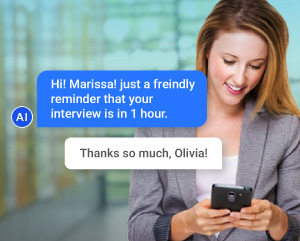
- Text-to-Apply For Open Jobs

- AI Powered Candidate Screening

- Automate Interview Scheduling

- Integrate With ATS & HR Systems

Learn More
Organizations using Dayforce Recruiting (Ceridian Dayforce ATS) often struggle with low offer acceptance rates, especially in competitive industries like retail, hospitality, logistics, and manufacturing. Top candidates for hourly and frontline roles frequently accept offers elsewhere while stuck in slow manual processes, ghosting recruiters, or receiving poor communication.
CloudApper AI Recruiter integrates directly with your Dayforce Recruiting Software to dramatically improve candidate engagement and boost offer acceptance through intelligent automation.
The Hidden Hiring Leak in Dayforce
Even strong Dayforce users lose great candidates due to delayed responses, unanswered questions, and impersonal communication. In today’s fast-moving job market, candidates expect quick interaction. When they don’t get it, they move on.
AI-powered sourcing and engagement solves this by working seamlessly inside Dayforce:
- Automatically sourcing and ranking candidates based on role-specific criteria using existing Dayforce data.
- Engaging applicants instantly through conversational AI that answers questions, provides role details, and guides them through next steps 24/7.
- Keeping candidates warm and excited while reducing drop-off between application and offer.
This creates a responsive, professional experience that makes your organization stand out.
Key Benefits for Dayforce Recruiting Teams
- Higher Offer Acceptance: Faster, personalized communication helps close more candidates.
- Reduced Candidate Drop-Off: Real-time AI responses keep applicants engaged throughout the process.
- Better Employer Brand: Professional, always-on interaction strengthens your reputation in competitive labor markets.
- Seamless Dayforce Integration: Full two-way sync with your existing ATS — no extra platforms or manual work required.
- Customizable for Your Industry: Configure AI conversations to highlight shift flexibility, benefits, or growth opportunities that matter most to your candidates.
Read the full guide: AI Sourcing Candidates from Ceridian Dayforce Recruiting Software (ATS)
Ready to improve your hiring success rate? Discover the CloudApper AI Recruiter for Dayforce and transform how you source, engage, and hire top talent.
Key Takeaways
- AI sourcing in Dayforce turns slow processes into fast, engaging experiences.
- Higher engagement directly leads to better offer acceptance and faster fills.
- Easy integration enhances your current Dayforce system without disruption.
By addressing engagement gaps in Dayforce Recruiting, AI helps talent teams win stronger candidates and build more successful hiring outcomes.

Build an AI Chatbot for Workday to Simplify Employee Self-Service

Employee Self-Service Kiosk
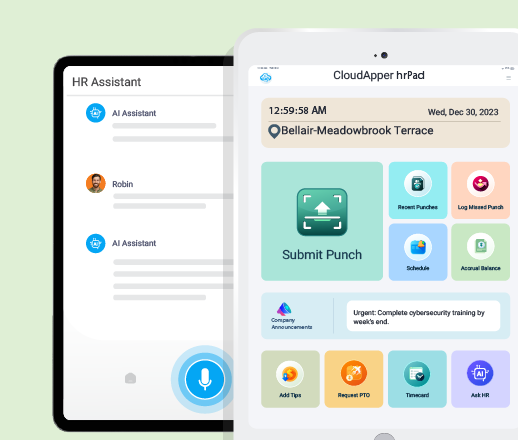
Works on any device with
TL;DR:
An AI Chatbot for Workday enables employees to handle HR tasks through simple conversation instead of navigating complex menus. It delivers instant answers on leave, payroll, benefits, and more while cutting down HR workload significantly.
Many Workday customers underutilize their investment because employees find the system difficult to navigate. This leads to heavy reliance on HR for even basic requests, creating delays and frustration. An intelligent AI Chatbot for Workday solves this by offering a natural, conversational interface that connects directly to Workday data.
The Real Problem It Solves
HR teams supporting Workday platforms are often overloaded with repetitive questions. Employees want quick answers about their time off balances, payslips, attendance, or benefits — but struggle with the standard portal. A dedicated AI Chatbot for Workday bridges this gap by understanding natural language and providing accurate responses 24/7.
Key Advantages:
- Faster employee self-service experience
- Substantial reduction in HR support tickets
- Increased Workday platform adoption
- Improved employee satisfaction and productivity
- Secure, compliant interaction with sensitive HR data
How to Create an AI Chatbot for Workday
- Choose High-Volume Use Cases Prioritize common requests such as leave balance inquiries, time-off submissions, payslip access, personal data updates, and policy questions.
- Select a No-Code Platform Built for Workday Use solutions designed for easy integration to avoid long development timelines and high costs.
- Connect Securely to Your Workday System Enable real-time data access and transaction capabilities while maintaining enterprise-grade security.
- Launch and Optimize Continuously Start small, analyze real conversations, and improve accuracy over time.
CloudApper hrGPT offers a fast and effective way to build a robust AI Chatbot for Workday without writing code.
For organizations with hourly or frontline staff, pairing the chatbot with modern attendance tools creates a powerful self-service ecosystem. Learn more about the CloudApper AI TimeClock for Workday, which provides touchless biometric clocking with intelligent AI support.
Final Thoughts
Deploying an AI Chatbot for Workday is one of the quickest ways to improve employee experience and maximize the return on your Workday investment. It transforms HR support from slow and manual to instant and intelligent.
Ready to build yours? Read the complete original guide: Building a Simple AI Chatbot for Workday.

Patient Safety Tips for Abdominoplasty Procedures in Toronto

A flat stomach sounds wonderful. The idea of wearing fitted tops again feels exciting. But surgery is still surgery. Things can go wrong. The good news is most problems are preventable. A little knowledge goes a long way. A few smart choices make all the difference. Toronto has excellent medical facilities. It has highly trained surgeons.
The city also has strict safety standards. For anyone considering a Toronto Surgery abdominoplasty, following these safety tips makes the journey smoother and safer.
Choose the Right Surgeon First
Board certification is non-negotiable. A certified plastic surgeon completed years of extra training. They passed difficult exams. They stay current with new safety protocols. Anyone can call themselves a cosmetic surgeon. That title means almost nothing.
Check the Royal College of Physicians and Surgeons website. Verify the credentials personally. A good surgeon also has hospital privileges. Even for outpatient procedures. That means they meet high standards. That means another layer of oversight. Never skip this step.
Understand Your Health History
The surgeon needs the full picture. Every medication matters. Prescription drugs. Over-the-counter pills. Herbal supplements. Fish oil thins the blood. Vitamin E thins the blood. Garlic supplements thin the blood. These must stop before surgery.
Past surgeries matter too. Previous abdominal procedures affect scar placement. C-sections matter. Hernia repairs matter. Gallbladder surgery matters. Smoking is a huge red flag. Nicotine constricts blood vessels. Healing suffers. Complications rise. Be honest about everything. The surgeon cannot help with hidden information.
Pick an Accredited Facility
Where the surgery happens matters enormously. An accredited facility meets strict safety standards. Equipment gets inspected regularly. Emergency protocols exist. Staff practice for rare crises. A private room in a medical spa rarely has this. A dentist’s office converted for surgery definitely does not. Ask about accreditation directly.
Look for Canadian Association for Accreditation of Ambulatory Surgical Facilities. Or College of Physicians and Surgeons approval. These designations mean something. They mean safety.
Ask About the Anesthesiologist
The person putting you to sleep matters. A board-certified anesthesiologist has years of training. They handle emergencies calmly. They adjust medications in real time. A nurse anesthetist has less training. A dentist doing anesthesia on the side is terrifying.
Ask who will be in the room. Ask about their credentials. Ask about their experience with tummy tucks specifically. Abdominoplasty takes two to four hours. Long surgeries carry more anesthesia risks. An experienced professional manages these risks better.
Quit Smoking Well in Advance
This warning cannot be repeated enough. Smoking wrecks healing. Nicotine narrows blood vessels. Less oxygen reaches the abdominal skin. The skin flap from a tummy tuck becomes fragile. It can die completely. This is called necrosis. It is horrible. It requires more surgery. It leaves terrible scars.
Quit smoking at least four weeks before surgery. Eight weeks is better. Six months is best. Vaping counts as smoking. Nicotine patches count as nicotine. Stop everything. The temporary discomfort is worth permanent safety.
Follow Pre-Op Instructions Perfectly
The surgical team gives a list of rules. Follow every single one. Stop eating at the specified time. Anesthesia with a full stomach is dangerous. Vomiting while asleep leads to lung damage. Stop drinking at the specified time. Dehydration is bad. Aspiration is worse. Shower with the special soap the night before. This reduces bacteria on the skin.
Antibiotics help. Clean skin helps more. Arrive at the right time. Rushing creates stress. Stress increases blood pressure. High blood pressure increases bleeding risk.
Plan for Aftercare Properly
Recovery is not a vacation. It is a vulnerable time. Arrange help before surgery day. Someone must drive home. Someone should stay for the first 24 hours. Someone needs to watch for complications. Fever over 101 needs a call. Shortness of breath needs emergency care. Severe pain unrelieved by medication needs attention.
One-sided leg swelling could be a blood clot. This is serious. Know the warning signs. Have the surgeon’s after-hours number saved. Call before panicking. But call.
Wear Your Compression Garment
The garment looks strange. It feels uncomfortable. Wear it anyway. The compression reduces swelling. It helps the skin adhere to the muscle below. It prevents fluid collections called seromas. These seromas need draining with a needle. Multiple times sometimes.
The garment also provides support. Moving around feels easier with it on. Most surgeons recommend wearing it for six weeks. Some say longer. Follow their specific instructions. The garment is annoying. A seroma is worse. A blood clot is worse. Wear the garment.
Move Early but Gently
Bed rest sounds safe. It is actually dangerous. Blood clots form when legs stay still. Get up and walk the day of surgery. Short walks around the bedroom. Slow walks to the bathroom. Increase distance each day. Listen to the body. Pain means slow down. Fatigue means rest. But keep moving.
Walking prevents pneumonia. It prevents constipation from pain meds. It prevents the deepest fear of every surgeon. A blood clot traveling to the lungs. That kills people. Walking prevents it. So walk. Even when tired. Even when sore. Just walk.

Signs You May Need a Psychiatrist Instead of a Therapist

Mental health can be enhanced by using therapy as an emotional coping mechanism and a safe environment where an individual can express personal issues. Nevertheless, sometimes it can be difficult to know when to see a psychiatrist. Symptoms can be, in some cases, severe, persisting, or driven by a biological process and hence requiring a more appropriate next treatment, psychiatric treatment.
Learning to differentiate between a therapist and online psychiatry services in New York may enable you to make informed choices regarding your care. Whereas therapists specialize in talk therapy and behavioral techniques, psychiatrists are medical doctors who have the ability to diagnose mental health problems and prescribe medicine when necessary.
Why Therapy Alone May Not Be Enough
A good number of people with anxiety and stress, grief, and transitional life changes, mild or severe, can be helped with the help of therapy. Nevertheless, the scales and extent of mental health are a continuum, with certain disorders necessitating treatment along with talk therapy.
Therapy is possibly not enough when:
- The symptoms are serious or deteriorating.
- Emotional distress has considerable effects on daily activity.
- A potential biological or neurological condition whatsoever.
- An improvement in treatment has stopped.
In such a case, a psychiatrist may give a more detailed assessment and define the necessity of drugs or other treatment methods.
Key Signs You May Need a Psychiatric Evaluation
58 million Americans experience some form of mental illness each year. The signs are many and can be a symptom that it is time to visit a psychiatrist rather than just through therapy.
Common indicators of when to see a psychiatrist include:
- Incessant depression or anxiety that fails to ameliorate.
- Very extreme mood changes or emotional volatility.
- Suicidal/self-homicidal thoughts.
- Issues in functioning at work, at school, or at home.
- Ruthless panic attacks or obsessive thoughts.
Some of their services, like the Mindful Care, will probably appeal to individuals with quick-assessment psychiatric services, which will help them to make timely access to assistance without showing up among other people.
Cognitive and Behavioral Red Flags
The need to acquire psychiatric care is also denoted by certain changes in the thinking pattern or behaviors.
These may include:
- Concentration problem or memory issues.
- Ambivalent thought or incoherent thought.
- Suspicion or paranoia without apparent cause.
- Leaving friends, family, or duties.
- Immediate alterations in behaviour or personality.
These symptoms could be a sign of underlying conditions of mood disorders, psychotic disorders, or severe anxiety disorders, which need to be medically evaluated.
Physical and Functional Symptoms That Indicate Medical Support May Be Needed
Mental health disorders tend to impact the body in addition to the mind. Psychiatric care is possible when symptoms are determined as being physical or disturbing daily functioning.
Mental health warning signs include:
- Persistent sleeplessness or oversleep.
- Change in appetite or weight significantly.
- Increased physical complaints.
- Centrality inability to sustain work, school, or personal commitments.
The symptoms can be a signal that the chemical or neurological systems of the brain may be involved, and it is in this situation that psychiatric evaluation will be of particular value.
When Medication May Be Considered
The ability to prescribe medication is one of the major differences between a psychiatrist vs therapist. Such medication is not necessarily needed, but it is quite successful in certain cases.
Psychiatric medication can be useful to you when you are experiencing:
- Major depression (moderate to severe).
- Generalized anxiety disorder or panic disorder.
- Bipolar disorder
- ADHD
- Obsessive-compulsive disorder (OCD)
Medication may help:
- Stabilize mood
- Minimize the severity of symptoms.
- Enhance concentration and sleep.
- Engagement in support of therapy.
In most instances, the use of medication together with therapy gives the best results.
What to Expect During a Psychiatric Consultation
The standard form of psychiatric consultation is designed to help you learn about your mental health using a step-by-step approach.
In the course of the consultation, you will get to know:
- Inquiries regarding your symptoms, as well as their duration of existence.
- Discussion of your medical and mental health history
- Review of family history of mental illness
- Interrogatives concerning lifestyle, stressful events, and everyday functioning.
- Potential screening of particular mental health disorders.
The psychiatrist can also assess whether medication is right or not, and also discuss with you the type of medication.
In contrast to therapy, psychiatric visits are oftentimes shorter and more diagnosis and treatment-planning-oriented. Progress check-ups are usually made in follow-ups to evaluate the progress and to add or change the medication when necessary.
Conclusion
Understanding whether to visit a therapist or a psychiatrist can be a serious catalyst in your mental health process. Whereas therapy is very useful in providing emotional support and a behavioral change, in some cases, some symptoms may need to be medically evaluated and may or may not require medication.
Therapists and psychiatrists commonly collaborate in order to offer holistic care. Through the proper support, numerous people can be relieved, stable, and even have a better quality of life.

Why Faster Isn’t Always Better in Clinical Documentation

Clinical documentation captures medical histories, treatment plans, test results, and clinical decisions. As healthcare organizations face growing workloads and staffing pressures, speed is a major focus in documentation processes. But speed alone does not guarantee better outcomes.
When documentation is rushed, important details can be missed, communication can suffer, and patient care may be affected. The goal should be timely documentation that remains accurate, complete, and clinically useful.
The value of accuracy over speed
Clinical records serve as a reference point for everyone involved in a patient’s care. Physicians, nurses, specialists, and administrative teams rely on documented information to make informed decisions. If notes are completed quickly but lack critical details, the quality of care may be compromised.
Errors in documentation can lead to misunderstandings, duplicated tests, incorrect treatments, or billing issues. Even small omissions can create challenges when multiple providers are coordinating care. Taking the time to document accurately often prevents larger problems later.
Documentation supports continuity of care
Patients frequently interact with multiple healthcare professionals across different settings. A well-documented record helps ensure that everyone has access to the same information.
When documentation is rushed, important context may be left out. Details about symptoms, medication changes, or treatment responses may not be fully recorded. This can make it harder for future providers to assess a patient’s condition and continue care effectively.
Clear, detailed documentation supports smoother transitions between providers and helps maintain consistency throughout the patient journey.
Efficiency tools still require oversight
Many healthcare organizations use tools and services designed to speed up documentation. Templates, voice recognition software, and medical scribing from services like Scribe X can reduce administrative workloads and allow clinicians to spend more time with patients.
These tools can be highly effective when used properly. However, they are not a substitute for clinical judgment. Automatically generated notes, pre-filled templates, or dictated records still need careful review. Clinicians remain responsible for ensuring that the final documentation accurately reflects the patient’s condition and the care provided.
Efficiency is important, but so is quality control.
Patient safety depends on complete records
Clinical documentation is more than an administrative task. It is closely connected to patient safety. Healthcare providers often rely on records to identify allergies, review medication histories, monitor chronic conditions, and track treatment progress.
Incomplete or vague documentation can increase the risk of mistakes. For example, failing to document a medication change or a patient’s reported symptoms may lead to inappropriate treatment decisions later.
Taking a few extra moments to verify details can help reduce risks and support safer care delivery.
Regulatory and legal considerations
Clinical documentation also serves regulatory, compliance, and legal purposes. Healthcare organizations must maintain records that accurately reflect patient encounters and treatment decisions.
If documentation is rushed and important information is missing, it may create challenges during audits, insurance reviews, or legal proceedings. Thorough records help demonstrate the rationale behind clinical decisions and support compliance with industry requirements.
Well-maintained documentation protects both patients and healthcare providers.
Finding the balance
The challenge isn’t choosing between speed and quality – healthcare organizations need both. Delayed documentation can create workflow bottlenecks, while rushed documentation can introduce errors and omissions.
The most effective approach focuses on balancing efficiency with accuracy. Streamlined workflows, supportive technology, and appropriate staffing can help clinicians document more efficiently without sacrificing quality. Regular review processes and training can also strengthen documentation standards.
Clinical documentation works best when it provides a clear, complete picture of patient care. Faster documentation may improve productivity, but only when accuracy and completeness remain priorities.

Supporting Children’s Development: Dyslexia Awareness and Occupational Therapy Activities

Children develop skills through a combination of learning, movement, and daily experiences. When challenges appear in reading, writing, coordination, or attention, understanding the underlying causes and using structured support strategies can make a major difference. This guide combines insights on how parents can support a child struggling with dyslexia and practical occupational therapy activities for everyday skill building, offering a clear roadmap for supporting development at home and with professionals.
Understanding What Dyslexia Really Means for Your Child
Dyslexia is a language-based learning difference that affects how the brain processes written and spoken words. It has nothing to do with vision problems or lack of effort. In fact, many children with dyslexia are highly creative, curious, and capable, yet they face real challenges with decoding words, recognizing spelling patterns, and reading fluently.
A key part of identifying dyslexia in kids is understanding that it presents differently across ages. A younger child might struggle to recognize rhymes or connect letters to sounds. An older child might read slowly, avoid reading aloud, or become frustrated with written assignments. These patterns are not laziness. They reflect how the brain is wired.
As a parent, the more clearly you understand what dyslexia actually is, the better you can advocate for your child. You move from confusion to confidence, and that shift directly affects how your child sees themselves. Children who feel understood at home are far more likely to persist through the challenges school presents.
Talk Openly with Your Child About Dyslexia
One of the most impactful things you can do is have an honest, age-appropriate conversation with your child about dyslexia. Many children already know something is different about how they learn. Without a clear explanation, they often fill that gap with the wrong conclusion: that they’re not smart enough.
Start the conversation simply. Tell your child that their brain learns in a different way, not a broken way. Use examples of successful people who have dyslexia to show that this difference doesn’t limit what’s possible. Keep the tone matter-of-fact rather than heavy or emotional, so your child doesn’t feel like dyslexia is a crisis.
As your child gets older, revisit these conversations. Let them ask questions. Encourage them to describe what feels hard so you can better understand their experience. This kind of open dialogue builds self-awareness, and self-awareness is one of the strongest tools a child with dyslexia can have. It helps them ask for help, use accommodations confidently, and develop resilience over time.
Create a Dyslexia-Friendly Learning Environment
The home environment strongly influences how a child experiences learning.
- Keep routines predictable and structured
- Use a quiet, distraction-free study space
- Break reading or homework into short sessions (e.g., 15–20 minutes)
- Connect reading to interests (stories, comics, audiobooks)
- Avoid making reading feel like punishment
A supportive emotional environment is just as important as academic support. When reading feels safe and manageable, children are more likely to engage consistently.
Early Evaluation and Professional Support
If dyslexia is suspected, early assessment is important. Educational psychologists or specialists evaluate reading fluency, phonological awareness, memory, and decoding skills.
Support may include:
- Structured literacy programs
- Individualized Education Plans (IEPs)
- Classroom accommodations (extra time, oral answers, audiobooks)
- Specialized tutoring
Early intervention is consistently linked to better long-term outcomes.
Partnering with Educators and Specialists
Collaboration is essential. Teachers, tutors, and specialists each play a role in supporting progress.
- Maintain regular communication with teachers
- Share what works at home
- Request accommodations when needed
- Work with structured literacy tutors
- Consider speech-language support if phonological difficulties are present
Consistency between home and school strengthens learning and reduces stress.
Occupational Therapy Activities for Everyday Skill Building
Occupational therapy focuses on helping individuals develop the skills needed for daily life—such as writing, coordination, attention, self-care, and participation in school or home activities.
These occupational therapy activities for everyday skill building are designed to improve function, not just isolated abilities. Therapists assess strengths and challenges, then use structured, goal-oriented activities to support progress.
A key principle in occupational therapy is activity grading—gradually increasing difficulty as the child improves. This keeps tasks achievable while still promoting growth.
What Skill Building Really Means in Occupational Therapy
Skill building in occupational therapy is not a one-size-fits-all process. It is a structured, intentional approach that targets the specific abilities a person needs to perform meaningful daily activities, whether that means a child learning to write or an adult recovering motor function after an injury.
Occupational therapists assess what a person can and cannot do, then design activities that gradually close that gap. The goal is always function, not just movement or memory in isolation. Every activity serves a purpose tied directly to real life.
It is also worth noting that occupational therapy activities, such as those mentioned in Soundsory’s guide about occupational therapy activities, work across a wide range of populations, from children with developmental delays to older adults managing chronic conditions. The methods vary, but the philosophy stays the same: meet the person where they are and build from there.
The Role of Assessment in Designing Activities
Before a therapist selects a single activity, they conduct a thorough assessment. This typically includes observation, standardized tests, and input from the person and their family. The results shape everything that follows, from the type of tasks used to the level of challenge introduced.
A well-designed assessment reveals not just deficits but also strengths. Therapists use those strengths as a foundation, so the person starts from a position of capability rather than limitation. This approach builds confidence alongside skill.
Fine Motor Activities for Precision and Dexterity
Fine motor skills involve the small muscles of the hands and fingers, and they are essential for tasks like writing, fastening buttons, using utensils, and typing. For many people in occupational therapy, this is one of the first areas addressed because it affects so much of daily life. You can explore a broader range of occupational therapy activities that target these skills at different ability levels.
Pinching and Grasping Exercises
Activities that target the pincer grip, the movement between thumb and index finger, are foundational for hand skill development. Therapists often use pegboards, tweezers, small beads, or clothespins to build this type of control. These tasks train precision without requiring expensive equipment.
For children, these activities can be embedded in play, like picking up small game pieces or threading beads onto a lace. For adults, similar tasks might be framed around practical needs, such as sorting coins or handling fasteners.
Hand Strengthening Through Purposeful Tasks
Strength and dexterity work together. A hand that lacks strength cannot sustain the precision needed for fine motor tasks, no matter how well-trained the movement pattern is. Therapists use tools like therapy putty, stress balls, and resistance-based hand exercises to build muscle endurance.
Why Occupational Therapy and Dyslexia Support Work Well Together
Children with dyslexia often benefit from occupational therapy because learning is not only academic—it is also physical, sensory, and cognitive.
For example:
- Fine motor skills support handwriting and writing fluency
- Sensory regulation improves focus during reading tasks
- Cognitive training supports memory and sequencing in reading
- Structured routines improve consistency in learning habits
When combined, these approaches reduce frustration and help children access learning more effectively.
Conclusion
Supporting a child with dyslexia requires understanding, structure, and the right tools. Occupational therapy adds another layer of support by strengthening the physical, sensory, and cognitive skills needed for learning and daily life.
When parents combine early evaluation, structured learning environments, open communication, and targeted occupational therapy activities for everyday skill building, children are far more likely to build confidence and long-term success.
All activities should be age-appropriate and supervised by an adult. If concerns persist, consult a qualified educational or healthcare professional.

RightPatient Blog
 How to Add AI to UKG, Workday, or SAP SuccessFactors Without Disrupting Your HR OperationsMay 23, 2026 - 11:51 am
 Why Multi-Location Retail Operations on Workday Can’t Afford a Dumb Time ClockMay 22, 2026 - 12:12 pm
 Workday Time Tracking for Home Health Agencies: The Geofencing Gap That Creates Compliance RiskMay 21, 2026 - 11:40 am
 Your Time Clock Is the First Thing New Hires Learn About How You Run HRMay 18, 2026 - 9:15 am