
The Future of Hiring: How hrPad’s Referral Feature is Shaping Tomorrow’s Workforce
TL;DR

  • Networking is a powerful tool for building talent pipelines, transforming informal connections into strategic hiring advantages.
  • CloudApper hrPad's referral feature leverages employee networks to enhance recruitment efficiency, reducing time-to-hire and improving cultural fit.
  • Employee referrals are a top source of quality hires, cutting time-to-fill by 55% and reducing turnover rates.
  • Nurturing relationships with referred candidates through continuous communication is crucial for long-term recruitment success.
  • Feedback loops and AI-driven tools enhance the referral process, providing insights into candidate skills and fit.
  • Innovative technologies like virtual reality can offer immersive candidate experiences, improving engagement and assessment.
  • Strategic networking and technology use in recruitment build a resilient workforce prepared for future challenges.

Explore how CloudApper hrPad can transform your hiring strategy. Contact Us to learn more.

Welcome to our expert roundtable discussion! I’m Mia, a representative from CloudApper, and today we’re diving into a topic that’s been generating a lot of buzz among our customers and industry professionals alike: the future of hiring and how innovative tools like CloudApper hrPad’s referral feature are reshaping the workforce landscape.

Joining me today are two of our internal solution specialists: Alex Johnson, our Senior HR Technology Consultant, and Sarah Lee, our AI Integration Specialist. Thank you both for being here.

Mia: Let’s start with you, Alex. We’ve seen a surge in interest around employee referrals as a hiring strategy. Why do you think this approach is gaining so much traction?

Alex: Thanks, Mia. Employee referrals have always been a valuable part of the recruitment process, but their importance has skyrocketed in recent years. The main reason is trust. Candidates referred by current employees tend to be more reliable and culturally aligned with the company. Plus, with tools like hrPad, the process is streamlined, making it easier for employees to participate and for HR teams to manage.

Mia: That’s a great point. Sarah, could you elaborate on how hrPad’s AI capabilities enhance the referral process?

Sarah: Absolutely, Mia. The integration of AI into hrPad is a game-changer. Our platform uses AI to analyze employees’ networks, identifying potential candidates who not only match the job requirements but also fit the company culture. This predictive analysis boosts the quality of referrals and increases participation rates. It’s like having a smart assistant that helps you find the best candidates effortlessly.

Mia: Fascinating! Alex, can you share an example of how this has worked in practice?

Alex: Sure, Mia. I recall a mid-sized tech company that was struggling to fill several key positions quickly. They implemented hrPad’s referral feature and within weeks, they were able to tap into their employees’ networks, identifying and hiring qualified candidates. Not only did this streamline their hiring process, but it also improved their diversity metrics, as they could prioritize referrals that contributed to a more inclusive workforce.

Mia: That’s impressive. Sarah, how does hrPad’s mobile-first design contribute to its effectiveness?

Sarah: The mobile-first design is crucial, Mia. In today’s fast-paced world, employees are constantly on the go. hrPad’s mobile-friendly interface allows them to submit referrals, track their statuses, and claim rewards directly from their smartphones. This accessibility ensures higher engagement and participation, which is essential for the success of any referral program.

Mia: It’s clear that technology plays a significant role in modern hiring practices. Alex, how does hrPad support diversity and inclusion initiatives?

Alex: hrPad provides tools that help companies track and improve diversity metrics among referrals. By fostering a more inclusive workforce, organizations can tap into a broader range of talents and perspectives, ultimately enhancing their competitive edge. This is crucial in today’s global market where diversity is not just a buzzword but a business imperative.

Mia: That’s a vital aspect. Sarah, can you talk about the integration capabilities of hrPad with existing HCM systems?

Sarah: Certainly, Mia. hrPad integrates seamlessly with leading HCM systems like UKG, Workday and SAP SuccessFactors. This ensures that the referral process is incorporated into the broader HR ecosystem, enhancing data accuracy and consistency. It allows for better data-driven decision-making, ultimately improving the overall strategic HR management.

Mia: Integration seems to be a key factor in the success of hrPad. Alex, what are the broader implications of these innovations for the future of hiring?

Alex: The implications are vast, Mia. As companies continue to rely on technology-driven solutions like hrPad’s referral feature, they can build more resilient and adaptable workforces. In a rapidly changing job market, this adaptability is crucial for maintaining a competitive edge. By focusing on referral innovation, companies can enhance their recruitment strategies, ensuring they remain competitive in an ever-evolving job market.

Mia: Thank you both for sharing your insights. It’s clear that the future of hiring is intertwined with technological advancements. For our readers interested in exploring how CloudApper hrPad can transform your hiring process, I encourage you to contact us for more information or to request a demo. Thank you for joining us today!

How To Build a Talent Pipeline Using Employee Referrals

  1. Implement a Referral Program: Start by setting up a structured employee referral program. This should include clear guidelines on how employees can refer candidates and any incentives for successful hires.
  2. Leverage Technology: Use an AI-driven tool, like CloudApper hrPad, to streamline the referral process. This platform allows employees to easily submit referrals and track their progress. For more information, see our article on AI in HR.
  3. Engage with Referred Candidates: Once candidates are referred, maintain regular contact to keep them engaged. Use personalized communication strategies to ensure they feel valued.
  4. Integrate Analytics: Utilize predictive analytics to assess the candidates' fit and potential within the organization. This reduces hiring risks and enhances decision-making.
  5. Provide Feedback: Create a feedback loop between employees, candidates, and HR to refine the referral process continually. Encourage input on what works well and what can be improved. For more insights on using data for HR decisions, read about how hrPad conducts surveys.

Frequently Asked Questions

  • What is the main advantage of using employee referrals in recruitment?

    The primary advantage of using employee referrals is the higher quality of hires, as referrals often result in faster hiring processes, better cultural fits, and reduced recruitment costs. To learn more, check out our article on why employee referrals should be your top hiring strategy.

  • How does CloudApper hrPad utilize AI in recruitment?

    CloudApper hrPad uses AI to analyze employees' networks and recommend high-quality candidates for open positions, ensuring that referrals are effective and of the highest caliber. You can find out more about AI's role in recruitment in our article on how AI helps address common HR challenges with CloudApper hrPad.

  • What role does technology play in enhancing employee referrals?

    Technology plays a crucial role by simplifying the referral process, integrating with HR systems, and providing predictive insights into candidates' potential performance and cultural fit. For more information, explore our CloudApper hrPad page.


MIA

MIA is CloudApper’s sales and solutions assistant, designed to help professionals and business leaders explore the future of workforce technology. MIA shares insights from real-world conversations with customers and CloudApper experts-bridging the gap between AI innovation and practical enterprise solutions.

Seamless Integration: How CloudApper AI TimeClock Fits into Your Existing HR Systems

TL;DR

AI is revolutionizing human capital management (HCM) in the construction industry by automating tasks like payroll data entry, overtime calculations, and leave processing. This transformation allows HR professionals to focus on strategic initiatives, enhancing productivity and optimizing workforce management. CloudApper AI TimeClock is a key player in this shift, offering precise time tracking and seamless integration with existing systems, reducing payroll errors, and ensuring compliance.

  • AI automates HCM tasks, saving time and reducing errors.
  • CloudApper AI TimeClock integrates with major HCM solutions.
  • Improved accuracy and compliance in workforce management.
  • HR teams can focus on strategic goals, enhancing productivity.

Embrace AI-powered solutions like CloudApper AI TimeClock to stay competitive and achieve long-term success. Contact us to learn more about transforming your HCM processes.

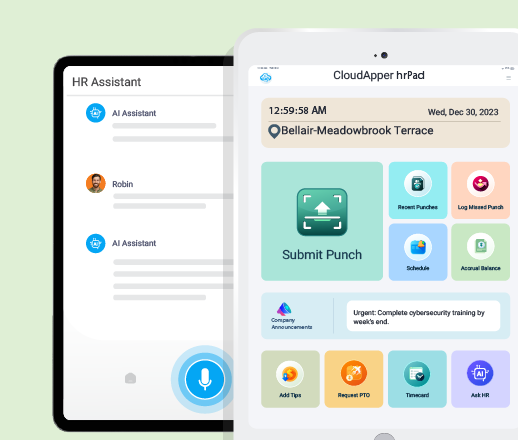
Are you tired of juggling multiple HR systems that don’t quite fit together? Meet CloudApper AI TimeClock — the tool that makes integration a breeze. With CloudApper, you can say goodbye to the headaches of mismatched systems and hello to seamless operation. Imagine transforming any iOS or Android tablet into a powerful time management device. That’s exactly what the CloudApper AI TimeClock, or hrPad, does. It’s user-friendly, efficient, and works perfectly with your existing HR systems.

In businesses today, outdated time-tracking systems can cause chaos. Errors pile up and employee morale takes a hit. But CloudApper AI TimeClock changes the game. It lets employees clock in and out, manage leave, and check leave balances—all from one easy-to-use interface. Plus, it integrates smoothly with big names like UKG, Workday, Oracle PeopleSoft HCM, and iSolved.

Why is this important? Because it means you don’t have to overhaul your current systems to get the benefits of AI-powered time management. Transitioning is smooth, with no workflow interruptions. The CloudApper Solutions Delivery team is there to help set up and tailor the system specifically for your needs.

Managers will love the insights they gain from CloudApper. The AI-powered analytics reveal leave trends and staffing patterns, helping plan better and make data-driven decisions. This means fairer, more efficient management of leave balances and approvals. But it doesn’t stop at timekeeping. CloudApper also includes an AI assistant for instant HR queries, employee referral tools, and pulse surveys for real-time feedback.

For employees, it’s all about empowerment. With self-service tools, employees can manage their time more effectively, leading to higher job satisfaction. And, importantly, CloudApper respects privacy. No GPS tracking here, just secure, user-friendly design that even the least tech-savvy can navigate.

Consider Potpourri Group Inc. (PGI). During the pandemic, they needed a touchless, hygienic solution. CloudApper fit the bill perfectly. Their UKG Workforce Ready system integrated smoothly, making the transition cost-effective and employee-friendly. PGI improved hygiene, compliance, and efficiency without compromising employee satisfaction.

Integrating new tech doesn’t have to be a nightmare. With CloudApper AI TimeClock, it’s a seamless experience. Compatible with top HCM solutions and backed by a dedicated support team, this tool modernizes your HR processes without disrupting ongoing operations.

Ready for a smarter, more efficient HR system? CloudApper AI TimeClock delivers. Enhance employee satisfaction, reduce HR workload, and gain deeper insights for strategic management. It’s time to experience the future of HR.

For more information or to experience the future of HR management, you can contact us for a free demo of hrPad.

How to Implement CloudApper AI TimeClock in Your Construction Firm

  1. Evaluate the System: Begin by understanding the features of the CloudApper AI TimeClock and how it fits into your construction firm’s current HR processes.
  2. Prepare Your Hardware: Ensure your site is equipped with iOS or Android tablets. Learn more about how iPad/Tablet-Based Time Clocks Can Streamline Workforce Management.
  3. Integration with Existing Systems: Work with your IT team to integrate the AI TimeClock with your current HCM systems like UKG, Workday, or Oracle PeopleSoft.
  4. Set Up User Accounts: Create user accounts for all employees, ensuring they understand the self-service tools available. Details on empowering employees are available at Empower Employees with Self-Service Features.
  5. Training and Support: Provide adequate training for staff to utilize the features effectively and ensure ongoing support is available.
  6. Monitor and Adjust: Use AI-powered analytics to gain insights into workforce management and adjust your strategies as necessary. Discover how to Gain Operational Insights For Workforce Management.

For more assistance or to experience the future of workforce management, consider reaching out to us to order a free demo of hrPad.

Frequently Asked Questions

How does AI reshape workforce management in construction?

AI technologies like the CloudApper AI TimeClock are revolutionizing the construction industry by improving workforce management. They automate time tracking, payroll processing, and compliance with labor laws, allowing HR teams to focus on strategic initiatives and reduce errors.

What benefits do construction firms gain from using AI time clocks?

AI time clocks streamline operations by ensuring accurate time tracking and payroll, reducing compliance risks, and offering seamless integration with existing systems like UKG, Workday, and Oracle PeopleSoft HCM. Learn more about how cloud-based time clocks reduce costs and simplify operations.

Can CloudApper AI TimeClock integrate with popular HCM systems?

Yes, the CloudApper AI TimeClock offers robust integration capabilities with popular HCM systems like UKG, Workday, and Oracle PeopleSoft, making it a game-changer for HR teams. For detailed insights, visit Why Time Clock Integration with UKG Pro and Workday Is a Game-Changer for HR Teams.

MIA

MIA is CloudApper’s sales and solutions assistant, designed to help professionals and business leaders explore the future of workforce technology. MIA shares insights from real-world conversations with customers and CloudApper experts-bridging the gap between AI innovation and practical enterprise solutions.

Leveraging Strategic Alliances for Enhanced Patient Safety: The RightPatient-Healthcast Collaboration

The healthcare industry is constantly evolving, driven by the need to improve patient safety, data integrity, and operational efficiency. At the forefront of this evolution are innovative technology solutions that address some of the most pressing challenges faced by healthcare providers today. And when two industry leaders join forces to integrate their cutting-edge technologies, the result is a synergy that sets new precedents in healthcare delivery. This is exactly what the strategic alliance between RightPatient and Healthcast represents.

RightPatient, a pioneer in the field of biometric patient identification technology, has partnered with Healthcast, a provider of premier single sign-on solutions, to create an integrated platform that not only enhances patient safety but also improves access to patient data. This collaboration is a potent mix of expertise and innovation, aimed at addressing the core problems of healthcare and paving the way for a safer, more secure healthcare landscape.

Biometric patient identification technology from RightPatient is designed to accurately identify patients at all points of care, thereby preventing medical identity theft and eliminating medical errors. On the other hand, Healthcast’s single sign-on solution ensures quick, secure, and efficient access to patient data. The integration of these two technologies results in a comprehensive solution that not only secures access to patient data but also improves its integrity.

The combined strength of RightPatient and Healthcast far exceeds the capabilities of individual products. This strategic alliance encourages the adoption of key elements that significantly improve patient data integrity, marking a groundbreaking move towards preventing medical identity theft, eliminating medical errors, and ensuring HIPAA-compliant patient identification.

Strategic alliances such as this have a proven track record of success. RightPatient has previously partnered with healthcare organizations like Hugh Chatham Memorial Hospital and Martin Health System, successfully addressing key patient identification management challenges and developing unique solutions that have been widely recognized across the industry.

Hugh Chatham Memorial Hospital, located in North Carolina, was grappling with issues related to duplicate medical records, overlays, and patient fraud. The introduction of RightPatient, seamlessly integrated with their existing electronic health record system, eliminated these issues, enhancing patient safety and reducing hospital liabilities.

Similarly, Martin Health System in Florida needed a comprehensive patient identification platform that could ensure 100% accuracy for their emergency and admissions departments. Their goal was to maintain a safer, more hygienic environment for their patients, in line with the hospital’s infection control policies. The deployment of RightPatient effectively addressed these patient identification challenges, eliminated duplicate medical records, prevented identity theft, and tackled the issue of ‘dirty data’.

These success stories underscore the transformative potential of strategic alliances in healthcare. They serve as a strong testament to the fact that patient safety and data security can become the standard, rather than mere objectives. The future of patient care as envisioned by the RightPatient and Healthcast alliance is one where technology plays a crucial role in shaping a safer, more secure healthcare landscape.

To explore how the RightPatient and Healthcast alliance can benefit your healthcare organization, schedule a demo or click here to learn more.

How To Use RightPatient and Healthcast's Integrated Solution

  1. Understand the Technology: Familiarize yourself with the biometric patient identification technology from RightPatient and the single sign-on solution from Healthcast.
  2. Implement the Solution: Integrate the combined solution into your healthcare system to improve patient safety and data integrity.
  3. Monitor and Evaluate: Regularly monitor the system to ensure it is ensuring HIPAA-compliant patient identification and preventing medical identity theft.

FAQs

  1. What is the strategic alliance between RightPatient and Healthcast?
    The strategic alliance between RightPatient and Healthcast is a partnership that integrates RightPatient's biometric patient identification technology with Healthcast's single sign-on solution. This integrated platform enhances patient safety and improves access to patient data.
  2. How does the RightPatient and Healthcast alliance improve patient safety?
    The alliance improves patient safety by accurately identifying patients at all points of care, thereby preventing medical identity theft and eliminating medical errors. It also ensures quick, secure, and efficient access to patient data.
  3. What are the benefits of the RightPatient and Healthcast alliance?
    The alliance encourages the adoption of key elements that significantly improve patient data integrity. It also helps in preventing medical identity theft, eliminating medical errors, and ensuring HIPAA-compliant patient identification.
  4. How has RightPatient helped healthcare organizations in the past?
    RightPatient has previously partnered with healthcare organizations like Hugh Chatham Memorial Hospital and Martin Health System, successfully addressing key patient identification management challenges and developing unique solutions that have been widely recognized across the industry.
  5. How can I learn more about the RightPatient and Healthcast alliance?
    You can schedule a demo or click here to learn more about the RightPatient and Healthcast alliance.

Enhancing Patient Safety with Biometric Identification in Emergency Healthcare

In the healthcare sector, patient identification errors have been a persistent issue, contributing to nearly 250,000 deaths annually in the United States alone. These shocking statistics highlight an urgent need for a reliable and fail-proof patient identification system. This is where the transformative potential of Biometric Patient Identification comes into play. This technological revolution is set to fundamentally enhance patient safety, especially in emergency scenarios.

Biometric Patient Identification might appear complex at first glance, but a profound understanding of this system is crucial for healthcare providers. Going beyond mere fingerprints or iris scans, Biometric Patient Identification involves a variety of technologies and intricate search functionalities. The primary aim of this system is to ensure accurate identification and treatment of patients, particularly those who are unconscious and rushed into the emergency room. It seeks to eliminate medical errors stemming from patient misidentification, thereby improving patient safety and healthcare outcomes.

RightPatient, a trailblazer in touchless biometric patient identification, is spearheading this transformative change. Since its inception, RightPatient’s mission has been to demystify and simplify the complex world of biometric patient identification, making it a vital tool for hospitals across the nation. RightPatient employs various sophisticated technologies to ensure swift and accurate identification of patients, whether conscious or unconscious. This is of paramount importance in emergency situations where every second counts and misidentification can lead to harmful medical errors or treatment delays.

To illustrate the effectiveness of RightPatient, let’s take a look at a case study from International Health Management, a non-governmental organization that runs healthcare initiatives in Bangladesh. They faced the daunting challenge of maintaining accurate patient identification amidst the chaos of emergency settings. However, the integration of RightPatient’s biometric identification system proved to be a turning point. Implemented across five locations and serving approximately 5,000 patients, the system facilitated quick and accurate patient identification, thereby reducing errors and enhancing security measures.

But RightPatient is more than just an identification solution. It represents a promise of safety – a commitment to ensure that the right patient receives the right care, every single time. Amidst the complexities of biometric patient identification, RightPatient emerges as your trusted partner, guaranteeing accuracy, efficiency, and peace of mind.

Embrace the future of patient identification with RightPatient. Let us help safeguard your patients, secure your data, and navigate the intricate world of biometric patient identification. For more information, visit our website or schedule a demo to experience how RightPatient can transform patient identification in your healthcare setting.

How to Implement RightPatient in Your Healthcare Facility

  1. Understand the Current State: Before implementing a new system, it's important to understand the current methods of identifying patients. Learn about the traditional methods of identifying patients and their associated challenges.
  2. Choose the Right Solution: Select a touchless biometric patient identification solution that suits your needs. RightPatient is a leading provider in this field. Learn more about their touchless biometric patient identification solution.
  3. Implement the System: Once you've chosen RightPatient, the next step is implementation. This involves integrating the system into your existing healthcare infrastructure. For a smooth transition, understand why experience matters when selecting a biometric patient enrollment solution.
  4. Train Your Staff: Ensure your staff is well-trained on the new system. This includes understanding how to use the system effectively and how to handle any potential issues.
  5. Monitor and Evaluate: After implementation, continuously monitor and evaluate the system's performance. Make necessary adjustments to ensure it's working effectively and improving patient safety.

Frequently Asked Questions

  • What is Biometric Patient Identification?
    Biometric Patient Identification is a system that uses unique biological traits of patients, such as fingerprints or iris scans, to accurately identify them. This technology is crucial in healthcare settings, especially in emergency scenarios, to ensure the right patient receives the right treatment.
  • How does Biometric Patient Identification improve patient safety?
    By accurately identifying patients, Biometric Patient Identification eliminates medical errors stemming from patient misidentification. This significantly improves patient safety and healthcare outcomes.
  • What is RightPatient?
    RightPatient is a leading provider of touchless biometric patient identification solutions. It uses sophisticated technologies to ensure swift and accurate identification of patients, thereby reducing medical errors and treatment delays.
  • How does RightPatient ensure patient privacy?
    RightPatient respects patients' privacy and conforms with HIPAA guidelines. It prioritizes the safe and secure collection and transmission of health data.
  • How can I learn more about RightPatient?
    You can visit the RightPatient website or schedule a demo to experience how it can transform patient identification in your healthcare setting.

Improving Hospital Operations with Biometric Patient Identification: The Hugh Chatham Case

Imagine transforming your hospital’s operations, enhancing patient safety issues, eliminating duplicate medical records, and eradicating Medicaid fraud with the simple introduction of a biometric patient identification platform. This isn’t a far-off dream, but an achievable reality, as evidenced by Hugh Chatham Memorial Hospital’s successful transition to RightPatient®.

Hugh Chatham Memorial Hospital, a leading healthcare provider in North Carolina, was no stranger to the operational challenges that many medical institutions grapple with. From patient safety issues to the creation of duplicate medical records and instances of patient fraud, the hospital faced a variety of concerns that needed immediate addressing. Their initial solution, a palm vein biometrics system, although innovative, fell short in several critical areas. The turning point? The introduction of RightPatient®.

RightPatient®, an advanced iris biometric patient identification platform, went above and beyond the hospital’s expectations. One of its most significant advantages is its contactless operation, crucial for maintaining a hygienic environment, particularly in the midst of a pandemic. This standout feature, combined with its ability to curb the creation of duplicate and overlay medical records from the onset, set it apart from their previous system.

The integration process of RightPatient® with the hospital’s existing EHR system was smooth and efficient, completed within a week, thereby reducing the demand on internal IT resources. The staff adaptation was swift and seamless, with the entire team getting up to speed within a single day, significantly accelerating the transformation process. A unique addition to the platform was a digital photo of the patient at each point of care, which not only strengthened the multi-factor authentication mechanism but also enhanced the overall patient experience.

RightPatient® is more than just a patient identification platform; it’s a comprehensive solution that addresses multiple operational challenges, ensuring a safer and more efficient healthcare environment. If you’re interested in learning how RightPatient® can transform your healthcare service, we invite you to visit our website or contact us directly for any inquiries. We are committed to helping you provide the best possible care for your patients.

How to Use RightPatient®

  1. Integration: Begin by integrating RightPatient® with your existing EHR system. This process is smooth and efficient, typically completed within a week. For more details, visit our integration guide.
  2. Staff Training: Train your staff to use RightPatient®. The adaptation process is swift, with the entire team getting up to speed within a single day. For more information, check out our training guide.
  3. Operation: Use RightPatient® for patient identification. The platform uses iris recognition technology and displays a digital photo of the patient at each point of care for multi-factor authentication. Learn more about its operation in our operation guide.

Frequently Asked Questions

  1. What is RightPatient®?
    RightPatient® is a touchless biometric patient identification platform that uses advanced iris recognition technology to enhance healthcare services. It helps eliminate duplicate medical records and medical fraud, ensuring a safer and more efficient healthcare environment.
  2. How does RightPatient® work?
    RightPatient® uses iris recognition technology for patient identification. It integrates seamlessly with your existing EHR system and displays a digital photo of the patient at each point of care for multi-factor authentication.
  3. What are the benefits of using RightPatient®?
    RightPatient® offers several benefits including contactless operation, prevention of duplicate and overlay medical records, seamless integration with existing EHR systems, and improved patient experience through the display of a digital photo at each point of care.
  4. How long does it take to integrate RightPatient®?
    The integration process of RightPatient® with an existing EHR system is smooth and efficient, typically completed within a week.
  5. How does RightPatient® enhance patient safety?
    RightPatient® enhances patient safety by preventing the creation of duplicate medical records and instances of patient fraud. Its contactless operation also helps maintain a hygienic environment.

Revolutionizing Healthcare: Biometrics for Inclusive Patient Identification

In today’s healthcare sector, the concept of patient identification is evolving rapidly to meet the needs of a diverse and growing population. The traditional methods of identifying patients – through physical credentials such as ID cards or documents – are fraught with limitations, including the risk of misidentification, loss or damage of credentials, and inefficiencies in data management. But what if we told you that the future of patient identification isn’t confined by these physical credentials? What if every patient, irrespective of their circumstances, birthplace, or background, could be accurately recognized without the need for tangible identification tokens?

This isn’t a far-off future or a pipe dream. This is the reality we’re pioneering at RightPatient, a leading provider of a touchless biometric patient identification solution.

Biometrics, by definition, is the automated recognition of individuals based on their behavioral and biological characteristics. In the context of patient identification, biometrics has often been misunderstood as a tool only applicable to patients with physical identification tokens. However, at RightPatient, we’re debunking this myth by emphasizing the inclusive capabilities of our biometric patient enrollment solution.

Our platform verifies the identity of every patient, ensuring nobody goes unnoticed. Unlike conventional methods, RightPatient verifies patients’ identities before initial biometric enrollment. This key feature significantly minimizes errors, enhances healthcare outcomes, and maintains data integrity across several healthcare environments. It caters to all patient touchpoints, extending from bedside to home health and ER, and even to self-driven interactions like patient portal access and phone authentication.

An example of this is International Health Management (IHM), a non-governmental organization that delivers healthcare services across Bangladesh. IHM was struggling with maintaining accurate patient records due to common identification redundancies. They needed a precise and consistent method for patient identification. That’s where RightPatient stepped in.

Through the integration of our biometric patient identification solution into IHM’s healthcare system, we provided a platform that uses unique biometric data inherently possessed by everyone, irrespective of physical identification credentials. This implementation eliminated duplicate records, increased patient identification speed, and bolstered security, creating a seamless healthcare experience for every patient under IHM’s care.

RightPatient empowers healthcare providers to retrieve patient medical records swiftly with near-instantaneous biometric scans. This accurate and inclusive patient identification system not only saves valuable time but also promotes data cleanliness, optimizing healthcare outcomes.

RightPatient safeguards patient safety by reducing misidentification risks, duplicate medical records, overlays, and medical ID theft – all factors that could jeopardize patient safety and the integrity of medical data.

Our platform’s unique integrations offer the adaptability needed to ensure patient acceptance, scalability for long-term value, and the ability to accurately identify patients anywhere along the care continuum using standard, non-proprietary equipment.

At RightPatient, we believe in an inclusive approach to patient identification. We’re challenging the status quo, ensuring the scope of biometric patient identification is broadened to include every individual.

Choose RightPatient for a seamless, inclusive, and comprehensive patient identification solution designed to enhance patient safety and improve healthcare outcomes. For more information or inquiries, visit our website or get in touch with us.

How to Use RightPatient

  1. Enroll in the System: The first step is to enroll in the RightPatient system. This involves verifying the patient's identity before initial biometric enrollment. For more information on the importance of this step, visit our blog post on Why Experience Matters When Selecting a Biometric Patient Identification Solution.
  2. Use Biometric Data: RightPatient uses unique biometric data inherently possessed by everyone. This includes both facial and voice recognition. To understand more about the future of biometric patient identification, read our article on The Future of Federated Patient Identification.
  3. Ensure Data Cleanliness: By using RightPatient, healthcare providers can promote data cleanliness and optimize healthcare outcomes. For a real-life case study of the system's effectiveness in preventing healthcare fraud, check out our post on RightPatient® Prevents Healthcare Fraud at University Health System.

FAQs

  1. What is RightPatient?
    RightPatient is a touchless biometric patient identification solution designed to verify the identity of every patient, ensuring no one is left out. It goes beyond traditional methods, verifying patients' identities before initial biometric enrollment.
  2. How does RightPatient work?
    RightPatient uses unique biometric data inherently possessed by everyone, irrespective of physical identification credentials. It supports both facial and voice recognition and remains compliant with HIPAA guidelines for secure patient data transmission.
  3. What are the benefits of using RightPatient?
    RightPatient reduces misidentification risks, duplicate medical records, overlays, and medical ID theft. It also promotes data cleanliness, optimizes healthcare outcomes, and maintains high levels of data integrity across various healthcare environments.
  4. Where can RightPatient be used?
    RightPatient covers all patient touchpoints from bedside to home health and ER, even extending to self-driven interactions like patient portal access and phone authentication.
  5. Is RightPatient compliant with HIPAA guidelines?
    Yes, RightPatient remains compliant with HIPAA guidelines for secure patient data transmission.

How Automation Enhances Communication in Customer Support

Did you know that companies using AI in customer support can reduce response times by up to 50%? Automation is not just an option; it’s a game-changer. For mid-sized companies, leveraging automation in customer support can be the key to unlocking new levels of efficiency and customer satisfaction. CloudApper AI RevOps offers innovative solutions that transform how businesses communicate with their clients, making it a must-have in your operational toolkit.

Customer support has dramatically evolved over the years, moving from simple phone and email interactions to fully integrated, proactive communication platforms. This shift has been driven by the need to address customer inquiries swiftly and accurately. AI solutions, particularly those offered by CloudApper AI RevOps, are at the forefront of this transformation, providing tools like the AI CSR Agent to streamline and enhance support systems.

Automation in customer support is primarily about improving communication. It allows businesses to allocate more time to complex and nuanced customer interactions that truly need a human touch. By improving efficiency but also offering a more personalized experience to their customers. The CloudApper AI RevOps CSR Agent is a prime example, adept at handling repetitive tasks such as answering FAQs, resetting passwords, and processing order updates, leading to quicker response times and higher customer satisfaction rates.

In our digital world, the expectation for immediate responses is more prevalent than ever. A delay in addressing customer concerns can quickly lead to dissatisfaction, and ultimately, lost business. The AI CSR Agent by CloudApper AI drastically reduces these delays, providing real-time solutions to common queries. This ensures that customers feel valued and heard, which is crucial for maintaining a positive brand image and fostering customer loyalty.

Moreover, automation does not mean losing the personal touch in customer interactions. AI technology today is remarkably sophisticated, capable of personalizing interactions through data-driven insights. The CloudApper AI CSR Agent tailors its responses based on previous interactions, customer preferences, and behaviors, effectively building a rapport with customers and making them feel understood and appreciated.

CloudApper AI RevOps doesn’t just stop at customer support. It offers a comprehensive suite of AI tools designed to enhance various facets of business operations:

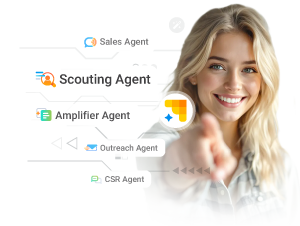
  • Scouting Agent: Streamlines lead generation by automating the identification of high-potential leads, enriching contact data, and integrating this information directly into the sales system, allowing the sales team to focus on lead conversion rather than data entry.
  • Amplifier Agent: Ensures that content remains king by automating content production. It repurposes existing assets into multiple formats, ensuring the business’s message effectively reaches its audience across all stages of the buyer’s journey.
  • Outreach Agent: Automates personalized follow-ups, crucial for nurturing leads. It sends timely, relevant messages, ensuring leads remain engaged without the need for additional outreach staff.
  • Sales Agent: Acts as a tireless sales assistant, engaging website visitors in real-time. It answers questions, qualifies prospects, and schedules meetings, turning website traffic into concrete opportunities.
  • CSR Agent: Pivotal in enhancing communication in customer support. By automating repetitive interactions, it allows support teams to focus on nurturing upsell opportunities, keeping customers satisfied, and reducing churn.

The benefits of integrating these automation tools into your customer support strategy are significant:

  1. Scalability: As your customer base grows, automation allows you to scale your support operations without a proportional increase in staff.
  2. Cost Efficiency: Automating routine tasks reduces operational costs, allowing you to allocate resources to more critical areas.
  3. Consistency: Automated systems provide consistent responses, ensuring uniform and accurate information is relayed to customers.
  4. Data-Driven Insights: Automation tools collect valuable data that can be analyzed to improve service quality and customer satisfaction.

The modern marketplace is increasingly complex, and businesses must navigate these complexities with efficient, scalable, and customer-centric solutions. Automation, particularly through AI-powered solutions like the CSR Agent offered by CloudApper AI RevOps, is crucial in enhancing communication in customer support. By integrating these advanced tools, businesses can not only meet but exceed customer expectations, fostering loyalty and driving growth.

For mid-sized companies aiming to enhance their customer support and sales workflows without increasing staff, CloudApper AI RevOps offers a comprehensive, scalable solution. Explore the full range of CloudApper AI tools and discover how automation can transform your customer support strategy here.

To learn more about how these tools can be tailored to your business needs, consider scheduling a demonstration with our team. Schedule a demo today and see firsthand how CloudApper AI RevOps can revolutionize your customer support and sales processes.

How-To Guide

How to Implement AI Solutions in Your Customer Support Operations

  1. Identify Routine Tasks: List and analyze tasks that are repetitive in nature within your customer support operations. This might include FAQ handling and processing order updates.
  2. Choose the Right Tool: Learn about different AI tools like the CSR Agent provided by CloudApper AI RevOps, which can automate these tasks efficiently.
  3. Integrate Seamlessly: Ensure that the AI tools integrate smoothly with your existing systems to maintain a consistent workflow. This aids in transforming how businesses transform and communicate.
  4. Monitor and Optimize: After implementation, continuously monitor the performance of these AI tools, making necessary adjustments based on data-driven insights to improve efficiency.

For further guidance, you can schedule a demo with CloudApper AI RevOps to see how these tools can be customized for your specific needs.

Frequently Asked Questions

  • What are the main benefits of using AI in customer support?
    Using AI in customer support, such as the AI solutions offered by CloudApper, can reduce response times by up to 50%, improve efficiency, and enhance the personalization of customer interactions.
  • How does the CloudApper AI RevOps CSR Agent improve customer communication?
    The CSR Agent automates repetitive tasks, allowing human agents to focus on complex inquiries while providing real-time solutions to common queries, which helps maintain a positive brand image.
  • Can automation replace the human touch in customer support?
    No, automation complements human interaction by handling routine tasks efficiently, allowing human agents to focus on interactions that require a personal touch and fostering customer relationships through data-driven insights.
  • What tools does CloudApper AI RevOps offer for enhancing sales operations?
    CloudApper offers a suite of tools, including the Scouting Agent for lead generation and the Amplifier Agent for content automation. You can read more about enhancing various facets of business operations with AI.

MIA

MIA is CloudApper’s sales and solutions assistant, designed to help professionals and business leaders explore the future of workforce technology. MIA shares insights from real-world conversations with customers and CloudApper experts-bridging the gap between AI innovation and practical enterprise solutions.

Offline Functionality in Time Clocks: A Must-Have for Remote Construction Sites

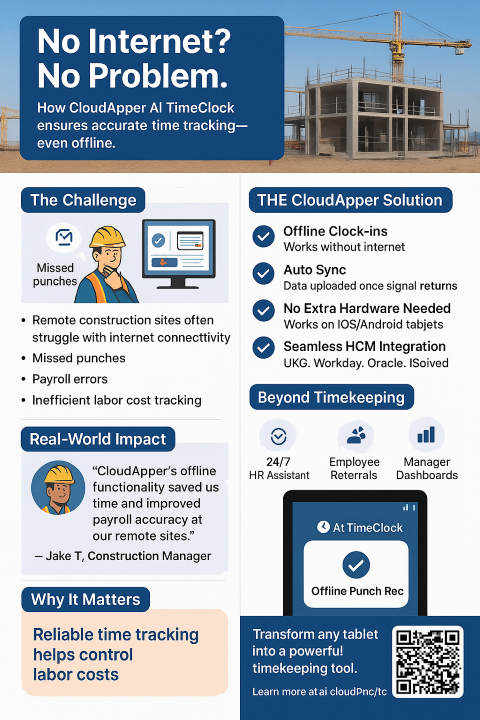
Is your construction site losing valuable time due to unreliable internet? In the fast-paced construction industry, every second is crucial, and efficient time management can significantly impact the success of a project. Remote sites often face the hurdle of limited internet connectivity, which can disrupt effective timekeeping. Offline functionality in time clocks is not just a convenience—it’s a necessity for maintaining accuracy and operational efficiency, regardless of location.

The CloudApper AI TimeClock, also known as hrPad, is setting new standards in time and leave management with its robust offline capabilities. Unlike traditional systems that stumble without stable internet, the CloudApper AI TimeClock captures offline punches and seamlessly syncs this data once connectivity is restored, ensuring data integrity and preventing payroll discrepancies.

Offline Functionality: The Backbone of Remote Efficiency

In remote construction areas, internet access is often inconsistent. Here, offline functionality isn’t merely beneficial—it’s essential. The CloudApper hrPad empowers employees to clock in and out even without internet access, ensuring accurate attendance data crucial for managing labor costs and project timelines efficiently.

Once connectivity is re-established, all collected data is automatically synced with the central system, eliminating data loss risk and keeping time records current. This provides HR and project managers with reliable, up-to-date data to make informed decisions.

Seamless Integration with Existing Systems

Designed to integrate smoothly with leading Human Capital Management (HCM) systems like UKG, Workday, Oracle PeopleSoft HCM, and iSolved, the CloudApper AI TimeClock enhances existing HR processes without requiring a system overhaul. The CloudApper Solutions Delivery team offers comprehensive setup and configuration support for a hassle-free transition.

Seamless integration is key for any technology adoption, especially in environments reliant on existing infrastructures. CloudApper’s seamless integration strategy allows businesses to maintain continuity and efficiency. Supporting major HCM systems, the AI TimeClock fits naturally into varied business settings, ensuring scalability and operational optimization without disruptive changes.

Transforming Tablets into Time Clock

A standout feature of the CloudApper AI TimeClock is its ability to transform any iOS or Android tablet into a sophisticated time clock. This versatility allows companies to use existing hardware, minimizing the need for additional investments. The user-friendly interface simplifies clock-ins/outs and leave requests, boosting workplace efficiency.

This approach not only reduces costs but also simplifies the user experience. Employees quickly adapt to these devices, minimizing learning curves and maximizing productivity. The platform’s adaptability means companies can dynamically respond to changing needs, whether scaling up during peak periods or adjusting workforce deployment.

Real-world Impact: A Customer’s Perspective

Jake Thompson, Construction Manager at BuildRight Construction, shares, “The CloudApper AI TimeClock has been transformative for our remote sites. Previously, we struggled with accurate time tracking due to poor internet connectivity. CloudApper’s offline functionality allows our team to punch in and out easily, with flawless data syncing. It’s saved us time and money, and improved our payroll accuracy.”

Beyond Timekeeping: Enhancing HR Processes

Beyond its timekeeping capabilities, the CloudApper AI TimeClock offers a suite of HR tools that streamline and enhance processes. Its AI assistant is available 24/7, providing instant answers to HR-related queries, from policies to benefits, empowering employees and reducing HR burdens.

Additionally, the platform supports employee referrals, enabling staff to recommend qualified candidates, fostering a robust company culture. Pulse surveys and a managerial dashboard provide real-time feedback and analytics, helping organizations gauge employee satisfaction and identify improvement areas.

For companies operating in remote construction environments, the CloudApper AI TimeClock is indispensable. Its offline functionality ensures reliable timekeeping, integrating with major HCM solutions and transforming tablets into powerful management devices. It offers a flexible and cost-effective solution for modernizing HR operations.

The CloudApper AI TimeClock not only simplifies time and leave management but also enhances HR processes through automation and data-driven insights. For any organization seeking to improve efficiency, transparency, and employee satisfaction, adopting the CloudApper AI TimeClock is a strategic move toward a productive future.

How to Implement CloudApper AI TimeClock for Your Construction Site

  1. Assess Your Needs: Determine the specific requirements of your site and how offline functionality, like the CloudApper AI TimeClock, can address internet reliability issues.
  2. Contact CloudApper: Reach out for a consultation through their Contact Us page to discuss tailored solutions for your setup.
  3. Select Your Devices: Choose compatible iOS or Android tablets that will be used as your time management devices. For more details on device setup, refer to How iPad/Tablet-Based Time Clocks Can Streamline Workforce Management.
  4. Setup & Integration: Collaborate with the CloudApper Solutions Delivery team for a smooth installation process, including integration with your existing HR systems for seamless integration.
  5. Train Your Team: Educate employees and managers on using the system effectively, emphasizing the benefits of offline functionality and real-time data syncing.
  6. Monitor & Optimize: Use the AI-generated analytics and insights from the managerial dashboard to continuously improve workforce management, guiding project managers in decision-making.

Implementing the CloudApper AI TimeClock can significantly enhance efficiency by addressing connectivity challenges and optimizing overall HR processes.

Frequently Asked Questions about CloudApper AI TimeClock

  • What is the CloudApper AI TimeClock?

    The CloudApper AI TimeClock is a sophisticated system designed to streamline time and leave management using AI technology. It transforms iOS and Android tablets into powerful time management devices, enhancing accuracy and efficiency.

  • How does CloudApper AI TimeClock handle unreliable internet?

    The system is equipped with offline capabilities, allowing it to function effectively even without internet connectivity, ensuring all data is accurately captured and synced once the connection is restored.

  • Can the TimeClock integrate with existing HR systems?

    Yes, the CloudApper AI TimeClock offers seamless integration with major HCM systems like UKG, Workday, and more, allowing businesses to maintain continuity without disruptive changes.

  • What measures does the system have to ensure data integrity?

    The system emphasizes data integrity by synchronizing accurate payroll data in real time, eliminating discrepancies caused by manual errors.

  • What additional HR features does the TimeClock offer?

    Alongside timekeeping, the system provides a suite of HR tools like time-off management, employee self-service features, and insights into workforce management for comprehensive organizational support.

MIA

MIA is CloudApper’s sales and solutions assistant, designed to help professionals and business leaders explore the future of workforce technology. MIA shares insights from real-world conversations with customers and CloudApper experts-bridging the gap between AI innovation and practical enterprise solutions.

AI Agents Transform Revenue Operations Ecosystem

Imagine revolutionizing your business’s revenue operations with a single, intelligent system that seamlessly connects all departments. This transformation is not a distant dream but a current reality, thanks to AI agents that are reshaping the revenue operations (RevOps) ecosystem. Many organizations struggle with fragmented data and workflow silos, leading to inefficiencies and stunted growth. These challenges often result in a disconnect between sales, marketing, outreach, and customer service. AI agents are stepping in to bridge these gaps by integrating traditionally isolated functions into a cohesive, intelligent system.

AI agents are specialized tools designed to automate and optimize various aspects of RevOps, tackling critical issues associated with data silos and fragmented workflows. They leverage AI-driven automation to ensure all functions within the RevOps ecosystem are interconnected and streamlined. Let’s delve into how these agents operate and their transformative impact on revenue operations.

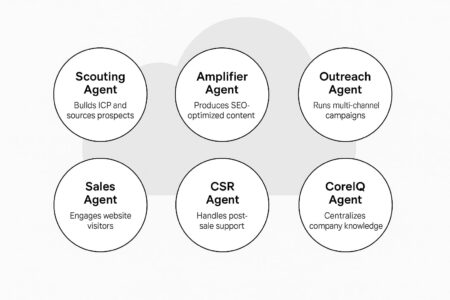
The Scouting Agent is a pivotal player in lead generation and management. By automating the process of building and refining Ideal Customer Profiles (ICPs), it sources high-potential prospects and enriches contact and company profiles with actionable insights. This ensures customer relationship management (CRM) systems are continuously updated with verified data, eliminating the lag and human error of traditional data transfers. With dynamic, real-time lead intelligence, the Scouting Agent smoothly integrates into automated sales workflows, facilitating a seamless transition from lead generation to sales engagement.

The Amplifier Agent acts as a bridge between marketing and sales functions. It generates and publishes SEO-optimized content, such as blogs, newsletters, and articles tailored to audience interests. This ensures the brand remains visible and the sales funnel is active around the clock. By keeping marketing and sales messaging perfectly synchronized through AI-driven insights, the Amplifier Agent ensures all departments are aligned in their objectives and strategies.

In outreach, the Outreach Agent excels by executing personalized, multi-channel campaigns. It manages and segments contact lists, builds personalized email sequences, and delivers bulk SMS messages. By tracking engagement and optimizing campaigns, it ensures marketing and outreach efforts are cohesive and aligned. Insights from the Outreach Agent further inform these campaigns, creating a feedback loop that enhances overall effectiveness.

The Sales Agent plays a crucial role in converting interest into opportunity. Positioned at the intersection of marketing and direct engagement, it initiates real-time conversations with website visitors, answers product questions, qualifies leads through intelligent dialogue, and books meetings automatically. By integrating seamlessly with CRM and marketing platforms, the Sales Agent ensures that high-intent prospects are engaged at the right moment with the right message

AI Agents Transform Revenue Operations Ecosystem

Post-sale customer engagement is critical for sustained growth, and the CSR Agent excels in this area. It handles support FAQs, collects case details, manages subscription renewals, and sends proactive updates. By integrating knowledge gained from upstream AI-driven outreach and sales activities, the CSR Agent ensures continuity and context in customer interactions, enhancing customer service without losing context and resulting in a more satisfying customer experience.

The CoreIQ Agent is crucial in breaking down data silos by providing a centralized repository of company and product knowledge. It supports all RevOps agents with insights, analytics, and information, ensuring consistent and accurate communication. By personalizing interactions and maintaining brand consistency across all agents, CoreIQ empowers decision-making and ensures compliance with policy and procedures. This fosters a unified Revenue Operations ecosystem, where all departments access the same information and make informed decisions based on comprehensive data.

Current trends indicate that nearly half of B2B SaaS companies are adopting true RevOps functions, recognizing the necessity of breaking down organizational walls to achieve end-to-end revenue lifecycle visibility and scalability. AI is no longer a futuristic luxury but an essential catalyst for this transformation. By addressing specific operational pain points with AI agents, companies can unify fragmented teams and systems into a cohesive, data-driven revenue engine.

Expert predictions highlight AI-driven intelligent automation and hyper-personalization as cornerstones of modern Revenue Operations success. This aligns with the increasing demand for scalable growth strategies that leverage AI to provide evergreen value for revenue leaders. By integrating specialized AI agents like the Scouting, Amplifier, Outreach, CSR, and CoreIQ agents, organizations can transform their revenue operations ecosystem, making it more efficient, responsive, and aligned with strategic goals.

AI agents are at the forefront of transforming the revenue operations ecosystem. By seamlessly integrating isolated functions into a unified, intelligent system, they address the critical pain points of fragmented data and workflow silos. The result is a more cohesive, efficient, and data-driven revenue engine that empowers organizations to achieve scalable growth and maintain a competitive edge in the market. As AI continues to evolve, its role in RevOps will undoubtedly expand, offering even more innovative solutions to the challenges of modern business operations.

To learn more about how AI can transform your revenue operations, explore the benefits of AI RevOps and discover how you can scale sales without hiring more people. If you have any questions or need further assistance, feel free to Contact Us.

How to Implement AI Agents in Revenue Operations

  1. Identify Key Areas for Automation

    Start by analyzing your current RevOps processes to identify areas where automation can provide the most value. This could include lead generation, content marketing, or customer service.

  2. Choose the Right AI Agents

    Select AI agents that align with your business needs. For example, use the Scouting Agent for lead generation and the Outreach Agent for executing personalized campaigns.

  3. Integrate AI Agents with Existing Systems

    Ensure that the AI agents are seamlessly integrated with your existing CRM and marketing platforms to enhance data flow and operational efficiency.

  4. Monitor and Optimize Performance

    Regularly track the performance of AI agents and optimize their functions based on insights and analytics. Utilize the CoreIQ Agent for insights and analytics support.

  5. Foster Continuous Improvement

    Encourage a culture of continuous improvement by regularly updating your AI agents and processes based on the latest trends and technologies in RevOps. To learn more about overcoming challenges, visit Overcome Sales Challenges.

Frequently Asked Questions

What are AI agents in Revenue Operations?

AI agents in Revenue Operations (RevOps) are specialized tools designed to automate and optimize various aspects of the revenue cycle. They help in integrating traditionally isolated functions like sales, marketing, outreach, and customer service into a cohesive, intelligent system. For more details, explore Revolutionizing Revenue Operations.

How does the Scouting Agent improve lead generation?

The Scouting Agent automates the creation and refinement of Ideal Customer Profiles (ICPs), sources high-potential prospects, and enriches contact and company profiles with actionable insights. This ensures CRM systems are continuously updated with verified data. Learn more about the Scouting Agent.

What role does the Amplifier Agent play in RevOps?

The Amplifier Agent bridges marketing and sales functions by generating and publishing SEO-optimized content to keep the brand visible and the sales funnel active. It ensures marketing and sales messaging are perfectly synchronized. Discover more about how AI can transform RevOps by visiting AI Transform RevOps.

Can AI agents help scale sales without hiring more people?

Yes, AI agents can help scale sales by automating and optimizing various sales processes, reducing the need for additional hires. For more information, check out how you can scale sales without hiring more people.

MIA

MIA is CloudApper’s sales and solutions assistant, designed to help professionals and business leaders explore the future of workforce technology. MIA shares insights from real-world conversations with customers and CloudApper experts-bridging the gap between AI innovation and practical enterprise solutions.

Leveraging mHealth Tools for Enhanced Personalized Medicine and Health Outcomes

In the wake of ever-evolving technology and digitalization, the healthcare industry stands at a transformative juncture. One of the significant shifts has been observed in the adoption of mobile health (mHealth) tools that are redefining the landscape of personalized medicine. The crux of this transformation lies in the power of healthcare apps and wearables that have revolutionized health data collection and analysis.

The advent of personalized medicine routine is a testament to the potential of these mHealth tools. Personalized medicine is about tailoring treatments and interventions to cater to individual patient needs, thereby ensuring accurate care every time. This approach has led to fewer hospital readmissions, enhanced health outcomes, and an impressive boost to comparative effectiveness research.

Amidst these transformative changes, RightPatient stands at the forefront with its cutting-edge mHealth tools. These tools are specifically designed to harness the potential of patient-generated data, thereby facilitating healthcare providers in personalizing treatments to individual needs. The RightPatient mHealth tools are not just an innovation; they are a revolutionary solution designed to fundamentally alter personalized medicine.

By enabling precise treatment strategies, RightPatient mHealth tools have proven instrumental in improving health outcomes. The reduction in hospital readmissions and the elevation in successful health outcomes signify a considerable improvement in the quality of patient care. Moreover, the contribution of these tools to comparative effectiveness research provides invaluable insights that stimulate further enhancement and innovation in patient care strategies.

However, the path to this revolution is not devoid of challenges. Data integration and user adoption are potential hurdles that healthcare providers may encounter in their journey towards adopting mHealth tools. RightPatient, with its commitment to offering seamless solutions, tackles these challenges head-on. It addresses data integration issues with flawless EHR interfacing and promotes high adoption rates with user-friendly designs.

The success story of Martin Health System, a prestigious Florida-based healthcare provider, serves as a testament to the potential of RightPatient’s mHealth tools. The healthcare provider was grappling with persistent patient identification issues, including duplicate medical records and patient fraud. Their search for a solution led them to RightPatient’s contactless biometric patient identification solution. This not only helped them maintain a secure and hygienic environment but also significantly reduced the errors and risks associated with misidentification.

In summary, RightPatient’s mHealth tools are not just a glimpse into the future of healthcare; they are actively shaping it. With an amalgamation of personalized care, improved health outcomes, and seamless data integration, they offer a promising pathway for healthcare providers.

So, are you prepared to take your healthcare services to the next level? Are you ready to safeguard your data and optimize patient outcomes? If so, explore how RightPatient’s mHealth tools can help you make a significant impact. Schedule a demo today, and take a step towards a future where personalized medicine is not an anomaly, but the standard.

How to Use RightPatient's mHealth Tools

  1. Understand the Potential: Familiarize yourself with the potential of mobile health (mHealth) tools and how they can revolutionize personalized medicine.
  2. Adopt the Tools: Adopt the healthcare apps and wearables designed by RightPatient. These tools are designed to harness the potential of patient-generated data, thereby facilitating healthcare providers in personalizing treatments to individual needs.
  3. Overcome Challenges: Understand and overcome the challenges of data integration and user adoption with RightPatient's seamless solutions.
  4. Monitor Outcomes: Monitor the improvement in health outcomes and reduction in hospital readmissions as a result of using RightPatient's mHealth tools.
  5. Schedule a Demo: To explore more about how RightPatient's mHealth tools can help you, schedule a demo today.

FAQs

  1. What are RightPatient's mHealth tools?
    RightPatient's mHealth tools are healthcare apps and wearables designed to harness the potential of patient-generated data. They facilitate healthcare providers in personalizing treatments to individual needs.
  2. How do RightPatient's mHealth tools contribute to personalized medicine?
    These tools enable healthcare providers to tailor treatments and interventions to cater to individual patient needs, thereby ensuring accurate care every time. This approach has led to fewer hospital readmissions, enhanced health outcomes, and a boost to comparative effectiveness research.
  3. What challenges might healthcare providers face when adopting mHealth tools?
    Data integration and user adoption are potential hurdles that healthcare providers may encounter. RightPatient addresses these challenges with flawless EHR interfacing and user-friendly designs.
  4. How have RightPatient's mHealth tools helped healthcare providers?
    RightPatient's mHealth tools have helped healthcare providers like Martin Health System by resolving patient identification issues, reducing duplicate medical records and patient fraud, and improving health outcomes.
  5. How can I explore more about RightPatient's mHealth tools?
    You can schedule a demo to explore how RightPatient's mHealth tools can help you make a significant impact in healthcare services.