

Q&A: How CloudApper AI TimeClock Protects Employee Data and Enhances Satisfaction

Turn Any Tablet
Into an AI Time Clock

 Time Capture
- HR Chatbot
- Self Service
- Time Card & PTO
Learn More
TL;DR
Discover how the CloudApper AI TimeClock can revolutionize your HR operations by ensuring robust data security and enhancing employee satisfaction. Our conversation with Alex, an HR Manager, highlights the system's advanced security protocols, privacy-respecting features, seamless integration, and proven success stories. Empower your workforce with self-service tools and reduce HR workload while maintaining data integrity.
- Advanced security with robust encryption and regular audits.
- No GPS tracking, ensuring employee privacy.
- Seamless integration with existing HR systems.
- Proven success in reducing errors and boosting satisfaction.
Ready to transform your HR management? Contact us to schedule a free demo and see how CloudApper can benefit your business today!
In today’s digital age, safeguarding employee data while ensuring efficient time management is a top priority for businesses across industries. Recently, I, Mia, a Sales Representative at CloudApper, had an insightful conversation with Alex, an HR Manager at a mid-sized tech company. Alex reached out via our website’s contact form, intrigued by how the CloudApper AI TimeClock could address their data security concerns while improving employee satisfaction. This topic is not only relevant to Alex’s company but also to any organization looking to enhance their HR operations securely and efficiently.
Q&A with Alex, HR Manager
Alex: How does the CloudApper AI TimeClock ensure the security of our employee data?
Mia: Great question, Alex! The CloudApper AI TimeClock is designed with advanced security protocols to protect employee data at every stage. We use robust encryption for data both in transit and at rest, ensuring that only authorized personnel can access sensitive information. Regular audits and updates keep our system ahead of potential threats, providing peace of mind for businesses like yours. You can learn more about our security measures here.
Alex: We’re concerned about employee privacy, especially with location tracking. How does your system handle this?
Mia: That’s a valid concern, Alex. Unlike many other systems, the CloudApper AI TimeClock does not include GPS tracking, which means your employees’ location data remains private. Our focus is on timekeeping and data security, ensuring that your team feels comfortable and their privacy is respected. This approach has been particularly appreciated by companies like Pacific Atlantic Handling, who needed a secure and private solution during the pandemic.
Alex: How does the integration process work with our existing HR systems?
Mia: Integration is seamless with the CloudApper AI TimeClock. Our Solutions Delivery team works closely with your IT department to ensure a smooth transition. The system is designed to fit right into your existing Human Capital Management (HCM) systems without requiring a complete overhaul. For instance, Potpourri Group Inc. successfully integrated our solution with their UKG Workforce Ready system, creating a touchless time capture solution that has stood the test of time.
Alex: Can you share some success stories from other companies using your solution?
Mia: Absolutely! One of our notable success stories is with FACE Amusement, who achieved up to 95% automation in shift communication, drastically reducing errors and improving payroll accuracy. Another example is Bergey’s Auto Dealership, which saw a significant reduction in payroll errors and compliance risks, boosting employee satisfaction through self-service tools.
Alex: How does the CloudApper AI TimeClock enhance employee satisfaction?
Mia: The CloudApper AI TimeClock boosts employee satisfaction by providing self-service tools that empower employees to manage their time and leave efficiently. The system offers a user-friendly interface for viewing leave balances and requesting time off, while managers gain valuable insights into leave trends. This not only reduces HR workload but also improves employee engagement and satisfaction. You can explore more about how we enhance employee satisfaction here.
Conclusion
Our conversation with Alex highlighted the critical role that the CloudApper AI TimeClock plays in securing employee data while enhancing HR operations. By addressing Alex’s concerns and showcasing real-world success stories, we demonstrated how our solution can transform time and leave management into a secure, efficient process. If you’re ready to experience the future of secure, efficient HR management, I invite you to schedule a free demo and discover how CloudApper can transform your business today!
How to Use CloudApper AI TimeClock for Enhanced HR Management
- Set Up the System: Start by reaching out to CloudApper to request a demo. Our Solutions Delivery team will assist in setting up the system to ensure it integrates smoothly with your current HR processes.
- Install on Compatible Devices: Install the CloudApper AI TimeClock on compatible tablets or iPads. Follow the provided guidelines to configure devices appropriately for employee clock-ins and leave management.
- Train Your Employees: Conduct training sessions to familiarize your employees with using the self-service tools for managing leave requests and viewing leave balances.
- Utilize Managerial Dashboards: Leverage the robust dashboards to gain valuable insights into staffing levels, leave trends, and overall workforce management. This data allows for data-driven decisions, as highlighted here.
- Regular System Audits: Make sure regular audits and updates are conducted to maintain top-level security and optimal system performance.
- Monitor and Optimize: Continuously monitor the system's performance and employee satisfaction levels, optimizing features as needed to ensure ongoing improvement in HR operations.
Frequently Asked Questions
How does the CloudApper AI TimeClock protect employee data?
The CloudApper AI TimeClock uses advanced encryption and regular security audits to ensure employee data is secure at every stage. From encrypting data in transit and at rest to limiting access to authorized personnel, our system is built to prioritize data security. Learn more about our security measures in our Ultimate Guide.
Can CloudApper AI TimeClock integrate with existing HR systems?
Yes, CloudApper AI TimeClock is designed to seamlessly integrate with your current HR systems. Our team will work closely with your IT department to ensure a smooth transition without requiring an overhaul of existing processes. For example, Potpourri Group Inc. successfully integrated our solution without disruptions.
Does CloudApper AI TimeClock use GPS tracking?
No, our system intentionally avoids GPS tracking to protect employee privacy. Instead, we focus on efficient timekeeping and data security. Discover how we prevent duplicate clock-ins without compromising privacy here.
How can CloudApper AI TimeClock improve employee satisfaction?
By providing self-service tools and a user-friendly interface, the CloudApper AI TimeClock allows employees to manage their time and leave efficiently. Managers also gain insights into leave trends, leading to better planning and reduced workloads. Explore detailed information on our solution's ability to boost employee satisfaction here.
What are some success stories of businesses using CloudApper AI TimeClock?
FACE Amusement achieved up to 95% automation in shift communication, reducing errors, while Bergey’s Auto Dealership minimized payroll errors and compliance risks. Both companies improved employee satisfaction significantly. Delve into more success stories and how CloudApper can make a difference here.


How AI-Powered RevOps is Revolutionizing Revenue Teams: A Q&A with Mia from CloudApper

 AI RevOps
Scale Revenue Without
Hiring More People
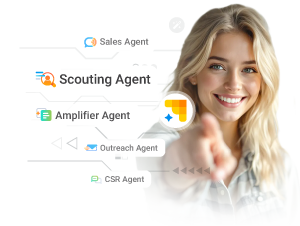
 Fill your pipeline automatically
 Get Content that captures attention
 Personalized Engagement, no delay
 Chatbot that converts visitors
 Support that retains customers
TL;DR
- AI-powered RevOps is transforming how revenue teams operate by integrating sales, marketing, and customer service for seamless collaboration.
- CloudApper's AI agents automate tasks, ensuring no leads are missed and enhancing customer interactions with personalized messaging.
- AI offers significant advantages over traditional methods, freeing teams to focus on strategic growth initiatives.
- Small businesses can leverage AI to compete with larger enterprises, thanks to scalable solutions.
- Ready to revolutionize your revenue operations? Contact us to learn more and schedule a demo with CloudApper AI RevOps.
Hi there! I’m Mia, a Sales Representative at CloudApper, and today I want to share an insightful conversation I had with a potential customer who reached out to us through a demo request. This customer, let’s call him Alex, works as a Revenue Operations Manager at a mid-sized tech company. Alex was curious about how AI could help streamline his company’s fragmented revenue operations. Let’s dive into our conversation!
Alex: Hi Mia, I’ve been reading about AI in RevOps and I’m intrigued. Our sales, marketing, and customer service teams often seem disconnected. How can AI help us integrate these processes?
Mia: Great question, Alex! You’re not alone—about 70% of businesses face similar challenges with fragmented operations. AI, especially through platforms like CloudApper AI RevOps, acts as the glue that holds these departments together. By using AI agents, we can automate tasks and ensure consistent messaging across all teams, turning scattered data into actionable insights. This integration helps prevent leads from slipping through the cracks and ensures a seamless customer experience.
Alex: That sounds promising. Can you explain how these AI agents work in practice?
Mia: Absolutely! Our platform uses specialized AI agents for different revenue areas. For instance, Scouting Agents proactively identify and qualify new leads, ensuring no opportunity is missed. Sales and Outreach Agents handle personalized messaging and customer interactions, building on each follow-up. Amplifier Agents optimize marketing campaigns for better reach, while CSR Agents provide quick and effective customer support. All these agents work in harmony through our CoreIQ Coordination, learning from each interaction to maintain data quality and process consistency.
Alex: It seems like AI could really transform our operations. But how does it compare to traditional methods?
Mia: That’s a key consideration! AI RevOps agents offer significant advantages over manual sales outreach. They automate repetitive tasks, freeing up your team to focus on strategic initiatives that drive growth. This agility is crucial in today’s competitive landscape. You can read more about the differences between AI RevOps agents and manual sales outreach on our website.
Alex: I see. And what about small businesses? Can they benefit from AI in the same way larger enterprises do?
Mia: Definitely! AI levels the playing field by providing small businesses with tools that large enterprises use. This helps them stay competitive in sales and marketing. Our platform is designed to be scalable, so businesses of all sizes can benefit. Check out how AI helps small businesses stay competitive.
Alex: Thanks, Mia. This has been really helpful. How can I learn more about implementing AI in our RevOps?
Mia: I’m glad you found it helpful, Alex! To explore further, I recommend scheduling a demo with us. You can also visit our Contact Us page for more information. Our team would be happy to guide you through the process and show you how CloudApper AI RevOps can transform your revenue operations.
Reflecting on this conversation, it’s clear that AI is not just a tech upgrade—it’s a strategic shift that allows teams to operate more efficiently. As the industry evolves, embracing AI in RevOps will be crucial for businesses aiming to lead their markets. If you’re ready to take the next step, learn more about CloudApper AI RevOps and see how it can revolutionize your revenue operations.
How to Implement CloudApper AI RevOps
- Understand Your Needs: Assess your current revenue operations to identify areas where AI can provide the most value. Consider the challenges your teams face and how AI could address them.
- Schedule a Demo: Visit our Contact Us page to schedule a demo. Our team will guide you through the platform's features and demonstrate how it can transform your operations.
- Choose the Right AI Agents: Based on your needs, select the AI agents that will best support your operations. This could include Scouting Agents for lead generation or CSR Agents for customer support.
- Integrate with Existing Systems: Work with our team to integrate CloudApper AI RevOps with your current systems. This ensures a smooth transition and maximizes the benefits of the platform.
- Monitor and Optimize: Once implemented, continuously monitor the performance of AI agents and optimize their configurations to ensure they are meeting your business goals.
For more information on how AI can revolutionize your business outcomes, read about unlocking the power of AI in sales operations.
Frequently Asked Questions
- What is CloudApper AI RevOps?
CloudApper AI RevOps is a solution that leverages autonomous AI agents to transform disjointed revenue operations into a cohesive and efficient system. It integrates sales, marketing, and customer service processes to enhance operational efficiency. - How can AI RevOps agents improve my business operations?
AI RevOps agents automate repetitive tasks, provide consistent messaging, and ensure data quality across all revenue operations. This leads to faster cycle times, higher conversion rates, and improved customer satisfaction. Learn more about the differences between AI RevOps agents and manual sales outreach. - Can small businesses benefit from AI RevOps?
Yes, AI RevOps levels the playing field for small businesses by providing tools that help them stay competitive. Discover how AI helps small businesses stay competitive in sales and marketing. - What are the main features of CloudApper AI RevOps?
The platform includes Scouting Agents, Sales and Outreach Agents, Amplifier Agents, and CSR Agents, all coordinated by CoreIQ to ensure seamless operations. Learn more about the advantages of automating sales with CloudApper AI RevOps. - How does AI RevOps compare to traditional sales methods?
AI RevOps offers significant advantages over traditional methods by automating routine tasks and optimizing processes. Explore why AI outreach performs better than traditional sales teams.

Transforming Support Teams with AI and Strategic Innovations
 AI RevOps
Scale Revenue Without
Hiring More People
- Fill your pipeline automatically
- Get Content that captures attention
- Personalized Engagement, no delay
- Chatbot that converts visitors
- Support that retains customers
TL;DR
In today's competitive business landscape, scaling support teams without expanding the workforce is a common challenge. AI and strategic innovations offer transformative solutions to enhance support capabilities while controlling costs. Here's how:
- AI-Powered Chatbots: Automate routine inquiries, reduce wait times, and improve customer satisfaction.
- Self-Service Portals: Empower customers to find answers independently, reducing direct support needs.
- Robotic Process Automation (RPA): Automate repetitive tasks, allowing teams to focus on strategic interactions.
- AI Analytics Tools: Gain insights into customer interactions and improve agent performance.
- Multichannel Support: Offer consistent support across various platforms, enhancing customer experience.
- Continuous Training: Use AI-driven platforms for personalized learning and skill enhancement.
These AI-driven solutions not only boost efficiency but also ensure success in a competitive market. If you're facing similar challenges, explore these innovations to transform your support team. For more insights and personalized solutions, feel free to contact us.
As a CloudApper Sales Representative, I often find myself in conversations with professionals from various industries, each facing unique challenges. One particular interaction stands out, where I was approached by an HR manager from a mid-sized tech company. She was grappling with the daunting task of scaling her support team without the luxury of expanding her workforce. This is a common dilemma in today’s fast-paced business environment, where exceptional customer support is not just a perk but a necessity.
The HR manager explained that while their customer base was growing rapidly, the budget constraints made it impossible to hire additional support staff. She was concerned about maintaining the quality of support and feared that the increasing workload would lead to burnout among her existing team members. This was a classic case of needing to do more with less, and I knew that AI and smart strategies could offer a viable solution.
We began by exploring the potential of AI-powered chatbots. These tools are revolutionizing customer support by providing immediate assistance and handling routine inquiries. By integrating AI-powered chatbots, the company could manage a significant portion of customer interactions, allowing human agents to focus on more complex issues. This not only reduces wait times but also boosts customer satisfaction. The chatbots are designed to understand common questions and offer quick solutions, and they continuously learn from past interactions to improve over time. This scalability is crucial for businesses looking to maintain quality support as their customer numbers rise. Learn more about AI-powered lead nurturing strategies.
Next, we discussed the implementation of self-service portals. These portals empower customers to find answers independently, which not only enhances the customer experience but also alleviates the support team’s workload. A well-designed self-service portal includes knowledge bases, guides, video tutorials, and forums. AI can analyze customer interactions and feedback to keep these resources updated, ensuring that customers receive accurate and relevant information. This approach significantly cuts down on direct support needs. Discover how to scale sales in 30 days without hiring.
We also explored the benefits of Robotic Process Automation (RPA). RPA can automate repetitive tasks such as data entry, ticket routing, and status updates. This automation allows support teams to concentrate on strategic tasks and customer interactions, thereby boosting productivity without the need for additional hires. RPA tools integrate seamlessly with existing systems, ensuring workflow continuity and can be implemented quickly to deliver immediate value. Launch a lean sales operation with automation.
To gain deeper insights into customer interactions and agent performance, we considered AI analytics tools. These tools analyze query patterns to identify areas for improvement and training opportunities. Predictive analytics, for instance, can forecast support demands based on historical data, while sentiment analysis monitors customer feedback in real-time, allowing for quick adjustments to enhance satisfaction. Overcome sales challenges for small teams.
Another strategy we implemented was offering multichannel support, allowing customers to choose their preferred method of interaction, whether it be email, social media, chat, or phone. AI manages these channels to ensure a consistent support experience, prioritizing and routing queries promptly to the right places. This not only improves the customer experience but also enables teams to handle more inquiries efficiently.
Finally, we emphasized the importance of continuous training and development for support staff. AI-driven training platforms offer personalized learning experiences, identifying knowledge gaps and providing targeted modules to enhance skills. This ensures that agents are well-equipped to tackle diverse issues and adapt to business changes.
The transformation was remarkable. By implementing these AI tools and smart strategies, the company was able to enhance its support capabilities while controlling costs. The support team became more efficient, and customer satisfaction levels soared. This experience taught me that scaling a support team without adding staff is indeed possible with the right approach.
Reflecting on this journey, I realized the immense potential of AI in revolutionizing customer support. As technology continues to evolve, AI’s role in customer support will only grow, offering new ways for businesses to scale effectively. For professionals in HR, IT, and Operations, embracing these innovations can lead to significant improvements in team efficiency and customer experience.
If you’re facing similar challenges in scaling your support team, I encourage you to explore these AI-driven solutions. They not only enhance support capabilities but also ensure success in a competitive market. For more insights and personalized solutions, feel free to contact us.
How-To Guide for Implementing AI in Customer Support
- Integrate AI-Powered Chatbots:
To start, implement AI-powered chatbots to handle routine customer inquiries. This enables your support team to manage more intricate issues, thus enhancing overall customer satisfaction. Explore AI-powered strategies. - Create a Self-Service Portal:
Develop a comprehensive self-service portal with knowledge bases and tutorials, allowing customers to resolve issues independently. This strategy reduces the burden on your support staff. Learn how to scale sales effectively without expanding your team. - Utilize Robotic Process Automation:
Deploy RPA to automate repetitive tasks, such as data entry and ticket routing, which streamlines your operations. Read about launching a lean sales operation with RPA. - Implement AI Analytics Tools:
Harness AI analytics to gain insights into support operations, predicting customer support demands and monitoring real-time feedback. Gain insights into overcoming sales challenges. - Adopt Continuous Training and Development:
Use AI-driven training modules to enhance your team's skills, ensuring they can adapt to evolving business needs.
Frequently Asked Questions
- How can AI-powered chatbots improve customer support?
AI-powered chatbots provide immediate assistance and handle routine inquiries, allowing human agents to focus on more complex issues. This reduces wait times and enhances customer satisfaction. They continuously learn from past interactions to improve over time. Learn more about AI-powered lead nurturing strategies. - What are the benefits of implementing self-service portals?
Self-service portals empower customers to find answers independently, thereby alleviating the workload of the support team and enhancing the customer experience. Discover how to scale sales in 30 days without hiring. - How does Robotic Process Automation (RPA) enhance support operations?
RPA automates repetitive tasks, allowing support teams to focus on strategic tasks and customer interactions, which boosts productivity. Launch a lean sales operation with automation. - Can AI analytics tools provide insights into support operations?
Yes, AI analytics tools analyze query patterns to identify areas for improvement and forecast support demands while monitoring customer feedback in real-time. Overcome sales challenges for small teams. - What role does continuous training play in enhancing support team capabilities?
Continuous training through AI-driven platforms helps identify knowledge gaps and offers targeted learning modules to enhance team skills.

Q&A with Mia: How CloudApper hrPad Seamlessly Integrates with Existing HR Systems

Employee Self-Service Kiosk
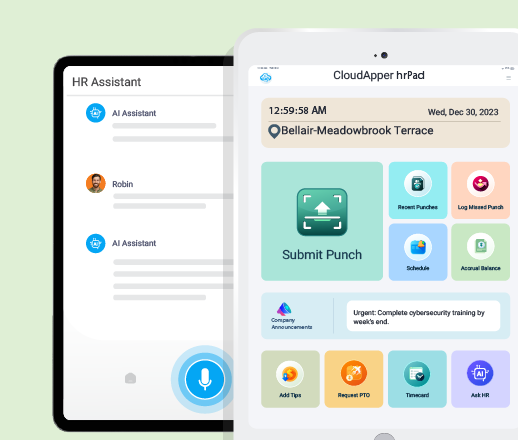
Works on any device with
TL;DR
- CloudApper hrPad offers seamless integration with HR systems like Workday, UKG, ADP, Oracle, and more, ensuring smooth data flow and reducing errors.
- Real-time data synchronization eliminates manual re-entry, enhancing operational efficiency and employee engagement.
- AI-driven self-service kiosks empower employees to manage HR tasks independently, reducing administrative burdens.
- hrPad helps reduce employee turnover by improving engagement and compliance with labor laws through accurate time tracking.
- Cost-effective solutions with tablet-based kiosks offer significant savings over traditional time clocks.
- Success stories from companies like Applegreen and Bergey's Auto Dealership highlight hrPad's transformative impact on HR operations.
If you're ready to transform your HR systems, contact us for a consultation and take your HR operations to the next level.
Inconsistent data, duplicate entries, and disconnected systems — these are common headaches for HR teams trying to integrate new technology with their existing platforms. In today’s fast-paced business environment, even small inefficiencies in HR processes can lead to costly errors, compliance risks, and frustrated employees. Many organizations face these challenges when attempting to modernize their HR operations with new tools.
That’s why seamless integration has become a top priority for HR leaders. CloudApper hrPad offers a powerful solution, designed to integrate smoothly with platforms like UKG, ADP, Oracle, and Workday — eliminating silos and driving efficiency.
Recently, Mia, a Sales Representative at CloudApper, was contacted by a potential customer eager to learn how hrPad could help them overcome these integration challenges and elevate their HR systems. Let’s dive into their conversation to explore the key benefits and features of this innovative solution.
Introduction
Mia received an email from John, an HR Manager at a mid-sized manufacturing company. John was facing challenges with his current HR system, which was causing inefficiencies and errors in data management. He was particularly interested in how CloudApper hrPad could integrate with their existing systems to streamline operations and improve employee engagement.
Q&A Session
John: Hi Mia, thanks for taking the time to speak with me. We’re currently using Workday for our HR needs, but we’ve been experiencing issues with data synchronization and employee engagement. Can CloudApper hrPad help with these challenges?
Mia: Hi John, I’m glad you reached out. CloudApper hrPad is designed to integrate seamlessly with systems like Workday, ensuring smooth data flow and eliminating common integration pitfalls. One of the standout features is real-time data synchronization, which allows for instant updates without manual re-entry. This not only reduces errors but also enhances operational efficiency. You can learn more about how we tackle these challenges here.
John: That sounds promising. We’re also looking to empower our frontline employees to manage their HR tasks more independently. Does hrPad offer any solutions in this area?
Mia: Absolutely! hrPad leverages AI to provide tablet-based kiosks that empower employees to manage tasks like schedule checks and time tracking on their own. This AI-driven self-service reduces administrative burdens and boosts employee engagement through real-time, intuitive interaction. You can read more about our AI-powered self-service here.
John: Employee turnover is another concern for us. How does hrPad help in reducing turnover and improving retention?
Mia: Great question, John. By improving employee engagement and providing tools for self-management, hrPad helps reduce turnover. It also enhances compliance with labor laws through accurate time tracking, which is crucial for maintaining employee satisfaction. For more insights on reducing employee turnover, check out this article here.
John: We’re also interested in the cost aspect. How does hrPad compare to traditional time clocks in terms of cost efficiency?
Mia: hrPad offers significant cost savings by using tablet-based kiosks instead of traditional time clocks. This not only reduces hardware costs but also minimizes the need for manual interventions, leading to lower operational costs. You can explore more about our cost-effective solutions here.
John: Lastly, can you share any success stories of companies that have benefited from using hrPad?
Mia: Certainly! Applegreen, for instance, experienced transformative outcomes by automating Human Capital Management functions with hrPad, leading to significant cost savings and enhanced compliance. Similarly, Bergey’s Auto Dealership reduced payroll errors and compliance risks, boosting employee satisfaction. These stories highlight hrPad’s potential to seamlessly enhance existing HR systems. You can read more about these success stories here.
Reflection and Call-to-Action
After the conversation, Mia reflected on how CloudApper hrPad could address the challenges faced by companies like John’s. By offering seamless integration, real-time data synchronization, and AI-driven self-service, hrPad empowers HR teams to focus on strategic priorities and enhances overall operational efficiency.
If you’re interested in learning more about how CloudApper hrPad can transform your HR systems, visit our CloudApper hrPad page or contact us for a consultation. Let us help you redefine integration and take your HR operations to the next level.
How To Integrate CloudApper hrPad with Existing HR Systems
- Assess Current Systems: Begin by analyzing your current HR systems to understand integration needs and identify areas of improvement.
- Consult with Experts: Contact CloudApper to discuss how hrPad can be tailored to suit your specific requirements by reaching out through our contact page.
- Implement hrPad Solutions: Work with the CloudApper team to implement hrPad solutions that align with your existing systems, focusing on real-time data integration. For an overview, visit our hrPad page.
- Train Your Team: Initiate a training program to familiarize your HR staff with the new tools provided by hrPad. Emphasize on features like AI-driven self-service, which reduces the administrative burden.
- Monitor and Iterate: Regularly review the system's performance for any improvements in operational efficiency and employee engagement. Make necessary adjustments in collaboration with CloudApper support.
For more guidance on improving operational efficiency, explore our detailed article.
FAQs about CloudApper hrPad
- How does CloudApper hrPad help with data synchronization issues?
CloudApper hrPad offers real-time data synchronization to prevent issues related to manual data re-entry, reducing errors and improving operational efficiency. For more information, visit our article on real-time data synchronization. - Can hrPad empower our employees to manage HR tasks independently?
Yes, hrPad utilizes AI-powered self-service solutions, allowing employees to manage tasks such as scheduling and time tracking autonomously. This significantly boosts employee engagement and reduces admin tasks. Learn more about this feature here. - What impact does hrPad have on employee turnover?
By enhancing employee engagement and providing tools for self-management, hrPad helps in significantly reducing employee turnover. It ensures compliance with labor laws, further improving employee satisfaction. Discover strategies to reduce turnover here. - How cost-effective is hrPad compared to traditional time clocks?
hrPad is highly cost-effective, offering savings through its tablet-based kiosk technology which cuts down on hardware costs and minimizes manual interventions, reducing overall operational costs. For detailed insights, see our cost efficiency breakdown. - Are there success stories of companies using hrPad?
Yes, companies like Applegreen and Bergey's Auto Dealership have seen significant improvements in HR efficiency and compliance using hrPad. You can read about their success stories here.

Leveraging Biometric Technology for Accurate Patient Identification and Efficient Healthcare

The United States healthcare system is wrestling a formidable adversary – patient misidentification. It’s a scourge that annually drains a whopping $6 billion from the healthcare sector. However, the silver lining in this grim scenario is the advent of biometric technology, such as RightPatient, that can dramatically reduce this wastage and streamline healthcare delivery.
RightPatient, a pioneering biometric patient identification solution, is redefining the contours of patient identification in healthcare. This cutting-edge, cloud-based technology helps healthcare organizations not only in accurately identifying patients but also in enhancing patient safety and significantly curbing healthcare costs. Its touchless, biometric process eliminates common challenges such as patient misidentification and duplicate records, which often compromise patient safety and inflate costs.
Yet, RightPatient’s benefits are not confined to mere identification. It significantly enhances the patient experience by reducing check-in times and making patients feel recognized and valued—a crucial factor in improving patient satisfaction.
Moreover, RightPatient has a direct bearing on healthcare outcomes. By ensuring accurate patient identification, it prevents medical errors linked to incorrect patient records. This accuracy is a vital ingredient in achieving superior healthcare outcomes.
A shining endorsement of its effectiveness is the experience of Martin Health system in Florida. They were battling significant patient identification challenges, including duplicate medical records and patient fraud. The deployment of RightPatient, which uses iris biometrics technology for patient identification, led to impressive results. They accomplished seamless integration with their existing EHR, staff acceptance, over 99% patient enrollment, and the introduction of a mobile component for bedside identification.
RightPatient’s success in Martin Health exemplifies the transformative potential of biometric technology in healthcare delivery. By ensuring accurate patient identification, preventing medical errors, and enhancing patient satisfaction, RightPatient is without a doubt a catalyst for efficient healthcare delivery and improved health outcomes.
Experience firsthand how RightPatient revolutionizes patient safety and bolsters operational efficiency. Schedule a demo today! For more information, visit https://daddy.rightpatient.com/ or for any queries, head to https://daddy.rightpatient.com/contact/.
Indeed, RightPatient is not just a tool; it is a comprehensive solution to one of the most daunting challenges in the healthcare industry. It is a testament to how technology, when used correctly, can create a significant positive impact on systems and processes, leading to better patient care and improved health outcomes. In a world where the margin for error is slim, RightPatient shines as a beacon of hope. It is an investment that healthcare organizations must consider seriously, for it promises to bring about a sea change in how healthcare is delivered, making it more efficient, safer, and more patient-centric.
How to Implement RightPatient in Your Healthcare Organization
- Understand the Benefits: Familiarize yourself with the benefits of RightPatient. It is a biometric patient identification solution that enhances patient safety and eliminates common challenges such as patient misidentification and duplicate records.
- Schedule a Demo: Visit the RightPatient website and schedule a demo to see the system in action. This will give you a firsthand experience of how it can streamline patient identification and improve patient satisfaction.
- Contact Customer Service: If you decide that RightPatient is the right fit for your organization, contact a customer service representative. They can guide you through the process of integrating RightPatient with your existing EHR for seamless integration.
- Train Your Staff: Once RightPatient is implemented, ensure your staff is well-trained on how to use the system. This will ensure smooth operation and maximum benefits from the system.
FAQs
- What is RightPatient and its purpose in healthcare?
RightPatient is a touchless biometric patient identification platform used to ensure the right care is assigned to the right patient, every time. - How does RightPatient contribute to efficient healthcare delivery?
It streamlines patient identification, thus reducing check-in times and errors resulting from patient misidentification or duplicate records. - How does RightPatient enhance healthcare outcomes and patient satisfaction?
It enhances outcomes by preventing medical errors resulting from incorrect patient information. The system also improves patient satisfaction through its smooth, frictionless approach to patient check-in, making every patient feel recognized and valued. - How can I implement RightPatient in my healthcare organization?
You can schedule a demo or contact a customer service representative through the RightPatient site to discuss deployment and integration options for your specific needs.

Interoperability in Healthcare Software: 3 Ways to Overcome Data Integration Challenges

Healthcare software development has entered an era where siloed systems can no longer keep up. The average hospital or clinic relies on dozens of applications—EHRs, lab systems, radiology tools, claims processors—all working in parallel. Yet too often, these systems speak different languages, making data integration feel like translating dialects without a common grammar. Interoperability isn’t a buzzword; it’s the backbone of digitally resilient healthcare.
In the middle of this digital transformation, tech partners like Trinetix are showing that scalable, patient-centric care isn’t a distant ideal—it’s a real possibility, when interoperability becomes an architectural priority. At a time when regulations demand seamless data access and patients expect continuity of care across providers, developers are under pressure to build software that doesn’t just function, but functions in context.
What’s often overlooked is that interoperability is not just a technical challenge—it’s a design challenge, a systems-thinking challenge, and a challenge of future-proofing. Healthcare software needs to anticipate integration needs years in advance. And this is where many development teams fall short—not from lack of skill, but from designing in isolation. Let’s break that down and explore why overcoming integration challenges begins by addressing the foundational flaws in how we approach data relationships in healthcare.
The Core Challenges of Data Integration in Healthcare
Despite years of technological progress, data integration in healthcare remains surprisingly brittle. That’s because the problem is less about the presence of data and more about the context in which it travels. Unlike industries with clean, transactional data, healthcare deals in nuance—clinical intent, patient variability, and regional regulations all distort what would otherwise be simple data flows.
Fragmented Data Sources Across the Ecosystem
Every healthcare entity—labs, specialists, pharmacies, insurers—stores its own flavor of patient data. The result? A sprawling patchwork of isolated repositories. These silos don’t just slow things down—they lead to duplicated diagnostics, medication errors, and administrative inefficiencies. From a software engineering perspective, stitching together these sources without a unifying layer turns every integration project into a bespoke challenge.
Non-Standardized Data Formats and Semantics
The second major issue is standardization—or lack thereof. HL7, FHIR, DICOM, ICD-10, SNOMED… the alphabet soup of data standards may be familiar to developers, but they often coexist without clear rules of engagement. Even within a single hospital, different departments might use different codes to represent the same condition. This semantic mismatch makes it incredibly difficult for systems to “understand” each other.
Security and Compliance Constraints
Then there’s the invisible layer: compliance. HIPAA, GDPR, and other frameworks impose encryption, auditability, and access control requirements that aren’t optional. Yet these mandates often work against fast, free-flowing integration. Developers must find ways to build bridges that are secure by default—without introducing friction into the user experience.
Embrace FHIR as the Backbone for API-Driven Integration
FHIR (Fast Healthcare Interoperability Resources) is not just another standard. It’s a framework built with the realities of modern software development in mind—offering RESTful APIs, lightweight data models, and modular components that mirror the way software is actually built in 2025.
Why FHIR is a Game-Changer for Developers
FHIR leverages web technologies (JSON, XML, HTTP) that are already native to most developers’ toolkits. It’s not only easier to implement than older protocols like HL7 v2, but it’s also predictable. FHIR’s resource-based structure allows developers to treat patient data like objects in a database—retrievable, searchable, and linkable via standard endpoints.
Moreover, FHIR is gaining traction globally. EHR vendors, health systems, and even government-backed health initiatives are rallying around it. That means developers can build with confidence, knowing that their applications will be interoperable across a growing number of healthcare ecosystems.
Best Practices for Implementing FHIR in Legacy Systems
While FHIR sounds modern, most healthcare systems don’t have the luxury of starting fresh. The trick is layering FHIR over existing infrastructure using lightweight adapters or middleware. Consider exposing only frequently accessed endpoints first (e.g., patient demographics, medication lists), then gradually expanding coverage.
Tip: Avoid overengineering. A minimalist FHIR layer can often do the job, especially when paired with smart caching and access controls.
Build Interoperability Layers with Integration Middleware
Middleware is the unsung hero of healthcare interoperability. Rather than replace old systems, it creates an abstraction layer that unifies them—turning fragmented systems into orchestrated, intelligent networks.
Role of Middleware in Real-Time Data Exchange
Middleware doesn’t just pass data around—it understands how and when to move it. Think of it as a digital air traffic controller: transforming formats, routing payloads, validating schema, and triggering workflows as needed. It handles the complex logic so the endpoint systems don’t have to.
Design Patterns: Enterprise Service Bus vs. API Gateway
Below is a quick comparison of two common integration models:
|
Feature |
Enterprise Service Bus (ESB) |
API Gateway |
|
Best for |
Complex orchestration across multiple systems |
Lightweight, real-time access via REST APIs |
|
Complexity |
High (more configuration and upfront setup) |
Medium (easier for microservices and cloud-native) |
|
Flexibility |
High for deep integrations with logic routing |
Moderate for CRUD operations and token validation |
|
Latency |
Higher due to message queuing and transformation |
Low, optimized for speed |
|
Monitoring & Scaling |
Built-in monitoring, but scaling can be resource-heavy |
Scales well with containerized/cloud infra |
Each has its place. ESBs work well when dealing with HL7 transformations or batch processing, while API gateways shine when exposing FHIR endpoints to mobile apps or external services.
Leverage AI and Machine Learning for Semantic Mapping
It’s one thing to transmit data. It’s another for systems to understand it. That’s where AI steps in—especially in semantic mapping, which is arguably one of the most overlooked but crucial aspects of interoperability.
How AI Helps Normalize Unstructured Data
Healthcare is overflowing with unstructured data: doctor’s notes, discharge summaries, lab comments. Traditional mapping relies on rules-based engines that quickly become unmanageable. But with NLP (Natural Language Processing) and machine learning, it’s now possible to extract meaning from clinical language and translate it into standardized formats.
For example, a physician’s note saying “patient shows signs of CHF” can be interpreted and mapped to a SNOMED concept for congestive heart failure. AI can cross-reference context, patient history, and terminology usage patterns to improve accuracy—often in real time.
Risks and Mitigation for AI in Sensitive Health Data
Of course, AI is not magic. Bias in training data, lack of explainability, and regulatory scrutiny all pose challenges. That’s why human-in-the-loop models are critical. Let clinicians validate mappings during implementation and train models incrementally based on feedback loops.
Pro tip: Combine rule-based systems with AI to get the best of both worlds—precision and adaptability.
The Future of Interoperability: Toward Patient-Centered, Modular Systems
Interoperability isn’t just about software systems talking to each other—it’s about creating a healthcare environment where the patient is the integration point. That means designing software with modularity and data liquidity at the core.
Emerging models like SMART on FHIR are pushing this vision forward. They allow third-party apps to plug directly into EHRs using standardized APIs and OAuth2 authentication. This modular approach is reshaping the way we think about healthcare UX—turning monolithic platforms into customizable ecosystems.
Developers who lean into this modularity will find themselves at the forefront of healthcare innovation. By breaking systems into composable services and focusing on developer experience, we can build applications that not only interoperate—but evolve.
Strategic Interoperability Starts with Smart Technical Choices
Integrating healthcare data isn’t just a technical box to check—it’s a long-term investment in scalability, security, and user trust. Whether you’re building patient-facing apps or internal dashboards, the success of your software depends on its ability to interoperate intelligently.
Adopting FHIR opens doors to standardization. Middleware reduces friction between legacy and modern systems. AI enhances context and clarity in ways that static systems can’t. These strategies are not silver bullets—but together, they form a resilient architecture.
As software developers, our job isn’t just to move data. It’s to shape the way data moves—securely, sensibly, and in service of better healthcare.

Balancing Human Touch in AI Sales: A Journey with CloudApper
 AI RevOps
Scale Revenue Without
Hiring More People
- Fill your pipeline automatically
- Get Content that captures attention
- Personalized Engagement, no delay
- Chatbot that converts visitors
- Support that retains customers
TL;DR
- Discover how CloudApper helped a tech company balance AI efficiency with the irreplaceable human touch in sales.
- AI tools automated routine tasks, freeing the sales team to focus on meaningful customer interactions.
- CloudApper's AI Sales Agent provided predictive analytics, enhancing personalized customer engagement.
- The result? Increased customer satisfaction, loyalty, and revenue, proving the power of AI-human synergy.
- Ready to transform your sales process? Contact CloudApper to explore our AI solutions and maintain the human touch in your sales strategy.
As a sales representative at CloudApper, I often find myself at the intersection of technology and human interaction. One particular experience stands out, highlighting the delicate balance between AI efficiency and the irreplaceable human touch. This is the story of how we helped a client navigate this balance, transforming their sales process and enhancing customer relationships.
The Challenge Faced
It all began when I received a call from the head of sales at a mid-sized tech company. They were struggling with a common issue: their sales team was overwhelmed with routine tasks, leaving little time for meaningful customer interactions. The company had recently implemented AI tools to automate data entry and lead scoring, but something was missing. Despite the increased efficiency, customer satisfaction scores were declining. The team felt disconnected from their clients, and the human touch seemed to be fading away.
Journey
Understanding their predicament, I scheduled a meeting to delve deeper into their operations. During our discussion, it became clear that while AI was handling the mundane tasks, the sales team was unsure how to integrate these tools effectively without losing the personal connection with their clients. They needed a solution that would allow them to leverage AI’s capabilities while maintaining the warmth and empathy that only humans can provide.
I shared insights from our own experiences at CloudApper, where we had successfully integrated AI into our sales processes without compromising on customer relationships. I explained how our AI RevOps solutions could help them achieve a similar balance. These tools are designed to handle repetitive tasks, freeing up the sales team to focus on building genuine connections with clients.
Solution
We decided to implement CloudApper’s AI Sales Agent, a tool that seamlessly integrates AI into the sales process. This solution allowed the sales team to automate routine tasks like lead data sorcing and lead scoring, while also providing insights into customer preferences and behaviors. With AI handling the data crunching, the sales team could concentrate on what they do best: connecting with people.
The AI Sales Agent also offered predictive analytics, enabling the team to tailor their approach to each client. By analyzing data, the AI could suggest the best time to contact a customer or recommend products that matched their needs. This personalized approach made customers feel valued and understood, fostering loyalty and satisfaction.
Impact
The transformation was remarkable. Within weeks, the sales team reported a significant increase in customer engagement and satisfaction. By letting AI handle the routine, they were able to focus on nurturing relationships and providing personalized service. Customers appreciated the attention to detail and the tailored solutions offered by the sales team.
Moreover, the company saw a boost in revenue as customer loyalty increased. The balance between AI efficiency and human empathy proved to be a winning combination. The sales team felt more empowered and motivated, knowing they could rely on AI to handle the mundane tasks while they focused on what truly mattered: their clients.
Reflection
Reflecting on this journey, I realized the importance of finding the right balance between technology and human interaction. AI is a powerful tool that can enhance efficiency and provide valuable insights, but it cannot replace the human touch. At CloudApper, we believe in empowering sales teams to use AI as an ally, not a replacement.
This experience reinforced my belief that the future of sales lies in the synergy between AI and humans. By leveraging AI’s capabilities, sales teams can focus on building meaningful relationships, ultimately leading to satisfied and loyal customers. It’s a win-win situation that benefits both businesses and their clients.
For businesses looking to integrate AI into their sales processes, I recommend exploring CloudApper’s solutions. Our AI Sales Agent is designed to help businesses maintain the human touch while maximizing efficiency. By embracing this balance, companies can achieve sustained success and growth in today’s competitive sales environment.
In conclusion, the journey of balancing AI with human interaction is not just possible; it’s necessary. By letting AI handle the routine, sales teams can focus on what truly matters: building relationships. This approach boosts customer satisfaction, loyalty, and revenue, ensuring long-term success in the ever-evolving world of sales.
How to Balance AI Efficiency with Human Interaction in Sales
- Identify Routine Tasks: Start by identifying tasks that can be automated, such as data entry and lead scoring. This will free up your sales team to focus on customer interactions.
- Implement AI Tools: Use tools like the CloudApper AI Sales Agent to automate these tasks. This tool integrates AI into your sales process, allowing for efficient task management.
- Train Your Team: Ensure your sales team understands how to use AI tools to enhance customer interactions. Training sessions can help them leverage AI for better customer insights and engagement.
- Leverage Predictive Analytics: Use AI to analyze customer data and provide insights into customer preferences. This allows your team to tailor their approach, improving customer satisfaction and loyalty.
- Monitor and Adjust: Regularly review the impact of AI on your sales process and make adjustments as needed. This ensures that AI is effectively supporting your team without compromising the human touch.
For more detailed guidance, consider reading about maximizing efficiency with AI agents.
Frequently Asked Questions
- How can AI improve the efficiency of my sales team?
AI can automate routine tasks such as data entry and lead scoring, allowing your sales team to focus on building relationships with clients. For more insights, check out our article on how to automate your entire sales funnel with CloudApper AI RevOps. - Will using AI tools affect the personal touch in customer interactions?
No, AI tools are designed to handle repetitive tasks, freeing up time for your sales team to engage in meaningful interactions. Our AI Sales Agent can help maintain the human touch while maximizing efficiency. - What are some best practices for integrating AI into sales processes?
To effectively integrate AI, ensure your team understands how to use the tools to enhance customer relationships. Explore our guide on AI RevOps agents vs manual sales outreach for more information. - How does AI provide personalized customer experiences?
AI can analyze customer data to offer predictive analytics, suggesting the best times to contact customers and recommending products that meet their needs. Learn more about AI-powered lead nurturing.

How Automated Screening Transformed My Approach to Frontline Recruitment

Reduce Time-to-Hire
with Conversational AI

- Text-to-Apply For Open Jobs

- AI Powered Candidate Screening

- Automate Interview Scheduling

- Integrate With ATS & HR Systems

Learn More
TL;DR
- Automated screening revolutionizes frontline recruitment by swiftly processing thousands of applications, identifying top candidates efficiently.
- Seamless integration with existing HR systems enhances efficiency without disrupting current processes.
- Improves candidate engagement with real-time updates, fostering a positive experience and reducing drop-off rates.
- Promotes fairness and diversity by eliminating unconscious biases, focusing on skills and qualifications.
- Frees HR teams from repetitive tasks, allowing focus on strategic decision-making and team building.
Ready to transform your recruitment strategy? Request a demo with CloudApper and discover how automated screening can give you a competitive edge.
I was wrapping up a virtual workshop with a group of HR professionals from various industries when one of the attendees asked if we could stay back for a few extra minutes. She was an HR manager at a growing retail chain, and the concern in her voice was clear. “We’re drowning in frontline applications,” she said. “We just can’t keep up.”
As a Sales Representative at CloudApper, I’ve had my share of discovery calls and product demos—but this impromptu conversation stuck with me. It wasn’t just the volume of applications that overwhelmed her team—it was the inefficiency of their outdated screening process. They were losing great candidates simply because they couldn’t move fast enough.
That after-hours exchange was more than a casual chat. It became a moment of reflection for me. It reminded me that behind every clogged hiring pipeline is a team doing its best with the tools they have—and often, those tools just aren’t enough. That’s when I fully grasped the transformative power of automated screening in frontline recruitment.
Automated Screening: A Game-Changer
Automated screening is not just a buzzword; it’s a game-changer. It allows companies to sift through thousands of applications swiftly, identifying the most qualified candidates without the manual drudgery. This realization was profound for me. I had always understood the theoretical benefits of AI in recruitment, but hearing firsthand how it could alleviate real-world pain points was enlightening.
From this experience, I learned several key insights that I believe are invaluable for HR leaders, IT admins, and operations managers.
1. Speed Is a Strategic Advantage
The speed of hiring is crucial. In today’s fast-paced world, the ability to fill positions quickly can be a significant competitive advantage. Automated screening slashes hiring times, allowing companies to secure top talent before competitors do.
2. Seamless Integration with Existing Systems
One of the client’s concerns was how new technology would fit into their existing systems. Automated screening tools, like those offered by CloudApper AI Recruiter, integrate effortlessly with current HR systems, enhancing efficiency without overhauling established processes. This is akin to adding a new piece to a puzzle that completes the picture without disrupting the existing framework.
3. Better Candidate Engagement
Another critical learning was the importance of candidate engagement. Traditional recruitment methods often leave candidates in the dark, leading to frustration and disengagement. Automated tools keep candidates informed with real-time updates, fostering a positive experience that makes them feel valued. This level of engagement is crucial in maintaining a strong employer brand and reducing candidate drop-off rates.
4. Promoting Fairness and Diversity
Automated screening promotes fairness and diversity. By evaluating candidates based on skills and qualifications rather than personal details, these systems help eliminate unconscious biases. This objective approach is essential for building a diverse and inclusive workforce, which is increasingly recognized as a driver of innovation and success.
5. Empowering HR Teams to Be Strategic
For HR teams, the shift from manual to automated processes means they can focus on strategic decision-making rather than getting bogged down by repetitive tasks. It’s like having a personal assistant who handles the mundane, allowing HR professionals to concentrate on building strong teams and aligning with company goals.
A Final Reflection
Reflecting on these insights, I encourage HR leaders, IT admins, and operations managers to consider the transformative potential of automated screening. By embracing this technology, you can streamline your recruitment processes, enhance candidate experiences, and promote a fairer, more inclusive workplace.
If you’re ready to explore how automated screening can revolutionize your recruitment strategy, I invite you to request a demo with CloudApper. Discover firsthand how our solutions can help you stay ahead of the curve and attract top talent with ease.
In conclusion, automated screening is not just the future of recruitment; it’s the present. By leveraging AI-driven tools, companies can make their hiring processes faster, fairer, and more efficient, gaining a strategic edge in the competitive talent market. So, the next time you find yourself overwhelmed by a stack of resumes, remember that technology is here to help you find the perfect fit for your team.
How-To Guide
How to Implement Automated Screening in Your Recruitment Process
- Identify Your Needs: Evaluate the specific requirements of your recruitment process and determine how automated screening can address these challenges.
- Choose the Right Tool: Select a tool like CloudApper AI Recruiter that seamlessly integrates with your existing HR systems and meets your needs.
- Integrate With Your Systems: Ensure the automated screening tool integrates smoothly with your current HR software to enhance efficiency without disrupting existing workflows.
- Configure Screening Criteria: Define the metrics and criteria for evaluating candidates to ensure objective and fair screening processes.
- Test and Monitor Performance: After implementation, continuously monitor the screening tool’s performance to ensure it’s aligning with your recruitment goals.
- Provide Feedback and Optimize: Gather feedback from HR teams and candidates to iteratively optimize the system for better results.
If you need further assistance, feel free to contact us for a personalized consultation on how to enhance your recruitment strategy with AI-driven tools.
FAQ
What is automated screening in recruitment?
Automated screening involves using AI-driven tools to sift through job applications and identify the most qualified candidates efficiently. It eliminates manual processes and speeds up hiring.
How does CloudApper AI Recruiter help in recruitment?
The CloudApper AI Recruiter streamlines recruitment by automating candidate engagement, resume screening, and interview scheduling, allowing HR professionals to focus on strategic tasks.
Can automated screening help reduce unconscious bias?
Yes, automated screening tools are designed to evaluate candidates based on predefined metrics, reducing unconscious biases and fostering a diverse workplace.
Why is candidate engagement important in the recruitment process?
Candidate engagement ensures applicants feel valued and informed throughout the recruitment process, reducing drop-off rates and maintaining a strong employer brand. Learn more about keeping candidates engaged.
How quickly can automated screening processes fill positions?
Automated screening significantly reduces hiring times, enabling companies to fill positions faster and stay competitive in the talent market.

Leveraging Iris Biometrics for Efficient and Hygienic Patient Identification in Healthcare

Can a simple blink be the key to securing patient identities in healthcare? This is the potential of Iris Biometrics, a groundbreaking innovation in patient identification technology that is quickly gaining traction globally. Healthcare organizations around the world are increasingly adopting iris biometrics, preferring it over other biometric identification forms. The reason for this preference lies in the unique benefits iris biometrics provides – it combines hygiene, speed, and accuracy in a way that is unmatched by its counterparts.
Foremost, iris biometrics provides a contactless identification method, ensuring the highest level of hygienic safety in patient identification, a crucial feature in our current pandemic-affected society. Unlike fingerprint or palm vein scanning, iris recognition does not require physical contact, reducing the risk of cross-contamination. This is especially important in healthcare settings, where maintaining hygienic conditions is paramount.
Another significant advantage of iris biometrics is the speed at which it can identify individuals. The high-speed search capability of iris biometrics facilitates quick identification, saving critical time in emergency care situations. This is especially critical in high-stress situations where seconds can mean the difference between life and death. By rapidly identifying a patient, healthcare providers can quickly access the patient’s medical history, allergies, and other vital information, enabling them to provide appropriate care more efficiently.
The accuracy of iris biometrics is another major advantage. With an unparalleled ability to accurately identify patients, iris biometrics contributes to reducing medical errors, ensuring patients receive the appropriate care at the right time. The reliability of this identification method allows healthcare providers to depend on it for consistent and precise patient identification. This significantly reduces the risk of misidentification, which can lead to serious medical errors.
What does this mean for healthcare organizations? Simply, it provides a route to achieve goals such as reducing duplicate medical records, eradicating healthcare fraud, and enhancing patient safety standards. With iris biometrics, healthcare organizations can streamline their operations, improve safety, and ultimately provide superior care to their patients.
Consider the case of RightPatient’s deployment at eight hospitals in Charlotte and Winston-Salem, including Martin Health in Stuart, Florida. The iris biometric patient identification solution was flawlessly integrated into the hospitals’ systems, leading to significant enhancements in patient registration and identification accuracy. Furthermore, with an acceptance rate of over 99%, patients appreciated the contactless feature of the solution, which minimized potential contamination risks.
The success of the iris biometric solution in these hospitals highlights the benefits of adopting such a solution in healthcare settings. It also underscores the potential of companies like RightPatient, who are leading the way in these technological advancements.
Therefore, if your healthcare organization is seeking an efficient, accurate, and hygienic patient identification solution, iris biometrics is the answer. With companies like RightPatient providing state-of-the-art Iris Biometric technology, the future of patient identification in healthcare has arrived. Experience the RightPatient difference today at RightPatient.com or contact us for a demo to see how Iris Biometrics can enhance your healthcare operations.
How to Implement Iris Biometrics in Your Healthcare Organization
- Understand the Benefits: Familiarize yourself with the unique benefits of Iris Biometrics, such as its unmatched accuracy, high-speed search capability, and contactless identification method.
- Reach Out to RightPatient: Contact RightPatient, a leading provider of Iris Biometric technology, for a demo and further information on how to implement the solution in your healthcare organization.
- Implement the Solution: With the help of RightPatient, integrate the Iris Biometric solution into your healthcare system. Ensure that the solution is flawlessly integrated into your system for optimal results.
- Educate Your Staff: Train your staff on how to use the Iris Biometric solution for patient identification. Ensure they understand the benefits and importance of the solution for patient safety and operational efficiency.
- Monitor and Evaluate: Regularly monitor and evaluate the effectiveness of the Iris Biometric solution in your healthcare organization. Make necessary adjustments to optimize its benefits.
FAQs
- What is Iris Biometrics?
Iris Biometrics is a groundbreaking innovation in patient identification technology that uses the unique patterns in a person's iris for identification. It is gaining global traction due to its unique benefits such as hygiene, speed, and accuracy. - Why is Iris Biometrics preferred over other biometric identification forms?
Iris Biometrics is preferred due to its contactless identification method, high-speed search capability, and unparalleled accuracy. These features make it a hygienic, efficient, and reliable solution for patient identification. - What are the benefits of Iris Biometrics for healthcare organizations?
Iris Biometrics helps healthcare organizations reduce duplicate medical records, eradicate healthcare fraud, and enhance patient safety standards. It also streamlines operations and improves safety, leading to superior patient care. - How has the implementation of Iris Biometrics been received by patients?
The implementation of Iris Biometrics has been well-received by patients, with an acceptance rate of over 99%. Patients appreciate the contactless feature of the solution, which minimizes potential contamination risks. - Where can I get more information about Iris Biometrics?
You can visit the RightPatient website or contact them for a demo to see how Iris Biometrics can enhance your healthcare operations.

AI Integration to Overcome RevOps Data Silos
 AI RevOps
Scale Revenue Without
Hiring More People
- Fill your pipeline automatically
- Get Content that captures attention
- Personalized Engagement, no delay
- Chatbot that converts visitors
- Support that retains customers
TL;DR
- 60% of companies struggle with data silos, leading to missed opportunities and poor communication.
- AI integration can unify sales, marketing, and customer service data, enhancing decision-making and customer satisfaction.
- CloudApper.ai offers AI tools that clean and optimize data, using predictive analytics to anticipate customer needs.
- Success stories show improved lead scoring, smarter sales routes, and enhanced customer service, reducing costs and improving data quality.
- CloudApper's AI agents streamline operations, reduce human error, and enhance outreach, allowing teams to focus on strategy.
- AI RevOps is crucial for businesses aiming to grow efficiently without expanding their workforce.
- Explore how AI can revolutionize your revenue operations and enhance your business strategy.
Ready to transform your business with AI? Contact us for personalized assistance and start your journey towards smarter RevOps today!
Did you know that 60% of companies face major challenges due to data silos? In today’s fast-paced business world, having scattered data can slow you down. But here’s the good news: AI can change everything. Imagine if all your sales, marketing, and customer service data talked to each other. With AI, that’s not just a dream. It’s happening now.
Data silos are like those boxes of old photos. They’re full of valuable memories, but if they’re scattered all over the house, they’re hard to enjoy. For businesses, these silos mean missed opportunities. They lead to poor communication and lost chances to impress customers. So, how do we fix this? AI-powered automation is the answer. It gathers all that scattered data and gives you a complete picture of your customers.
AI-driven RevOps data integration pulls data together. It uses smart tools like predictive analytics to make sense of everything. The result? Better decisions and happier customers. With all your data in one place, your business can move faster and smarter. You can spot opportunities and dodge risks much better.
CloudApper AI is leading the charge in this AI revolution. They offer tools that not only clean up your data but also make it work harder for you. By using AI for predictive analytics, they help businesses predict customer needs and adjust their strategies. In a world where knowing your customer is key, this is a huge advantage. Learn more about how to automate your sales funnel effectively.
Think about a company that used CloudApper’s tools to crush their data silos. They improved lead scoring, made sales routes smarter, and boosted customer service. The result? Lower costs and top-quality data. This shows how powerful AI integration can be. Discover how AI-powered lead nurturing can convert effectively.
CloudApper’s solution is like a roadmap for AI success in RevOps. It starts with looking at your current data setup to find improvement areas. Then, you pick the AI tools that fit your needs. Finally, training your team ensures everyone can use AI insights effectively.
At the core of CloudApper’s AI are agents like Scouting, Sales, and Outreach. Each agent plays a unique role. The Scouting Agent finds and maintains quality leads. The Sales Agent makes sure interactions are meaningful and meetings are set smoothly. The Outreach Agent sends personalized messages, keeping your leads engaged. The Amplifier Agent boosts your online presence, while the CSR Agent provides excellent customer support. Explore the differences between AI RevOps agents vs manual sales.
One big win with CloudApper’s AI RevOps is solving problems like lead leakage and inconsistent outreach. By reducing human error and making workflows seamless, CloudApper offers a system that’s always on and scalable. This means your team can focus on strategy and relationships, not just manual tasks.
For businesses wanting to grow without hiring more people, CloudApper’s AI RevOps is a great choice. It blends AI’s efficiency with human creativity, helping you beat traditional revenue models. Plus, it’s easy to set up. With support from CloudApper specialists, you can quickly tap into AI’s potential to boost growth and efficiency. Learn how AI outreach vs traditional sales can enhance your strategy.
AI in RevOps is a game-changer. It helps overcome data silos and transforms how revenue operations work. With tools like CloudApper’s AI RevOps, businesses get a complete view of customer interactions, make smarter decisions, and enhance customer experiences. As companies look to stay competitive, AI-driven RevOps data integration is key to future success. Dive into revolutionizing revenue operations with CloudApper AI RevOps and start your journey towards a smarter RevOps strategy today!
For more information on how AI can transform your business operations, explore AI RevOps or contact us for personalized assistance.
How to Implement AI-Powered RevOps in Your Business
- Assess Your Current Data Setup: Begin by evaluating your existing data infrastructure to identify areas that need improvement. This step is crucial for understanding how AI can best be integrated into your operations.
- Select the Right AI Tools: Choose AI tools that align with your business goals. CloudApper's AI RevOps offers a range of agents, each designed to optimize different stages of the revenue cycle. For more information, explore automating your sales funnel.
- Train Your Team: Ensure that your team is well-trained to use AI insights effectively. This includes understanding how to interpret data analytics and apply them to strategic decision-making.
- Integrate AI Agents: Deploy AI agents like the Scouting, Sales, and Outreach Agents to automate and enhance your sales and customer service processes. These agents will help reduce lead leakage and improve customer engagement.
- Monitor and Optimize: Continuously monitor the performance of AI tools and optimize them as needed. This will help you stay competitive and ensure that your AI integration is delivering the desired results. Discover how AI outreach vs traditional sales can enhance your strategy.
By following these steps, businesses can effectively implement AI-powered RevOps, leading to improved efficiency and growth. For personalized assistance, contact us.
Frequently Asked Questions
What are data silos, and why are they a problem?
Data silos refer to isolated data storage systems within an organization, where information is not easily accessible across different departments. This can lead to poor communication, missed opportunities, and inefficiencies. By integrating data using AI, businesses can improve decision-making and customer satisfaction.
How does AI help in breaking down data silos?
AI helps by automating the integration of data across various departments, providing a unified view of information. Tools like CloudApper's AI RevOps use predictive analytics to make sense of the integrated data, enabling better decision-making. Learn more about automating your sales funnel.
What is CloudApper's AI RevOps?
CloudApper's AI RevOps is a solution that automates and optimizes revenue operations using specialized AI agents. These agents handle tasks traditionally managed by human teams, improving efficiency and reducing errors. For more details, explore revolutionizing revenue operations.
How do AI RevOps agents compare to manual sales processes?
AI RevOps agents offer a more efficient and scalable solution compared to manual sales processes. They reduce human error, enhance data quality, and allow teams to focus on strategic tasks. Discover the benefits of AI RevOps agents vs manual sales.
Can AI RevOps help with lead nurturing?
Yes, AI RevOps can significantly enhance lead nurturing by automating personalized communication and ensuring timely engagement with leads. This leads to higher conversion rates. Learn more about AI-powered lead nurturing.

RightPatient Blog
 How to Add AI to UKG, Workday, or SAP SuccessFactors Without Disrupting Your HR OperationsMay 23, 2026 - 11:51 am
 Why Multi-Location Retail Operations on Workday Can’t Afford a Dumb Time ClockMay 22, 2026 - 12:12 pm
 Workday Time Tracking for Home Health Agencies: The Geofencing Gap That Creates Compliance RiskMay 21, 2026 - 11:40 am
 Your Time Clock Is the First Thing New Hires Learn About How You Run HRMay 18, 2026 - 9:15 am