
Revamping Patient Identification in Healthcare with Iris Biometrics

In the healthcare industry, patient misidentification is a critical issue that has far-reaching consequences. Unfortunately, a staggering 58% of medical errors can be traced back to patient misidentification, putting patients at significant safety risks. Furthermore, these errors severely impact the operational efficiency of healthcare organizations. Iris recognition, a cutting-edge biometric identification technology, is rapidly transforming this landscape, offering a revolutionary solution to patient identification.

RightPatient®, a pioneer in biometric patient identification, harnesses the power of advanced iris biometric technology to innovate patient identification processes. This innovative technology ensures maximum safety, efficient risk management, and life-saving precision. Notably, Novant Health, a leading integrated system of 14 medical centers, has successfully implemented this solution, witnessing remarkable results.

Novant Health was facing a unique challenge. The organization needed a safe, cost-effective patient identification technology solution capable of generating a unique identifier linked to every patient’s medical record. The goal was to eliminate issues such as duplicate medical records, overlays, and patient fraud. Additionally, the solution needed to integrate seamlessly with their existing Electronic Health Record (EHR) system.

The introduction of RightPatient® brought a significant shift in patient safety and accurate identification at Novant Health. Patients quickly adopted the system, recognizing its potential to protect their medical identity throughout the care continuum. The benefits exceeded initial expectations, streamlining the patient registration process, and significantly enhancing identification accuracy.

In today’s world, where concerns about infectious diseases are high, the touchless mechanism of RightPatient® has proven crucial in maintaining a sanitary healthcare environment. The system’s performance persisted even when dealing with unconscious, disoriented, or urgent care patients, demonstrating its robustness in varied scenarios.

RightPatient® eradicates the need for ID cards or PINs, which are often prone to fraud and other risks. Instead, it leverages the unique features of each individual, providing accurate patient identification within seconds. This not only saves time but also minimizes potential errors.

The successful implementation of the RightPatient® iris biometric identification system at Novant Health highlights its effectiveness and reliability. It has emerged as a trusted solution in the rapidly evolving healthcare landscape. By incorporating this technology, Novant Health not only improved its operational efficiency but also significantly enhanced patient safety and satisfaction.

RightPatient® is becoming a key player in shaping the future of patient identification. It offers scalability, broad implementation, and risk mitigation. Experience the revolution in patient identification—schedule a demo of RightPatient today.

How to Implement RightPatient® in Your Healthcare Organization

  1. Identify the Need: Recognize the issues of patient misidentification, duplicate medical records, overlays, and patient fraud in your healthcare organization. Understand the need for a safe, cost-effective patient identification technology solution.
  2. Choose RightPatient®: Opt for RightPatient®, which uses advanced iris biometric technology for patient identification. It generates a unique identifier linked to every patient's medical record.
  3. Integrate with Existing Systems: Ensure that RightPatient® integrates seamlessly with your existing Electronic Health Record (EHR) system.
  4. Train Staff: Train your healthcare staff to use RightPatient® for patient identification. The system is easy to use and provides patient identification within seconds.
  5. Monitor and Evaluate: Regularly monitor and evaluate the effectiveness of RightPatient® in improving patient safety and operational efficiency in your healthcare organization.

FAQs

  1. What is patient misidentification?
    Patient misidentification refers to the incorrect identification of a patient, often leading to medical errors. It is a significant issue in the healthcare industry, with 58% of medical errors traced back to this problem.
  2. What is iris recognition?
    Iris recognition is a biometric identification technology that uses the unique patterns in an individual's iris for identification. It is a non-contact and hygienic method of identification.
  3. What is RightPatient®?
    RightPatient® is a biometric patient identification system that uses advanced iris recognition technology. It ensures maximum safety, efficient risk management, and life-saving precision in patient identification.
  4. How has Novant Health benefited from RightPatient®?
    Novant Health has successfully implemented RightPatient®, which has streamlined the patient registration process, enhanced identification accuracy, and improved patient safety and satisfaction.
  5. How does RightPatient® contribute to a sanitary healthcare environment?
    RightPatient® uses a touchless mechanism for patient identification, which is crucial in maintaining a sanitary healthcare environment, especially in the context of high concerns about infectious diseases.


Navigating Biometric Technology Adoption in Healthcare: Benefits and Challenges

Biometric technology has been a game-changing innovation in healthcare, offering unparalleled accuracy in patient identification and convenience. However, like any technology, it brings with it a set of challenges that need to be carefully navigated. In this article, we will delve into both the advantages and drawbacks of biometrics in healthcare, focusing particularly on the invaluable insights gathered from the ‘Biometrics in Healthcare’ LinkedIn Group.

The use of biometrics in healthcare is not a new concept; it has been steadily gaining traction over the years. Its popularity stems from its potential to enhance patient identification, streamline Single Sign-On (SSO), and ensure HIPAA compliance. The technology has been reshaping the healthcare landscape, with key players, such as RightPatient, leading the charge.

RightPatient has been at the forefront of the biometric revolution in healthcare. Its multi-modal biometric solution is a testament to the organization’s commitment to addressing modern healthcare challenges. The solution not only complies with HIPAA regulations but is also in line with recent industry trends and regulatory mandates, including CMS’s Interoperability Rules and Joint Commission Standards. The focus is clear: prioritize patient safety and prevent errors.

Patient misidentification has long been a significant issue in healthcare. It has been estimated that 10-20% of medical errors can be attributed to patient misidentification. This results in duplicate records, which cost hospitals thousands of dollars, and a rise in medical identity theft cases. RightPatient has addressed this issue head-on, producing impressive results in numerous case studies. The solution has led to substantial cost savings and a marked reduction in errors.

But RightPatient is not just a quick, contactless mobile identification solution. It offers a seamless patient experience while protecting their sensitive health information. In anticipation of the shift towards contactless solutions in the post-COVID-19 world, RightPatient has positioned itself to adapt swiftly. Its cloud-based solution is scalable, allowing for a rapid response to changes and providing real-time updates without the need for on-site hardware.

The efficacy of RightPatient’s solution is best illustrated in the case of International Health Management. This NGO, facing issues with inaccurate patient identification, turned to RightPatient for help. The introduction of RightPatient’s biometric system led to a significant improvement in accuracy, speed, and security, serving approximately 5000 patients since 2014. The solution effectively eliminated duplicate records, medication errors, and instances of fraud, leading to a safer, more efficient healthcare environment.

However, it is crucial to remember that while the benefits of biometric technology in healthcare are numerous, there are also limitations. The technology’s actual implementation, as well as the infrastructure used to process data, can impact its pros and cons. As such, it is essential to consult with a knowledgeable executive before making decisions regarding adoption.

In conclusion, RightPatient is dedicated to ensuring that the right patient receives the right care every time. Discover more about how RightPatient can enhance healthcare operational efficiency by enquiring about a demo at https://daddy.rightpatient.com/contact/. While biometric technology in healthcare undoubtedly offers many benefits, it is important to understand its limitations and make informed decisions about its adoption.

How to Use RightPatient

  1. Understand the Technology: Familiarize yourself with the strengths and constraints of biometric modalities in healthcare. Learn how RightPatient leverages multi-modal biometrics to accommodate diverse medical settings. For more information, visit biometrics in healthcare.
  2. Implement the Solution: Implement RightPatient's solution in your healthcare setting. It provides a quick, contactless mobile identification solution that ensures a seamless patient experience while protecting their sensitive health information. Learn more about the Contactless mobile identification solution.
  3. Monitor and Adapt: Monitor the effectiveness of the solution and adapt as necessary. RightPatient's cloud-based solution offers scalability, enabling a rapid response to changes. Understand how to adapt swiftly to changes in the healthcare environment.

Frequently Asked Questions

  • What is the role of biometrics in healthcare?
    Biometrics play a crucial role in healthcare by enhancing patient identification, streamlining Single Sign-On (SSO), and ensuring HIPAA compliance. It helps in reducing medical errors, eliminating duplicate records, and preventing medical identity theft.
  • What is RightPatient?
    RightPatient is a leading provider of biometric solutions for patient identification in healthcare. It offers a multi-modal biometric solution that complies with HIPAA regulations and aligns with industry trends and regulatory mandates.
  • What are the benefits of RightPatient?
    RightPatient offers a quick, contactless mobile identification solution that enhances patient safety and prevents errors. It also provides real-time updates without the need for on-site hardware, making it a scalable solution.
  • What are the limitations of biometric technology in healthcare?
    While biometric technology offers numerous benefits, its implementation and the infrastructure used to process data can impact its pros and cons. Therefore, it is essential to consult with a knowledgeable executive before making decisions regarding adoption.

Enhancing Patient Safety in Telehealth with Biometric Identification

The healthcare industry worldwide experiences a significant financial toll due to patient misidentification. This not only impacts the financial health of the industry but also compromises the safety of millions of patients. However, a beacon of hope has emerged in the form of biometric technology. With the bourgeoning telehealth services, the need for accurate patient identification has become more crucial than ever. RightPatient, a leading touchless biometric patient identification solution, is revolutionizing the landscape of patient identification in telehealth, emphasizing both patient safety and data security.

Telehealth’s popularity has been on an exponential rise, largely due to the global pandemic. However, the transformation to digital has not been without its challenges. The most prominent among these is the daunting task of patient identification. Misidentification can lead to severe medical errors, security breaches, and fraud, putting patients’ lives at risk and draining valuable resources.

Biometric technology has emerged as a reliable and potent solution to accurate patient identification. Advanced technology enables biometric patient identification systems like RightPatient to accurately identify patients, even when they are unconscious. This feature is particularly crucial in emergency situations where every second count. RightPatient not only offers swift identification but also gives paramount importance to patient privacy, strictly adhering to HIPAA guidelines. It ensures the safe and secure processing and transmission of health data, thereby adding an extra layer of security.

A case in point is the International Health Management, a Bangladeshi NGO. They integrated RightPatient’s web-based fingerprint biometric ID system into their healthcare service, which significantly reduced patient misidentification, duplicate records, and medication errors, serving approximately 5,000 patients across five locations. RightPatient not only streamlined their operations but also elevated the patient experience by ensuring speedy and accurate identification.

The success of RightPatient with International Health Management is a testament to its capabilities in delivering unmatched patient identification. It paves the way in our increasingly digital healthcare world, proving that accurate patient identification in telehealth is not just possible, but a reality.

In conclusion, with the continued evolution of telehealth, biometric technology like RightPatient will remain integral in ensuring accurate patient identification. RightPatient is not merely an identification solution; it’s a commitment to safety. Experience the future of telehealth with RightPatient, your dependable partner in touchless biometric patient identification. Schedule a demo today and witness the difference we can make. For more details, visit https://daddy.rightpatient.com/ and for inquiries, navigate to https://daddy.rightpatient.com/contact/.

How to Use RightPatient

  1. Understand the Importance: Recognize the financial toll due to patient misidentification and the role RightPatient plays in mitigating it.
  2. Explore the Technology: Learn about the biometric technology that powers RightPatient and how it ensures accurate patient identification.
  3. Integrate into Your Healthcare Service: Follow the example of International Health Management and integrate RightPatient into your healthcare service. Read the case study to understand how it can streamline operations and elevate the patient experience.
  4. Ensure Patient Privacy: Understand how RightPatient gives paramount importance to patient privacy and strictly adheres to HIPAA guidelines.
  5. Schedule a Demo: Experience the future of telehealth with RightPatient by scheduling a demo today. Witness the difference it can make in ensuring accurate patient identification.

Frequently Asked Questions

  • What is RightPatient?
    RightPatient is a leading touchless biometric patient identification solution that ensures patient safety and data security. It is particularly useful in telehealth services where accurate patient identification is crucial.
  • How does RightPatient work?
    RightPatient uses advanced biometric technology to accurately identify patients, even when they are unconscious. This feature is particularly crucial in emergency situations where every second counts.
  • What are the benefits of using RightPatient?
    RightPatient not only offers swift identification but also gives paramount importance to patient privacy, strictly adhering to HIPAA guidelines. It ensures the safe and secure processing and transmission of health data, thereby adding an extra layer of security.
  • Has RightPatient been used successfully in the healthcare industry?
    Yes, RightPatient has been successfully integrated into the healthcare service of International Health Management, a Bangladeshi NGO. It significantly reduced patient misidentification, duplicate records, and medication errors, serving approximately 5,000 patients across five locations.
  • How can I get more information about RightPatient?
    For more details, visit RightPatient and for inquiries, navigate to Contact Us.

Leveraging Biometrics for Enhanced Data Security in Digital Healthcare

In the digital era, healthcare systems worldwide are actively embracing the power of technology to revolutionize the way they deliver care. However, this digital transformation is not without its challenges. Among these, the heightened risk of data breaches and identity theft is causing significant concern. According to recent projections, the cost of healthcare data breaches is estimated to reach a staggering $4 billion by 2020. This startling statistic underscores the urgent need for robust data security measures in the healthcare sector. RightPatient, a leading biometric patient identification solution, is at the forefront of addressing this critical need.

The RightPatient solution leverages advanced biometric technology to provide secure access to Protected Health Information (PHI), significantly mitigating the risk of data breaches and identity theft. Its state-of-the-art identification system ensures that only the right individuals have access to sensitive health information, thus preventing unauthorized access and ensuring the privacy and security of the patients’ data.

But the effectiveness of RightPatient extends beyond data security. The solution also plays a crucial role in enhancing patient engagement. By providing secure access to their PHI, RightPatient empowers patients to be more actively involved in their healthcare journey. This fosters a collaborative environment conducive to better patient outcomes and propels patients to take ownership of their health.

The value of RightPatient was significantly demonstrated when it was integrated into the healthcare system of International Health Management, a reputable NGO in Bangladesh. The organization was grappling with challenges such as incorrect patient identification, leading to issues like duplicate records, errors in medication distribution, and fraud. The introduction of RightPatient’s secure and efficient fingerprint biometric identification system in 2014 effectively eradicated these problems, benefiting about 5,000 patients across five distinct locations in the country. This real-world application underlines the potential of RightPatient in boosting data security and patient engagement in the digital health realm.

As we look to the future of digital health, the importance of biometrics cannot be overstated. RightPatient is more than just a solution to today’s digital challenges in healthcare; it’s a future-ready platform equipped to handle upcoming trends and innovations. It offers a smooth, safe, and hygienic way for patients to connect with their healthcare providers, positioning it at the forefront of digital health trends and innovations.

Experience the RightPatient difference in securing your digital health landscape – schedule a demo today. It’s time to embrace the digital health movement with the confidence of biometric technology. With RightPatient, healthcare providers can confidently integrate digital systems into their care delivery without compromising safety or privacy. Experience the power of biometrics, and secure your healthcare data with RightPatient.

How to Secure Your Healthcare Data with RightPatient

  1. Understand the Importance of Biometrics: Read our blog post on the importance of biometrics to understand how biometric technology can revolutionize healthcare data security.
  2. Explore the RightPatient Solution: Learn about the leading biometric patient identification solution and how it leverages advanced biometric technology to secure PHI.
  3. Schedule a Demo: Experience the RightPatient difference by scheduling a demo. This will give you a firsthand experience of how RightPatient can secure your healthcare data and enhance patient engagement.

FAQs

  1. What is RightPatient?
    RightPatient is a touchless biometric patient identification solution designed to enhance data security and patient engagement in the digital health landscape.
  2. How does RightPatient enhance data security?
    RightPatient employs advanced biometric technology to provide secure access to Protected Health Information (PHI), significantly reducing the risk of data breaches and medical identity theft.
  3. How does RightPatient foster patient engagement?
    By providing secure access to their PHI, RightPatient empowers patients to take an active role in their healthcare journey, fostering a collaborative healthcare environment.
  4. What makes RightPatient a future-ready platform?
    RightPatient is equipped to handle upcoming trends and innovations in the digital health realm. It offers a seamless, safe, and hygienic way for patients to connect with their healthcare providers, positioning it at the forefront of digital health trends and innovations.
  5. How can I experience the RightPatient difference?
    You can schedule a demo to experience the RightPatient difference in securing your digital health landscape.

Enhancing Hygiene and Efficiency in Healthcare with Iris Recognition Technology

As the world continues to grapple with the ongoing COVID-19 pandemic, maintaining a sterile environment in healthcare settings has become more crucial than ever. Now, more than any other time, the spotlight is on the choice of biometric hardware and its direct impact on hygiene standards in these settings. In this light, iris recognition technology is rapidly carving a niche for itself as a preferred choice in healthcare facilities. Its non-contact nature minimizes the spread of pathogens, fostering a safer environment for patient care.

Introducing RightPatient®, a groundbreaking biometric patient identification solution that leverages the power of iris recognition technology. Unlike traditional biometric hardware systems that require physical contact, RightPatient® is entirely contactless. This feature is not only instrumental in minimizing the potential for transmission of pathogens but also guarantees a safer and cleaner patient environment.

Why is hygiene such a critical factor in the adoption of iris recognition technology in healthcare? The answer is simple but profound. The non-contact nature of iris recognition technology allows healthcare providers to maintain a sterile environment while simultaneously enhancing efficiency in patient identification. Therefore, RightPatient®, with its touchless attribute, emerges as an intelligent choice for healthcare providers looking to streamline their workflow without compromising patient safety.

Need evidence? Consider the positive outcomes stemming from RightPatient’s implementation at eight hospitals in Charlotte and Winston-Salem, including Martin Health in Stuart, Florida. Thanks to its non-contact feature, RightPatient® has remarkably optimized patient registration and significantly improved identification accuracy. This has resulted in over 99% patient acceptance and enrollment. These improvements have not only saved invaluable time but also minimized potential contamination risks, fostering an efficient and hygienic care environment.

But RightPatient® doesn’t stop at improving hygiene in healthcare settings. It extends its reach to significantly reducing fraud and medical ID theft, averting medication errors, and eliminating duplicate patient records. Moreover, with its capability to identify patients bedside using any Windows-based tablet or smartphone, medical staff can now provide safer and more efficient care.

In essence, the significance of hygiene in choosing biometric hardware for patient identification cannot be overstated. As healthcare providers continually prioritize patient safety, the adoption of non-contact solutions like RightPatient® will only continue to grow. RightPatient® not only streamlines your workflow, but it also communicates to your stakeholders that patient health and safety are your topmost priorities.

To learn more about RightPatient® and its touchless biometric patient identification solution, visit our website or contact us directly. Experience the benefits of a solution that not only improves your workflow but also underscores your commitment to hygiene and patient safety. With RightPatient®, hygiene and patient safety are not just words; they are an intrinsic part of your healthcare delivery system.

How to Implement RightPatient® in Your Healthcare Facility

  1. Understand the Benefits:
    First, familiarize yourself with the benefits of RightPatient®. Learn how its iris recognition technology can enhance hygiene and efficiency in your healthcare facility.
  2. Plan Your Implementation:
    Next, plan your implementation strategy. Understand why biometric patient identification implementation should be a priority in your healthcare facility.
  3. Train Your Staff:
    Train your staff on how to use RightPatient®. Show them how it can be used to authenticate patients bedside using any Windows-based tablet or smartphone.

Frequently Asked Questions

  1. What is RightPatient®?
    RightPatient® is a touchless biometric patient identification solution that uses iris recognition technology. It is designed to maintain a sterile environment in healthcare settings by eliminating the need for physical contact during patient identification.
  2. Why is RightPatient® considered a preferred choice in healthcare facilities?
    RightPatient® is preferred due to its non-contact nature, which minimizes the spread of pathogens and ensures a safer environment for patient care. It also streamlines the patient identification process, making it more efficient.
  3. What are the benefits of using RightPatient®?
    RightPatient® not only reduces the potential for transmission of pathogens but also improves efficiency in patient identification. It has been proven to increase patient acceptance and enrollment, reduce fraud and medical ID theft, avert medication errors, and eliminate duplicate patient records.
  4. Can RightPatient® be used on mobile devices?
    Yes, RightPatient® can identify patients bedside using any Windows-based tablet or smartphone, allowing medical staff to provide safer and more efficient care.

Leveraging Multi-Modal Biometric Identification for Enhanced Patient Care

The healthcare sector is continually evolving, and the advent of innovative technologies has been reshaping patient identification processes, enhancing data integrity, and improving overall patient care. This transformation is driving a shift from single modality identification systems to a more comprehensive and effective multi-modal biometric identification system like the RightPatient® system. Such a system can accurately identify patients across various touchpoints, from bedside healthcare services to home health, emergency rooms, or mobile environments. It’s not just a vision of the future; it’s a reality that is being progressively shaped by technological advancements and the pressing need for accurate patient identification.

These systems, relying on a single form of patient identification, such as fingerprints or iris scans, have struggled to adapt to the rapidly changing healthcare environment. This inability to keep pace has led to a multitude of problems, including patient misidentification, duplicate records, and issues related to medical identity theft.

Multi-modal biometric identification systems like RightPatient®, on the other hand, harness the power of cutting-edge voice and facial recognition technologies. They offer a robust solution to the issues plaguing single modality systems. RightPatient®’s extensive capabilities to authenticate patient identities across various touchpoints make it a beacon of hope in an increasingly complex healthcare landscape.

A practical example of the effectiveness of the RightPatient® system is seen in the case of International Health Management, a well-respected NGO that runs healthcare projects in Bangladesh. After dealing with numerous issues related to incorrect patient identification, the organization integrated RightPatient® into their healthcare framework. The results were dramatic, with the system accurately identifying approximately 5,000 patients across five different locations within the country. This example not only showcases the effectiveness of RightPatient® in improving patient identification but also highlights its adaptability to different patient touchpoints, demonstrating the system’s flexibility, scalability, and integrity.

RightPatient® is not just a solution for the present; it’s future-ready, compatible with any biometric form, including fingerprint, finger vein, palm vein, iris, facial, and voice recognition. This broad compatibility makes it an ideal choice for institutions planning to evolve their patient identification touchpoints in the future.

In conclusion, as healthcare touchpoints continue to diversify, the need for multi-modal biometric identification systems like RightPatient® becomes increasingly evident. They offer more than just functionality — they guarantee the highest levels of patient engagement, safety, and long-term value. These systems are not just the future of patient identification; they’re the present, reshaping the healthcare industry and ensuring improved patient care and data integrity. For more information about RightPatient®, visit https://daddy.rightpatient.com/ or contact us at https://daddy.rightpatient.com/contact/.

How To

  1. How to Integrate RightPatient® into Your Healthcare Framework
    RightPatient® integrates seamlessly with the healthcare workflow. For a smooth setup process, follow the instructions provided by our team. For more insights, check out our blog post on Why We Offer a Choice of Hardware Modalities for Biometric Patient ID.
  2. How to Leverage RightPatient® for Accurate Patient Identification
    RightPatient® uses voice and facial recognition technologies for patient identification. Learn more about these technologies in our blog post on Improving Mobile Patient Identification with Wireless Technology.
  3. How to Future-Proof Your Patient Identification Process with RightPatient®
    RightPatient® is compatible with any biometric form, making it a future-proof solution. Read our blog post on Why Experience Matters When Selecting a Biometric Patient Identification Solution to understand how to make the most of this feature.

FAQs

  1. What is RightPatient®?
    RightPatient® is a multi-modal biometric identification system designed to accurately identify patients across various healthcare touchpoints.
  2. How does RightPatient® differ from single modality identification systems?
    Unlike single modality systems that rely on one form of patient identification, RightPatient® leverages cutting-edge voice and facial recognition technologies to offer a robust solution to patient misidentification, duplicate records, and medical identity theft.
  3. Is RightPatient® adaptable to different patient touchpoints?
    Yes, RightPatient® has proven its adaptability across different patient touchpoints, including bedside healthcare services, home health, emergency rooms, and mobile environments.
  4. Is RightPatient® future-ready?
    Yes, RightPatient® is compatible with any biometric form, making it an ideal choice for institutions planning to evolve their patient identification touchpoints in the future.
  5. Where can I get more information about RightPatient®?
    For more information about RightPatient®, visit https://daddy.rightpatient.com/ or contact us at https://daddy.rightpatient.com/contact/.

Enhancing Patient Experience with Biometric Identification in Healthcare

Imagine a world where patient misidentification in healthcare is no longer a threat. A world where there are no cases of improper treatment due to misidentification, no loss of public trust in healthcare providers. This is the world that RightPatient, a pioneering provider of biometric patient identification solutions, envisions.

RightPatient’s innovative touchless biometric patient identification system guarantees accurate patient identification, diminishing wait times, and amplifying the overall patient experience. Its effortless features seamlessly blend with top-rated EHR systems, simplifying functionality and easing its acceptance. The RightPatient solution isn’t merely a product – it’s a commitment to a safer and more efficient healthcare experience for patients.

Take for instance International Health Management, a commendable NGO running healthcare initiatives in Bangladesh. They were grappling with inaccurate patient identification that led to medication mishaps, fraudulent activities, redundant patient records, and reduced convenience. The adoption of the RightPatient® biometric identification system revolutionized their operations. Paired with the M2-EasyScan™ fingerprint reader and rolled out across five locations in Bangladesh, the system catered to around 5,000 patients, offering a secure and accurate patient identification process.

The outcome was a swift, touchless solution that streamlined their patient identification process, minimized errors, and bolstered security. RightPatient®’s flexible technology accommodates a range of biometrics, from fingerprint and iris to facial and voice recognition, promising scalability and adaptability to meet both present and future needs.

Investment in biometric patient identification doesn’t just ensure that the right patient receives the correct treatment. It also considerably elevates the overall patient experience and satisfaction. It fortifies patient trust in healthcare services by offering a safe and precise identification process. Moreover, by speeding up the check-in process, it reduces wait times, resulting in heightened patient satisfaction.

To sum up, the transformative potential of biometric patient identification technology is indisputable. Incorporating such a system into their operation, healthcare providers can safeguard patient safety, boost patient trust, and enhance the overall patient experience. To learn how RightPatient is revolutionizing patient safety, book a demo today at www.rightpatient.com or connect with us at www.rightpatient.com/contact for more information or inquiries.

As of June 4, 2025, RightPatient continues to pioneer the way in patient identification, offering a reliable and efficient solution to a problem that has long plagued the healthcare industry. Despite the advances in healthcare technology, patient misidentification remains an issue, leading to devastating consequences such as duplicate medical records, and even loss of life. RightPatient’s biometric system addresses this issue head-on, providing a robust and reliable solution that not only ensures accurate patient identification but also enhances patient satisfaction by reducing wait times.

In the global healthcare landscape, patient identification errors have been a longstanding issue. These errors can lead to severe consequences, such as incorrect diagnoses, improper treatment, and even death. In addition to these dire outcomes, misidentification can lead to increased healthcare costs due to unnecessary tests and treatments. RightPatient’s biometric solution aims to eliminate these issues, providing a safe, efficient, and reliable method for patient identification.

RightPatient’s system is not just a product; it’s a commitment to patient safety and efficient healthcare. The system’s integration with top-rated EHR systems simplifies its functionality, making it easy for healthcare providers to adopt. Moreover, its flexible technology accommodates a variety of biometric data, including fingerprints, iris scans, facial recognition, and voice recognition. This adaptability ensures that the system can meet the evolving needs of healthcare providers and patients alike.

The case of International Health Management in Bangladesh is a prime example of the transformative potential of RightPatient’s system. The NGO was struggling with inaccurate patient identification, leading to numerous issues such as medication errors, redundant patient records, and reduced patient satisfaction. However, with the implementation of RightPatient’s system, these issues were significantly reduced. The system streamlined their patient identification process, minimized errors, and enhanced security, demonstrating the substantial benefits of accurate patient identification.

In conclusion, RightPatient’s biometric patient identification system is more than just a product; it’s a commitment to a safer and more efficient healthcare experience. By ensuring accurate patient identification, the system not only prevents harmful medical errors but also enhances patient satisfaction by reducing wait times. With RightPatient, healthcare providers can protect patient safety, boost patient trust, and elevate the overall patient experience. RightPatient continues to revolutionize patient safety, leading the way in accurate and efficient patient identification.

How to Enhance Patient Experience with RightPatient's Biometric Identification Solution

  1. Invest in RightPatient: As a healthcare provider, invest in RightPatient's touchless biometric patient identification solution to eliminate risks associated with patient misidentification. Learn more about why experience matters when selecting a biometric patient identification solution.
  2. Integrate with EHR Systems: Integrate RightPatient with your existing EHR system to simplify its functionality and facilitate smooth adoption. Discover why seamless EHR integration is important.
  3. Utilize Various Biometrics: Use RightPatient's flexible technology that accommodates a variety of biometric data, including fingerprints, iris scans, facial recognition, and voice recognition. Find out why we offer a choice of hardware modalities for biometric patient ID.

FAQs

  • What is RightPatient?
    RightPatient is a pioneering provider of touchless biometric patient identification solutions. It guarantees accurate patient identification, reducing wait times and enhancing the overall patient experience.
  • How does RightPatient work?
    RightPatient's system integrates with top-rated EHR systems, simplifying its functionality. It uses a range of biometrics, including fingerprint, iris, facial, and voice recognition, to accurately identify patients.
  • What are the benefits of using RightPatient?
    RightPatient ensures accurate patient identification, preventing harmful medical errors. It also reduces wait times, enhancing patient satisfaction and trust in healthcare services.
  • Can RightPatient be integrated with existing EHR systems?
    Yes, RightPatient seamlessly integrates with leading EHR systems, making it easy for healthcare providers to adopt.
  • What types of biometrics does RightPatient use?
    RightPatient accommodates a variety of biometric data, including fingerprints, iris scans, facial recognition, and voice recognition.

Revolutionizing Frontline Engagement: How AI-Driven Self-Service Solutions are Transforming the Workplace

TL;DR

  • Discover how AI-driven self-service solutions are revolutionizing frontline engagement, enhancing productivity, and boosting job satisfaction.
  • Learn how CloudApper hrPad empowers employees with autonomy and real-time feedback, transforming workplace dynamics.
  • See how AI can streamline processes, reduce administrative overhead, and improve employee satisfaction in sectors like healthcare.
  • Embrace the future of work with AI to create a dynamic, responsive, and engaged workforce.
  • Ready to transform your workplace? Contact us to learn more about implementing AI-driven solutions.

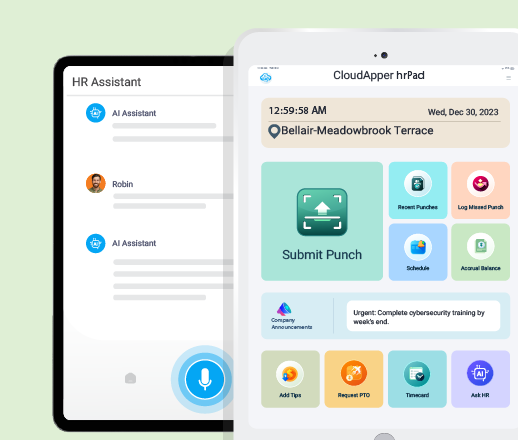
How is the workplace changing with AI? In today’s rapidly evolving work environment, AI-driven self-service solutions are transforming how frontline workers engage with their tasks and organizations. At the forefront of this transformation is CloudApper hrPad, a platform that uses cutting-edge AI technology to make self-service capabilities more intuitive and efficient. One of the standout features is the AI Assistant Raven, which personalizes user experiences by predicting scheduling needs and optimizing time management. This approach empowers workers with autonomy and boosts productivity through real-time feedback. Thus, employees manage tasks more effectively, leading to higher job satisfaction and engagement.

Imagine a healthcare facility adopting AI-driven solutions to tackle workplace challenges like scheduling conflicts and communication barriers among frontline staff. By implementing CloudApper hrPad, they streamlined processes, improving employee satisfaction and operational efficiency. The platform’s self-service capabilities allowed employees to manage schedules directly from their devices, reducing administrative overhead and increasing control over their work environment.

Despite some skepticism about AI in the workplace, evidence shows these technologies are crucial in shaping future work environments. Embracing AI-driven self-service solutions helps companies create a more dynamic and responsive workforce, ultimately leading to a more productive and satisfied team. CloudApper hrPad enhances frontline workers’ engagement and recognition through practical technology. It addresses key pain points like feeling undervalued and lacking control over their work environment. The platform facilitates regular feedback surveys for valuable insights from frontline employees, fostering a more engaged workforce. Additionally, by enabling employees to send SMS referrals for job openings, CloudApper hrPad fosters community involvement in company growth. This involvement makes employees feel more connected and valued, enhancing their overall work experience.

Looking to the future, AI’s role in frontline work environments will expand, offering new opportunities for innovation and growth. By understanding and leveraging these technologies, organizations can remain competitive and responsive to employee needs while enhancing business operations through increased efficiency and satisfaction.

How To Implement AI-Driven Solutions with CloudApper hrPad

  1. Assess Your Current Work Environment:
    Begin by evaluating the current processes and identifying areas where AI-driven solutions could offer improvements, such as scheduling, communication, and feedback systems.
  2. Research and Understand CloudApper hrPad:
    Familiarize yourself with the features of CloudApper hrPad, including its self-service capabilities, feedback tools, and real-time predictive analytics. Visit the CloudApper hrPad overview for detailed insights.
  3. Develop an Implementation Plan:
    Create a structured plan for integrating CloudApper hrPad into your existing systems. Ensure it aligns with your business operations and addresses key workplace challenges.
  4. Train Frontline Workers:
    Conduct training sessions for your employees to effectively use the platform. Emphasize its features that enhance autonomy and productivity, such as schedule management and feedback processes.
  5. Monitor and Collect Feedback:
    After deployment, regularly gather feedback from employees using the internal feedback tools within CloudApper hrPad to continually improve its usage and address any arising concerns.
  6. Reap the Benefits:
    Experience improved productivity, employee satisfaction, and engagement by leveraging AI-driven solutions to create a dynamic and responsive work environment. Discover more benefits by consulting our enhanced engagement resources.
  7. If you need further assistance, don't hesitate to Contact Us.

Frequently Asked Questions

  • What is CloudApper hrPad?
    CloudApper hrPad is an innovative AI-driven self-service solution designed to revolutionize frontline engagement by enhancing autonomy, productivity, and job satisfaction. It allows workers to manage their schedules, access timecard data, and provides feedback tools for a more engaged workforce. Read more.
  • How does AI improve employee satisfaction?
    AI solutions like CloudApper hrPad help streamline workplace challenges such as scheduling and communication, which improves productivity and satisfaction. Learn more here.
  • What role does AI play in enhancing productivity?
    AI-driven self-service platforms allow employees to manage tasks more effectively and provide real-time feedback and scheduling predictions through features like the AI Assistant Raven, boosting overall productivity. Explore more.
  • What benefits do AI-driven self-service solutions bring to a company?
    These solutions foster a more engaged workforce by providing autonomy, facilitating feedback, and involving employees in decision-making processes. Find out more.
  • How can AI help reduce employee turnover?
    By addressing common concerns regarding recognition and work environment control, AI solutions can significantly reduce turnover and enhance job satisfaction. Read in detail.

MIA

MIA is CloudApper’s sales and solutions assistant, designed to help professionals and business leaders explore the future of workforce technology. MIA shares insights from real-world conversations with customers and CloudApper experts-bridging the gap between AI innovation and practical enterprise solutions.

Revolutionizing Time Tracking for Remote Teams With Geo-Fencing

TL;DR

  • AI-driven geo-fencing is transforming time tracking for remote teams, enhancing productivity and accountability.
  • Industries like renewable energy, agriculture, and emergency services benefit from precise location tracking and improved efficiency.
  • CloudApper AI TimeClock offers biometric identification and AI authentication to prevent time theft and fraud.
  • Seamless integration with HR systems ensures compliance and automates payroll, reducing errors and workload.
  • Success stories highlight improved time tracking and payroll accuracy, fostering a transparent workplace culture.

Discover how AI-driven geo-fencing can revolutionize your team's time tracking. Contact us for more information.

Did you know that AI-driven geo-fencing is changing how businesses track time for remote teams? In today’s world, with more companies relying on remote and field-based workers, this technology offers precise time and location tracking, boosting productivity and accountability, and ensuring employees’ hours are accurately logged no matter where they are.

AI helps overcome traditional geo-fencing limits, which is a big plus for industries like renewable energy, agriculture, and emergency services, where workers are often in diverse environments. Real-life examples show the impact of AI-driven geo-fencing. In the renewable energy sector, field technicians are tracked more accurately, optimizing their time. In agriculture, workers’ movements are monitored to boost efficiency, and emergency services use real-time tracking for quick responses and better resource management.

Moreover, AI-enhanced geo-fencing improves employee engagement through clear and accurate time tracking, making workers feel more valued and improving job satisfaction. AI also tackles connectivity and data privacy issues, with advanced algorithms working even in areas with poor network coverage and strong data protection measures in place.

CloudApper AI TimeClock, or CloudApper hrPad, turns any iOS or Android tablet into an AI-powered HR assistant. It features biometric identification and AI-driven authentication to prevent time theft and fraud, fostering trust. Automated data processing, including geo-fencing and employee surveys, provides detailed reports for better resource management and productivity.

The platform integrates easily with HR systems like UKG, Oracle HCM, and SAP SuccessFactor, ensuring correct compensation and compliance with labor laws. It automates payroll management, reducing HR workload and errors, allowing HR teams to focus on strategic goals. Its user-friendly interface and self-service features empower employees, boosting morale and efficiency.

Success stories show its impact. Bergey’s Auto Dealership achieved accurate time tracking and reduced payroll errors, while FACE Amusement automated shift communication and improved payroll accuracy. Overall, CloudApper AI TimeClock is essential for transparency and a healthy workplace culture. As businesses adapt to remote work demands, embracing such technologies is vital for staying competitive.

How-To Guide: Using CloudApper AI TimeClock Effectively

Step 1: Setting Up Your Device

Transform your iOS or Android tablet into an AI-powered HR assistant by installing the CloudApper AI TimeClock app. Ensure your device is updated to the latest operating system for optimal performance.

Step 2: Configuring Biometric Identification

Enable biometric authentication in the app settings to prevent time theft and fraud. This feature provides an extra layer of security for time tracking.

Step 3: Utilizing AI-Driven Geo-Fencing

Activate geo-fencing within the app to accurately track employee locations and working hours. This function works even in low connectivity areas, ensuring precise data collection.

Step 4: Integrating with Existing HR Systems

Link CloudApper AI TimeClock with platforms like UKG, Oracle HCM, and SAP SuccessFactor. This integration streamlines payroll management and helps maintain labor law compliance.

Step 5: Empowering Employees with Self-Service Features

Encourage employees to use the self-service features for schedule management and time-off requests. This not only boosts morale but also enhances operational efficiency. Discover more about these features here.

Frequently Asked Questions

What is CloudApper AI TimeClock?

CloudApper AI TimeClock, also known as CloudApper hrPad, is an innovative time tracking solution that transforms any iOS or Android tablet into an AI-powered HR assistant. It is especially beneficial for remote and field-based teams, providing precise time and location tracking. Learn more about its features here.

How does AI-driven geo-fencing work?

AI-driven geo-fencing utilizes advanced algorithms to accurately track employee locations and times, even in areas with poor network coverage. This technology enhances productivity and accountability by ensuring accurate time logs. It is particularly useful in industries where employees are frequently on the move, such as renewable energy and agriculture.

What industries benefit the most from CloudApper AI TimeClock?

Industries such as renewable energy, agriculture, and emergency services benefit greatly from CloudApper AI TimeClock due to its accurate time tracking and geo-fencing features. It ensures efficient management and enhances resource allocation across diverse environments.

How does CloudApper AI TimeClock prevent time theft?

The platform uses biometric identification and AI-driven authentication to prevent time theft and fraud, fostering a trustworthy work environment. For detailed information on how it safeguards against fraudulent activities, check out our resource here.

How does CloudApper AI TimeClock handle compliance with labor laws?

CloudApper AI TimeClock integrates with platforms like UKG, Oracle HCM, and SAP SuccessFactor to automate payroll management and compliance monitoring, reducing HR workload and ensuring labor law compliance. Explore more about its compliance features here.

MIA

MIA is CloudApper’s sales and solutions assistant, designed to help professionals and business leaders explore the future of workforce technology. MIA shares insights from real-world conversations with customers and CloudApper experts-bridging the gap between AI innovation and practical enterprise solutions.

Revolutionizing Talent Acquisition: AI-Enhanced Employee Referral Networks

TL;DR

  • AI is transforming talent acquisition by addressing challenges like candidate drop-off and screening inefficiencies.
  • CloudApper AI Recruiter offers features like Text-to-Apply, reducing drop-off rates and enhancing candidate engagement.
  • Automated screening and scheduling free up HR teams for strategic tasks, improving efficiency in high-volume hiring.
  • Employee networks are leveraged for quality hires, ensuring candidates are a good fit through AI-driven insights.
  • Seamless integration with existing HR systems facilitates a smooth transition to AI-enhanced recruitment.

Ready to revolutionize your recruitment process? Contact us to learn more or schedule a demo.

In today’s fast-paced job market, the way we hire talent is undergoing a significant transformation, thanks to AI-powered solutions like CloudApper AI Recruiter. Recently, I had an engaging conversation with a potential customer who reached out after reading one of our insightful blogs. They were intrigued by how AI could address their recruiting challenges, particularly candidate drop-off, screening inefficiencies, and high-volume hiring.

Customer: “Hi, I’m the HR Manager at a mid-sized tech company, and I’ve been reading about AI in recruitment. We struggle with candidate drop-off during the application process and screening inefficiencies. Can AI really help with these issues?”

Me: “Absolutely! AI can be a game-changer in recruitment. With CloudApper AI Recruiter, we leverage AI to streamline the entire hiring process. For instance, our Text-to-Apply feature transforms traditional application forms into engaging, conversational experiences. This not only makes the process more appealing to candidates but also significantly reduces drop-off rates.”

Customer: “That sounds promising. We also have a high volume of applications, and screening them is quite time-consuming. How does your solution handle that?”

Me: “Great question! Our AI automates routine tasks like candidate screening and scheduling. This means your HR team can focus on strategic decision-making rather than getting bogged down with administrative tasks. Plus, our system uses employee networks to speed up hiring, tapping into referrals which are often the best source for quality candidates.”

Customer: “I see. And what about ensuring that the candidates we hire are the right fit for our company?”

Me: “CloudApper AI Recruiter excels here too. It provides AI-driven insights by analyzing performance data, helping you close skill gaps and improve workflows. This ensures you’re focusing on the most promising leads. Additionally, our dynamic feedback loops promote continuous communication between employees and managers, aligning recruitment strategies with your organizational goals.”

Customer: “This all sounds very efficient. How does it integrate with our existing HR systems?”

Me: “Integration is seamless. Our solution works with your current systems, facilitating a smooth transition from traditional methods to AI-enhanced recruitment. It’s designed to empower your HR team to break down traditional barriers and focus on cultivating talent rather than just managing tasks.”

Reflecting on this conversation, it’s clear that AI is not just a buzzword but a practical tool that can revolutionize talent acquisition. By enhancing employee referral networks and automating routine tasks, CloudApper AI Recruiter empowers HR teams to focus on what truly matters—finding and nurturing the best talent. If you’re ready to transform your recruitment process, I invite you to learn more about CloudApper AI Recruiter or schedule a demo to see it in action.

How to Implement AI in Your Recruitment Process

  1. Understand the Benefits:

    Begin by understanding how AI can transform recruitment processes by improving efficiency, and candidate experience, and providing actionable insights. For a detailed guide, visit this page.

  2. Evaluate Your Current Systems:

    Assess your existing HR systems and processes to determine where AI can add value, especially in areas like candidate drop-off and screening inefficiencies.

  3. Plan Your Integration:

    Work with your IT and HR teams to ensure that the AI recruiter integrates seamlessly with your current systems. This step should focus on creating a smooth transition from traditional methods to AI-enhanced recruitment.

  4. Get a Demo:

    Experience the features of CloudApper AI Recruiter firsthand by scheduling a demo to see how it can cater specifically to your organizational needs.

  5. Implement and Monitor:

    After integration, continually monitor the performance of the AI solutions to ensure they meet recruitment goals and make adjustments as necessary for optimization.

FAQs about AI in Recruitment

  • What is CloudApper AI Recruiter?

    CloudApper AI Recruiter is an AI-powered solution designed to enhance the recruitment process by automating workflows, providing insights from performance data, and facilitating seamless integration with existing HR systems. Learn more about it here.

  • How does AI reduce candidate drop-off during the application process?

    AI solutions like CloudApper AI Recruiter utilize features such as Text-to-Apply to create a more engaging and conversational application process, significantly reducing candidate drop-off. For further information, read this article.

  • Can AI help with screening inefficiencies?

    Yes, AI automates routine tasks like screening and scheduling, which reduces manual inefficiencies and allows HR teams to focus on strategic tasks. Discover more about AI-assisted screening here.

  • Is AI effective for high-volume hiring?

    AI streamlines high-volume hiring through automation and AI-driven insights, making the process more efficient. To learn how AI manages this, check out this blog.

  • How do employee networks enhance recruitment?

    By leveraging existing employee networks, AI recruiters like CloudApper significantly speed up the hiring process, tapping into a valuable source of high-quality candidates. Explore the benefits of employee networks here.

MIA

MIA is CloudApper’s sales and solutions assistant, designed to help professionals and business leaders explore the future of workforce technology. MIA shares insights from real-world conversations with customers and CloudApper experts-bridging the gap between AI innovation and practical enterprise solutions.