
Leveraging Multi-Modal Biometric Identification for Enhanced Patient Care

The healthcare sector is continually evolving, and the advent of innovative technologies has been reshaping patient identification processes, enhancing data integrity, and improving overall patient care. This transformation is driving a shift from single modality identification systems to a more comprehensive and effective multi-modal biometric identification system like the RightPatient® system. Such a system can accurately identify patients across various touchpoints, from bedside healthcare services to home health, emergency rooms, or mobile environments. It’s not just a vision of the future; it’s a reality that is being progressively shaped by technological advancements and the pressing need for accurate patient identification.

These systems, relying on a single form of patient identification, such as fingerprints or iris scans, have struggled to adapt to the rapidly changing healthcare environment. This inability to keep pace has led to a multitude of problems, including patient misidentification, duplicate records, and issues related to medical identity theft.

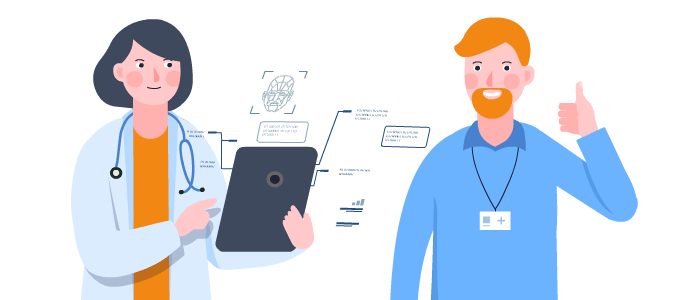
Multi-modal biometric identification systems like RightPatient®, on the other hand, harness the power of cutting-edge voice and facial recognition technologies. They offer a robust solution to the issues plaguing single modality systems. RightPatient®’s extensive capabilities to authenticate patient identities across various touchpoints make it a beacon of hope in an increasingly complex healthcare landscape.

A practical example of the effectiveness of the RightPatient® system is seen in the case of International Health Management, a well-respected NGO that runs healthcare projects in Bangladesh. After dealing with numerous issues related to incorrect patient identification, the organization integrated RightPatient® into their healthcare framework. The results were dramatic, with the system accurately identifying approximately 5,000 patients across five different locations within the country. This example not only showcases the effectiveness of RightPatient® in improving patient identification but also highlights its adaptability to different patient touchpoints, demonstrating the system’s flexibility, scalability, and integrity.

RightPatient® is not just a solution for the present; it’s future-ready, compatible with any biometric form, including fingerprint, finger vein, palm vein, iris, facial, and voice recognition. This broad compatibility makes it an ideal choice for institutions planning to evolve their patient identification touchpoints in the future.

In conclusion, as healthcare touchpoints continue to diversify, the need for multi-modal biometric identification systems like RightPatient® becomes increasingly evident. They offer more than just functionality — they guarantee the highest levels of patient engagement, safety, and long-term value. These systems are not just the future of patient identification; they’re the present, reshaping the healthcare industry and ensuring improved patient care and data integrity. For more information about RightPatient®, visit https://daddy.rightpatient.com/ or contact us at https://daddy.rightpatient.com/contact/.


How To

  1. How to Integrate RightPatient® into Your Healthcare Framework
    RightPatient® integrates seamlessly with the healthcare workflow. For a smooth setup process, follow the instructions provided by our team. For more insights, check out our blog post on Why We Offer a Choice of Hardware Modalities for Biometric Patient ID.
  2. How to Leverage RightPatient® for Accurate Patient Identification
    RightPatient® uses voice and facial recognition technologies for patient identification. Learn more about these technologies in our blog post on Improving Mobile Patient Identification with Wireless Technology.
  3. How to Future-Proof Your Patient Identification Process with RightPatient®
    RightPatient® is compatible with any biometric form, making it a future-proof solution. Read our blog post on Why Experience Matters When Selecting a Biometric Patient Identification Solution to understand how to make the most of this feature.

FAQs

  1. What is RightPatient®?
    RightPatient® is a multi-modal biometric identification system designed to accurately identify patients across various healthcare touchpoints.
  2. How does RightPatient® differ from single modality identification systems?
    Unlike single modality systems that rely on one form of patient identification, RightPatient® leverages cutting-edge voice and facial recognition technologies to offer a robust solution to patient misidentification, duplicate records, and medical identity theft.
  3. Is RightPatient® adaptable to different patient touchpoints?
    Yes, RightPatient® has proven its adaptability across different patient touchpoints, including bedside healthcare services, home health, emergency rooms, and mobile environments.
  4. Is RightPatient® future-ready?
    Yes, RightPatient® is compatible with any biometric form, making it an ideal choice for institutions planning to evolve their patient identification touchpoints in the future.
  5. Where can I get more information about RightPatient®?
    For more information about RightPatient®, visit https://daddy.rightpatient.com/ or contact us at https://daddy.rightpatient.com/contact/.

Enhancing Patient Experience with Biometric Identification in Healthcare

Imagine a world where patient misidentification in healthcare is no longer a threat. A world where there are no cases of improper treatment due to misidentification, no loss of public trust in healthcare providers. This is the world that RightPatient, a pioneering provider of biometric patient identification solutions, envisions.

RightPatient’s innovative touchless biometric patient identification system guarantees accurate patient identification, diminishing wait times, and amplifying the overall patient experience. Its effortless features seamlessly blend with top-rated EHR systems, simplifying functionality and easing its acceptance. The RightPatient solution isn’t merely a product – it’s a commitment to a safer and more efficient healthcare experience for patients.

Take for instance International Health Management, a commendable NGO running healthcare initiatives in Bangladesh. They were grappling with inaccurate patient identification that led to medication mishaps, fraudulent activities, redundant patient records, and reduced convenience. The adoption of the RightPatient® biometric identification system revolutionized their operations. Paired with the M2-EasyScan™ fingerprint reader and rolled out across five locations in Bangladesh, the system catered to around 5,000 patients, offering a secure and accurate patient identification process.

The outcome was a swift, touchless solution that streamlined their patient identification process, minimized errors, and bolstered security. RightPatient®’s flexible technology accommodates a range of biometrics, from fingerprint and iris to facial and voice recognition, promising scalability and adaptability to meet both present and future needs.

Investment in biometric patient identification doesn’t just ensure that the right patient receives the correct treatment. It also considerably elevates the overall patient experience and satisfaction. It fortifies patient trust in healthcare services by offering a safe and precise identification process. Moreover, by speeding up the check-in process, it reduces wait times, resulting in heightened patient satisfaction.

To sum up, the transformative potential of biometric patient identification technology is indisputable. Incorporating such a system into their operation, healthcare providers can safeguard patient safety, boost patient trust, and enhance the overall patient experience. To learn how RightPatient is revolutionizing patient safety, book a demo today at www.rightpatient.com or connect with us at www.rightpatient.com/contact for more information or inquiries.

As of June 4, 2025, RightPatient continues to pioneer the way in patient identification, offering a reliable and efficient solution to a problem that has long plagued the healthcare industry. Despite the advances in healthcare technology, patient misidentification remains an issue, leading to devastating consequences such as duplicate medical records, and even loss of life. RightPatient’s biometric system addresses this issue head-on, providing a robust and reliable solution that not only ensures accurate patient identification but also enhances patient satisfaction by reducing wait times.

In the global healthcare landscape, patient identification errors have been a longstanding issue. These errors can lead to severe consequences, such as incorrect diagnoses, improper treatment, and even death. In addition to these dire outcomes, misidentification can lead to increased healthcare costs due to unnecessary tests and treatments. RightPatient’s biometric solution aims to eliminate these issues, providing a safe, efficient, and reliable method for patient identification.

RightPatient’s system is not just a product; it’s a commitment to patient safety and efficient healthcare. The system’s integration with top-rated EHR systems simplifies its functionality, making it easy for healthcare providers to adopt. Moreover, its flexible technology accommodates a variety of biometric data, including fingerprints, iris scans, facial recognition, and voice recognition. This adaptability ensures that the system can meet the evolving needs of healthcare providers and patients alike.

The case of International Health Management in Bangladesh is a prime example of the transformative potential of RightPatient’s system. The NGO was struggling with inaccurate patient identification, leading to numerous issues such as medication errors, redundant patient records, and reduced patient satisfaction. However, with the implementation of RightPatient’s system, these issues were significantly reduced. The system streamlined their patient identification process, minimized errors, and enhanced security, demonstrating the substantial benefits of accurate patient identification.

In conclusion, RightPatient’s biometric patient identification system is more than just a product; it’s a commitment to a safer and more efficient healthcare experience. By ensuring accurate patient identification, the system not only prevents harmful medical errors but also enhances patient satisfaction by reducing wait times. With RightPatient, healthcare providers can protect patient safety, boost patient trust, and elevate the overall patient experience. RightPatient continues to revolutionize patient safety, leading the way in accurate and efficient patient identification.

How to Enhance Patient Experience with RightPatient's Biometric Identification Solution

  1. Invest in RightPatient: As a healthcare provider, invest in RightPatient's touchless biometric patient identification solution to eliminate risks associated with patient misidentification. Learn more about why experience matters when selecting a biometric patient identification solution.
  2. Integrate with EHR Systems: Integrate RightPatient with your existing EHR system to simplify its functionality and facilitate smooth adoption. Discover why seamless EHR integration is important.
  3. Utilize Various Biometrics: Use RightPatient's flexible technology that accommodates a variety of biometric data, including fingerprints, iris scans, facial recognition, and voice recognition. Find out why we offer a choice of hardware modalities for biometric patient ID.

FAQs

  • What is RightPatient?
    RightPatient is a pioneering provider of touchless biometric patient identification solutions. It guarantees accurate patient identification, reducing wait times and enhancing the overall patient experience.
  • How does RightPatient work?
    RightPatient's system integrates with top-rated EHR systems, simplifying its functionality. It uses a range of biometrics, including fingerprint, iris, facial, and voice recognition, to accurately identify patients.
  • What are the benefits of using RightPatient?
    RightPatient ensures accurate patient identification, preventing harmful medical errors. It also reduces wait times, enhancing patient satisfaction and trust in healthcare services.
  • Can RightPatient be integrated with existing EHR systems?
    Yes, RightPatient seamlessly integrates with leading EHR systems, making it easy for healthcare providers to adopt.
  • What types of biometrics does RightPatient use?
    RightPatient accommodates a variety of biometric data, including fingerprints, iris scans, facial recognition, and voice recognition.

Revolutionizing Frontline Engagement: How AI-Driven Self-Service Solutions are Transforming the Workplace

TL;DR

  • Discover how AI-driven self-service solutions are revolutionizing frontline engagement, enhancing productivity, and boosting job satisfaction.
  • Learn how CloudApper hrPad empowers employees with autonomy and real-time feedback, transforming workplace dynamics.
  • See how AI can streamline processes, reduce administrative overhead, and improve employee satisfaction in sectors like healthcare.
  • Embrace the future of work with AI to create a dynamic, responsive, and engaged workforce.
  • Ready to transform your workplace? Contact us to learn more about implementing AI-driven solutions.

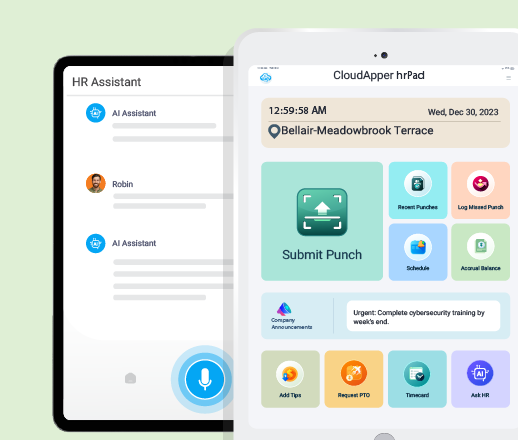
How is the workplace changing with AI? In today’s rapidly evolving work environment, AI-driven self-service solutions are transforming how frontline workers engage with their tasks and organizations. At the forefront of this transformation is CloudApper hrPad, a platform that uses cutting-edge AI technology to make self-service capabilities more intuitive and efficient. One of the standout features is the AI Assistant Raven, which personalizes user experiences by predicting scheduling needs and optimizing time management. This approach empowers workers with autonomy and boosts productivity through real-time feedback. Thus, employees manage tasks more effectively, leading to higher job satisfaction and engagement.

Imagine a healthcare facility adopting AI-driven solutions to tackle workplace challenges like scheduling conflicts and communication barriers among frontline staff. By implementing CloudApper hrPad, they streamlined processes, improving employee satisfaction and operational efficiency. The platform’s self-service capabilities allowed employees to manage schedules directly from their devices, reducing administrative overhead and increasing control over their work environment.

Despite some skepticism about AI in the workplace, evidence shows these technologies are crucial in shaping future work environments. Embracing AI-driven self-service solutions helps companies create a more dynamic and responsive workforce, ultimately leading to a more productive and satisfied team. CloudApper hrPad enhances frontline workers’ engagement and recognition through practical technology. It addresses key pain points like feeling undervalued and lacking control over their work environment. The platform facilitates regular feedback surveys for valuable insights from frontline employees, fostering a more engaged workforce. Additionally, by enabling employees to send SMS referrals for job openings, CloudApper hrPad fosters community involvement in company growth. This involvement makes employees feel more connected and valued, enhancing their overall work experience.

Looking to the future, AI’s role in frontline work environments will expand, offering new opportunities for innovation and growth. By understanding and leveraging these technologies, organizations can remain competitive and responsive to employee needs while enhancing business operations through increased efficiency and satisfaction.

How To Implement AI-Driven Solutions with CloudApper hrPad

  1. Assess Your Current Work Environment:
    Begin by evaluating the current processes and identifying areas where AI-driven solutions could offer improvements, such as scheduling, communication, and feedback systems.
  2. Research and Understand CloudApper hrPad:
    Familiarize yourself with the features of CloudApper hrPad, including its self-service capabilities, feedback tools, and real-time predictive analytics. Visit the CloudApper hrPad overview for detailed insights.
  3. Develop an Implementation Plan:
    Create a structured plan for integrating CloudApper hrPad into your existing systems. Ensure it aligns with your business operations and addresses key workplace challenges.
  4. Train Frontline Workers:
    Conduct training sessions for your employees to effectively use the platform. Emphasize its features that enhance autonomy and productivity, such as schedule management and feedback processes.
  5. Monitor and Collect Feedback:
    After deployment, regularly gather feedback from employees using the internal feedback tools within CloudApper hrPad to continually improve its usage and address any arising concerns.
  6. Reap the Benefits:
    Experience improved productivity, employee satisfaction, and engagement by leveraging AI-driven solutions to create a dynamic and responsive work environment. Discover more benefits by consulting our enhanced engagement resources.
  7. If you need further assistance, don't hesitate to Contact Us.

Frequently Asked Questions

  • What is CloudApper hrPad?
    CloudApper hrPad is an innovative AI-driven self-service solution designed to revolutionize frontline engagement by enhancing autonomy, productivity, and job satisfaction. It allows workers to manage their schedules, access timecard data, and provides feedback tools for a more engaged workforce. Read more.
  • How does AI improve employee satisfaction?
    AI solutions like CloudApper hrPad help streamline workplace challenges such as scheduling and communication, which improves productivity and satisfaction. Learn more here.
  • What role does AI play in enhancing productivity?
    AI-driven self-service platforms allow employees to manage tasks more effectively and provide real-time feedback and scheduling predictions through features like the AI Assistant Raven, boosting overall productivity. Explore more.
  • What benefits do AI-driven self-service solutions bring to a company?
    These solutions foster a more engaged workforce by providing autonomy, facilitating feedback, and involving employees in decision-making processes. Find out more.
  • How can AI help reduce employee turnover?
    By addressing common concerns regarding recognition and work environment control, AI solutions can significantly reduce turnover and enhance job satisfaction. Read in detail.

MIA

MIA is CloudApper’s sales and solutions assistant, designed to help professionals and business leaders explore the future of workforce technology. MIA shares insights from real-world conversations with customers and CloudApper experts-bridging the gap between AI innovation and practical enterprise solutions.

Revolutionizing Time Tracking for Remote Teams With Geo-Fencing

TL;DR

  • AI-driven geo-fencing is transforming time tracking for remote teams, enhancing productivity and accountability.
  • Industries like renewable energy, agriculture, and emergency services benefit from precise location tracking and improved efficiency.
  • CloudApper AI TimeClock offers biometric identification and AI authentication to prevent time theft and fraud.
  • Seamless integration with HR systems ensures compliance and automates payroll, reducing errors and workload.
  • Success stories highlight improved time tracking and payroll accuracy, fostering a transparent workplace culture.

Discover how AI-driven geo-fencing can revolutionize your team's time tracking. Contact us for more information.

Did you know that AI-driven geo-fencing is changing how businesses track time for remote teams? In today’s world, with more companies relying on remote and field-based workers, this technology offers precise time and location tracking, boosting productivity and accountability, and ensuring employees’ hours are accurately logged no matter where they are.

AI helps overcome traditional geo-fencing limits, which is a big plus for industries like renewable energy, agriculture, and emergency services, where workers are often in diverse environments. Real-life examples show the impact of AI-driven geo-fencing. In the renewable energy sector, field technicians are tracked more accurately, optimizing their time. In agriculture, workers’ movements are monitored to boost efficiency, and emergency services use real-time tracking for quick responses and better resource management.

Moreover, AI-enhanced geo-fencing improves employee engagement through clear and accurate time tracking, making workers feel more valued and improving job satisfaction. AI also tackles connectivity and data privacy issues, with advanced algorithms working even in areas with poor network coverage and strong data protection measures in place.

CloudApper AI TimeClock, or CloudApper hrPad, turns any iOS or Android tablet into an AI-powered HR assistant. It features biometric identification and AI-driven authentication to prevent time theft and fraud, fostering trust. Automated data processing, including geo-fencing and employee surveys, provides detailed reports for better resource management and productivity.

The platform integrates easily with HR systems like UKG, Oracle HCM, and SAP SuccessFactor, ensuring correct compensation and compliance with labor laws. It automates payroll management, reducing HR workload and errors, allowing HR teams to focus on strategic goals. Its user-friendly interface and self-service features empower employees, boosting morale and efficiency.

Success stories show its impact. Bergey’s Auto Dealership achieved accurate time tracking and reduced payroll errors, while FACE Amusement automated shift communication and improved payroll accuracy. Overall, CloudApper AI TimeClock is essential for transparency and a healthy workplace culture. As businesses adapt to remote work demands, embracing such technologies is vital for staying competitive.

How-To Guide: Using CloudApper AI TimeClock Effectively

Step 1: Setting Up Your Device

Transform your iOS or Android tablet into an AI-powered HR assistant by installing the CloudApper AI TimeClock app. Ensure your device is updated to the latest operating system for optimal performance.

Step 2: Configuring Biometric Identification

Enable biometric authentication in the app settings to prevent time theft and fraud. This feature provides an extra layer of security for time tracking.

Step 3: Utilizing AI-Driven Geo-Fencing

Activate geo-fencing within the app to accurately track employee locations and working hours. This function works even in low connectivity areas, ensuring precise data collection.

Step 4: Integrating with Existing HR Systems

Link CloudApper AI TimeClock with platforms like UKG, Oracle HCM, and SAP SuccessFactor. This integration streamlines payroll management and helps maintain labor law compliance.

Step 5: Empowering Employees with Self-Service Features

Encourage employees to use the self-service features for schedule management and time-off requests. This not only boosts morale but also enhances operational efficiency. Discover more about these features here.

Frequently Asked Questions

What is CloudApper AI TimeClock?

CloudApper AI TimeClock, also known as CloudApper hrPad, is an innovative time tracking solution that transforms any iOS or Android tablet into an AI-powered HR assistant. It is especially beneficial for remote and field-based teams, providing precise time and location tracking. Learn more about its features here.

How does AI-driven geo-fencing work?

AI-driven geo-fencing utilizes advanced algorithms to accurately track employee locations and times, even in areas with poor network coverage. This technology enhances productivity and accountability by ensuring accurate time logs. It is particularly useful in industries where employees are frequently on the move, such as renewable energy and agriculture.

What industries benefit the most from CloudApper AI TimeClock?

Industries such as renewable energy, agriculture, and emergency services benefit greatly from CloudApper AI TimeClock due to its accurate time tracking and geo-fencing features. It ensures efficient management and enhances resource allocation across diverse environments.

How does CloudApper AI TimeClock prevent time theft?

The platform uses biometric identification and AI-driven authentication to prevent time theft and fraud, fostering a trustworthy work environment. For detailed information on how it safeguards against fraudulent activities, check out our resource here.

How does CloudApper AI TimeClock handle compliance with labor laws?

CloudApper AI TimeClock integrates with platforms like UKG, Oracle HCM, and SAP SuccessFactor to automate payroll management and compliance monitoring, reducing HR workload and ensuring labor law compliance. Explore more about its compliance features here.

MIA

MIA is CloudApper’s sales and solutions assistant, designed to help professionals and business leaders explore the future of workforce technology. MIA shares insights from real-world conversations with customers and CloudApper experts-bridging the gap between AI innovation and practical enterprise solutions.

Revolutionizing Talent Acquisition: AI-Enhanced Employee Referral Networks

TL;DR

  • AI is transforming talent acquisition by addressing challenges like candidate drop-off and screening inefficiencies.
  • CloudApper AI Recruiter offers features like Text-to-Apply, reducing drop-off rates and enhancing candidate engagement.
  • Automated screening and scheduling free up HR teams for strategic tasks, improving efficiency in high-volume hiring.
  • Employee networks are leveraged for quality hires, ensuring candidates are a good fit through AI-driven insights.
  • Seamless integration with existing HR systems facilitates a smooth transition to AI-enhanced recruitment.

Ready to revolutionize your recruitment process? Contact us to learn more or schedule a demo.

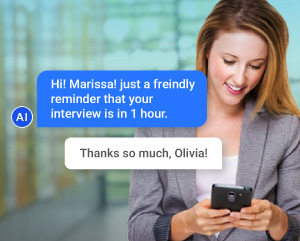
In today’s fast-paced job market, the way we hire talent is undergoing a significant transformation, thanks to AI-powered solutions like CloudApper AI Recruiter. Recently, I had an engaging conversation with a potential customer who reached out after reading one of our insightful blogs. They were intrigued by how AI could address their recruiting challenges, particularly candidate drop-off, screening inefficiencies, and high-volume hiring.

Customer: “Hi, I’m the HR Manager at a mid-sized tech company, and I’ve been reading about AI in recruitment. We struggle with candidate drop-off during the application process and screening inefficiencies. Can AI really help with these issues?”

Me: “Absolutely! AI can be a game-changer in recruitment. With CloudApper AI Recruiter, we leverage AI to streamline the entire hiring process. For instance, our Text-to-Apply feature transforms traditional application forms into engaging, conversational experiences. This not only makes the process more appealing to candidates but also significantly reduces drop-off rates.”

Customer: “That sounds promising. We also have a high volume of applications, and screening them is quite time-consuming. How does your solution handle that?”

Me: “Great question! Our AI automates routine tasks like candidate screening and scheduling. This means your HR team can focus on strategic decision-making rather than getting bogged down with administrative tasks. Plus, our system uses employee networks to speed up hiring, tapping into referrals which are often the best source for quality candidates.”

Customer: “I see. And what about ensuring that the candidates we hire are the right fit for our company?”

Me: “CloudApper AI Recruiter excels here too. It provides AI-driven insights by analyzing performance data, helping you close skill gaps and improve workflows. This ensures you’re focusing on the most promising leads. Additionally, our dynamic feedback loops promote continuous communication between employees and managers, aligning recruitment strategies with your organizational goals.”

Customer: “This all sounds very efficient. How does it integrate with our existing HR systems?”

Me: “Integration is seamless. Our solution works with your current systems, facilitating a smooth transition from traditional methods to AI-enhanced recruitment. It’s designed to empower your HR team to break down traditional barriers and focus on cultivating talent rather than just managing tasks.”

Reflecting on this conversation, it’s clear that AI is not just a buzzword but a practical tool that can revolutionize talent acquisition. By enhancing employee referral networks and automating routine tasks, CloudApper AI Recruiter empowers HR teams to focus on what truly matters—finding and nurturing the best talent. If you’re ready to transform your recruitment process, I invite you to learn more about CloudApper AI Recruiter or schedule a demo to see it in action.

How to Implement AI in Your Recruitment Process

  1. Understand the Benefits:

    Begin by understanding how AI can transform recruitment processes by improving efficiency, and candidate experience, and providing actionable insights. For a detailed guide, visit this page.

  2. Evaluate Your Current Systems:

    Assess your existing HR systems and processes to determine where AI can add value, especially in areas like candidate drop-off and screening inefficiencies.

  3. Plan Your Integration:

    Work with your IT and HR teams to ensure that the AI recruiter integrates seamlessly with your current systems. This step should focus on creating a smooth transition from traditional methods to AI-enhanced recruitment.

  4. Get a Demo:

    Experience the features of CloudApper AI Recruiter firsthand by scheduling a demo to see how it can cater specifically to your organizational needs.

  5. Implement and Monitor:

    After integration, continually monitor the performance of the AI solutions to ensure they meet recruitment goals and make adjustments as necessary for optimization.

FAQs about AI in Recruitment

  • What is CloudApper AI Recruiter?

    CloudApper AI Recruiter is an AI-powered solution designed to enhance the recruitment process by automating workflows, providing insights from performance data, and facilitating seamless integration with existing HR systems. Learn more about it here.

  • How does AI reduce candidate drop-off during the application process?

    AI solutions like CloudApper AI Recruiter utilize features such as Text-to-Apply to create a more engaging and conversational application process, significantly reducing candidate drop-off. For further information, read this article.

  • Can AI help with screening inefficiencies?

    Yes, AI automates routine tasks like screening and scheduling, which reduces manual inefficiencies and allows HR teams to focus on strategic tasks. Discover more about AI-assisted screening here.

  • Is AI effective for high-volume hiring?

    AI streamlines high-volume hiring through automation and AI-driven insights, making the process more efficient. To learn how AI manages this, check out this blog.

  • How do employee networks enhance recruitment?

    By leveraging existing employee networks, AI recruiters like CloudApper significantly speed up the hiring process, tapping into a valuable source of high-quality candidates. Explore the benefits of employee networks here.

MIA

MIA is CloudApper’s sales and solutions assistant, designed to help professionals and business leaders explore the future of workforce technology. MIA shares insights from real-world conversations with customers and CloudApper experts-bridging the gap between AI innovation and practical enterprise solutions.

Leveraging Biometrics for Enhanced Patient PHI Protection in Healthcare

The United States is witnessing an alarming surge in medical identity theft, a crime that poses severe threats to patient safety and healthcare institutions. The primary challenge lies in safeguarding Patient Protected Health Information (PHI), a task that has become increasingly complicated with the rise in patient-driven interactions in the healthcare system. However, the advent of biometrics in healthcare is revolutionizing this landscape by providing an added layer of protection and acting as a formidable deterrent to hackers.

Leading the charge in harnessing the power of biometrics in healthcare is RightPatient, a touchless biometric patient identification solution specifically designed to address modern healthcare challenges.

RightPatient functions as a robust shield for patient data, securing sensitive information and discouraging potential hackers. It offers more than just robust security; RightPatient delivers convenience and efficiency to healthcare providers and patients. Its effectiveness extends to remote patient identification, a critical requirement in the rapidly digitizing healthcare environment. From securing patient portal access to confirming phone interactions, RightPatient ensures that the right patient receives the right care, every time.

Superior security, ultimate convenience, unparalleled efficiency, and compliance assurance are some of the key features that make RightPatient stand out. Its ability to streamline patient interactions and eradicate the need for manual data entry drastically reduces potential errors and enhances outcomes.

The transformative impact of RightPatient is evident in the case of International Health Management. This global health organization faced significant challenges with incorrect patient identification, which led to threats to patient PHI, duplicate patient records, and medication distribution errors. However, after integrating RightPatient, International Health Management managed to enhance the protection of patient PHI and improve their healthcare system.

The integration of RightPatient resulted in accurate patient identification, faster identification procedures, and a significant reduction in duplicate medical records and medication errors. This case underscores the transformative power of biometric patient identification solutions in amplifying patient safety and the overall integrity of healthcare services.

In the current era, where patient safety and data security are intertwined, RightPatient emerges as the preferred solution for hospitals nationwide. It delivers security, efficiency, and peace of mind, safeguarding patients, data, and the bottom line. With RightPatient, getting patient identification right is paramount. Are you ready to witness the transformative impact of RightPatient on overall patient safety and healthcare outcomes? Schedule a demo today.

How to Use RightPatient

  1. Set Up RightPatient:
    After scheduling a demo and deciding to integrate RightPatient into your healthcare system, our team will guide you through the setup process. This includes installing the necessary software and hardware, and training your staff on how to use the system.
  2. Register Patients:
    Once RightPatient is set up, you can begin registering patients. This involves capturing a photo of the patient and linking it to their unique medical record. This process is quick, easy, and completely touchless, ensuring maximum convenience and safety. For more information on patient registration, visit our blog post on Mobile Patient Identification with the RightPatient Smart App.
  3. Verify Patient Identity:
    Each time a patient visits, their identity can be verified using RightPatient. The system will scan their face and match it to the photo linked to their medical record. This ensures that the right patient receives the right care, every time. For more information on patient verification, check out our blog post on The True Meaning of Patient Identification Innovation.
  4. Secure Patient Data:
    RightPatient not only verifies patient identity but also secures patient data. It acts as a robust shield for patient data, deterring potential hackers and ensuring the safety of PHI. For more information on how RightPatient secures patient data, read our blog post on Healthcare Data Security: How Doctors and Nurses Access, Utilize, and Protect Your Information.

Frequently Asked Questions

  1. What is medical identity theft?
    Medical identity theft refers to the illegal use of someone else's personal information, such as their name and health insurance numbers, to obtain medical services, prescription drugs or to make fraudulent claims for financial gain.
  2. What is Patient Protected Health Information (PHI)?
    Patient Protected Health Information (PHI) is any information about health status, provision of health care, or payment for health care that can be linked to a specific individual. This is interpreted rather broadly and includes any part of a patient's medical record or payment history.
  3. How does RightPatient protect PHI?
    RightPatient is a touchless biometric patient identification solution that secures sensitive patient data and deters potential hackers. It ensures that the right patient receives the right care, every time, thereby safeguarding PHI.
  4. What are the key features of RightPatient?
    RightPatient offers enhanced security, ultimate convenience, unrivaled efficiency, and compliance assurance. It streamlines patient interactions, removes the need for manual data entry, and drastically reduces potential errors.
  5. How has RightPatient helped healthcare institutions?
    RightPatient has helped healthcare institutions like International Health Management enhance the protection of patient PHI, improve their healthcare system, and reduce errors like duplicate medical records and medication errors.

Boosting Patient Safety in Healthcare with Iris Recognition Technology

In an era where technological innovation is revolutionizing various sectors, healthcare is no exception. RightPatient, an industry-leader in patient identification solutions, is at the forefront of this transformation, employing advanced iris recognition technology. Iris recognition is critically instrumental in enhancing patient safety, mitigating the risk of medical errors, and fortifying the security of healthcare environments.

Misidentification-related medical errors are a grave concern in the healthcare industry, leading to unnecessary financial burdens and, more alarmingly, jeopardizing patient lives. According to a John Hopkins study, medical errors are the third leading cause of death in the United States, many of which are attributed to patient misidentification. Furthermore, misidentifications are estimated to cost the healthcare industry a staggering $6 billion annually. The need for a reliable, accurate, and foolproof patient identification solution is more critical than ever.

Enter RightPatient’s Iris Recognition technology. Purpose-built to ensure exceptional patient safety, this cutting-edge technology accurately identifies patients, significantly reducing misidentification errors. It safeguards patients from costly and potentially fatal mistakes, thereby elevating the quality of healthcare.

Unlike traditional contact-based methods, iris recognition is a non-invasive process. This feature considerably reduces the risk of infection transmission within healthcare facilities, a concern that has been amplified in the wake of global health crises. This hygienic identification method contributes significantly to the overall safety and security of healthcare environments.

In addition to ensuring patient safety, RightPatient’s Iris Recognition technology also provides robust data security. It adds an extra layer of defense against medical identity theft and fraud, two rampant issues that plague the healthcare sector. By preserving the integrity of patient data, it insulates healthcare organizations from the costly repercussions of data breaches.

Consider the real-world example of Martin Health in Stuart, FL. They integrated RightPatient into their healthcare system, and within a week, the system was fully functional. The staff needed less than a day’s training to master the new technology, and patient acceptance and enrollment into the RightPatient platform exceeded 99%. The non-invasive iris biometrics technique significantly lowered infection risk, leading to reduced medical errors and enhanced patient safety. Since the system’s installation, Martin Health has seen an uptick in patient safety, a decline in medical ID theft, and a consistent Master Patient Index (MPI).

The advancements in iris recognition are not just improving patient safety but are also thwarting medical errors and bolstering healthcare security. Adoption of this technology can lead to significant improvements in healthcare outcomes and instigate a revolution in patient safety.

Discover more about RightPatient’s Iris Recognition technology at www.rightpatient.com and reach out to us at www.rightpatient.com/contact/ to learn how this technology can enhance patient safety in your healthcare organization. The future of healthcare is here, and RightPatient is leading the way with their innovative Iris Recognition technology.

How to Implement RightPatient's Iris Recognition Technology

  1. Reach Out to RightPatient: Visit the contact page on the RightPatient website to express your interest in implementing their Iris Recognition technology.
  2. Integration: Once you've made contact, the RightPatient team will work with you to integrate the technology into your healthcare system. You can learn more about this process by reading about the real-world example of Martin Health.
  3. Training: The RightPatient team will provide necessary training to your staff to ensure they can effectively use the technology. For more insights into the training process, check out the advancements in iris recognition.
  4. Enrollment: Once the system is fully functional, patients can be enrolled into the RightPatient platform. The non-invasive iris biometrics technique significantly lowers infection risk, leading to reduced medical errors and enhanced patient safety.
  5. Monitor and Evaluate: After implementation, monitor the system's effectiveness and evaluate improvements in patient safety, reduction in medical ID theft, and the consistency of the Master Patient Index (MPI).

FAQs

  1. What is RightPatient's Iris Recognition technology?
    RightPatient's Iris Recognition technology is a touchless biometric solution designed to ensure accurate patient identification, thereby reducing errors associated with misidentification and enhancing patient safety.
  2. How does Iris Recognition technology enhance patient safety?
    By accurately identifying patients, the technology helps eliminate dangerous and costly mistakes that can lead to medical errors. It also reduces the risk of infection transmission due to its non-invasive nature.
  3. How does the technology protect patient data?
    RightPatient's Iris Recognition technology provides an additional layer of protection by making it virtually impossible to impersonate a patient, thus securing the integrity of patient data and shielding healthcare organizations from the costly consequences of data breaches.
  4. How does Iris Recognition technology compare to traditional identification methods?
    Unlike traditional contact-based methods, iris recognition is a non-invasive process, significantly reducing the risk of infection transmission within healthcare facilities.
  5. What are the benefits of implementing RightPatient's Iris Recognition technology?
    Benefits include unparalleled accuracy in patient identification, hygiene-friendly usage, robust data security, and enhanced patient safety.

From Application to Onboarding: How AI Streamlines the Entire Recruitment Journey

TL;DR

  • AI revolutionizes recruitment by streamlining the entire process from application to onboarding, making it faster and more efficient.
  • The CloudApper AI Recruiter integrates seamlessly with existing HR systems, offering a conversational interface that enhances candidate engagement.
  • Smart algorithms rank candidates quickly, allowing HR teams to make faster, more informed hiring decisions.
  • AI enhances employee referrals, ensuring new hires align with company culture and values.
  • Interview scheduling is simplified, reducing errors and saving time for both candidates and recruiters.
  • Onboarding is expedited with tools like the Offer Letter Generator, ensuring new hires are ready to contribute immediately.
  • Centralized candidate data management makes HR tasks more manageable and efficient.
  • Adopting AI in recruitment not only speeds up processes but also positions companies as innovative leaders in their industries.

Ready to transform your recruitment process? Contact us to learn more about integrating AI into your hiring strategy.

Did you know that AI can make hiring faster and easier? The recruitment process often feels like a marathon. From sorting through applications to getting new hires on board, it can be slow and frustrating. But AI is here to change all that, making things smoother from start to finish. Companies are now using AI to speed up the recruitment journey, ensuring everything from the first application to the final onboarding step is seamless.

One of the coolest tools out there is the CloudApper AI Recruiter. It fits right in with the systems companies already use, like HR software and applicant tracking systems, without needing big changes or lots of money. A standout feature of this AI technology is Conversational AI. Instead of filling out boring forms, candidates interact with a friendly chat interface. This makes applying feel more like having a conversation than doing paperwork.

AI also helps with sorting candidates. It uses smart algorithms to quickly rank candidates based on set criteria. This means HR teams can make decisions faster, picking the best candidates quickly. The faster you hire, the less chance the competition has to snatch up top talent.

Referrals are another area where AI shines. Employee referrals have always been a great way to find new hires. AI makes it even better by making it easier for employees to refer people they know. This means getting candidates who already fit the company culture and values, which is a big win for everyone.

Scheduling interviews can be a headache. Matching up everyone’s calendars takes forever and mistakes happen. But with AI, interview scheduling is a breeze. The system finds times when both the candidate and the recruiter are free, cutting out all the back and forth. This makes the whole process much smoother.

Getting new hires started, or onboarding, is just as important as the other steps. AI helps here too, with things like the Offer Letter Generator. This tool helps recruiters create and send offer letters quickly, keeping things professional and efficient. With these tasks streamlined, new hires are ready to hit the ground running.

On top of all these features, the AI Recruiter acts like a one-stop shop for all candidate data. HR teams can easily manage all the applications, making their jobs a lot easier. This centralization means everything is in one place, easy to access whenever needed.

Using AI in recruitment not only speeds things up but also makes companies look cutting-edge. By taking away the boring admin tasks, HR can focus on big-picture things like developing talent and planning for the future. This shift helps build a culture of innovation and flexibility, which are key in today’s fast-moving business world.

So, what does all this mean for companies? By using AI from the application stage to onboarding, they can streamline each step, improve the candidate experience, and secure top talent. This positions them as leaders in their industries, ready to face any challenge head-on.

How-To Guide

  1. Implement AI to Streamline Your Recruitment Process:

    Begin by integrating tools such as the CloudApper AI Recruiter into existing HR systems to enhance efficiency from the application stage to onboarding. This step will streamline the entire recruitment process.

  2. Enhance Candidate Engagement with Conversational AI:

    Utilize Conversational AI to replace traditional forms with a chat interface, making the application process more engaging and less tedious.

  3. Automate Candidate Screening:

    Employ AI algorithms to screen and rank applicants, allowing for quick and data-driven hiring decisions. For more information, visit automate candidate screening.

  4. Streamline Employee Referrals:

    Facilitate easier employee referrals using AI, encouraging staff to bring in potential hires who match the company culture. Details can be found on how to unleash the power of referrals with AI.

  5. Optimize Interview Scheduling Using AI:

    Remove manual scheduling hurdles by using AI to align candidate and interviewer schedules, minimizing errors and delays during the interview process. Learn more about interview scheduling.

FAQs

  • How does the CloudApper AI Recruiter simplify the recruitment process?

    The CloudApper AI Recruiter streamlines recruitment by integrating features such as Conversational AI for an interactive application process, automated candidate screening, and efficient interview scheduling, reducing the time-to-hire and enhancing the overall recruitment experience.

  • What is the role of AI in improving the candidate experience?

    AI improves the candidate experience by offering a personalized application process, reducing cumbersome administrative tasks, and providing timely communication. Learn more about enhancing the candidate experience.

  • How does AI assist with employee referrals?

    AI enhances employee referrals by simplifying the referral process, enabling employees to easily recommend qualified candidates, resulting in hires who are more likely to align with company culture and values. Discover more about employee referrals.

  • What advantages does automated candidate screening provide?

    Automated candidate screening helps quickly rank candidates based on set criteria, facilitating swift and informed hiring decisions. For more details on how the CloudApper AI Recruiter implements this, visit here.

  • How can companies benefit from AI in scheduling interviews?

    AI facilitates efficient interview scheduling by syncing candidate and recruiter availability, thus eliminating scheduling errors and saving time. For a deeper insight into this feature, explore here.

MIA

MIA is CloudApper’s sales and solutions assistant, designed to help professionals and business leaders explore the future of workforce technology. MIA shares insights from real-world conversations with customers and CloudApper experts-bridging the gap between AI innovation and practical enterprise solutions.

AI-Driven RevOps for Team Alignment and Growth

TL;DR

  • Unlock seamless team alignment and growth with AI-driven RevOps, eliminating data fragmentation and misaligned goals.
  • CloudApper's AI tools like the Scouting Agent and Sales Agent boost lead qualification and streamline sales processes, leading to significant improvements in lead quality and sales cycle time.
  • Enhance customer engagement and marketing ROI with the Outreach and Amplifier Agents, ensuring synchronized efforts across departments.
  • Revolutionize customer service with the CSR Agent, automating routine tasks for faster response times and personalized experiences.
  • Transform your operations into a growth engine by aligning KPIs and processes with CloudApper's suite of AI agents.
  • Stay competitive and drive sustainable growth by adopting AI-driven RevOps solutions.

Ready to transform your operations? Contact us today to explore how AI RevOps can benefit your business.

Ever wondered how some companies always seem to have it all together? It’s like they have a magic wand for team alignment and growth. The secret? AI-driven RevOps. In the fast-paced world of revenue operations, teams often face hurdles like data fragmentation and misaligned goals. These issues can slow down growth and make it tough for teams to work together smoothly. But what if you could solve these problems with just a few clicks?

AI-driven platforms like CloudApper are changing the game. They offer tools that help teams work together seamlessly and grow faster. Imagine being able to align your sales, marketing, and customer service teams effortlessly. No more silos, no more lost opportunities. Everyone is on the same page, working towards the same goals. Sounds like a dream, right?

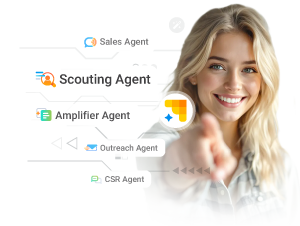
Let’s break it down. First, there’s the Scouting Agent. This AI tool is all about finding and qualifying leads. It digs through heaps of data to ensure your sales team focuses on the best opportunities. For example, one company saw a 30% jump in qualified leads after using the Scouting Agent. That’s a huge win!

Then, there’s the Sales Agent. This tool keeps your sales processes on track. It helps your team follow up on leads and manage the sales pipeline efficiently. One sales manager reported a 20% reduction in their sales cycle time. More deals closed, less time wasted. To learn more about how to automate your entire sales funnel, explore the strategies that can streamline your processes.

Next up, the Outreach Agent. It creates custom engagement sequences that boost customer interactions. By sending the right message at the right time, it strengthens relationships and ups conversion rates. Companies have seen a 25% increase in customer engagement thanks to this agent. Discover why AI outreach performs better than traditional sales teams.

Don’t forget the Amplifier Agent. This tool supercharges your marketing campaigns. It aligns marketing efforts with sales goals, making sure every campaign is data-driven and effective. Some marketing directors noted a 15% rise in campaign ROI. The advantages of automating sales with CloudApper AI RevOps are numerous, from increased efficiency to better resource allocation.

The CSR Agent is a game-changer for customer service. It automates routine interactions, so your team can focus on complex issues. This leads to faster response times and happier customers. One company cut their response time in half! In real-world scenarios, these AI agents work together to transform operations. Take a company struggling with low conversion rates. By using the Scouting and Sales Agents, they can improve lead qualification and follow-up strategies. Meanwhile, the Outreach and Amplifier Agents ensure that marketing and sales efforts are in sync.

AI is also revolutionizing customer service. The CSR Agent can handle many routine tasks, freeing human agents for more complex problems. This not only speeds up service but also creates personalized customer experiences. By automating routine tasks, AI-driven RevOps platforms like CloudApper free up time and resources. Teams can then focus on strategic growth initiatives. It’s all about moving from manual tasks to strategic planning, unlocking human potential.

CloudApper’s AI agents act as the glue that holds everything together. They ensure workflows are synchronized and customer engagement is personalized. By aligning KPIs and processes across departments, they drive growth and efficiency. In today’s world, where customer expectations are sky-high, AI-driven RevOps platforms provide a significant edge. They tackle data fragmentation and misalignment, turning revenue operations into a growth engine. As more companies adopt AI, CloudApper’s suite of AI agents offers the tools needed for operational excellence and sustainable growth.

Explore how revolutionizing revenue operations with AI can impact your business. The impact of CloudApper AI RevOps is profound, offering a new level of operational efficiency and growth potential. For businesses looking to stay competitive, understanding how AI helps small businesses stay competitive in sales and marketing is crucial.

For more information or to get started, contact us today and see how AI RevOps can transform your operations.

How To Leverage AI-Driven RevOps for Your Business

Step 1: Understand Your Needs

Start by identifying the key areas in your revenue operations that require improvement. This could be lead generation, sales follow-ups, or customer service.

Step 2: Implement AI Agents

Deploy AI agents like the Scouting Agent to enhance lead qualification and the Sales Agent to streamline your sales funnel. These tools help in aligning your teams and improving operational efficiency.

Step 3: Automate Outreach

Use the Outreach Agent to create personalized engagement sequences. This will boost customer interactions and conversion rates. Learn more about the benefits of AI outreach here.

Step 4: Enhance Marketing Campaigns

Leverage the Amplifier Agent to align your marketing efforts with sales goals, ensuring data-driven and effective campaigns. Explore the advantages of automating sales for better ROI.

Step 5: Improve Customer Service

Implement the CSR Agent to automate routine customer service tasks, allowing your team to focus on more complex issues. This will reduce response times and enhance customer satisfaction.

Step 6: Monitor and Adjust

Regularly review the performance of your AI agents and make necessary adjustments to ensure they continue to meet your business goals. For more information on revolutionizing your operations, visit Revolutionizing Revenue Operations with AI.

For further assistance, contact us today to see how AI RevOps can transform your operations.

Frequently Asked Questions

What is AI-driven RevOps?

AI-driven RevOps refers to the use of artificial intelligence to enhance revenue operations by aligning sales, marketing, and customer service teams. This approach helps in overcoming challenges like data fragmentation and misaligned goals, leading to smoother workflows and faster growth.

How does CloudApper AI RevOps help in team alignment?

CloudApper AI RevOps uses specialized AI agents like the Scouting Agent and Sales Agent to automate lead qualification and follow-ups. This ensures all team members are working towards the same goals, eliminating silos and enhancing efficiency.

What are the benefits of using AI for outreach?

AI-driven outreach, as facilitated by tools like the Outreach Agent, allows for the creation of custom engagement sequences that improve customer interactions and conversion rates. Learn more about why AI outreach performs better than traditional methods.

Can AI RevOps improve customer service?

Yes, the CSR Agent automates routine customer service interactions, allowing human agents to focus on complex issues. This leads to faster response times and improved customer satisfaction. Discover more about the impact of CloudApper AI RevOps.

How can small businesses benefit from AI in sales and marketing?

AI helps small businesses stay competitive by automating and optimizing sales and marketing processes, ensuring efficient resource allocation and higher ROI. For more insights, check out how AI helps small businesses stay competitive.

MIA

MIA is CloudApper’s sales and solutions assistant, designed to help professionals and business leaders explore the future of workforce technology. MIA shares insights from real-world conversations with customers and CloudApper experts-bridging the gap between AI innovation and practical enterprise solutions.

Navigating RevOps Challenges: Strategies for Success in a Fast-Paced Digital World

TL;DR

In the fast-paced digital world, Revenue Operations (RevOps) is crucial for aligning marketing, sales, and customer service to drive growth. However, businesses face challenges like siloed data, misaligned goals, and inefficient technology use. Overcoming these hurdles involves:

  • Investing in integrated CRM systems to unify data and improve customer experiences.
  • Aligning departmental goals with company objectives through regular cross-departmental meetings and OKRs.
  • Streamlining the tech stack to enhance efficiency and reduce confusion.
  • Focusing on customer-centric strategies to boost satisfaction and loyalty.
  • Providing continuous training and development for employees to adapt to new processes and technologies.

By addressing these issues, companies can transform RevOps challenges into opportunities for sustained growth. Contact us to learn more about how RevOps can benefit your business and schedule a demo today.

Are you ready to tackle RevOps challenges head-on? In today’s fast-paced digital world, Revenue Operations, or RevOps, plays a vital role in aligning marketing, sales, and customer service to boost growth. But, as seamless integration becomes the goal, many businesses face hurdles that can slow down progress. Let’s explore these challenges and discover strategies to overcome them, keeping our eyes on the prize: maximizing revenue and ensuring customer satisfaction.

RevOps is more than just a buzzword. It’s about strategically aligning sales, marketing, and customer service to enhance efficiency and drive revenue. A Forrester report highlights that companies embracing RevOps experience 19% faster revenue growth and 15% higher profitability. Despite these impressive figures, rolling out a successful RevOps strategy isn’t just a walk in the park. So, what obstacles lie ahead, and how can businesses navigate these obstacles effectively?

One significant challenge is siloed data and processes. When departments work in isolation, it leads to inconsistent customer experiences and lost opportunities. Remember Peter Drucker’s famous words, “What gets measured gets managed.” Inconsistent data management makes it hard to measure and manage performance effectively. To break these silos, investing in integrated CRM systems and data platforms is crucial. 

Another common hurdle is the misalignment of goals across departments. Each team often has its own objectives, leading to conflicting priorities. The solution? Establish unified objectives that align with company goals. Regular cross-departmental meetings help keep everyone on the same page. Implementing OKRs (Objectives and Key Results) provides a framework for setting and tracking shared goals, promoting a cohesive approach to revenue generation.

Inefficient use of tech tools can create more problems than they solve. Over-reliance on multiple, disconnected tools leads to confusion. Businesses should streamline their tech stack by identifying and integrating tools that best serve their needs. 

A RevOps strategy lacking a customer-centric approach can lead to poor experiences and decreased satisfaction. As Jeff Bezos says, “We see our customers as invited guests to a party, and we are the hosts.” Focusing on customer experience is key. Businesses should understand customer needs and pain points. 

Inadequate training and development pose another challenge. Without proper training, employees struggle with new RevOps processes and technologies, impacting productivity and morale. Investing in continuous learning is crucial for maintaining a skilled workforce. Regular training sessions keep employees updated with the latest tools and methods. Partnering with experts or using online platforms provides access to valuable resources.

By addressing issues like siloed data, misaligned goals, and inefficient tech use, businesses can create a cohesive and effective RevOps strategy. Prioritizing customer experience and investing in employee development ensures not only meeting but exceeding revenue targets. By adopting these solutions, companies transform RevOps challenges into opportunities, paving the way for sustained growth and success. For more details on how RevOps can benefit your business, explore our AI RevOps solutions or schedule a demo today.

How to Overcome RevOps Challenges

Step 1: Break Down Silos

Invest in integrated CRM systems and data platforms like Salesforce and HubSpot to centralize information and provide a unified view of customer interactions. This step helps prevent data fragmentation and boosts operational efficiency.

Step 2: Align Departmental Goals

Establish unified objectives that align with overall company goals. Regular cross-departmental meetings and implementing OKRs (Objectives and Key Results) can promote a cohesive approach to revenue generation.

Step 3: Streamline Your Tech Stack

Identify and integrate the tools that best serve your business needs. For more guidance on customer support improvements, check out our customer support strategies.

Step 4: Focus on Customer-Centric Strategies

Understand customer needs and pain points through feedback loops and regular satisfaction surveys.

Step 5: Invest in Employee Training

Provide continuous learning opportunities to ensure employees are adept with the latest tools and methods in RevOps. Consider online platforms or expert partnerships to offer valuable training resources. For a deeper dive into solutions tailored to your business, explore our CSR Agent or schedule a demo today.

Frequently Asked Questions about RevOps

1. What is Revenue Operations (RevOps)?

Revenue Operations, or RevOps, is a strategic approach that aligns marketing, sales, and customer service to enhance efficiency and drive revenue. For more insights, visit our fast-paced digital world article.

2. What are the main challenges in implementing a RevOps strategy?

Siloed data, misaligned goals, and inefficient use of technology are significant challenges. For example, disconnected data leads to inconsistent customer experiences. Learn how our customer support solutions can help overcome these obstacles.

3. How can technology improve RevOps?

Technology can be a double-edged sword in RevOps, but utilizing integrated tools like Salesforce for CRM and platforms such as Marketo for marketing automation can streamline operations and boost efficiency. Discover how AI-powered personalization can transform your RevOps strategy.

MIA

MIA is CloudApper’s sales and solutions assistant, designed to help professionals and business leaders explore the future of workforce technology. MIA shares insights from real-world conversations with customers and CloudApper experts-bridging the gap between AI innovation and practical enterprise solutions.