
RightPatient-combats-denials-in-healthcare-facilities

Dealing with Claim Denials in Healthcare Facilities

RightPatient-combats-denials-in-healthcare-facilities

Healthcare providers have always been under a lot of pressure. Patient mix-ups, identity theft cases, denied claims, medical record errors, data breaches, and patient safety incidents are just a few examples of the challenges. However, all of these issues were more visible than ever with COVID-19. Claim denials were one of the most difficult challenges, as there were more patients in need of healthcare services during the pandemic’s peak. Both healthcare providers and payers were (and still be) at odds over denied claims, and the situation will only worsen as rules and regulations change. While hospitals are already suffering from massive losses, refused claims exacerbate the situation. That being said, let’s take a look at a few strategies for dealing with claim denials in healthcare facilities.

RightPatient-combats-denials-in-healthcare-facilities

Strategies that can help reduce claim denials in healthcare

Provide training to the coding team

Coding errors are one of the most regular reasons for claim denials in healthcare facilities. For example, suppose a patient came in and requested healthcare services; the latter has a unique code. However, the coding team utilized the incorrect code, and when the payer inspects the claim, it is classified as denial because the incorrect code was used.

To avoid such errors, healthcare providers must train the coding team on topics such as common coding errors, coding do’s and don’ts, recent updates, and so on.

Ensure that physicians record information correctly

A lack of proper clinical documentation is another factor that contributes to claim denials in healthcare. The coding team is not responsible for every denied claim. When clinical documentation problems occur, wrong codes are almost always selected, resulting in denied claims.

As a result, healthcare providers must guarantee that physicians properly and timely record all paperwork in suitable medical records. RightPatient can aid in the proper identification of medical records and the reduction of denied claims.

Ensure that claims are submitted timely

Another reason contributing to denied claims is the failure to submit them on time, which can be easily rectified. Healthcare providers should set goals for their coding teams in order for them to process claims in a fast and accurate manner. They should, for example, categorize which batch of claims will be delivered and when they should be sent and check for errors.

Dealing-with-claim-denials-in-healthcare-facilities-with-RightPatient

While this does not always succeed, detecting the issues that cause late submissions can assist providers in addressing the issue and reducing future claim denials.

Ensure accurate patient identification to reduce denials in healthcare

One common cause of denials in healthcare facilities is medical record errors such as duplication and overlays, the majority of which result in mix-ups, improper treatment, and, predictably, billing and coding issues. The majority of medical record errors arise because there is no standardized patient identification in the US healthcare system.

While many healthcare providers waited for a standardized and effective patient identifier while dealing with duplication and denied claims, forward-thinking health systems already prevent them with RightPatient.

RightPatient is a touchless biometric patient identification platform used by top healthcare organizations such as Terrebonne General Medical Center, Duke Health, Community Medical Centers, and University Hospital. RightPatient uses one of the most secure, sanitary, and non-transferable properties of patients: their faces.

During registration, patients must look at the camera; RightPatient takes a snapshot and compares it to existing medical information to identify duplication. If no matches are identified, a new EHR is created with the patient’s photo attached. Whenever the patient comes to the hospital for additional healthcare services, they only need to look at the camera, And RightPatient generates the necessary medical record in seconds.

RightPatient isn’t just for registration; healthcare providers can use the platform throughout the care continuum. After scheduling sessions, remote patients can send selfie photographs as well as a photo of their ID card. RightPatient examines the photographs for a match, then searches to see if there are any existing records, and either produces new credentials for new patients or sends the proper EHR to the hospital for existing patients.

RightPatient not only makes accurate patient identification simple, but it’s also safe, secure, clean, and seamless. Healthcare providers may smoothly link RightPatient with their EHR systems, making the latter part of the EHR workflow.

Using RightPatient, some prominent healthcare providers reduce patient misidentification, eliminate duplicate medical records, minimize denied claims, and enhance patient safety and quality.


RightPatient-prevents-patient-identification-errors-in-hospitals

Common Reasons for Patient Identification Errors in Hospitals and How to Solve Them

RightPatient-prevents-patient-identification-errors-in-hospitals

Positive patient identification is an important but underappreciated component of the US healthcare system. Healthcare providers maintain patient safety, appropriate medical treatment, and good healthcare results by precisely identifying patients and using their relevant electronic health information. For instance, the physicians know of the patient’s comprehensive medical history, the revenue cycle team knows which claims to submit to the insurer, and the hospital records the patient’s information in the appropriate EHR. Unfortunately, this isn’t always the case; patient identification errors in hospitals are all too common and can generate a slew of issues for healthcare providers, patients, and insurance companies.

RightPatient-prevents-patient-identification-errors-in-hospitals

Patient identification errors in hospitals generate a variety of issues, including:

  • Patient safety issues
  • Patient data integrity failure
  • Patient mix-ups
  • Medical record errors like duplicates and overlays
  • Denied claims
  • Detrimental patient experience 
  • Medication administration errors
  • Financial and legal issues

While those are some of the issues created by patient misidentification, let’s look at some of the common reasons why they happen in the first place, as well as how a touchless biometric patient identification platform like RightPatient ensures positive patient identification.

Common reasons for patient identification errors in hospitals

Patient misidentification during registration

In hospitals, patient misidentification is most common during registration. Patients are wrongly identified and linked to the incorrect EHRs from the start during the registration procedure. As a result, the patient will receive ineffective care because the physicians will be relying on someone else’s medical history.

The patient’s EHR is difficult to find

The registration areas are arguably high-pressure situations, as patients are constantly arriving, and a limited number of workers are required to process them for treatment. However, when the registrar examines the EHR system, they may discover that no medical records match the patient. At times, registrars may detect that too many EHRs correspond to the patient. In these instances, registrars must select an EHR, and the chances are that they will select the erroneous one, resulting in improper patient identification.

Reducing patient waiting times

As previously said, any given healthcare provider’s registration area is quite hectic. Patients are begging for treatment, and registrars are under intense pressure to shorten patient wait times. Because there is no standardized precise patient identifier in place, searching for the relevant medical records can take a long time. Because the EHR system contains tens of thousands of medical records, the registrar may wind up picking the incorrect medical record.

Preventing-patient-identification-errors-in-hospitals

Existing duplicate medical records 

This may appear perplexing, but patient identification errors in hospitals and medical record errors are inextricably linked; the other will follow naturally if one occurs.

Patient identification, for example, occurs when an incorrect medical record is picked. When the registrar searches the EHR system and finds no EHRs with the patient’s name, they create a new medical record. However, due to a lack of definite patient identification, the patient’s genuine medical record could not be identified, resulting in a new duplicate medical record.

Similarly, duplicate medical records within the EHR system are bound to induce patient misidentification because all of the records are inconsistent and fragmented, resulting in patient safety issues, incorrect treatment, and worse.

Human errors

Human error is another prominent cause of patient misidentification in hospitals. While registrars, nurses, and other healthcare workers already work in a high-stress environment, a single typing error can force them to select the wrong EHR.

Patients themselves submit false, wrong, or incomplete

Patient misidentification in hospitals happens when patients offer insufficient or incorrect information to medical employees. For example, a patient’s medical record is maintained with the name “William Smith,” yet he gives the registrar the name “Bill Smith.” The registrar will search for his medical record using the keyword “Bill Smith,” which will not yield the genuine EHR.

On the other hand, patients falsify information to obtain treatment in the name of someone else. It’s nearly impossible to identify the falsehood because healthcare providers don’t employ a reliable patient identification system throughout the states.

RightPatient can prevent all of the above and more.

RightPatient prevents patient identification errors in hospitals

RightPatient is a touchless biometric patient identification platform that accurately identifies patients across the treatment continuum. During the registration process, the platform captures patients’ photographs and ties them to the proper EHRs, effectively locking the medical records. When the patients return, the platform must authenticate their identities – the patients only need to glance at the camera – it’s that simple!

RightPatient enhances patient safety, minimizes denied claims, strengthens patient data integrity, and ensures that the proper patient is receiving the right treatment at all times.

Latest Telehealth Trends That Will Fuel Your Practice in 2022

Latest Telehealth Trends That Will Fuel Your Practice in 2022

Latest Telehealth Trends That Will Fuel Your Practice in 2022

In March 2020, the telehealth utilization rates grew by 154% compared to the same time in 2019. While the COVID-19 outbreak gave us a glimpse of the true potential of Telehealth technology, we cannot help but wonder – is the telehealth growth trend going to persist moving into 2022? 

Latest Telehealth Trends That Will Fuel Your Practice in 2022

Getting a custom telehealth solution can help you retain more patients, optimize your workflows, and ease your doctors’ jobs. But it’s also quite expensive, and the industry is not without its challenges. Curious to see if Telehealth is the way to go in 2022? You first need to understand the recent trends and challenges in the remote health sector. So, buckle up and read on to learn about the telehealth industry’s major benefits and challenges in 2022.

7+ Emerging Telehealth Trends & Statistics to Keep in Mind 

Telehealth is a technology that enables medical practices worldwide to provide their services remotely using video and audio-conferencing technology.

In a modern climate, getting help remotely became essential. With that being said, the industry is still in its infancy, and we can only predict how it will develop down the line. Here’s a quick overview of all the latest telehealth trends and statistics shaping the industry to this day:

#1. Increased Usage and Stabilized Growth

The number of telehealth visits increased by 50% in 2020 compared to 2019. At the same time, the industry size is expected to grow from $50 billion to $194 billion by 2023. You might be thinking that the industry is booming solely because of the COVID outbreak, and things will slow down shortly. However,  the growth has only stabilized and become more prevalent since the initial COVID-19 craze cooled down. Right now, the telehealth software utilization levels are 38X times those of 2019.

This means that while the industry is not growing as fast as it did in 2020, telehealth technology is here to stay for the long term. 

#2 Increased Patient Satisfaction & Cost Savings

85% of telehealth patients in the USA reported higher satisfaction with telehealth services and $19 to $121 in cost savings than in-person visits. Telehealth services help patients save money and time, so if your practice still does not offer remote doctor visits – you are likely missing out on a good number of patients. When it comes to getting drug prescriptions or managing appointments with the doctor – over 90% of users reported that they would keep using telehealth technology instead of in-person visits in the USA. 

#3. 360-Degree Care Provision

Gone are the days when patients would have to visit 4-5 professionals in person to get a full picture of their state of health and all their prescriptions. HIPAA-compliant telehealth software ensures the safe storage of patients’ data, which enables doctors to get a full picture of their state in a matter of seconds, fully remotely. With the ability to view the information about all previous patient visits and other doctors’ notes, caregivers spend less time on creating diagnoses. This saves time getting to know the patient’s case and enables doctors to provide a more rounded conclusion in less time. 

#4. Improved User Experience is a Must-Have 

As Telehealth is expanding, the quality standards for telehealth applications are also rising. Older telehealth software had simple, secure video-calling features with limited booking functionality. Nowadays, patients want much more than that. Here are a few important qualities of a successful modern telehealth application that you need to keep in mind:

  • Cross-platform functionality 
  • HIPAA-compliance
  • Integrated booking system
  • Secure file storage for all medical imaging
  • Ratings and review mechanisms
  • Integrated automated chatbot support 

The point here is that standing out from the crowd with your telehealth application is getting more challenging (yet more rewarding), so make sure that you partner with the HIPAA-compliant software developers you can trust.

#5: AI in Telehealth: Automating Prescriptions & Intelligent Diagnoses

When you marry artificial intelligence and healthcare, good things happen. Using machine learning algorithms, modern healthcare solutions will be able to do any of the following: 

  • Calculate the required dosage of patients’ prescriptions automatically
  • Read medical images and highlight any pathologies, making medical imaging analysis a swift process
  • Provide intelligent diagnoses for doctor’s review, based on the information provided on the patients’ file

The advent of AI technology in Telehealth will ease the lives of many patients and medical professionals worldwide. Some modern enterprise-scale businesses already use AI modeling to analyze the patient’s state over time to achieve higher workflow efficiency. 

#6 The Advent of Wearables and IoT in Telehealth

Internet of things is a term used to describe the usage of any physical device to accommodate a software program. In medicine, wearables like fitness trackers and biosensors track patients’ states and metrics in real-time, keeping the doctors aware of prescriptions’ effects on patients’ health. If doctors can monitor your health in real-time – they can devise a better treatment for you down the line.

Moving forward, one of the biggest telehealth trends would be to “marry” the telehealth software with the most popular devices (smartwatches, heart monitors, fit bands, etc.) on a global scale. Therefore, modern telehealth solutions will be built with the most popular wearable platforms in mind. 

#7: Rise of Mental and Chronic Disease Treatment Through Telehealth

Whether it’s diabetes, Alzheimer’s, or cancer – 1 out of 3 adults worldwide suffers from some chronic condition. Despite such high numbers, a large portion of patients worldwide never show up to their follow-up appointments with doctors (most of the time – because it’s inconvenient or they find it pointless). This makes the cost of average health insurance much higher than it has to be. 

At the same time, 21% of USA adults are suffering from mental problems, while the pandemic has disrupted the operations of 93% of mental health centers in the country. 

The problem here is two-fold: 

  1. Pandemic made it harder for care providers to offer their services in-person
  2. Patients do not attend in-person meetings because they are resource-consuming

Telehealth can fix both of these problems by providing timely and cost-efficient appointments for chronic disease and mental health patients. The chances are that both of these sectors will thrive in the modern telehealth landscape for years to come. 

So, What Does it Mean for Your Medical Practice?

You cannot execute a good portion of different clinical procedures without the patient being on-site in the hospital. With that being said, telehealth offers a much better quality of service and price/quality ratio compared to in-person meetings when it comes to simple medical checkups, appointment scheduling, prescription adjustment, and monitoring of patients’ health. It also boosts patient engagement, increases retention, lowers operational costs, and organizes things for your doctors, making their life easier. 

One concern many experts have is that some of the problems of in-person visits will bleed over to telehealth – some of them are medical identity theft and duplicate medical records. Fortunately, touchless biometric patient identification platforms like RightPatient ensure that patients are identified accurately even when they are availing remote healthcare services. When patients schedule remote appointments, they receive a message with a link – all they need to provide is a selfie photo and a photo of their driver’s license or a similar photo ID. RightPatient automatically compares the photos for a match and verifies the patient’s identity – ensuring positive patient identification, preventing medical identity theft, and protecting patient data.

Coming back to the point, if some 10 years ago, telehealth software would have been a nice addition to in-person visits in your hospital, today it became an essential part of any modern medical practice. If you still have not implemented a telehealth solution at your business – then you are likely missing out.

Data in Healthcare and its Impact on Patient Well-Being

Data in Healthcare and its Impact on Patient Well-Being

Data in Healthcare and its Impact on Patient Well-Being

How Data Implementation Improves Patient Outcomes

Data is a high-growth industry that has penetrated into virtually all areas of commerce. From a strictly business perspective, it’s no small wonder that the healthcare industry has taken to it just as surely as any other market sector. 

But how does data relate to the actual healthcare process? Though data-driven patient care is a relatively young phenomenon – at least in the form it has currently taken – it has an enormous amount of potential to positively shape patient outcomes.

Data in Healthcare and its Impact on Patient Well-Being

In this article, we take a look at how data implementation can be used to improve people’s health. 

An Endless Flow of Information

The majority of healthy people only see their doctor once a year or even every other year. During these visits, they get their vitals taken, and then have a very short meeting with their physician. For years, this standard of care has been the baseline. While it has its merits, it’s also highly subject to variables that can disrupt the results. 

For example, if the patient had a meal shortly before their appointment, their blood pressure will read artificially low. If they had coffee, it will be artificially high. If they are nervous, as many people are at the doctor’s office, their pulse will read very fast. If they are sleepy – and who isn’t sleepy? – it might read as unusually slow. 

You get readings, but they are reflective of one select moment. They don’t necessarily represent your overall health. 

Wearable health technology changes this. There are now devices that continuously log your heart rate and other key analytics that can produce a much more comprehensive view of your health. 

This constant data-taking is a relatively new development, and as such, it hasn’t yet lived up to its full potential. Nevertheless, it’s a very promising prospect. Wearables, coupled with IoT technology produce a constant data stream that can give doctors an unparalleled look at their patient’s health. 

Not only is this useful for people with known conditions, but it can be vital for those who are perceived as healthy. Many conditions require early detection for effective treatment. This is more possible than ever with wearable health technology. 

Hospital Management

It’s no secret that hospitals have a limited number of resources. Covid-19 made this fact particularly relevant as hospitals all around the world had to make difficult decisions about how they could make the most of their equipment and staff during a time of unusually high need. 

These decisions can be made easier using data algorithms. Using data, hospital managers can benefit from an enhanced understanding of where the most need is. 

This could mean diverting more staff to a certain floor of a hospital wing. For example, a program that analyzes Covid metrics may detect the early signs of a spike. The hospital manager will then know that they need more staff on the respiratory wing. 

Data can also be used for assessing what patients even require physicians. Using patient portals and calibrated algorithms, a hospital can view patient complaints by order of their urgency. Some may need to come in to be seen directly, while others may be able to have their needs met through a telehealth module. 

Not only does this save the hospital on resources, but it also costs less money, allowing patients to get the care they need at a potentially more affordable price. 

Faster Diagnosing

Data implementation can also help doctors make quicker diagnoses. Using algorithms, they can take a patient’s health history, plug in their symptoms, and receive a quick list of probable diagnoses. In many cases, a quick turnaround time can be the difference between a patient getting better, or getting worse. 

In this scenario, the doctor still uses their own knowledge, but instead of sifting through dozens of possible scenarios, they are left with a manageable handful of possibilities.  

Blockchain

Naturally, a patient’s health history is very personal, private information. As healthcare drifts closer and closer towards broad data usage, security becomes a big issue. After all, if companies like Marriot can’t keep their customer data safe, what hope does a small rural hospital have?

Blockchain makes data implementation safer. It provides encryption that simultaneously makes data more secure, and easier to share amongst qualified professionals. 

This technology makes it very easy for patients to have access to important health records even when they are far from home. If a person finds themselves hospitalized out of state, or even in another country, they can trust that their records are being shared securely thanks to blockchain technology. 

Administrative Advantages

Data implementation also has significant administrative advantages. While these benefits may not be experienced by the patient directly, they do impact their ultimate quality of care. Administratively, hospitals can use data to make more informed decisions about upkeep, patient scheduling, supply management, and all manner of other features that make a hospital tick and hum. 

Though less palpable, these benefits can have a keen impact on the patient experience. If you’ve ever been in a waiting room where ten people seem to have the same appointment time, you understand the truth of this. 

Community Outreach

Health data can also be an important aspect of community outreach. For example, if data shows that a certain segment of the population is unusually averse to getting the flu vaccine, data can help healthcare professionals identify what sort of people fall into this category, and then help them make an advertising campaign that is tailored towards that section of the community. 

Similarly, healthcare professionals can also use community data to anticipate things like an isolated Covid outbreak. Since March of 2020, we have seen that Covid may spike in certain parts of the country, even when the numbers are very mild overall. 

Data can anticipate and isolate these projected spikes to make sure that the community that is to be impacted by them is aware of the situation ahead of time. 

Accurate Patient Data is Crucial for Positive Patient Outcomes

Since there’s no standardized and effective patient identifier in place, patient misidentification is rampant in the US – leading to duplicate medical records, identity theft cases, denied claims, and patient safety issues. None of the above points will be effective until patient data integrity is ensured – RightPatient helps with the latter.

Several hospitals are using RightPatient – a touchless biometric patient identification platform – to help them ensure that accurate medical records are being selected. It utilizes patients’ photos to identify medical records accurately – making it a safe, seamless, and easy patient identification process for everyone involved. RightPatient prevents duplicates, prevents identity theft cases, and improves patient outcomes by identifying EHRs accurately across the care continuum. 

Dealing With Huge Medical Practice Running Costs

Dealing With Huge Medical Practice Running Costs: How To Bring Them Down

Dealing With Huge Medical Practice Running Costs

There’s no getting around it – the cost of running a medical practice is high. However, that doesn’t mean you have to accept high bills without hesitation. High running costs slow down your practice and make it difficult to provide quality care to your patients. You’ll be more stressed, and your patients will ultimately be the ones who are affected. Here are some helpful tips to bring down your medical practice’s running costs. 

Hire Virtual Assistants Instead of Full-Time Employees

One way to reduce your running costs is to hire a virtual medical scribe instead of a full-time administration assistant. Virtual assistants work remotely, usually from their home country. They’re experts in a particular area and can help you with various tasks, such as billing, transcription, and marketing.

Dealing With Huge Medical Practice Running Costs

Hiring a virtual assistant is a great way to reduce your running costs because you only pay for their work hours. You don’t have to worry about paying for benefits, such as health insurance and retirement pensions. A virtual assistant is qualified and experienced in the area you need help with.

Use Technology To Reduce Paperwork

Another way to reduce your running costs is to use technology to reduce the amount of paperwork you produce. For example, you can use electronic health records (EHRs) to store patient information. Doing so reduces the amount of paper you need to print out and file.

You can also use online tools to bill patients and manage appointments -most of them will save you both time and money. They’re also more efficient than traditional methods, which means you can see more patients in a day. Technology also allows you to communicate with patients and other healthcare professionals electronically, creating convenience and saving time.

Reduce Costs That Don’t Contribute to Better Healthcare

Analyze your costs and identify which ones are contributing to better healthcare for your patients, and which ones are not. For example, you may want to reduce your advertising budget, or the amount you spend on office supplies. You can also reduce the amount you spend on rent or lease a smaller office. However, make sure the office you lease is still big enough to accommodate your needs.

Other than this, check whether you’re paying multiple subscriptions for software or services you don’t use. You can also save money by negotiating lower prices for supplies.

Reduce Bureaucracy

Bureaucracy can be a major contributor to high running costs. It creates inefficiencies and wastes valuable time and money. Reduce bureaucracy by streamlining your processes and eliminating unnecessary steps. You can also make sure all your employees are trained the same and follow the same procedures.

Involve the Staff in Reducing Costs

Your staff is a valuable resource when it comes to reducing costs. Ask them for ideas on how to reduce expenses. You may be surprised at the amount of money your staff can save you. They may also have suggestions on how to improve your practice’s efficiency. Together, you can develop ways to reduce your running costs without compromising the quality of care you provide.

Adopt Industry Best Practices

It’s always a good idea to learn from colleagues in other industries. Many of them have already found ways to reduce their running costs. Consider their best practices and see how you can apply them to your medical practice. Some of the things that can help reduce costs are:

  • Efficient use of space – can you use less space and still provide the same level of care?
  • Error-free processes – can you eliminate or reduce the number of mistakes made?
  • Staff training and development – is there a way to improve staff efficiency or train new skills?

Reduce Waste

Waste is a major contributor to high running costs. Reduce waste by eliminating unnecessary steps in your processes, recycling, composting, and using energy-efficient equipment.

Ensure Accurate Patient Identification

Inaccurately identifying patients has several disadvantages – it creates duplicate medical records, overlays, patient mix-ups, denied claims, and more – all of which can become significant losses to any medical practice.  This occurs because patients are misidentified when they have common names or characteristics – leading to the patient being treated using an entirely different EHR! The consequences of patient misidentification are catastrophic as the patient’s life is on the line – they might get treated for a condition they don’t have! 

Fortunately, a touchless biometric patient identification platform like RightPatient helps associate EHRs with the appropriate patients accurately. Patients registered with the platform only need to look at the camera – RightPatient does the rest, making it one of the most ideal ways to tackle mix-ups.   

Continually Analyze the Running Costs To Remain Profitable

Implementing some or all of these tips reduces your medical practice’s running costs. This will allow you to provide better care for your patients while still staying within your budget. Remember to continually analyze your costs and look for new ways to reduce them. Doing so ensures your practice remains profitable and sustainable in the long run.

The Modern Viability of Telehealth

The Modern Viability of Telehealth

The Modern Viability of Telehealth

The healthcare industry has experienced major changes and innovations in the last decade. One of its most prevalent shifts has been the increasing viability of telehealth offerings. Statistics across a range of metrics have shown strong growth and increased adoption of telehealth over the past 10-12 years. 

The Modern Viability of Telehealth

Beginning in March of 2020 when the advent of COVID-19 threw the healthcare industry (and the entire world) into chaos, telehealth visits exploded. Experts expect that a post-COVID-pandemic world will include a much more expanded and regular adoption of telehealth as an effective alternative to in-person healthcare provision. Though much remains to be learned and understood about the long-term ramifications of telehealth practice, its benefits and possibilities look very promising and could also alleviate much of the strain and burden the healthcare industry has sustained in the last 1-2 years.

Reasons Telehealth Looks More Promising than Ever Before

Though telehealth has technically been possible for a longer amount of time than it has been more readily adopted on a wide scale, various limitations had previously rendered it impractical for widespread use. However, several large shifts that have occurred within the last 5-10 years have made it a much more viable option and have set the stage for telehealth to prove a sustainable and widely accessible healthcare provision option.

Electronic Health Records (EHRs)

The prevalence of electronic health records and other digital means of storing and sharing information have made it much easier for multiple healthcare providers to access a patient’s data and health history to provide care. In the past, records would have largely been stored in hard copies, and the process of getting that information to a new health provider so that they could administer care was much more manual. If this was still the case, it would render telehealth provision much more arduous. 

Now that EHRs can be transferred and stored digitally, distance is moot, and being in person to transfer health information or histories is unnecessary. Conducting healthcare provision via online telehealth platforms can sometimes make digital data representations of that care more convenient and arguably contribute to better record-keeping and data analytics that can serve that patient in the future.

Moreover, in the case of EHRs, healthcare providers must ensure that they are feeding accurate data into the medical records. Problems such as duplicate medical records and overlays cause patient mix-ups, denied claims, patient safety issues, poor patient data, and worse – all of which can be prevented with positive patient identification. Fortunately, touchless biometric patient identification platforms like RightPatient ensure that the appropriate medical record is presented each time the patient comes in and verifies their identity. RightPatient improves patient data integrity, enhances patient safety, and prevents patient misidentification at any point in the care continuum. 

The ubiquity of Internet Connectivity

Because video conferencing is still a data-heavy task that requires a strong internet connection, even as recently as 5-10 years ago telehealth would have been impractical or even impossible for all but those who paid premium prices for ample internet bandwidth. 

However, as connectivity technology and availability have increased, telehealth has become accessible for a large percentage of the world’s population. As more and more people enjoy strong regular internet access in their homes and workplaces, telehealth offerings become a convenient and easy healthcare option.

Growing Acceptance of Telehealth in Policy and Insurance Coverage 

Another valuable contributor to telehealth’s increasing adoption rates, especially in the face of COVID-19, healthcare providers and insurance companies scrambled to provide alternatives to in-person healthcare out of necessity. Factors like persons with high-risk health conditions and hospitals overrun with COVID patients meant that thousands of individuals had no choice but to look for alternatives to traditional health visits. 

Even as COVID-19 slows and the healthcare landscape will likely shift away from its resulting emergency measures over the coming year or more, telehealth has proven beneficial for several reasons and will very likely remain and even increase in use over the coming years.

Increase in Technologies 

With an increase in technology, telehealth can propel into the future with various ways to allow for remote healthcare. Even now some diagnostic tests and involved types of medicinal and care administration can be performed remotely, either via mail-in arrangements or through virtual means. The development of new technologies including Virtual and Augmented Reality and Artificial Intelligence (AI) will continually offer medical professionals more means of conducting healthcare provision remotely via telehealth platforms.

The Many Benefits of Telehealth

It is because of the many benefits telehealth promises that huge energy and resources are being invested in making it even more available and robust. Though this is not an exhaustive list, the reasons below are just a few of the ways telehealth can provide distinct advantages to the healthcare system:

Its efficiency allows more visits to fit into a span of time. It can often save both patients and sometimes healthcare providers the time, resources, and energy required to travel to healthcare provision locations. Telehealth can sometimes make moving between different healthcare locations unnecessary for medical professionals. And it cuts down on the need for multiple healthcare staff to conduct a single visit, lessening the total work required to provide medical appointments.

Telehealth can increase access to healthcare for a number of individuals. For some demographics including the elderly or those with social anxiety or that live in remote areas, traveling to a healthcare facility is impractical or even impossible. Telehealth makes healthcare provision available from the comfort or security of one’s own home. For others, their life or work schedule makes it difficult to attend in-person appointments.

Additionally, it can reduce strain on hospitals and overburdened healthcare providers. Telehealth can also reduce traffic through in-person health locations, lessening overall contamination and keeping them more insulated for patients in more severe or critical conditions.

Finally, telehealth provision can often create an improved patient experience. Many patients who experience telehealth appointments prefer them to in-person visits. Telehealth can reduce external factors and experiences that can be unfavorable to some patients and provide an alternative that suits some individuals much more favorably.

Because of the many benefits they provide, telehealth offerings will likely become even more prevalent and fully featured in the future. Though they will never fully replace in-person health provision, telehealth can provide a strategic and cost-effective alternative that can expand healthcare provision’s reach and help it cater to more people effectively.

Accurate-patient-identification-improves-patient-safety-and-quality

How Patient Safety and Quality in Healthcare Can be Improved With Positive Patient ID

Accurate-patient-identification-improves-patient-safety-and-quality

While COVID-19 has been arguably the most talked-about issue over the past few years, it’s not the only problem that healthcare providers face. Even now, a plethora of problems continues to plague the US healthcare system. Duplicate medical records, overlays, medical identity theft, lack of proper patient identification, labor shortages, massive financial losses, and infection control issues are just some of them. While not all of these factors are solvable by the hospitals themselves, ensuring positive patient identification can help reduce many significant problems. With that being said, today, we’ll be considering how effective patient identification can improve patient safety and quality. 

Accurate-patient-identification-improves-patient-safety-and-quality

Five ways that patient identification improves patient safety and quality

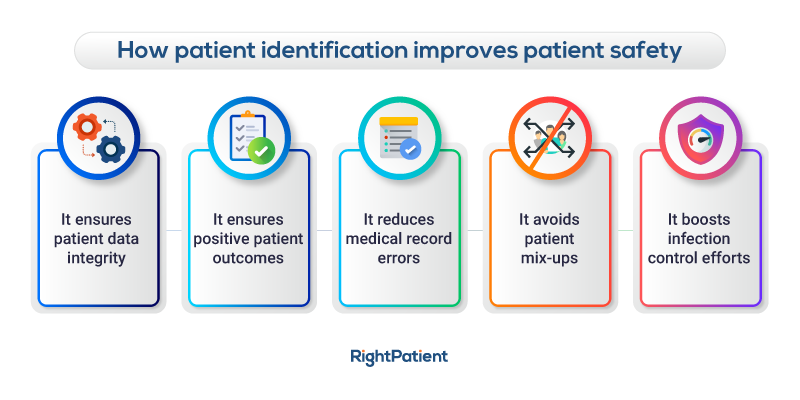
It ensures patient data integrity 

One significant issue that healthcare providers face in the US is the lack of data integrity in medical records or EHRs, which can often be traced back to patient misidentification. It’s pretty simple: if a patient has more than one EHR, their medical history, allergies, medications, vitals, etc., will be spread across several different medical records.

There are thousands of fragmented EHRs like these. As such, the patient will receive treatments based on a highly fragmented EHR; it doesn’t provide the complete collection of patient information. As a result, treatments may be inaccurate or less effective. However, there’s an even more severe scenario. In cases where there’s a lack of accurate patient identification, hospitals could use one of these EHRs to treat the wrong patient! 

The presence of positive patient identification, on the other hand, ensures patient data integrity at all times since patients are treated using accurate EHRs whenever they come in. This remains true both for virtual and inpatient visits.

It ensures positive patient outcomes

Positive patient identification ensures that accurate EHRs are associated with the correct patients across the care continuum. Doing so helps the patients receive the best possible treatment plans and care without inaccuracies, helping them recover without any unwanted incidents, thereby enhancing patient safety and quality in the process.

Five-ways-positive-patient-ID-improves-patient-safety-and-quality

Patients can receive the wrong treatment without accurate patient identification since they’re associated with incorrect medical records, which can lead to dangerous and adverse incidents. 

It reduces medical record errors

One of the biggest problems caused by patient misidentification is that it leads to medical record errors, such as duplicates and overlays. Naturally, these can be detrimental to patient outcomes. Imagine a scenario whereby a patient has multiple EHR documents; if just one of those records is used to treat them, the treatment plan would be based on incomplete information, hence leading to ineffective treatment. On the other hand, overlays are even more dangerous; these are merged EHRs, but they often belong to different patients! Whichever patient gets treated using such an inaccurate EHR record could naturally face detrimental and wrong treatments down the line unless it’s detected and resolved quickly.

Fortunately, accurate patient identification prevents medical record errors right off the bat. Ensuring that accurate EHRs are used every time that patients come in for an appointment helps avoid the creation of duplicates and overlays, thereby saving considerable costs for the hospital and improving patient safety and quality of care overall. 

It avoids mixups

Patient mix-ups can be hazardous and can even lead to the wrong patient getting the treatment or surgery intended for another. It might sound like a basic mistake that would never happen, but in reality, such an event has happened numerous times where the wrong patient received kidney transplant surgery.

RightPatient-improves-patient-safety-and-quality-of-care

One of the most common reasons for this is because patients had similar names and characteristics on their EHRs, which can easily lead to mixups, especially in high-pressure environments. In other cases, the wrong patient may have received chemotherapy that was assigned to a different patient for lifesaving treatment. Meanwhile, patients receiving the wrong medication and so on are potentially common risks due to mixups and mistakes.

Most of these mixups can be traced back to – you guessed it – patient misidentification. As such, ensuring positive patient identification is one of the most effective ways for hospitals to prevent these mixups and avoid jeopardizing patient safety overall.

It boosts infection control efforts

It might seem a little unclear as to how accurate patient identification can help boost infection control issues? Well, integrating a touchless patient identification platform such RightPatient helps with that. RightPatient doesn’t just ensure that the patients are identified correctly across the care continuum, but it also ensures that this care is provided hygienically.

Patients only need to look at the camera for registration; the platform captures a photo and attaches it to their EHRs, essentially locking them. Whenever patients come in for subsequent visits, all they need to do is look at the camera, and the platform automatically matches the current photo with the saved one.

RightPatient is already helping several healthcare providers ensure accurate patient identification, improve patient safety, and bolster infection control efforts effectively. As such, it could be a valuable tool to implement for your own healthcare facility’s management systems, too; why not give it a try?

How To Improve Patient Experience When Faced with Overflow

How To Improve Patient Experience When Faced with Overflow

How To Improve Patient Experience When Faced with Overflow

We all need to keep our patients happy, and it is paramount that you and your staff do everything possible to facilitate this. On a busy day when time is in short supply and your team is rushed off its feet, you may feel like all you are doing is making apologies. But, as long wait times have a negative effect on patient satisfaction, it’s crucial to eliminate the apologies and provide your patients with a good experience. After all, this may well determine how many repeat or referral patients you get in the future, which is fundamental if you want to grow your practice.

How To Improve Patient Experience When Faced with Overflow

1:  Communication is Key

Brushing up on how you communicate with your patients can improve their experience immensely. You should seek to understand how you can improve the experience of waiting and invest in developing patient-centered information and communication.

As a service-based business, you should be setting clear expectations for your patients. If you are having a particularly busy period and appointment times are stretched, make sure your team is aware that they will need to manage wait times. Be honest and up-front with patients if their appointment is delayed and provide them with accurate information about how long the wait may be. Patients can then decide if they want to wait, or they may prefer to rebook. It’s not a perfect solution, but it gives patients the choice.

Today’s technology is making it possible for patients and healthcare providers to communicate in ways we never dreamed of 20 years ago. Voice mail, faxes, and mail are giving way to instant messaging and telehealth video consults. Not only does this enable you to contact patients immediately if you foresee a problem that may result in their appointment being delayed, but it also reduces the time spent in the waiting room. In a pandemic, reducing potential exposure to the virus is beneficial not just for patients but for your team, too.

With all the means of communication we have at our disposal these days, there really is no excuse for not getting in touch with your patients. Unfortunately, technology does not teach individuals how to communicate with patients. Staff training in this area should be a priority as even the most technologically advanced communicator should ensure their face-to-face communication skills are equally as good.

2:  Revamp Your Waiting Room

The waiting room is a crucial part of a patient’s overall experience, and it should be welcoming, aesthetically pleasing, comfortable, and clean. A waiting room with tasteful décor, filled with color and natural light can influence patients positively on a physical and psychological level. It has been found that plants in the waiting room favorably impact patients and staff – even if they are artificial. Let your patients know you care about their experience by creating a modern waiting room aesthetic where your patients feel comfortable and able to relax.

Creating a Relaxing Space

De-clutter your waiting area by removing old magazines and keeping stacks tidy with baskets or magazine racks. Update your seating, choosing fabrics that are functional, comfortable, and match your brand aesthetic. Have a variety of ambient light sources in the room that contributes to a tranquil atmosphere much more than functional, overhead lighting.

Provide WiFi

Reliable, complimentary WiFi will be a huge benefit to many patients who can entertain themselves using their smartphones or tablets. Parents will find it useful to keep their small children occupied and for anyone needing to keep a check on emails or work, Wi-Fi will provide functional and practical service.

Customize TV Content

Customized TV content can deliver a variety of tailor-made messages to your patients. Far from just showing TV programs, you can create local interest content, such as ads from local businesses, or display information about your practice or dental health issues.

3:  Mitigate Long Wait Times with IT that Suits Your Business

Scheduling Tools

It is a common misconception that if you cannot see patients expediently, then it is because the practice is too busy. From time to time, this may well be the case, but one of the main reasons for limited appointment options could be due to inefficient scheduling. With the right healthcare scheduling software for your clinic, you can improve wait times for your patients and minimize staffing shortages that can contribute to overflowing waiting rooms.

  • For patients, filling in long forms in the waiting room should be a thing of the past. Digital health tools include portals that allow patients to fill in their information securely online before they arrive for their appointment – resulting in less time in the waiting room. What’s more, the information can integrate seamlessly with the dental management software suites you use to streamline other processes, such as administration, appointments, patient records, treatment planning, test results, billing. This saves you and your staff time so they can concentrate on patient care rather than administrative tasks.
  • For even greater improvements, staff shift scheduling can present your whole team with a valuable tool for managing their time. The fact is, you and your team must juggle patient waits, treatments, medications, insurance procedures and administration among other things and things can go awry swiftly if members of your team are absent. Shift scheduling software enables all members of your team to manage their work schedules and as practice manager for you to see at a glance who can step in to cover.

Telehealth

Although telehealth has been around for some time now, the pandemic has brought it truly into the mainstream. It is now an essential tool to aid communication between healthcare practitioners and patients, helping to keep patients and your staff safe and eliminating congested, chaotic waiting rooms. It has been estimated that 20% of emergencies can be seen using teledentistry, which itself can have marked improvement on congested waiting areas.

Artificial Intelligence (AI)

AI is already saving time for patients and for your staff. Rather than having to phone in and wait in line for your office to answer, a website chatbot can often answer questions frequently posed by patients – even out of hours. Additionally, it saves both your team’s and your patient’s time.

While AI is still in its infancy, machine learning will transform patient care in the future with algorithms that will be paramount in the way we treat patients – from diagnostics to holistic treatment plans. There will be numerous benefits to patients, including spending less time in a waiting room because AI-driven systems will be able to accurately detect their problems and prescribe a course of treatment.

The Bottom Line

In the world we live in today, patients have high expectations. They want to be seen with little wait times; they want their treatment options explained simply, and they want their dentist to be attentive and caring. Moreover, healthcare providers need to ensure that they are providing the appropriate treatment to the right patient. A touchless patient identification platform like RightPatient can help with that, preventing patient mix-ups, duplicates, and overlays in the process. 

Making improvements for your patients is just as likely to be beneficial to you and your team, too. The pandemic was not good for dental health and has already changed workflows dramatically with the increased use of technology solutions. But, moving forward it’s important to know your business and invest in the most appropriate technology and training that meets your practice’s needs, rather than the latest “cutting-edge tech” that may not fit in with your workflow.

RightPatient-addresses-many-patient-safety-concerns

Five Common Patient Safety Concerns Hospitals Must Address Effectively

RightPatient-addresses-many-patient-safety-concerns

Arguably, hospitals and health systems have been facing a very rough patch due to COVID-19, and with its latest variant, Omicron, it looks like it will continue to haunt everyone for quite some time. While COVID-19 is the biggest problem right now, it’s not the only one – healthcare providers need to address several issues to treat patients effectively and safely. With that out of the way, let’s dive deep into some of the typical patient safety concerns hospitals need to address effectively.

RightPatient-addresses-many-patient-safety-concerns

Five patient safety concerns hospitals need to focus on

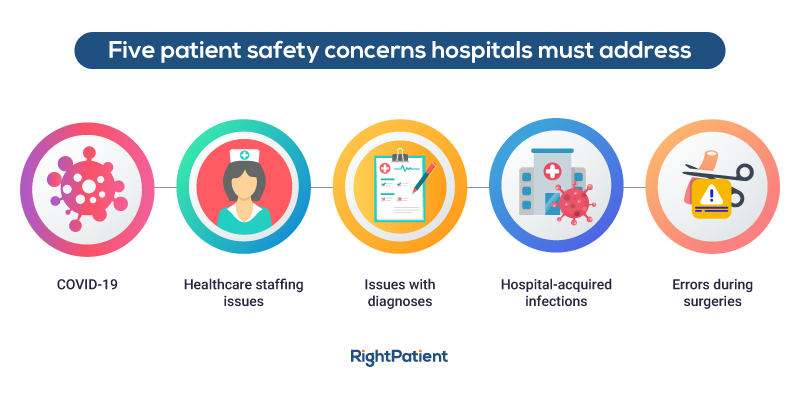
COVID-19

Quite unsurprisingly, this tops all lists regarding patient safety concerns in the world now. This has been the most significant and unprecedented challenge healthcare providers have faced in recent years. Even with the new vaccines, rules and regulations, cases are still increasing due to the Omicron variant. 

The variant has caused several hospitals to permanently close their doors, rapid changes to the entire healthcare landscape, incorporation of telehealth into the mix and adoption of other practices – desperate times call for desperate measures. 

While hospitals have already allocated or built separate facilities to accommodate COVID-19 patients, surges created by new variants have overwhelmed them. During such surges, hospitals postpone non-emergency elective procedures and surgeries, limit visitors, shorten visiting hours and encourage telehealth to protect regular patients from catching COVID-19 at their facilities. While these have become the typical responses, it disrupts the healthcare experience for many patients – what if the non-emergency procedure is crucial for the patient, or what if the hospital suspends ALL elective procedures? These are some questions that need answers from healthcare providers. 

Healthcare staffing issues

The virus has led to another problem – a shortage of healthcare professionals. Many professionals contracted the virus. Unfortunately, some lost their lives, and others had to isolate themselves. On the other hand, hospitals incurred huge losses since elective procedures and regular healthcare visits were postponed or canceled. They had to furlough or lay off workers and introduce pay cuts. These actions led to massive shortages as nurses and other healthcare staff members had to look after far more patients than they could manage. 

Five-patient-safety-concerns-hospitals-must-address-RightPatient

This is a huge patient safety concern because fewer healthcare staff members mean that the treatment will be rushed and compromised. Patients won’t receive the level of care they need, and increased pressure on healthcare staff members might lead to mistakes.

Issues with diagnoses

While diagnostic errors were common before COVID-19 wreaked havoc, the virus has caused many patients to miss out on scheduled diagnostic tests or even have them delayed. In the pre-pandemic era, errors such as delayed diagnosis, misdiagnosis and failure to diagnose related diseases were common. However, healthcare providers were forced to delay all procedures barring COVID-19 cases to allocate resources to deal with the pandemic.

Due to such delays, the patients’ health problems worsened, leading to more complex treatment plans, higher risks and chances of patient safety incidents. Once again, healthcare providers are using telehealth to address this issue. Although diagnostic tests are virtually impossible, patients need to physically come to healthcare facilities for the tests.

HAIs – one of the most significant patient safety concerns now

Hospital-Acquired Infections (HAIs) are quite problematic and have become one of the prominent patient safety concerns in the US, especially after COVID-19. Hospitals consist of patients suffering from different diseases, some of which are contagious. When other people, be it patients or healthcare staff members, have contact without ample protection, they’ll contract the virus as well. This is how COVID-19 has spread, and healthcare providers need to use innovative solutions and strategies to prevent HAIs. For instance, touchless patient identification platforms like RightPatient can help with infection control and reduce HAIs effectively – more on that later. 

Errors during surgeries

Surgical mistakes are one of the biggest challenges for most healthcare providers. Surgical errors come in various forms, from retained surgical instruments and wrong-site surgery to operating on the wrong patient. A frequent surgical mistake is when patients get mixed up due to common names. While there are miraculous cases where the initial patient survived, these are dangerous nonetheless.

Surgical mistakes due to patient misidentification can be prevented with a tried and tested biometric patient identification like RightPatient. Using their photos, it ensures that patients are identified accurately and safely across the care continuum.

RightPatient prevents duplicate medical records and mix-ups – preventing patient safety incidents in the process. 

How are you addressing patient safety concerns at your healthcare facility?

Easier Ways to Guide Patients to Healthcare Services

Easier Ways to Guide Patients to Healthcare Services

Easier Ways to Guide Patients to Healthcare Services

In the healthcare industry, it is extremely crucial that patients can easily find the right information at the right time to ensure the highest quality of Healthcare Services. Here are some tips to make crucial information easier available online.

Healthcare communications are becoming a crucial part of making sure the patient will get the right treatment. Quick access to the right information can be crucial for starting the right treatment, even before the patient will encounter the healthcare system. Therefore, providers in the healthcare industry can take a service check on their online services to make sure that the most important information is easily available to patients.

Easier Ways to Guide Patients to Healthcare Services

Avoid Specialized Language

A primary task in healthcare information is to convert medical terms into simpler terms that can be understood by laymen. Few of the patients have the right education to understand the doctors’ language and will probably not obtain it before it becomes crucial information for the patients. The main task here is to simplify without giving wrong information.

Use Easy-to-remember Intuitive Domain Names

When a patient sees a doctor and gets advised to read more information on a webpage, it’s important that this webpage is easily accessible. Some companies tend to have special shortenings of names that are difficult to either spell or remember for the patients. Therefore, it can be useful for health care services to use a premium domain name.

A premium domain is living up to the criteria for a user-friendly experience. Such domains might already be occupied or bought by other companies. But at Domainify, you can find some of the best healthcare domain names. These names are all living up to the criteria for a premium domain name, and it even comes with a pre-designed logo. It is even SEO-friendly and all of them are easy to remember and spell for patients.

Make Communication More Visual

Medical terms can be abstract and difficult to understand for patients. Many people don’t know about the body’s mechanisms. They can feel pain and discomfort but might not know exactly how a knee or stomach is functioning. Therefore, doctors and health care personnel have a big task of communicating this information in an easily understandable way.

For a lot of patients, descriptions of the body can be quite abstract in words. Often a feeling in the body is difficult to translate into words. This is leading to a huge potential in visual communication like infographics in health care. Here health care providers can more easily give instructions, communicate about specific body parts or symptoms.

The brain is processing visual communication thousands of times faster than text according to TechSmith. Research also shows that people are more likely to remember communication when it is delivered visually instead of by text. The explanation is not so weird. Visualizations show things like they are. Text is a transformation of events in the world transformed into letters, that are forming words, sentences, and texts. Texts might be easy to write, but visuals are easier to use for learning.